
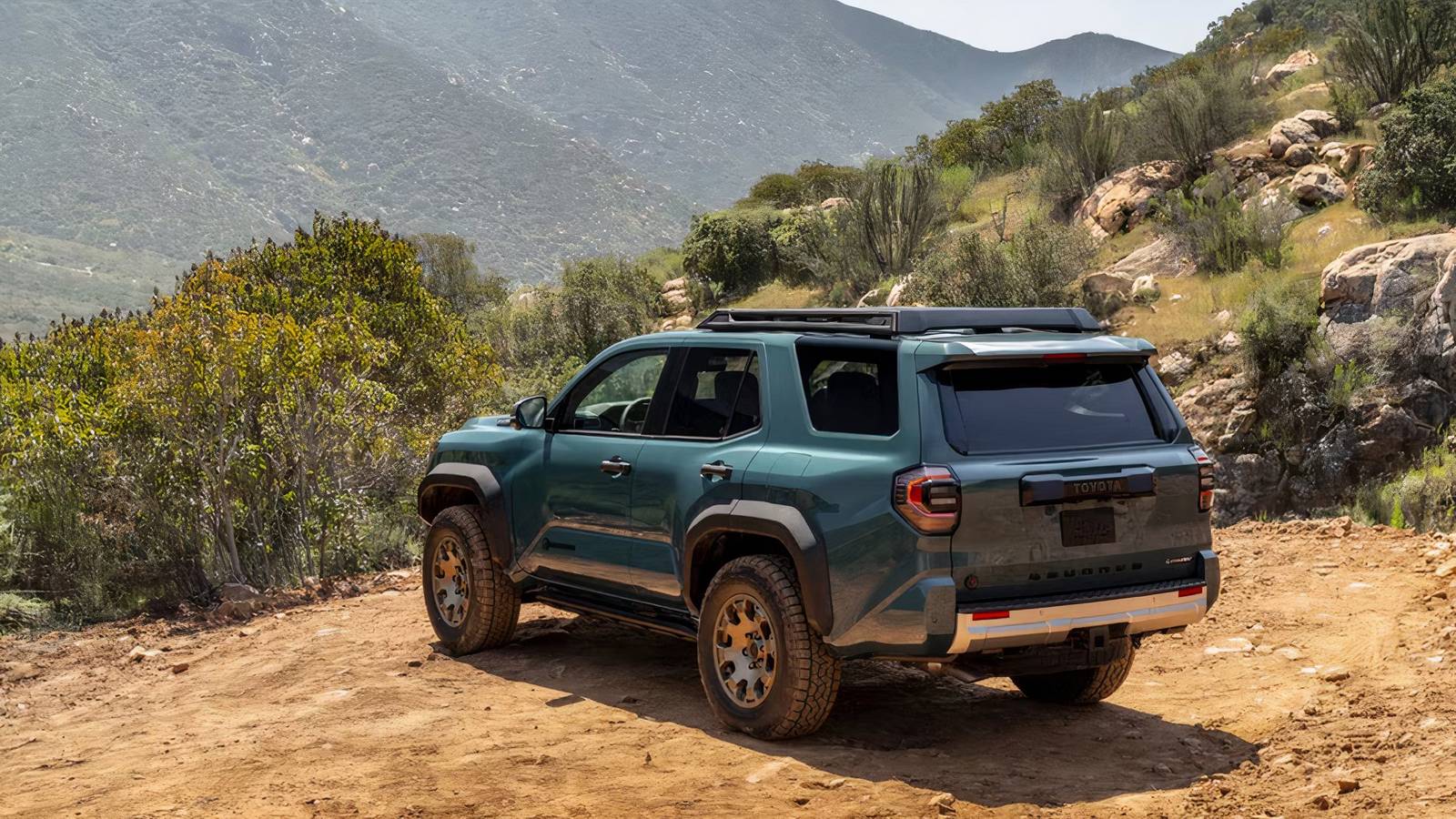
The mid-size SUV segment has traditionally been a tale of two sides. On the one hand, there was the rugged adventure vehicle that featured body-on-frame construction and was designed to conquer off-road trails. Then, there was the SUV for the masses: the comfort-driven vehicle, which featured a commanding view of the road without the bare-knuckle utility of the off-roaders. For decades, the former of these vehicles relied on a brute-force approach, harnessing serious mechanical durability without much consideration for the comfort of the driver. However, these two worlds started colliding in the 2010s, and now, in the 2020s, the landscape has shifted towards classic strength combined with cutting-edge technology.
No longer do manufacturers have to choose which side of the fence their vehicles are on, as ruggedness and refinement can be easily interwoven into the same package. Pairing the sense of adventure that off-roaders are synonymous with creature comforts and hybrid powertrains means that rugged vehicles are more accessible than ever. Though some hardcore fans of utility vehicles may argue that these SUVs have lost their analog souls, there is no doubt that some of the true icons of the segment continue to offer incredible capability both off the road and on it.

Every Toyota 4Runner Generation And How It’s Changed
The Toyota 4Runner has been smashing through our trails and deserts for 41 years – here is what you need to know about all the 4Runner generations.
Why The Modern Consumers Demand Comfort

Across all segments, manufacturers have proven that single-purpose vehicles aren’t the way forward anymore. Traditionally, a sports car would be too harsh for the daily commute and a hatchback too small for a typical family – these concepts simply aren’t the case anymore. With the democratization of power and technology coming in the form of hybrids, EVs, and efficient turbocharged engines, consumers now expect cutting-edge equipment, refined comfort, and generous performance. Off-roading specialist vehicles are no longer exempt from that demand.
The History Of The Toyota 4Runner

The original Toyota 4Runner was released in 1984 and was incredibly primitive from a modern perspective. At its core, it was a Toyota Hilux in SUV form, with a removable fiberglass canopy, meaning it hadn’t exactly forged its own identity yet, though the dependable, off-road credentials were obvious. With the 4Runner moving into true SUV territory with the launch of the second generation in 1990, the outline of the brute that we know and love today was forming.
More Generations Of The 4Runner
- The Second Generation (1990 to 1995) served as the first true 4Runner traditional SUV package
- The Third Generation (1996 to 2002) was easier to live with, and became distinct from Toyota pickups in construction
- The Fourth Generation (2003 to 2009) offered a 4.7-liter V8, the only 4Runner to offer this engine
- The Fifth Generation (2010 to 2024) stuck to its roots with a naturally aspirated engine and had rugged styling
Throughout the generations, the 4Runner became a more complete off-roading package, and Toyota perfected this philosophy in the fifth generation. It wasn’t until 2025 that the 4Runner adopted a more mass-market strategy with the rugged yet more futuristic sixth-generation vehicle. With a move towards larger screens, hybrid options, and advanced safety systems, the vehicle has made its stand for the contemporary buyer.

2025 Toyota 4Runner TRD Pro Vs. Trailhunter: Same Price, Different Adventure
This year’s 4Runner lineup is filled with some impressive trims, but there are two that stand out – they both cost the same but offer something unique
How Much Is A 2025 Toyota 4Runner Worth Today?

The 2025 4Runner is in high demand, even with the subsequent release of the 2026 4Runner. Despite this model releasing a year ago, most trims have only lost a few thousand dollars from their original MSRP. The TRD Pro and Trailhunter trims are still costing around $65,000 to $70,000, and some ultra-low mileage examples are at a higher price than their original MSRP due to limited stock in the same trim levels for the 2026 4Runner.
More savvy buyers are holding out for low-mileage 2025 4Runners to avoid the premium cost of a brand-new vehicle. Considering it is exactly the same vehicle as the 2026 model, and you can save thousands of dollars by choosing one with a couple of thousand miles that still feels brand new, it’s perhaps the perfect way to get into a truly innovative Toyota SUV, which combines a rugged heritage with modern amenities. Dealers are also more likely to offer special discounts on used 2025 models, meaning the capacity for even lower prices is higher.
Powertrain And Performance

The 2025 4Runner saw a shift to a hybrid powertrain – a bold move for an SUV deeply rooted in naturally aspirated simplicity. However, there are several technical benefits to this modernization. The outgoing V6 required 4,400 RPM to hit maximum torque, which meant you had to work the engine hard to feel its true pulling power. The new 2.4-liter hybrid hits peak torque at 1,700 RPM, making the 2025 4Runner feel far more responsive and capable in a variety of scenarios.
2025 4Runner VS 2024 4Runner Specifications
|
2025 Toyota 4Runner (hybrid) |
2024 Toyota 4Runner |
|
|
Powertrain |
2.4-liter turbocharged inline-4 |
4.0-liter N/A V6 |
|
Transmission |
8-speed automatic |
5-speed automatic |
|
Horsepower |
326 |
270 |
|
Torque |
465 Ib-ft |
278 Ib-ft |
|
0-60 mph |
6.5 seconds |
7.7 seconds |
The eight-speed automatic is one of the 2025 4Runner’s best attributes, and makes the outgoing five-speed automatic feel primitive. The newer eight-speed manages to stay directly in the power band nearly all the time, making it a more effortless experience compared to the five-speed, which was known for gear hunting. Toyota’s goal of revitalizing the 4Runner for a more all-encompassing approach is hugely benefited by the 2025 vehicle’s instantaneous performance and silky driving experience.

How Toyota’s 4Runner Evolved Into One Of The Most Reliable SUVs Of All Time
The story of the Toyota 4Runner’s evolution from a simple, truck-based SUV to a legendary off-road and reliability icon is one for the books.
Efficiency And Reliability

Fuel economy is another huge win for the hybrid. Even though it’s not a powertrain designed for efficiency as its main priority, it still yields vastly improved results over the previous 4.0-liter V6 4Runner. City driving is where the largest improvement is felt, with the 2024 model getting a fairly poor 16 miles per gallon, but the 2025 variant managing 23. A 7 mpg difference doesn’t sound like much, but it’s an enormous 44 percent improvement compared to the outgoing model. Combined, the hybrid still offers 35 percent better economy, achieving a reasonable 23 miles per gallon – not bad for a heavy, boxy, and capable SUV.
The 4.0-liter V6 version remained the bedrock for 15 years, meaning Toyota had ironed out any imperfections with the engine. Because it was also a low-stress, overbuilt V6 with no turbochargers or complicated additions, it meant that it was a remarkably reliable vehicle. Even the five-speed’s rudimentary nature was key to its longevity, as it’s a hugely straightforward unit that is also mechanically understressed. The new 2.4-liter hybrid powertrain is far more complex, and because it’s a first-generation model, there have been some inevitable issues. Of course, it has been subjected to Toyota’s stringent testing (some of the most thorough in the industry), but there are always likely to be initial problems like software glitches and faulty sensors.

Top 10 Off-Road SUVs That Can Conquer Any Terrain
These utes stand as the pinnacle of exploration, with extensive upgrades allowing them more off-road versatility than most SUVs.
Trim Levels And Interior Quality

The sixth-generation 4Runner focuses on modernizing the previous model’s outdated aspects but still puts emphasis on physical controls and ease of use. Standard models feature an acceptable eight-inch display, with higher trims receiving a huge 14-inch infotainment screen. There is also an excellent choice of material quality, which can match the type of lifestyle you will be leading: for those who focus on off-roading and it being a true workhorse, there is a durable synthetic leather option. Higher trims introduce genuine leather options with serious luxury touches like a heads-up display and second-row heated seats.
Most Notable Trim Options
- The base model SR5 started at $40,700 and included 17-inch alloys, a smart key, and an eight-inch display
- The TRD Off-Road started at $49,190 and focuses on rugged features like crawl control and a Multi-Terrain Select
- The Platinum started at $62,860 and is hybrid only. It includes a 360-degree camera and a head-up display
- The Trailhunter is the most expensive at $66,900 and offers OME 2.5-inch shocks, an ARB roof rack, and a snorkel
Should You Buy One

If you’ve always loved the idea of owning a robust off-roader with serious capabilities, but it has never quite fit the brief for your everyday life, then the 2025 Toyota 4Runner is now seriously worth considering. It features a complex yet potent powertrain which makes it feel like a capable car on the road but offers trim levels that give you incredible opportunities for an adventure. While some of the soul of the 4Runner has been lost from its analog roots, there is no doubt that it offers more to a variety of people than the outgoing version through serious refinement, modernized looks, and excellent interior options.
Sources: Toyota, the EPA