
The iconic American V-8 engines of the 1950s and 1960s owe much of their existence to World War II machines, including tanks and aircraft. World War II technically squeezed out every last ounce of technological prowess from manufacturers, including Detroit’s factories that housed famed American carmakers. It was the need of the hour, and hence it wasn’t given much importance. However, cracks began to appear after the war, when there was a shortage in just about everything, from housing to consumer goods. Even automobiles were outdated, with cars utilizing pre-war technology.
The only upgrades new cars got until the late 1940s were facelifts. Things were getting monotonous. However, thanks to the trickling down of various war machine technologies, things began to get interesting in the American automobile scene, especially on muscle cars. This is because many engines, transmissions, and even steering and braking technology were finally being revolutionized, thanks to World War II tech. But it was the extensive array of technologies on V8 engines that disrupted the way we looked at “fast” passenger cars. Not only did aircraft (and other war machines) give us iconic technological features like the “Hemi” and superchargers, but they also helped improve efficiency, performance, and even the materials used on cars of the time.
Here’s How Post-World War II Phase And Airplanes Helped Create Aspirational V-8 Engines
Post-War Demand And Global Expansion Are Key Factors

The year 1945 is often highlighted as a pivotal point in the American automobile landscape, as a wave of wartime technology features was slowly being introduced into the development and manufacturing cycles of cars. This is the start of the iconic post-war automotive movement, which was further strengthened with economic prosperity, innovation, design, and global expansion. The world saw a notable boost in economic prosperity on various levels because the most energy-intensive task (World War II) was finally completed. Also, thanks to the United States’ initiative of the GI Bill, veterans were provided educational and home-buying concessions. This helped the average person be a bit more aspirational and be willing to invest in more expensive cars.

Airplanes were a major driver of the modernization of muscle car V8 engines, as many in-engine technologies were trickle-down versions of features from warplanes. Furthermore, the trickle-down also extended to transmissions, power steering, and even suspension systems. Given the confidence of people willing to shell out more for expensive cars, automakers were also bold enough to make this a trickle-down effort. Many manufacturing techniques are used to mass-produce many of the new-gen V8 components, thereby keeping prices under control.

10 Forgotten V8 Engines That Deserve a Second Look
These may not be the first V-8 engines that come to mind, but they all deserve more love.
Chrysler’s Famed Hemispherical Combustion Chambers Came From A Fighter Bomber
All Thanks To A Government Contract

The hemispherical combustion chambers have been around since the early 1900s. But it got a serious upgrade during World War II, when Chrysler received a government contract to develop a new engine to improve the performance of the P-47 fighter bomber. This new XP-47H engine could hit an impressive 490 MPH during stable flight. However, it was never put into mass production, as this technology was refined and readied only as the war drew to a close. By that time, the Air Force was more interested in jet engines. However, thanks to Chrysler’s findings with the inverted V-16 Hemi engine, we now have a lineage of the famed Chrysler Hemi V-8s.

The first-ever Hemi V-8 cars were the Chrysler New Yorker and the Imperial, introduced in 1951. These two cars also marked Chrysler’s entry into high-performance V8 territory for public roads. Before this, Hemi engines were only used in racing cars. The “Hemi” V8 technology is so goated that it is still utilized in ferocious Dodge muscle cars. The unique combustion chamber design improves airflow and promotes more complete fuel burn, thanks to larger valves.

The dome-shaped cylinder heads also reduce heat loss, which in turn helps generate more power and torque from the same displacement. It’s sort of like having the properties of a supercharger minus the weight. The cylinder head design also facilitates the addition of larger intake and exhaust valves placed on opposite sides, enabling the engine to breathe better, especially at higher RPMs.
American Cars That Introduced The Hemi V-8 To The World (From The 1950s)
- Chrysler New Yorker
- Chrysler Imperial
- Chrysler Saratoga
- Dodge C Series
- Chrysler C-300

Beyond aircraft, military tanks have also played a vital role in the introduction of a crucial car technology feature a lot earlier in the WW2 phase—the Hydra-Matic transmission. GM introduced this gearbox technology in 1939 for both Cadillac and Oldsmobile cars. It was the first fully automatic transmission on passenger cars and was introduced as a costly option at the time. Before cars, this technology was utilized in various military vehicles, including the M24 Chaffee light tank, the M5 Stuart tank, the M18 Hellcat tank destroyer, and more. Cadillac’s “battle-tested” tag for the Hydro-matic transmission comes from its extensive utilization on war machines.

The First Turbocharged Muscle Car Is Now A Collector’s Bargain
This model’s futuristic technology may have contributed to its demise, though buyers can reap the rewards of its failure today.
German Aircrafts Contributed To The Introduction Of Fuel Injection Systems
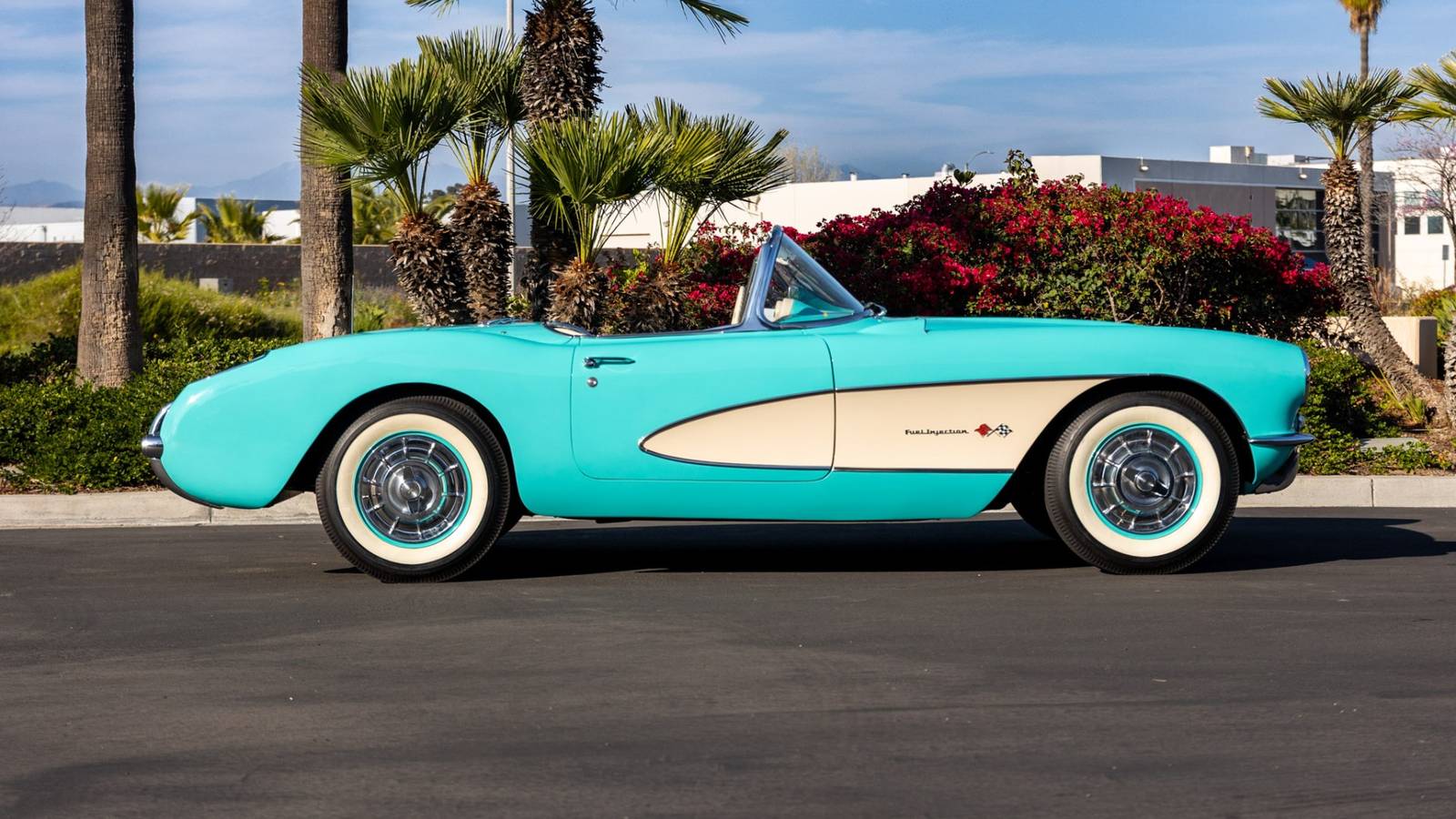
The 1957 Chevy Corvette Was The First American Car To Get It

Fuel injection was not new, even during World War II, as it had been around since the inception of the internal combustion engine. But those were a lot cruder and not much better than the tried-and-tested carburetors. However, it was during World War II that this system received a notable glow-up, in the form of more sophisticated mechanical fuel injectors. German aircraft engines were the first to use this tech. Performance issues plagued carburetors at higher altitudes and under extreme G-forces. The FI system took care of this issue.

After the war, this technology soon trickled down into the racing world with Chevy being one of the first carmakers to utilize it. The 1957 Chevy 283 V-8 engine got it as an option. The Chevy Corvette used this engine. Later, the 1958 Chrysler 300D also became the first car to use electronic fuel injection. However, this was a more complex and less successful feature than the Corvette’s mechanical setup at the time.

Factory-Turbocharged Muscle Cars You Forgot Existed
A high-performance turbocharged variant is usually a high-profile car, but some seriously killer turbo rides have fallen down the memory hole.
The Legendary P-51 Mustang And Supercharging
The Dawn Of Supercharged V8s

The iconic P-51 Mustang fighter-bomber is famed for its perfect combination of speed, range, armament, and usability. The two pillars of its well-rounded character are its powerful Packard Merlin engine and its sleek laminar-flow wing design. Its engine’s undisputed performance was due to the use of superchargers, which improved efficiency and power.

Supercharging is not a new technology; it was even available in the 1800s, when blowers were used to help fire up industrial furnaces. However, it reached a high level of maturity during World War II. After that, it became even more exciting when it trickled down to road-going cars. This technology is why we have whining supercharged V8s today.
Earliest American V8 Supercharged Cars
- 1957 Ford Thunderbird F-Code
- 1957 Studebaker Golden Hawk
- 1957 Packard Clipper
- 1962 Oldsmobile Jetfire
- 1963 Studebaker Avanti R2

This Classic Muscle Car Could Outrun Modern Performance Cars
The 1970 Chevelle SS 454 set a muscle car performance standard the lasted almost four decades and still impresses.
Even ABS Has Its Roots In Bomber Aircrafts
Derived From A Clever Metered Braking System On Airplanes

The life-saving anti-lock braking system, ever so common on cars and even motorcycles today, originated on early 1950s British bomber aircraft. Strategic bombers like the Avro Vulcan and others featured a system that monitored the rotational speed of each landing gear wheel and applied braking force in such a way as to prevent any of the wheels from locking up and skidding.

This extensive system later on trickled down and was simplified into the ABS brakes we know of today. The 1978 Mercedes-Benz S-Class is best known as the first production car with a modern electronic ABS. However, not many are aware of the much earlier 1971 Chrysler Imperial that came with Bendix-developed electronic ABS. Sadly, Mercedes’s Bosch-developed system was much more refined and hence takes the spotlight

These Are The First 10 Production Cars In History With Factory Turbochargers
We may love a good turbo today, but they had to start somewhere – here are the first 10 production cars to boast a turbocharged engine under the hood.
The Aircraft-V-8 Connection Goes Beyond Just Trickle-Down Mechanical Technology
Materials, Manufacturing Technologies, Engineering Talent, And Fuel Technology Play Vital Roles In Making V8 Engines Cooler

All of this military-grade technology that has been trickled down for road-car use is cool, but rapid expansion would not have been possible without efficient manufacturing techniques. The post-war era also helped with this, along with skilled technical prowess and even advanced fuel technology (thanks to aviation fuel), which enabled V8 engines to extract maximum “performance” from these cool technologies. In fact, some of the technologies mentioned above would not be used to their full potential without appropriate materials and higher-quality fuel.

World War II saw a lot of advancements in the use of materials and manufacturing technologies. These included aluminum alloys, high-tensile steel, and precision machining. These features, when trickle-down, significantly contributed to the creation of high-performance American cars.

Then there’s the surplus of engineering talent, which, ironically, was far more than the landscape today. Many aircraft-engine specialists returned to Detroit. Since most of the new and bold technologies that automakers were experimenting with were trickled-down versions of airplane features, these specialists were the perfect ones to guide the ship. They brought expertise in aerodynamic flow, ignition timing, and high compression to the automobile industry.

Then there’s a vital piece in this mix that many will overlook—fuel. High-compression V8s reached their full performance potential thanks to superior, high-octane fuel. Aiding this feat was high-octane aviation fuel, which was quite expensive. Still, with the broader embrace of powerful muscle cars, prices went down, thanks to more extensive and road-oriented fuel technology innovations.
Source: Local Histories