
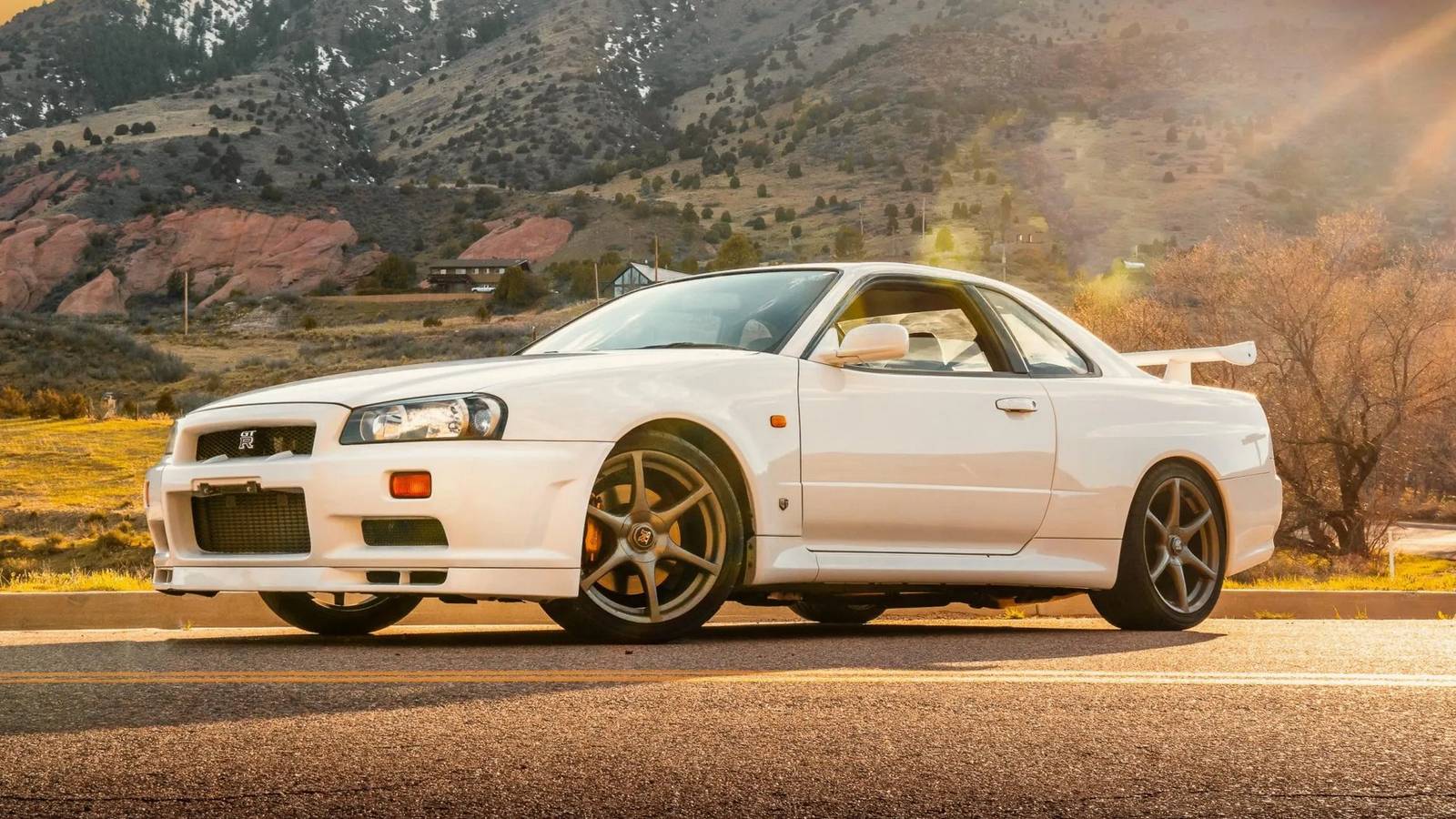
At RM Sotheby’s Monterey 2025, a 1996 Nissan Skyline GT-R Nismo 400R was auctioned for nearly a million dollars. Wait, that’s a homologation special, surely it would be so expensive, right? Yes, but even if you look at the regular 1996 Nissan Skyline GT-R, Classic.com tracks them at an average of $165k, with the lowest reported sale still over $50k. And the GT-R isn’t alone. Across the board, 1990s Japanese sports cars are soaring in value, with collectors gladly paying a premium for them.
The reason is simple: the ‘90s were the golden era of Japanese sports cars. This was the time when Japanese manufacturers pushed the boundaries of automotive engineering, building sports cars that could run with their Euro rivals while keeping costs in check. They were also reliable, highly tunable, and, many of them, stunningly gorgeous. They reshaped our car culture, inspired a new generation, and cemented Japan’s sports car legacy. Here’s the history of Japanese sports cars from that era.
The ‘90s Were The Golden Age Of Japanese Sports Cars

The 1990s are often considered the golden age of Japanese sports cars, all thanks to the country’s economic boom and bubble economy that lasted from 1986 to 1991. This bubble market was a time of unprecedented excess in Japan, fueling innovation and competition across industries, including automotive.

Carmakers now had larger budgets than ever, allowing them to take more risks and innovate their cars. The manufacturers weren’t just competing with each other; they wanted to go against European luxury cars and American muscle cars. Even though the country’s economic bubble burst in the early ‘90s, it had already given the manufacturers the momentum.

This time of uncompromising engineering resulted in an array of sports cars from Japan that were not merely designed to transport people, but to show the world what Japanese manufacturers were capable of. These new cars set the template for the sports cars that followed, featuring innovative and advanced tech, including all-wheel-drive systems, lightweight construction, aerodynamic designs, and twin-turbocharged engines. More importantly, these cars were relatively affordable compared to their European and American rivals, and they did not compromise on quality.

Such iconic Japanese sports cars are still cherished by enthusiasts and collectors around the world and have become cultural artifacts. The 1990s Japanese cars continue to inspire modern car designs and enthusiasts even today, and glimpses of them can be seen in modern sports cars. Though we doubt most of them will ever come close to living up to the ‘90s Japanese sports cars’ legacy.

10 Legendary Japanese Cars That Cemented Their Legacy Thanks To The U.S. Market
These iconic Japanese models still retain a massive influence stateside.
Automotive Legends That Became Cultural Phenomena

The bubble gave Japanese manufacturers many benefits, including the freedom to innovate. This allowed automakers to focus their resources on making their cars compete and even one-up European sports cars. This bubble helped them build halo models that defined the Japanese sports car ethos. They let Japanese manufacturers play in the same league as the Corvette, Porsche, and Ferrari. Sometimes, they even won.
From Race-Ready Exotics To Rally-Bred Road Cars

The 1993 Toyota Supra Mk4, packing the legendary 2JZ-GTE straight-six engine and twin turbos, became a tuning legend, capable of pumping out 1000 horsepower with the proper mods, leading to one of the strongest tuning circles. The 1990 NSX, developed with Ayrton Senna’s input, brought mid-engine supercar performance that pushed manufacturers like Ferrari to rethink the dependability and ergonomics of their models.

Mazda’s 1992 RX-7 FD was another legend, showcasing the rotary engine’s potential; it delivered high-revving performance with lightweight construction, all wrapped in a timeless, stunning exterior. Meanwhile, the Nissan Skyline GT-R, featuring the ATTESSA AWD system and the RB26DETT engine, became known for its excellent road manners. The 1992 Mitsubishi Lancer Evolution offered a different kind of rally-bred performance for the road. And these are just a few examples.
What Collectors’ Dreams Are Made Of

These iconic 1990s Japanese sports cars were built with performance in mind, not cost. As mentioned earlier, they’ve become automotive legends today, and each of these demands a premium in the used market. For example, according to Classic.com, a Supra Mk4 averages $76k, while an RX-7 FD averages $30k. Such demand and the fact that enthusiasts are willing to pay for them only show how relevant these ‘90s sports cars are even today. Not to forget, the ‘90s tuner culture destroyed many models of these already low-production-run cars.
Motorsports Domination, Pop Culture Icons, And More

The ‘90s sports cars dominated in competition, too, from rally stages to endurance races. For example, the rotary-powered Mazda 787B won the 1991 Le Mans endurance race, showing the performance potential of the rotary engines. The 1992 Subaru Impreza WRX and Mitsubishi Lancer Evolution dominated rallies, and the Skyline GT-R got banned from Australian Group A because it basically ate the competition, earning the nickname Godzilla in Australia.

This motorsport success led the ‘90s Japanese sports cars to enter pop culture. Video games, like Gran Turismo, and The Fast And The Furious movies gave these cars exposure, popularizing JDM cars and creating the JDM custom car culture in the US. Japanese manufacturers were no longer known for boring econoboxes; instead, they were taking center stage in the automotive world.

10 1990s Cars That Are Now Worth More Than Their MSRP
These cars from the 90s may not have the latest technology, but they can sure fetch a pretty penny in today’s market.
‘90s Japanese Sports Cars Became A Blank Canvas For Enthusiasts

Adding yet another piece to the ‘90s Japanese sports car legacy was their blank canvas nature. Before 1995, auto parts were regulated, and tuning was technically illegal. That act was revised in 1995, allowing car enthusiasts to customize and tune their cars. Here, Japanese sports cars stood apart from the crowd, responding well to mods thanks to solid engines, simple designs, and aftermarket support. They were blank canvases, with models like the Honda Civic, Nissan 240SX, and Toyota AE86 becoming favorites.

The Japanese sports cars were blank canvases for customization, and so the custom craze of the ‘90s began. Owners started tuning, turbocharging, or even swapping engines, and some even pushed their cars to outperform supercars. Other enthusiasts used customizations as a form of self-expression, adding body kits, neon lights, and elaborate sound systems to their Japanese sports cars.

This JDM custom culture created a domino effect in the states, nurturing enthusiast communities that held regular car shows and meetups. It also led to numerous online forums, such as Club4AG and Honda-Tech, that brought people together across regions. Aftermarket companies like Greddy, HKS, and A’PEXi also emerged. Japanese sports cars gave car enthusiasts a way to express themselves, meet like-minded people, and improve their cars as they wanted.

Why 90s Mitsubishi Sedans Are Some Of The Best Performance Bargains Today
These old-school Japanese legends are underappreciated and undervalued.
Accessible Performance, Led By Kaizen

Performance is never cheap, but before the ‘90s, it was reserved for those with deep pockets only. European exotics and American muscle cars weren’t so accessible for everyone, but that changed in the ‘90s with Japanese sports cars. They were more affordable and competent, making performance more accessible to the masses. Add to that the solid aftermarket support, and enthusiasts could now tune their cars to produce supercar-like performance for a fraction of the cost.
Bulletproof Reliability Led By Kaizen Philosophy

Japanese carmakers were driven by Kaizen, a deeply ingrained Japanese principle that means continuous improvement. So, instead of milking the same model for years, manufacturers continually refined and improved their cars. With regular tweaks to the suspension, interior, gear ratios, and more, manufacturers were able to make cars that aged better than the competition. Thanks to Kaizen, Japanese cars were more reliable, had better fit and finish, and higher long-term quality rankings.

This reinforced trust among buyers and earned manufacturers like Toyota and Honda a reputation for reliability that persists. And this reliability did not come at the cost of performance. Even the most high-performance cars, like the NSX, were reliable and could be used daily without draining the bank account. It’s why engines like the B-Series, 2JZ, and SR20 are still so popular: they can withstand plenty of abuse without grenading themselves. This was the final piece of the puzzle that made ‘90s Japanese sports cars so iconic.

Why The 1990s Was A Golden Era For Affordable Sports Cars
The ’90s brought us some of the best cheap sports cars that still live on today, here are the reasons that the decade produced so many greats.
1990s Japanese Sports Cars’ Legacy Is Not Going Anywhere Soon

The Japanese economic bubble burst in the early ‘90s, followed by economic stagnation in Japan. Automakers in the country now had tighter budgets, so they shifted their focus from high-performance sports cars to more sensible categories. Stringent emissions norms only made things worse for sports cars. Despite this, the cars that Japanese manufacturers made in the ‘90s still remain, and their reputation has only grown with time.

Tuners still pick up rustboxes from barns and restore them into high-performance custom cars, while collectors are still willing to pay the equivalent of a modern Euro sports car for an old Japanese one. The 25-year import law has also opened a new market for importing 1990s Japanese cars into the U.S., allowing young enthusiasts to experience the beauty of these old JDM cars. These iconic 1990s Japanese sports cars are as much a part of the American car culture as the good ol’ Mustangs and Corvettes.

Japan’s ‘90s sports cars continue to influence newer cars, too, as seen in modern models like the Subaru WRX, Nissan GT-R, and Honda Civic Type-R. While these modern machines continue to offer high performance and reliability, they are unlikely to ever have the same impact as their predecessors. It’s not for nothing that the 1990s are known as the golden years of Japanese sports cars, and it’s safe to say that legacy is not going anywhere.
Source: Manufacturers, Classic.com, Bring a Trailer, HotCars, CarBuzz