
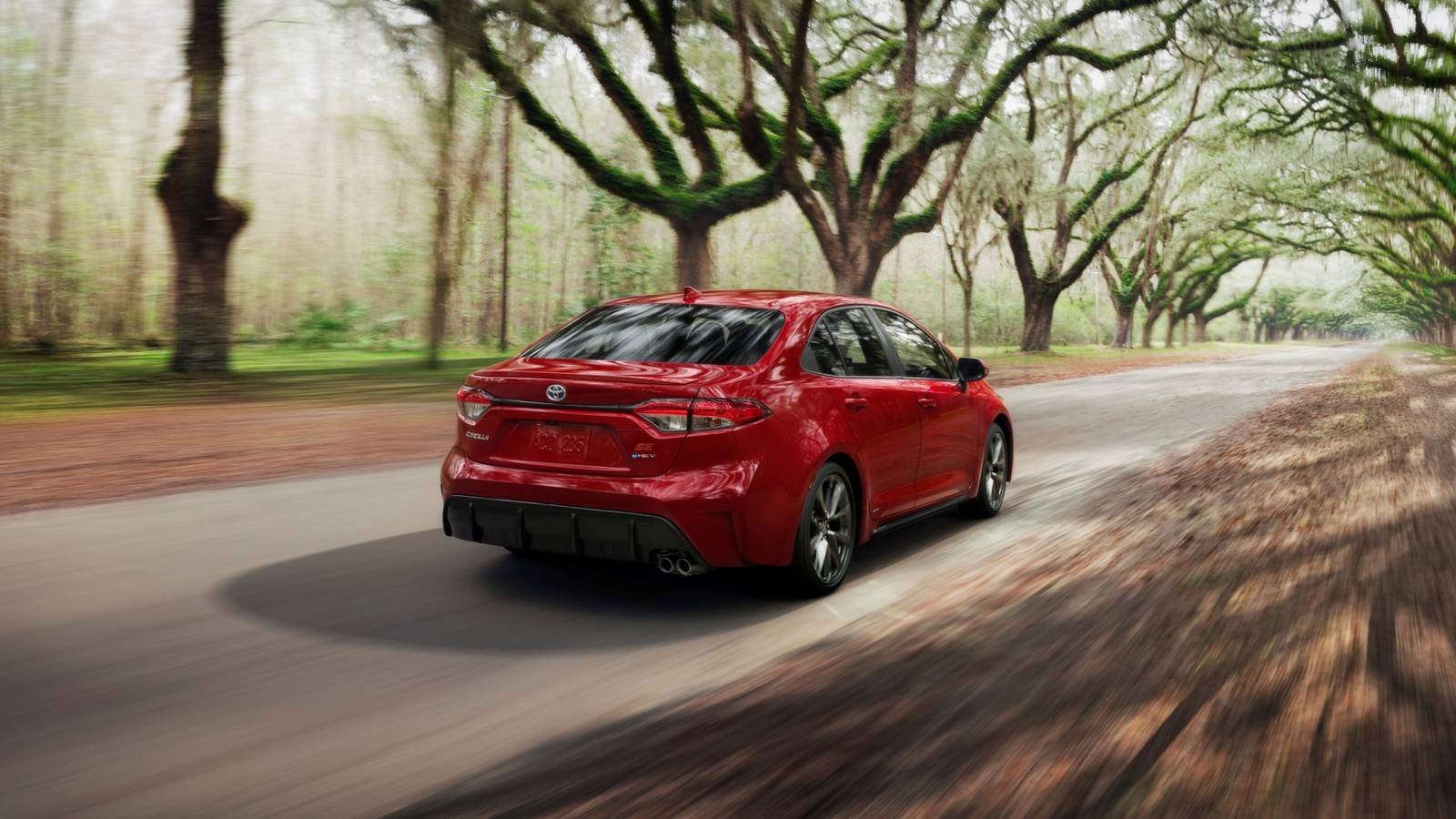
Now that hybrid car demand is soaring to new heights in 2026, there are a lot of consumers asking what they can expect from these vehicle types over an extended ownership period. Hybrids are typically more reliable than conventional ICEs, because manufacturers fit them with more resilient engines that don’t cover the full load of driving thanks to the integrated electric motor. This means that the powertrain is subject to less stress, which leads to improved longevity. The electrical system in your typical HEV runs off compact lithium-ion or nickel-metal hydride battery packs with much lower capacities compared to PHEVs or fully electric vehicles, which is why these types of vehicles don’t operate on electricity alone.
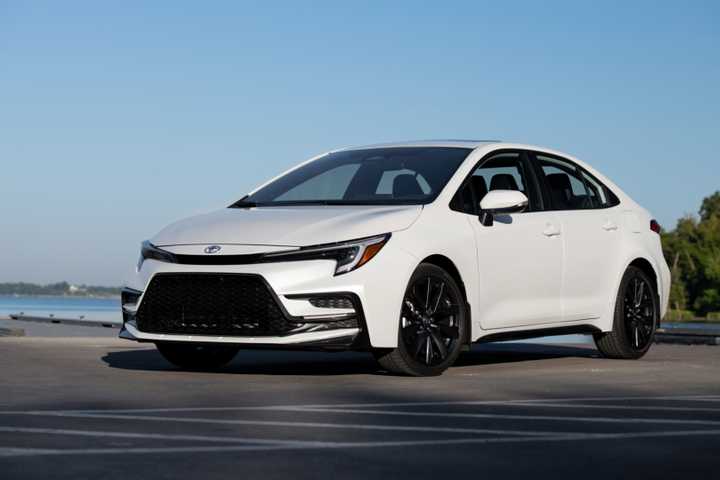

- Base Trim Engine
-
2.0-liter 4-cylinder
- Base Trim Transmission
-
CVT
- Base Trim Drivetrain
-
Front-Wheel Drive
- Base Trim Horsepower
-
169 HP @6600 RPM
- Base Trim Torque
-
151 lb.-ft. @ 4400 RPM
- Make
-
Toyota
- Model
-
Corolla Sedan
- Segment
-
Compact Sedan
Despite their improved reliability standards, HEVs are still subject to wear, with the battery pack being the most expensive component that you’ll find yourself replacing, typically after 200,000 miles. The positive of modern hybrids is that the replacement battery technology is substantially more affordable compared to when these hybrids first arrived on the U.S. market. This remains true, even if you factor inflation into the equation. Most brands that have focused on electrification these past few years have incorporated their electrification and battery technology down into their hybrids, resulting in better efficiency, reliability, and combined performance. If you are in possession of a hybrid and have surpassed the 200,000-mile threshold, these are some issues that you may encounter.
Why Hybrid Batteries Don’t Last Forever

A hybrid vehicle’s battery capacity gradually declines due to a combination of chemical degradation and usage patterns. This degradation is completely dependent on the vehicle and how much it has been driven, but the symptoms will remain the same across the segment. With time and use, the lithium-ion or nickel-metal hydride cells within the battery pack experience wear as a result of repeated charging and discharging cycles. This causes the electrodes to deteriorate and the electrolyte to break down. Factors like high temperatures, rapid acceleration, and frequent deep discharges accelerate this process.
An HEV’s battery management system plays a role in regulating voltage and temperature, but as the cells age, this system becomes less effective at balancing the charge between individual cells, leading to uneven wear. After 200,000 miles, a hybrid battery typically loses between 20 and 30 percent of its original capacity, depending on driving habits and environmental conditions.
Heat Is A Major Battery Killer

If you frequently drive your hybrid vehicle in extreme heat or heavy stop-and-go traffic, you’ll notice that the battery will degrade much faster. If you primarily drive on highways at more consistent speeds and in moderate climates, the battery will retain capacity for a longer period.
The capacity loss directly impacts your hybrid battery’s electric-only driving range and overall fuel efficiency, as the internal combustion engine is forced to engage more often to compensate for the reduced electric power. Some manufacturers implement regenerative braking systems and advanced cooling technologies to slow down capacity loss, but even with these measures, you won’t be able to avoid battery degradation.

Why The 2026 Corolla Hybrid Might Be One Of The Cheapest Cars To Own Long-Term
Here’s why the Corolla Hybrid is a financially sensible choice in 2026.
How Much The Corolla Hybrid’s Battery Costs

According to Toyota, you can expect to pay anywhere between $3,000 and $8,000 to have a new 0.9-kWh nickel-metal hydride battery pack installed in your Corolla Hybrid. If you opt for a refurbished pack, this lowers the price to anywhere between $1,500 and $3,500, but these will be slightly less reliable and suffer from a shorter lifespan.
All Corolla Hybrid models come standard with the brand’s class-leading 10-year or 150,000-mile battery warranty, which covers all manufacturer-related faults and defects. Toyota benefits from a fairly comprehensive online parts catalog, but it does not list a replacement HEV battery pack part, so there’s no exact figure for us to reference.
Competitive Starting Prices For The Range

The Toyota Corolla Hybrid range starts at a very competitive $24,775 for the base LE, followed by the $27,215 SE, and flagship $29,140 XLE. You can fit all derivatives with the $1,400 all-wheel drive system, and you also have to consider the brand’s mandatory $1,195 destination fee. The brand also includes a host of optional extras and packages, but these differ depending on which trim you are considering.
Additional options include the $425 premium Pearl paint options, consisting of Ruby Flare and Wind Chill. Convenience Package prices range between $530 and $1,340, depending on your specification. The Premium Package costs between $1,220 and $2,190. Toyota also offers a host of accessories covering storage, cooling, body and interior protection, and pet-friendly equipment, with prices ranging between $80 to $1,200, depending on what accessory you desire.

10 Ways The 2025 Toyota Corolla Keeps Getting Better
There’s a reason Toyota has sold more than 50 million of them.
Toyota’s Trusty HEV System

The Toyota Corolla Hybrid features the brand’s previous-generation 1.8-liter four-cylinder Atkinson cycle 2ZR-FXE engine. The engine has the same bore and stroke as the non-hybrid model. Toyota gives it an increased 13.0:1 compression ratio and a late-stage closing inlet valve. In isolation, the powertrain generates 98 horsepower and 105 pound-feet.
Toyota merges this engine with a triple-permanent-magnet Hybrid Synergy Drive configuration, bringing the combined output up to 138 horsepower and 152 pound-feet of torque. The larger motor generates 93 horsepower, and the smaller just 40 horsepower. Toyota doesn’t disclose the third motor’s output or any of the torque figures. This output doesn’t change whether you select the front or all-wheel drive system. Toyota’s signature Electronically Controlled Continuously Variable Transmission is the only transmission option available.
Toyota doesn’t declare any official performance times, but independent testers reveal the all-wheel-drive model accelerates from 0 to 60 MPH in 9.0 seconds. The front-wheel-drive model is noticeably slower, with a 9.6-second 0-60 MPH time. Toyota limits the entire range’s top speed to 114 MPH.
World-Class Consumption Estimates

The 2026 Toyota Corolla sedan Hybrid is one of the brand’s most successful hybrid products, for multiple reasons. It may not be a high-performance hybrid, but it returns some attractive EPA-estimated fuel consumption results. The front-wheel-drive LE is the most efficient of the lot, returning a 53/46/50 MPG result on its city/highway/combined cycle. The EPA indicates this model will save you $3,000 in fuel costs over five years compared to the average new vehicle sold in the U.S. You’ll spend $950 on fuel every year and $1.55 to drive 25 miles.
The Corolla Hybrid range also has the added benefit of an optional all-wheel-drive system. The all-wheel-drive SE is the least efficient of the lot, bringing in a 41/47/44 MPG result. The all-wheel-drive model reduces the car’s tank size from 13.2 to 11.3 gallons, resulting in a decreased range from 565 to 497 miles on a single tank of gas. All hybrids feature the same 0.9 kWh nickel-metal hydride battery.

Ranking The Toyota Corolla Hybrid Models Years For Reliability
Toyota’s iconic reliability is seen throughout the Corolla Hybrid platform. Here are the best years and not-so-best years.
Toyota’s Dependable Reliability Reputation

The 2026 Toyota Corolla hybrid benefits from highly impressive reliability standards, making it an exceptional option if you want a compact sedan that goes the distance, while using as little fuel as possible. iSeeCars signifies that it will have an average lifespan of 11.4 years or 149,308 miles with a 17.5 percent probability of reaching 200,000 miles.
J.D. Power backs this with an 81/100 quality and reliability score, together with 79/100 for the driving experience, 88/100 for resale, and 76/100 for the dealership experience, bringing its consumer-verified overall score up to 76/100.
Appealing Low Running Costs

According to Edmunds, the entry-level LE is the cheapest model that you can own, with an expected ownership cost of $39,550 over the course of five years and 60,000 miles. Included in this is $4,367 on maintenance, $773 on repairs, $11,203 on depreciation, and $7,825 on fuel. According to CarEdge, the Corolla, on average, will cost $34,616 to own, including $9,013 on depreciation, $6,600 on fuel, and $1,430 on maintenance.
RepairPal estimates that the 2026 Toyota Corolla Hybrid has an average annual maintenance and repair cost of $362, significantly lower than the $526 average for compact cars. Both the non-hybrid and hybrid models benefit from Toyota’s high reliability rating of 4.5 out of 5.0. Kelley Blue Book highlights that despite the hybrid’s specialized components, its long-term maintenance remains competitive with the gasoline model, often averaging under $400 annually once the free coverage expires.
Sources: J.D. Power, RepairPal, KBB, Edmunds, CarEdge, iSeeCars, and the EPA