
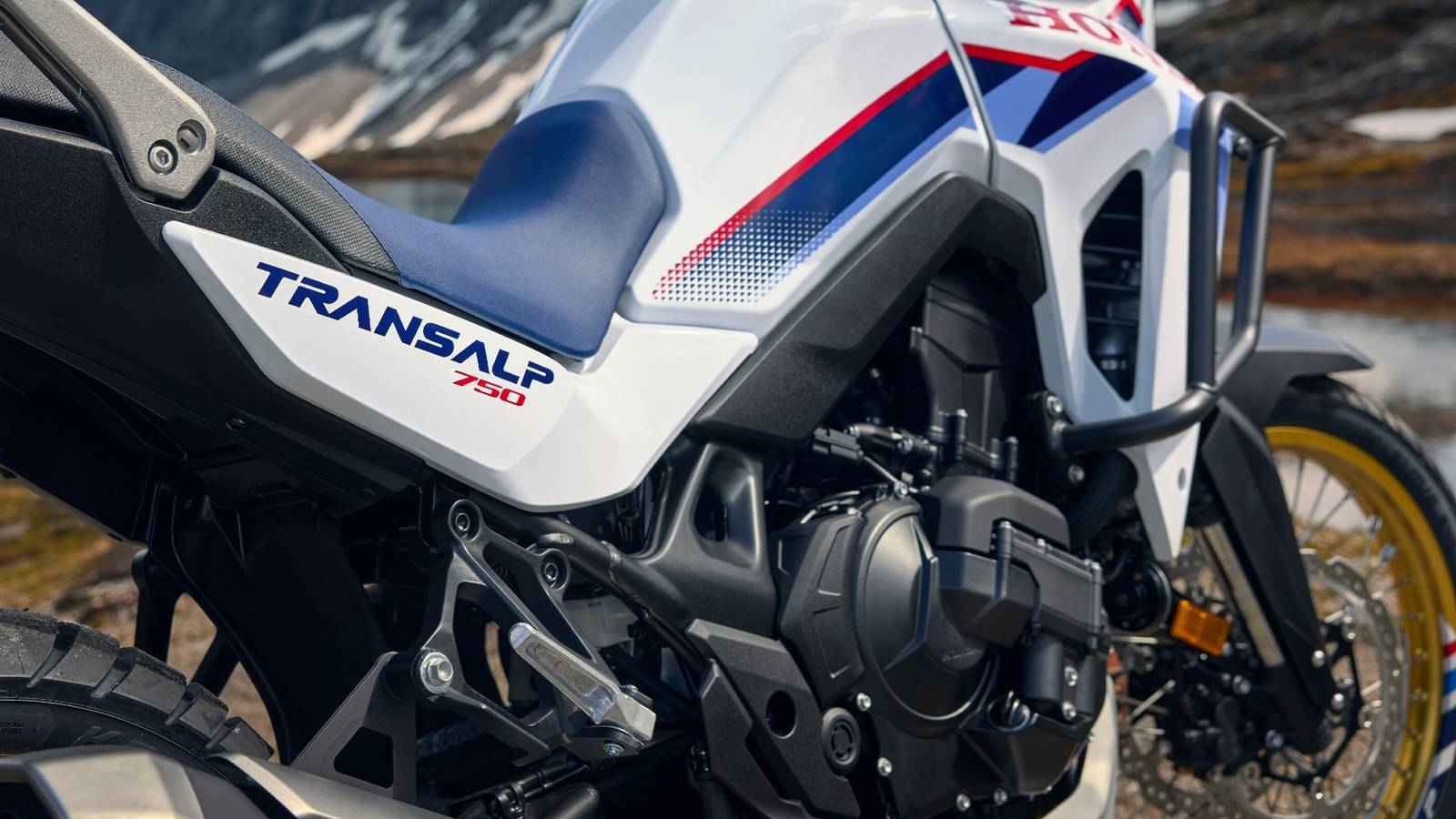
Ever since its inception a few years ago, the Honda XL750 Transalp has beaten its rivals in terms of overall value. An MSRP under $10,000, barely any compromise on features, and a mighty impressive parallel-twin engine are all driving forces for the same. Things can always get better, though, and the Japanese giant has proved exactly that in 2026. We say this because the already impressive Transalp just became even better.
Regular Updates Are Rare In The Midweight Adventure Bike Segment

Look at the middleweight ADV segment, and you’ll realize manufacturers don’t really like updating things regularly. Japan, in particular, follows the said approach. For instance, the Suzuki V-Strom 800 has had no notable changes since its inception. Whereas, the Yamaha Tenere 700 has only had one small update (gaining a TFT and traction control), nearly half a decade after its arrival. As for Europeans, the Aprilia Tuareg 660 has remained the same since its debut, barring a few livery updates.
The Honda Transalp Serves An Exception

The XL750 Transalp breaks that trend. Although it debuted in November 2022, the ADV has already had a few nifty but important updates. The fascia was updated for last year, along with the addition of a new TFT and updated electronic aids. Now, 2026 brings another new technology that makes the package more versatile and usable for the masses.

Honda’s Motorcycles Are Doing All The Heavy Lifting For The Company Right Now
With the auto division taking a $1 billion loss, Honda’s motorcycle division came out as the saving grace
The E-Clutch Technology Is Now Standard On The 2026 Transalp

Just like it did with its other midweights (CB750, CB650, and CBR650R), the Transalp now comes with the E-Clutch technology. This is essentially an advanced version of a quickshifter and autoblipper, so you can go up and down the six-speed transmission without using the clutch. The bonus is that you can even roll off from a standstill (or come to a halt) without using the clutch. That adds an extra layer of convenience while riding around town. And when you hit the off-road trails, you can just shut it off and use the lever to slip the clutch as needed.
The Engine And Underpinnings Remain Unchanged

E-Clutch aside, everything else is the same. The 755cc, parallel-twin mill continues with 90 hp and 55 lb-ft, while being housed inside a steel chassis. The latter pairs up with 43 mm USD forks and a monoshock, each of which offers full adjustability and comes from Showa. Spoke wheels with dual-purpose rubber, featuring dual 310 front and a single 296 mm rear disc brake, round things off. Like all else, the dimensions remain more or less the same, barring the 5 lbs increase in curb weight.
|
Engine |
Power |
Torque |
Transmission |
Chassis |
Suspension |
Weight |
|
755cc, parallel-twin |
90 HP |
55 LB-FT |
Six-speed |
Steel tubular |
43 mm USD forks/monoshock (F/R) |
468 pounds |
The 2026 Transalp Costs Over $10,000


The Motorcycle That Explains Honda’s Reputation In One Ride
This classic UJM is able to sum up Honda and the brand’s reputation for building high-quality motorcycles in one ride
Last but not least, the new technology brings a small price revision. The MSRP rises from $9,999 to $10,199—a pretty understandable hike, considering Honda kept the price unchanged during the last update. Plus, the extra $200 doesn’t hurt its overall value prospect. The Yamaha Tenere 700 is still $800 pricier, while the Suzuki V-Strom 800DE sits $1,600 higher than the Honda. Neither bike has remotely similar performance, meanwhile.