
The title of this article brings together three defining attributes that seasoned motorcyclists increasingly prioritize as their experience grows — comfort, value, and reliability. Earlier in my riding journey, comfort was often negotiable; youth and enthusiasm compensated for physical strain. Reliability, too, was not a primary concern, as time spent maintaining and tinkering with my motorcycle felt rewarding rather than burdensome. Value, however, has always remained a critical factor, shaped by the financial constraints of earlier years.
With time and miles, perspective evolves. The importance of a motorcycle that starts effortlessly, minimizes fatigue, and delivers consistent performance becomes undeniable. Comfort is no longer a luxury but a necessity. Reliability translates into peace of mind. And value, as always, remains integral. These three pillars converge most effectively in one category of motorcycles — the sport-touring segment.
Why Sport-Touring Isn’t A Cruisers Cup Of Tea

While cruiser motorcycles are often celebrated for their relaxed ergonomics and visual appeal, their design philosophy does not cater to every rider. The laid-back riding triangle, though comfortable in short bursts, can compromise agility and induce fatigue over longer distances. Additionally, the inherent weight of most cruisers makes maneuvering in tight urban environments a challenge.
Harleys And Indians Execute The Job Their Way

Manufacturers like Harley-Davidson and Indian Motorcycle have made significant strides in improving cruiser dynamics. Modern chassis engineering, enhanced weight distribution, and better aerodynamic considerations have undoubtedly refined the riding experience. However, fundamental limitations persist — large-displacement engines, relaxed steering geometry, and heat dissipation issues in slow-moving traffic continue to affect usability, particularly in congested conditions.

10 Best Touring Motorcycles For Relaxed Weekend Rides
Tour in total comfort with these 10 top-rated sport and full-dress touring motorcycles, built for big miles, smooth rides, and stress-free weekends.
The Honda NT1100 DCT Has Our Attention

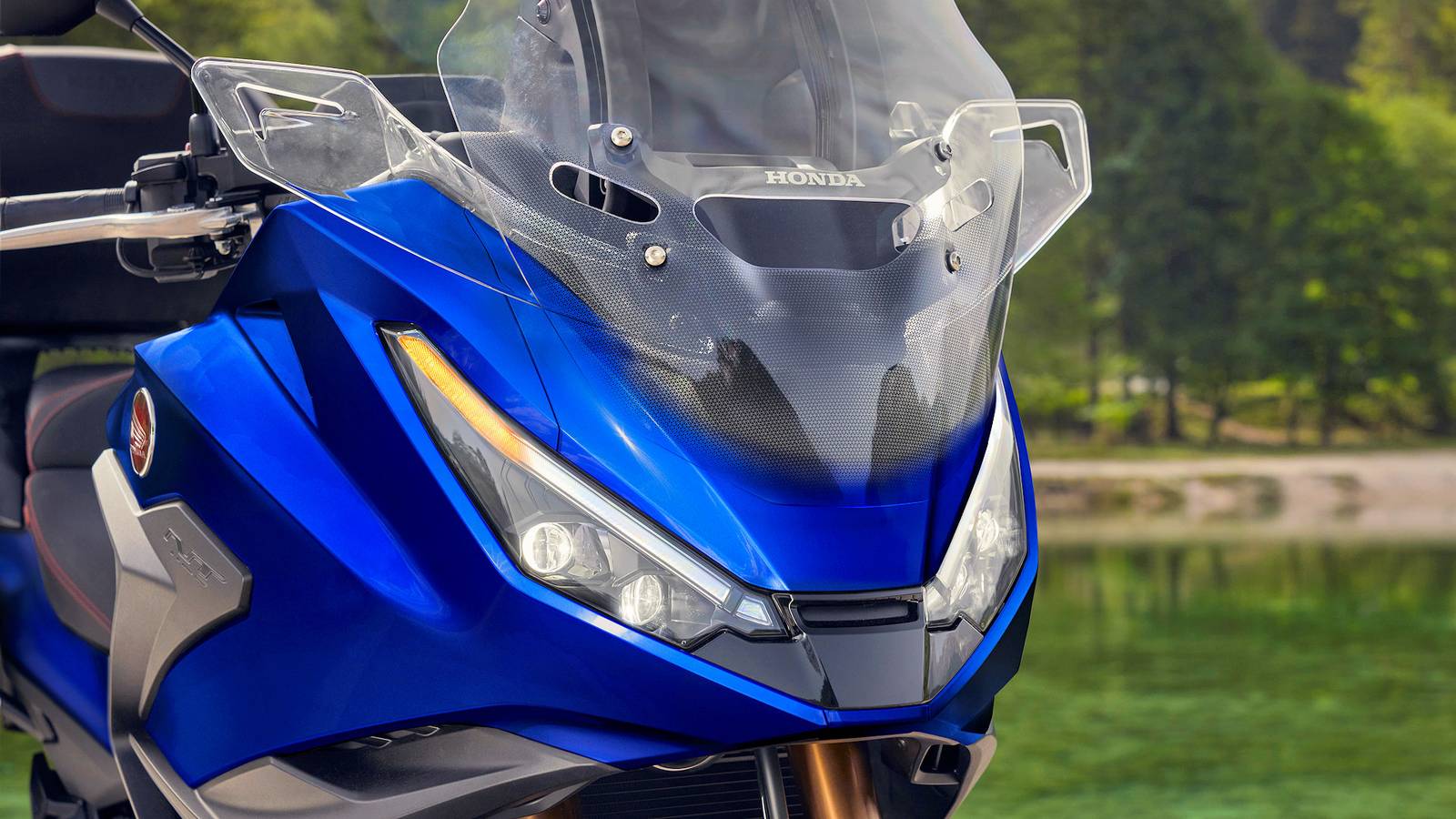
This is precisely where sport-tourers establish their relevance. The Honda NT1100 DCT exemplifies this balance, presenting itself as a well-rounded offering in an increasingly competitive segment. Its design language is sharp yet purposeful, and its feature set is clearly oriented toward maximizing rider and pillion comfort. Honda has strategically positioned the NT1100 within the touring category, emphasizing practicality without sacrificing engagement. Features such as 17-inch alloy wheels, a large front visor for wind protection, an ergonomically elevated handlebar, and a 32.3-inch seat height collectively make it suitable for both daily commuting and extended weekend rides.
Prices Start At $11,999

With a starting price of $11,999, Honda offers the NT1100 DCT in a single, well-equipped variant — simplifying the buying decision. Equipped exclusively with a dual-clutch transmission (DCT), the motorcycle distinguishes itself by delivering convenience without complexity. At this price point, the NT1100 undercuts several competitors while offering remarkable versatility. It transitions seamlessly from an urban commuter to a capable canyon carver and a dependable long-distance tourer.

The Honda Touring Motorcycle That Is Worth Every Penny
This is Honda’s first-ever modern sports tourer and it has the same versatile engine as the Africa Twin ADV.
Proven Parallel-Twin Plant Makes An Appearance Once Again

At the heart of the NT1100 lies a proven 1,084cc parallel-twin engine — a powerplant that prioritizes usability over outright performance figures. While its 100-horsepower output may appear modest on paper, the engine delivers a broad and predictable torque curve, ensuring effortless acceleration across various riding conditions. Peak power arrives at 7,500 RPM, while maximum torque (82.6 pound-feet) is achieved at 5,500 RPM, reinforcing its low- and mid-range strength. This tuning allows the motorcycle to perform confidently even when fully loaded, making it particularly suitable for two-up touring.
An ADV, A Cruiser, And A Café Racer All Have The Same Heart

The versatility of this engine is further highlighted by its presence across multiple Honda platforms, including the Honda Africa Twin, Honda Rebel 1100, and Honda Hawk 11. Its Unicam design has earned a reputation for durability and efficiency, contributing to lower maintenance requirements and extended service intervals. This same character translates seamlessly into urban environments, where smooth throttle response and tractable power delivery enhance everyday usability.
Honda Has The Right Underpinnings For The NT1100

The NT1100 benefits from a well-engineered chassis and suspension setup derived from Honda’s adventure-touring expertise. Long-travel Showa suspension components, including a Separate Function Big Piston (SFF-BP) inverted fork at the front and a Pro-Link monoshock at the rear, ensure balanced damping and ride comfort. With 5.9 inches of suspension travel and 6.8 inches of ground clearance, the motorcycle is well-equipped to handle uneven surfaces while maintaining composure during spirited cornering.
A Solid Frame Work Is Half The Job Done

The frame architecture, shared with the Africa Twin, has been adapted to suit road-focused dynamics. Revised rake and trail figures, along with 17-inch wheels and a shorter wheelbase, contribute to improved agility and handling precision. A reinforced bolt-on subframe further enhances load-carrying capability, making the NT1100 a practical choice for long-distance touring with luggage.

10 Most Overlooked Touring Motorcycles That Will Last A Lifetime
Some of the most reliable touring bikes on the market continue to get overlooked in 2025
The Rider’s Triangle Mainly Focuses On Comfort

Ergonomics play a central role in the NT1100’s design philosophy. The upright riding position, complemented by wide handlebars and centrally positioned footpegs, promotes long-distance comfort. The seat height of 32.3 inches accommodates a wide range of riders, with an optional taller seat available. Attention to aerodynamic detail is evident in the adjustable five-step windshield, offering a 6.5-inch range of adjustment. Additional wind deflectors ensure minimal turbulence, enhancing rider comfort over extended durations. Pillion comfort is equally impressive, with a spacious and well-cushioned passenger seat supported by robust grab rails — a feature often overlooked in this segment.
It Is Loaded With Tech Too

The NT1100 integrates modern technology seamlessly into the riding experience. A 6.5-inch TFT touchscreen supports Apple CarPlay and Android Auto, alongside Bluetooth connectivity for communication and navigation. Supplementing this is a secondary LCD panel displaying essential ride information. A comprehensive electronic safety suite, governed by a six-axis IMU, ensures optimal traction and stability. Additional touring conveniences include optional panniers and a generous 5.4-gallon fuel tank, reducing the need for frequent refueling stops.

The Touring Bike That’s A Budget Alternative To A BMW R 1300 RT
The touring bike in context is sportier, more powerful, and way cheaper than the R 1300 RT
The Rivalry Still Doesn’t End

The sport-touring segment remains highly competitive, particularly among Japanese manufacturers. Models such as the Yamaha Tracer 9, Suzuki GSX-S1000GT+, and Kawasaki Versys 1100 SE LT present compelling alternatives, each bringing unique strengths in terms of performance, technology, and pricing.
Yamaha Tracer 9 – $12,599

The Yamaha Tracer 9 stands out as one of the most well-rounded touring motorcycles in the middleweight segment, earning its reputation as a machine that truly checks every box. At its core is the legendary 890cc CP3 inline-triple engine, producing 117 horsepower with ample torque across the rev range, revving eagerly all the way to the redline. Derived from the MT-09 platform, the engine has been specifically tuned for smooth, tractable power delivery with everyday usability, while the diamond-type aluminum frame keeps weight down to 483 pounds and delivers flickability close to a naked bike.

A six-axis IMU offers five ride modes — including two fully customizable ones — that can be switched on the fly, all backed by an assist and slipper clutch as standard. The Deltabox-style chassis pairs with fully adjustable suspension, while lean-sensitive electronic rider aids bring a new level of sophistication to the segment.
Suzuki GSX-S1000GT+ – $14,399

The Suzuki GSX-S1000GT+ is a compelling sport-tourer that masterfully blends highway comfort with serious performance credentials. At its heart is a K5 GSX-R1000-derived engine tuned to deliver 150 horsepower with peak torque of nearly 80 pound-feet, though the power is kept deliberately docile at low revs thanks to Suzuki’s Low RPM Assist feature.

On the touring front, the GT+ comes standard with color-coordinated hard luggage, and the feature set is rounded out by a large 6.4-inch TFT display with Bluetooth connectivity for call management, music control, and turn-by-turn navigation. Rider ergonomics are a genuine highlight — a wider, raised handlebar opens up an upright riding position, while rubber-damped footpegs and handlebars manage engine vibrations over long hauls, supported by a larger five-gallon fuel tank to reduce stops.
Kawasaki Versys 1100 SE LT – $19,499

The 2025 Kawasaki Versys 1100 SE LT is a formidable flagship sport-tourer that raises the bar in its class with meaningful upgrades across the board. Kawasaki has bumped displacement from 1,043cc to 1,099cc by increasing the stroke by 3mm, resulting in a 13-horsepower boost to 133 horsepower, along with improved torque in the upper half of the rev range peaking at 82.5 pound-feet. On the suspension front, Showa’s Skyhook EERA semi-active technology continuously adapts damping in real time, enabling light steering on highways and a more planted feel in wet conditions, all underpinned by a fully adjustable 43mm inverted cartridge fork with 5.9 inches of travel at both ends.

The Kawasaki Cornering Management Function (KCMF) automatically modulates brake force and engine power throughout corners without feeling intrusive, backed by IMU-linked traction control, multiple ride modes, and intelligent ABS. Standard kit includes heated grips, cruise control, and 28-liter lockable hard saddlebags, while Bluetooth connectivity via the Rideology app enables navigation, phone notifications, and voice control.
Sources: Honda, Kawasaki, Yamaha, Suzuki