
It’s no secret that muscle cars from the 1960s and 1970s represent the pinnacle of American performance from that era, and for many enthusiasts, modern muscle cars can’t quite replicate the character and substance that define the classics. What today’s cars do offer, however, is far greater safety, technology, and reliability — trade-offs that may matter more to some buyers than raw nostalgia. But are modern muscle cars also significantly faster?
Not necessarily. We looked at period road tests, contemporary reviews, and broader performance consensus to see whether today’s machines truly outperform their legendary predecessors off the line. Based on the comparisons below — using the modern benchmark of 0–60 mph acceleration — many icons from the golden age of muscle still feel quick by today’s standards. That said, there’s no denying how dramatically engineering, tires, and drivetrain technology have evolved over the last five to six decades.
To provide you with the most accurate information, the specifications and related data in this article are courtesy of the manufacturers. 0-60 MPH times are either official figures, courtesy of independent outlets, or an average of consensus from the time. Models are listed in ascending order based on the 0-60 MPH time of their modern variants, from the “slowest” to the quickest.
2023 Dodge Charger R/T
0-60 MPH: 5.0 Seconds

The 2006 model year signaled the return of the Dodge Charger nameplate in the form of a four-door sedan, but the available Hemi V8 engines made it a muscle car at heart. Two years later, the two-door Challenger would follow. The Charger shared a platform with Chrysler’s 300 but was more performance-oriented, although a manual transmission was off the table. From 2011 to 2023, the Charger went through the revised LD generation that brought to an end the fantastic modern muscle car era, though the Charger nameplate then returned in 2024 for a four-door and two-door variant, minus the V8 engine option.
Basic Specifications
|
2023 Dodge Charger R/T |
1968 Dodge Charger R/T (Hemi) |
|
|---|---|---|
|
Engine format |
5.7-liter, naturally-aspirated V8 |
7.0-liter, naturally-aspirated V8 |
|
Power |
375 hp |
425 hp |
|
Torque |
410 lb-ft |
490 lb-ft |
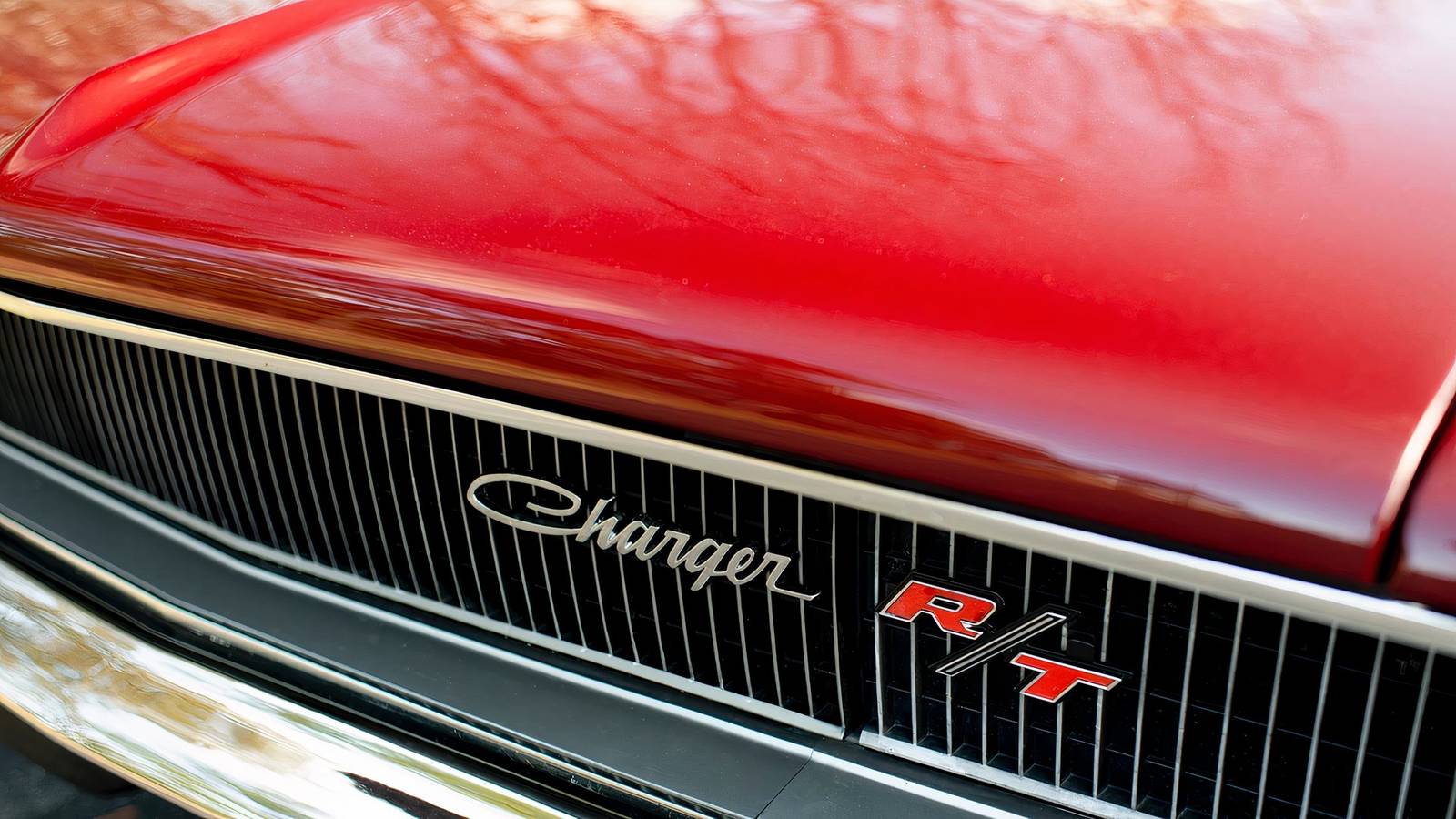
It lacked the coupe bodystyle of the Challenger, but the R/T models offered muscle thanks to the 5.7-liter Hemi engine, and enthusiasts could also plump for the Hellcat performance flagship with more than 700 horsepower. Today, the R/T is an appealing choice for those who can appreciate its quick acceleration, classic soundtrack, and practicality. The image above is the Charger R/T Scat Pack, which offers even more power from a 6.4-liter Hemi.

Our legacy model comparison is, of course, the classic Charger, which offered various engines culminating in the 7.0-liter Hemi engine. Many sources suggest a 4.8-second 0-60 mph was possible in a stock Charger R/T, but your own results may vary based on the actual specification. Many buyers of the Charger R/T specified the ‘440’ Magnum V8, and the 426 Hemi V8 is rarer and far more valuable, with Hagerty suggesting that ’68 Charger models with the Hemi engine are worth more than $80,000 on average, which is around $30,000 more than the Magnum. Either way, a 0-60 mph time of around five seconds or less is still hugely impressive today, considering the advancements in engineering over the decades.


Find 2023 Dodge Charger and more cars for sale on our Marketplace
2023 Dodge Challenger R/T
0-60 MPH: 4.8 Seconds

2023 was also the last model year for the third-generation, two-door Challenger, which shared the fundamental platform design with the Charger. Like the Charger, this muscle car also offered an eclectic engine range from the Pentastar V6 up to the brutal SRT Hellcat’s supercharged 6.2-liter Hemi engine. For 2018, the first SRT Demon variant was also released with up to 840 horsepower.
Basic Specifications
|
2023 Dodge Challenger R/T |
1970 Dodge Challenger R/T (Hemi) |
|
|---|---|---|
|
Engine format |
5.7-liter, naturally-aspirated V8 |
7.0-liter, naturally-aspirated V8 |
|
Power |
375 hp |
425 hp |
|
Torque |
410 lb-ft |
490 lb-ft |
The R/T remains the enthusiast’s reliable, middle-of-the-range choice for eight rumbling cylinders and adequate power, while, unlike the Charger, the Challenger also offered the ability to swap the gears yourself with an optional manual transmission. The 2023 Challenger R/T’s acceleration time is often quoted as slightly faster than the Charger, too. This nameplate was discontinued after 2023 to make way for the new Charger, which is also available in a two-door bodystyle, effectively replacing the Challenger.

Released in 1970, the classic Challenger was devised, a little late to take a share of Ford’s success with the Mustang, but it did become a classic nevertheless. Coming some seven years after the Blue Oval’s pony car and also competing with the Chevy Camaro, the Challenger was devised to compete at the higher end of the pony car market with powerful engines on offer, such as the Magnum and Hemi V8s, with less-powerful options like the Slant Six also available. The mighty Hemi was produced in fewer examples than other variants like the Magnum models and is also more valuable today as a result. Hagerty suggests that the Hemi-equipped Challenger could hit 60 mph in around the six-second range, but faster times are also suggested in many places.
Find 2023 Dodge Challenger and more cars for sale on our Marketplace

The Most Reliable Modern Muscle Cars
We find the modern muscle car with the highest-ranking year for reliability – surprisingly, there is more than one reliable model to choose from.
2006 Pontiac GTO
0-60 MPH: 4.8 Seconds

A badge-engineered muscle car based on the Australian Holden Monaro, this model was the last in the Pontiac GTO lineage to date and is unlikely to return since the brand became defunct in 2010. It was an attempt to bring muscle to the range in a modern package, but the styling was deemed bland by some, and the handling was not as sharp as it could have been.
Basic Specifications
|
2006 Pontiac GTO |
1964 Pontiac GTO |
|
|---|---|---|
|
Engine format |
6.0-liter, naturally-aspirated V8 |
6.4-liter, naturally-aspirated V8 |
|
Power |
400 hp |
348 hp |
|
Torque |
400 lb-ft |
430 lb-ft |
Yet, this was a muscle car at heart, featuring all the right ingredients within its rounded, ’90s silhouette: GM’s LS1 V8 engine, an available manual transmission, rear-wheel drive, and healthy performance statistics. Its acceleration and composure were still notable, and the latter was aided by the independent rear suspension that set it apart from the contemporary Ford Mustang. The final two years from 2005 to 2006 resulted in some changes that included, most notably, the LS2 V8, now 6.0-liters up from 5.7, and raising power and torque to the same level as the Corvette.

For many, the original muscle car, or at least the car that helped kickstart the golden period of muscle, was the GTO. Based on the 1964 Pontiac Le Mans, which started as a part of the Tempest line, the GTO offered V8 power with up to 348 horsepower from various iterations of Pontiac’s 6.4-liter engine. 0-60 mph times of as little as 4.6 seconds were reported with specially-prepared press cars, but standard models were also widely reported to hit the same speed in the five or six-second range. Either way, the GTO became a legend for its powerful engine in a mid-sized body, the impressive straight-line performance, its relative affordability, and its image.

2026 Ford Mustang GT
0-60 MPH: 4.2 Seconds

Ford’s Mustang is the last bastion of the true muscle car if one is only measured by V8 power, and it’s still going strong with the Coyote V8 engine, rear-wheel drive, an available manual transmission, and iconic styling. The model was heavily updated for this generation with aggressive styling, additional modern technology, including an updated infotainment suite, and an upgraded interior.
Basic Specifications
|
2026 Ford Mustang GT |
1967 Ford Mustang GT |
|
|---|---|---|
|
Engine format |
5.0-liter, naturally-aspirated V8 |
4.7-liter, naturally-aspirated V8 |
|
Power |
486 hp |
271 hp |
|
Torque |
418 lb-ft |
305 lb-ft |
Power is now up to nearly 500 horsepower without the need for forced induction or hybrid hardware, making it noteworthy in 2026. Enthusiasts who do need more firepower can also find the Dark Horse in Ford’s lineup, which does take power to 500 ponies. A 4.2-second 0-60 MPH time is on offer, but the optional upgraded exhaust system and automatic ‘box can lower this figure, with some outlets reporting less than four seconds for the 60 mph metric.

The Ford Mustang received a major redesign for 1967, and the car’s engine bay was made larger to accommodate bigger, more powerful engines, specifically big blocks. A high-powered version of the 289 V8 (4.7 liters) could produce 270 horsepower, but a 6.4-liter big block was also on offer with 335 horsepower. Many sources agree that optimally-prepped versions of the high-power 289 GT could hit 60 mph in the low-five-second range, but real-world, stock performance is closer to seven seconds. Not bad for a pony car from the late sixties.
Find 2026 Ford Mustang and more cars for sale on our Marketplace

Mustang GT 0-60: Is It fast Enough To Beat Its Rivals?
The C8 Corvette, Toyota GR Supra, Chevy Camaro, and more challenge the Mustang in the sports coupe arena. Here’s how the GT holds up.
2024 Chevrolet Camaro SS
0-60 MPH: 4.0 Seconds

Like the Dodge Challenger and Pontiac GTO, the Chevy Camaro nameplate was also discontinued after 2024, but many sources suggest the badge will return for 2026 or 2027, likely as an electric model. Up until the end, the sixth-generation Camaro offered the classic muscle car (or more accurately, pony car) package: the LT1 V8, rear-wheel drive, a manual transmission, and sexy styling.
Basic Specifications
|
2024 Chevrolet Camaro SS |
1967 Chevrolet Camaro SS (350 CI) |
|
|---|---|---|
|
Engine format |
6.2-liter, naturally-aspirated V8 |
5.7-liter, naturally-aspirated V8 |
|
Power |
455 hp |
295 hp |
|
Torque |
455 lb-ft |
380 lb-ft |
There were also other engines offered, including a turbo-four and a V6, but the highlight was the supercharged ZL1 at the top of the pile. The Camaro SS (and LT1) trim made the Camaro an appealing muscle car with its healthy power output (below), and with the automatic transmission, it could hit 60 mph in four seconds on the nose by most accounts, though swapping cogs yourself could make that feat some tenths of a second slower.

The first-gen Camaro is beloved by enthusiasts, and its style is unmistakable. SS variants improved things over base models with upgraded braking and suspension, among other elements, but the optional 6.5-liter big block was yet another reason to take one home and try your hand at drag racing. Most variants were fitted with the smaller 5.7-liter engine, and 0-60 mph is reported to be as low as 7.8 seconds. While the classic Camaro would most likely steal most hearts at a Cars And Coffee, the modern Camaro is far more capable and easier to live with. We would still take the 60s version for its charm and raw nature, even if infotainment was not on the cards back then.
Sources: Ford, Dodge, Chevrolet, General Motors, Hagerty