
Some cars fade away quietly. Not because they were bad or unloved (though some were), but because time, trends, and shifting tastes made them anachronisms of their time. Sometimes, headline-grabbing muscle cars or boutique exotics shift buyers’ attention away from relevant models, causing them to lie forgotten, patiently waiting for a kind soul to walk by, like those lovable mutts with hopeful eyes at the rescue shelter.
These are the classic cars that savvy enthusiasts quietly hunt down because they were mechanically honest, widely produced, and are today supported by a strong aftermarket of parts and knowledge from strong owner communities. And like those old cult films, they prove that the subject matter isn’t always flashy or appreciated in a world of bigger-and-better. They may not be romantic or outstanding in their respective segments, but they’re appealing for their accessibility, buy-in prices, simplicity, and a smidgen of character.
The models on this list have been extensively researched, with all information verified to the best of our ability. Models are ranked from the lowest estimated value to the highest estimated value.
1977 Ford Bronco
Estimated Value Starting At: $60,000

You wouldn’t think it, but the 1977 Ford Bronco is among the most sought-after classics on the market today, and certainly tops among SUVs. They aren’t cheap, though, with fair examples starting in the $40,000s and pristine models topping six figures. Auction sampling puts the reasonable price range at $50,000 to $80,000, depending on condition and history. Parts and donor vehicles abound, while active restoration forums and hobbyist communities offer insight into tech and parts swapping.

The 1977 Ford Bronco represents the final year of the first-generation (debuting in 1966) and is attractive for its classic Ford looks, which have been retro-replicated in the current Ford Bronco. Bronco started off as a compact, rugged SUV with a classic body-on-frame layout, four-wheel drive, and a choice of Ford small block V-8s, all of which make it easy to refurbish or restomodify. The 1977 model was prepared for the generational change with a more robust rear differential and added exterior cosmetic cues like side markers.
Make Model Production Information
|
Production Years |
1966–1977 (1st gen) |
|
Units Produced |
225,000 |
|
Unique Features |
Available power steering, front disc brakes; fuel filler door |
1967 Volkswagen Beetle
Estimated Value Starting At: $21,000

One of the most beloved vehicles to own and restore, the Volkswagen Beetle remains widely traded in the classic car market, with Classic.com showing active listings for the 1967 model ranging from $9,000 to upwards of $45,000, depending on condition, mileage, and origin. Most examples live in the $10,000s, mainly because of their workhorse nature, with reasonably-conditioned models occupying the low $20,000s, according to Hagerty. Early Beetles are easy to work on with readily-available parts, making them favorites for restoration and conversion.

The 1967 VW Beetle was part of the post-WW2 second generation that evolved from the Hitler-commissioned “people’s car” Type 1 and stretched into 1970, at which time it ceased German production but continued into 2003 in Mexico. The classic rear-engine RWD Beetle is known for its roomy interior and air-cooled four-cylinder engines that produced modest horsepower but were easy to work on, refurbish, and modify with readily available parts and components. Classic Beetles are supported by an extensive local-club network.
Make Model Production Information
|
Production Years |
1938–2003 (Type 1) |
|
Units Produced |
21.5 million |
|
Unique Features |
Rear-mounted, air-cooled engines; unmistakable profile |
1979 Chevrolet Corvette
Estimated Value Starting At: $15,500

Corvettes are aspirational renovation classics, with some very dear models available from the early days of the badge. The 1979 Chevrolet Corvette is part of the third-generation (C3), with examples currently trading in the high teens upwards to the mid-$40,000s, with some exquisitely preserved models slotting in higher. Auction data slots realized values in the $8,000–$18,000 range, with good condition cars in the middle of the range. Parts availability for the C3 is strong for original and reproduced items, and online forums and marque clubs provide extensive support.

One of the most attractive restoration features of the 1979 Chevrolet Corvette is that it is the highest ever produced Corvette, with 53,807 units (though the 2023 C8 came within 23 models of surpassing it). It could also be seen as the first of the modern Vette, with improvements like standard power accessories, a standard AM/FM radio, and new high-back seats (first seen only on the 1978 Indy Pace Car). Corvette enthusiast communities are some of the most active on the planet, both Corvette general and C3 specific.
Make Model Production Information
|
Production Years |
1968–1982 (C3) |
|
Units Produced |
542,861 |
|
Unique Features |
standard V-8 power; two-seat sportiness; prestigious badge |
1974 Ford Pinto
Estimated Value Starting At: $15,000

The 1974 Ford Pinto may seem a surprising addition to a list of preferred restorations, based on its unflattering reputation, but it represents a desire for simple mechanicals, affordable parts and components, and a ready supply of donor cars. Auction results show a wide margin of values, ranging from $5,500 to upwards of $20,000, with the median being in the $15,000 range for cars in good shape. Parts, components, and panels for early Pintos are readily available and modestly priced, and trim pieces are abundant from independent suppliers.

The Pinto was Ford’s first sub-compact in 1971 (followed a couple of years later by the Mercury Bobcat), and the 1974 Ford Pinto represents the model’s top seller with 544,209 units (making it one of the prolific outputs for American small cars). Today, it’s liked for its lightweight design, roomy platforms for DIY work, simple mechanicals, and affordable, readily-available parts and components, as well as plenty of opportunities for conversions. Pinto communities are smaller, but very active for support and discussions.
Make Model Production Information
|
Production Years |
1971–1980 |
|
Units Produced |
Over 3.15 million |
|
Unique Features |
Lightweight; simple mechanicals; various model configurations |
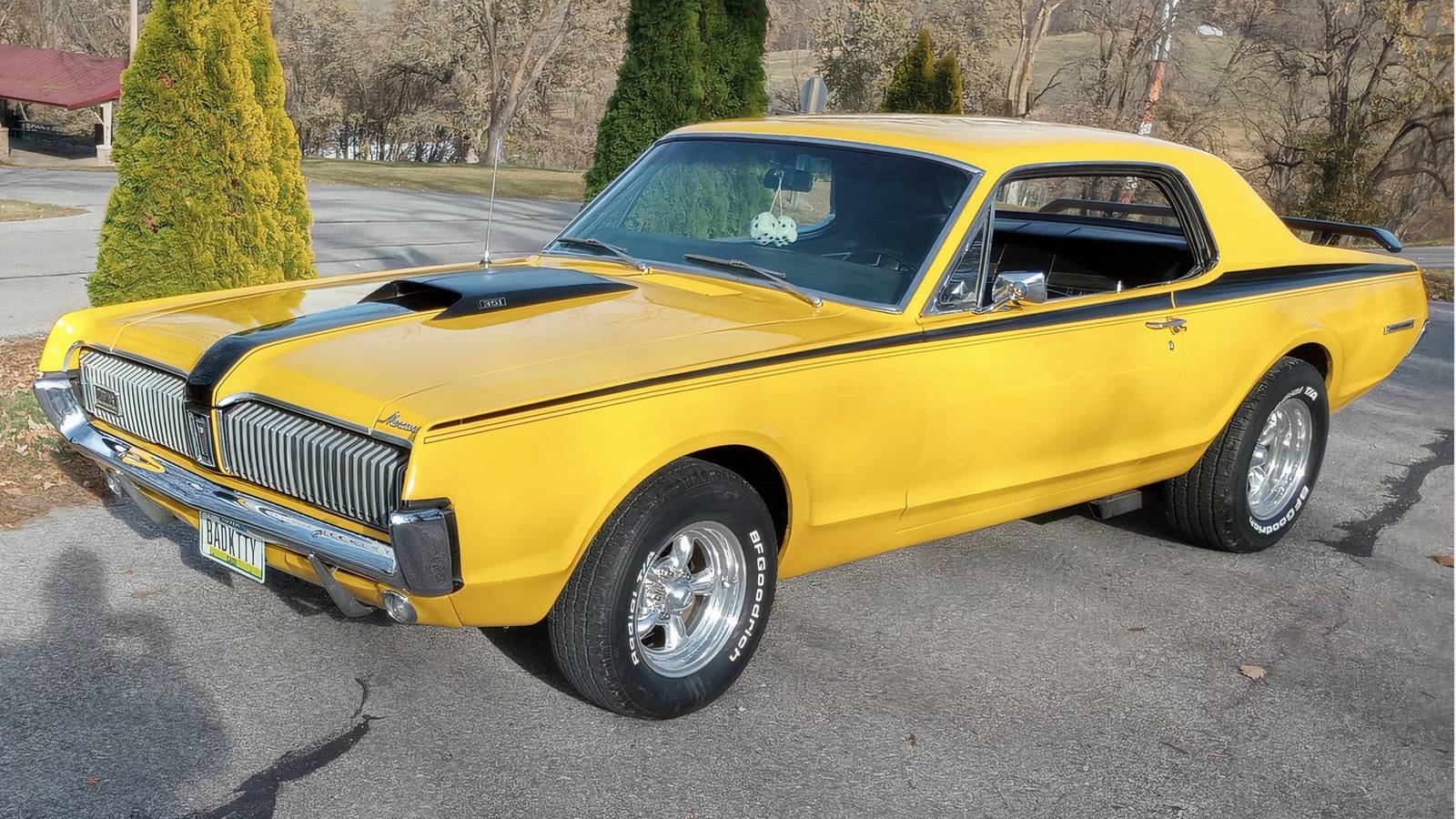
1967 Mercury Cougar
Estimated Value Starting At: $15,000

The original Ford Mustang is one of the more desirable classics for restoration, but it’s also one of the most expensive. In contrast, the Mercury Cougar is not as dear but shares the majority of Mustang hardware, making parts availability solid and DIY expertise interchangeable. Good to excellent examples are making the used car listings in the $20,000–$40,000+ range, with Classic.com valuing the 1967 model just shy of $15,000. There is also a dedicated enthusiast network and a healthy supply of trim reproduction.

Even though 1967 was the inaugural year for the Mercury Cougar, it hasn’t attained the exultance of most first-generation classics, perhaps because its Mustang sibling was still wowing enthusiasts at the time (and continues to this day). Like other pony-car competitors of the era, the first Cougar only lasted a couple of model years before growing into the 1970s, but it garnered a loyal following for its distinctive features and premium appointments. Combined with pony-car performance, it turns the 1967 Mercury Cougar into an attractive restoration project.
Make Model Production Information
|
Production Years |
1967–1970 (1st gen) |
|
Units Produced |
437,084 |
|
Unique Features |
Exclusive V-8 power; hidden headlamps; premium materials and features |
1974 AMC Gremlin
Estimated Value Starting At: $13,000

The AMC Gremlin is another classic darling, similar to the Ford Pinto, because it’s an easy canvas for restoration and conversion. With simple mechanicals and room in which to work, the 1974 Gremlin trades on the used car stock market in the $13,000–$25,000 range, with good examples hovering around the $15,000 level. Out of the box, the front straight-six RWD platform translates into easier work and lower costs than more complex classics before and after it. Engine and suspension components are readily available, and plenty of specialist suppliers fill in the blanks.

The American Motors Gremlin was basically a Hornet with the trunk lopped off, and the wheelbase shortened by a foot. The model’s highest production year of the model’s single-generation nine-year run (1974–1978, but continuing in Mexico until 1983) was 1974, with 171,128 coming off the lines in Kenosha, Wisconsin, and Brampton, Ontario. That provides a healthy supply of parts and donor cars for anyone undertaking a restoration or retro-conversion of the value-conscious, robust-platform hatchback. A loyal following provides support in forums and local clubs.
Make Model Production Information
|
Production Years |
1970–1978 |
|
Units Produced |
671,475 |
|
Unique Features |
Quirky styling; reliable straight-six engines; flexible platform |
1965 Chevrolet Corvair
Estimated Value Starting At: $12,500

The Chevrolet Corvair was developed to fit into the growing segment for small cars, predominantly the VW Beetle, and using the same rear-engine RWD configuration. Unlike the Beetle, it was available in multiple bodystyles, which has led to its demand being watered down over the years. The 1965 Corvair is moderately active in the classic car market, with Classic.com showing a wide range of asking prices ($8,000 to upwards of $28,000, depending on bodystyle and condition). Hagerty shows excellent models in the $5,000 range, while Corsa variants hover at $12,000.

The 1965 Chevrolet Corvair launched the second generation of the German-like compact, straddling the line between the affordable VW Beetle and the flat-six Porsche 911 (which was introduced after the original Corvair in 1960). The 1965 Corvair addressed the “Unsafe At Any Speed” criticism with a fully-redesigned rear suspension that enhanced the balance and handling of the sporty car, which is one of the reasons it is a desirable classic. Active forum and club communities provide support for parts-sourcing and project knowledge.
Make Model Production Information
|
Production Years |
1965–1969 (2nd gen) |
|
Units Produced |
About 350,000 |
|
Unique Features |
Rear-mounted boxer-6 engine; fully independent rear suspension |
1976 Triumph Spitfire 1500
Estimated Value Starting At: $11,000

The 1976 Triumph Spitfire 1500 maintains a modest, consistent presence in the used car market, with transactions ranging between $6,000 and $18,000, depending on its condition and history. The Triumph Spitfire median is in the high $10,000 bracket, with auction results taking a good example as high as $13,000. Parts are readily available, and their prices are reasonable, mostly due to the simplicity of the four-cylinder engine and the car’s basic driveline. Specialist Triumph suppliers are abundant, as are enthusiast communities.

The 1976 Triumph Spitfire 1500 is part of the final production run of the iconic British car that started production in 1962 (and finished in 1980). Named for its 1.5-liter four-cylinder engine (which replaced the Spitfire Mark IV’s 1.3), the Spitfire 1500 was the most prolific of the lightweight Triumph roadsters, with over 95,000 units over its six-year run. Its appeal comes from its classic sports car looks, minimalist, lightweight design, and simplicity. Parts are affordable, and loyal British car communities are engaged.
Make Model Production Information
|
Production Years |
1974–1980 |
|
Units Produced |
95,829 |
|
Unique Features |
Classic sports car; fun to drive; mechanical simplicity |
1973 MGB
Estimated Value Starting At: $9,500

The MGB laid the groundwork for British sports cars, and like its Spitfire compatriot, it’s another prime candidate for budget-friendly classic restoration. Classic.com shows transactions ranging from about $6,000 to nearly $24,000, with the average rooted in the $14,000 range. Although European parts are often cost-prohibitive, MGB parts are generally affordable, and the car’s mechanical simplicity makes restoration affordable, even if you want to drop in a V-8. Specialist vendors fill in the gaps for items such as the soft top and suspension upgrades.

The MGB had a long run, with its unibody construction debuting in 1962 and quickly garnering attention around the world as the quintessential British sports car. Its 1.8-liter four-cylinder put out just 95 horsepower, which proved plenty to enjoy the lightweight two-seater, and made it easy to work on. Restoration depends on readily available parts and simple design, and the MGB aces both parts of the equation. The car’s simplicity also makes it easy to convert, and a dedicated group of followers supplies the knowledge and support for projects.
Make Model Production Information
|
Production Years |
1962–1980 |
|
Units Produced |
386,961 |
|
Unique Features |
Monocoque construction; lightweight design |
1993 Cadillac Allante
Estimated Value Starting At: $8,000

The Cadillac Allanté is one of the most overlooked classics for several reasons, including a near total aversion by its intended buyer base at the time—young, affluent, dynamic-driving enthusiasts—who would never buy a Cadillac, and Cadillac lovers who didn’t consider it worthy of the badge. It remains moderately available with Hagerty valuing it from $3,500 to upwards of $30,000, depending on condition, mileage, and powertrain. Parts are readily available, but they are expensive, due to the car’s limited volumes (estimated at about 21,000 total sales, with a vast majority still on the road).

Created as a European roadster, the Cadillac Allanté was unique and costly, with a body penned by Pininfarina, and frequent flyer miles logged between Italy and Detroit—the body was produced in Turin, then shipped to the Detroit-Hamtramck assembly plant via specially converted 747s for final assembly. The Allanté started life with GM’s compact V-8s shared with Buicks and Oldsmobiles (4.1 liters, then 4.5 liters), but in its final year, it received the marvelous 4.6-liter NorthStar V-8 shared with other Cadillacs, though Allanté had an exclusive HO 200-horsepower version.
Make Model Production Information
|
Production Years |
1987–1993 |
|
Units Produced |
21,430 |
|
Unique Features |
American luxury roadster; removable hardtop; road-sensing suspension (RSS) |
Sources: Classic.com, Kelley Blue Book, J.D. Power, Hagerty