
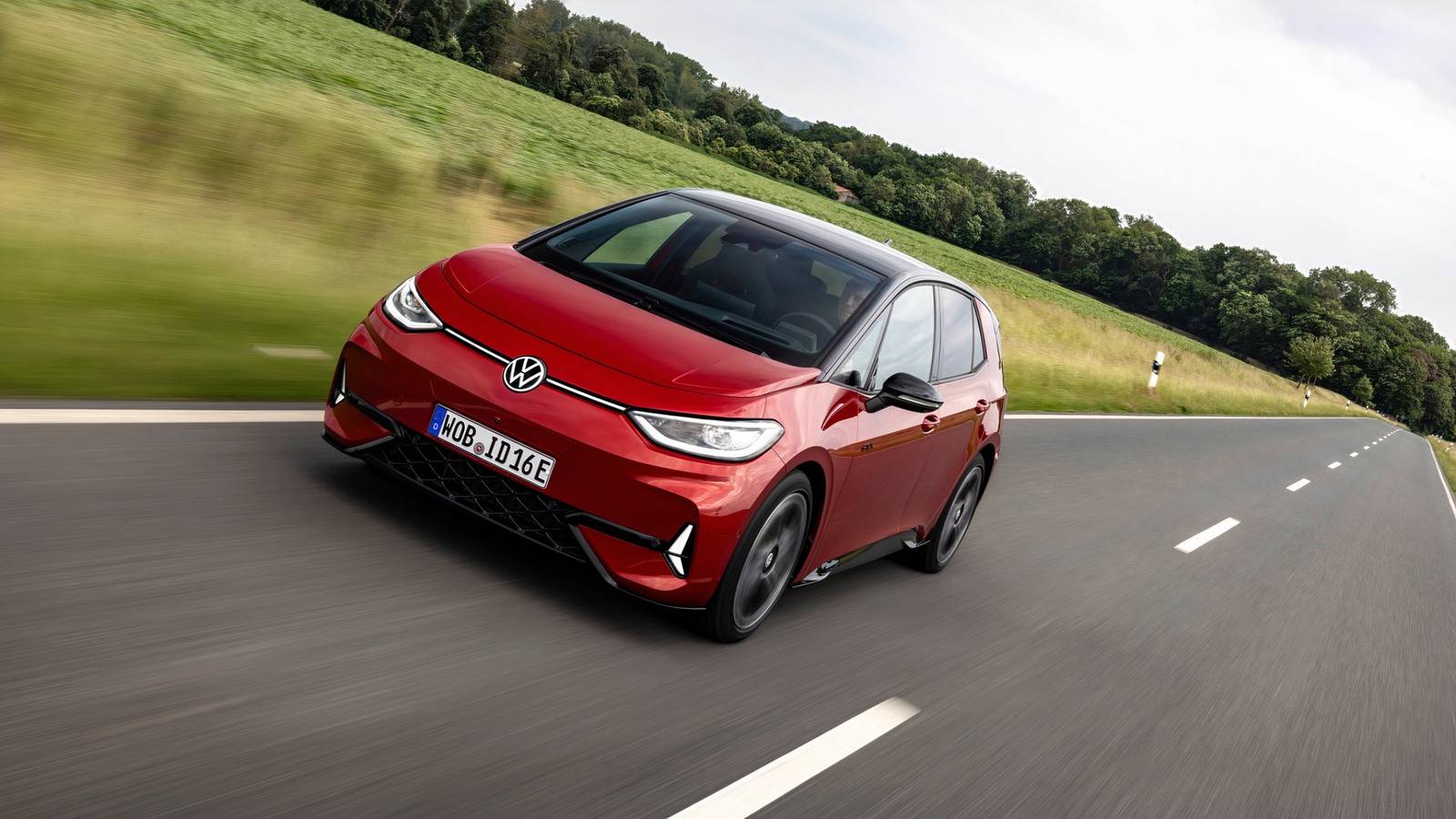
When people talk about collaboration between Ford and Volkswagen, the focus almost always lands on the modern era — electric vehicles, shared platforms, and the reality that no legacy automaker can afford to go into it alone anymore. What’s far less remembered is that this partnership almost happened nearly 50 years earlier, at a moment when the industry was facing a very different kind of crisis. Not electrification. Not software. But fuel.
In the early 1970s, as the oil crisis loomed and Europe braced for a new era of efficiency-driven motoring, Ford and Volkswagen explored a collaboration that could have reshaped the supermini segment long before it truly existed. It never materialized — but the reasons why are just as revealing as the partnership that eventually did.
The Supermini That Started The Talks (Fiesta & Polo)

By 1973, fuel prices were rising, consumer priorities were shifting, and European buyers were no longer interested in large, thirsty cars built for post-war optimism. Efficiency, compact packaging, and affordability were becoming non-negotiable. Ford of Europe knew it needed a small, modern hatchback — and it needed one quickly. The company didn’t yet have a suitable front-wheel-drive platform ready to go, and time was not on its side. Volkswagen, meanwhile, was in the middle of its own transformation. Having already begun moving away from rear-engine layouts, VW had developed its then-new EA111 front-wheel-drive platform, which would underpin its next generation of compact cars — including what would soon become the Polo. This is where the two paths briefly converged.
Why A Partnership Was Considered

As the 1973 oil crisis approached, Ford of Europe explored ways to accelerate its entry into the emerging supermini space. One option was internal development. Another was collaboration. Ford reportedly approached Volkswagen about the possibility of sharing the EA111 platform — not as a long-term alliance. The thinking was simple: leverage VW’s existing front-drive architecture to quickly build a fuel-efficient supermini for the U.K. and continental markets. Developing a clean-sheet small car was expensive, and regulations were tightening around emissions and safety. Platform sharing could have reduced cost and development time significantly. Today, this kind of arrangement is routine. In the early 1970s, it was still unconventional — especially between two major rivals.
How Close The Deal Really Came

Ford’s approach to Volkswagen was formal enough to be recorded in historical archives. That said, the discussions stopped well short of execution. There were no shared prototypes, no joint design studios, and no signed agreements. The talks largely focused on feasibility — whether sharing tooling and platform architecture could work without compromising either brand’s long-term plans. Volkswagen ultimately declined to open up the EA111 platform. The platform represented more than just hardware — it symbolized VW’s transition into a new technological era after decades of rear-engine dominance. Sharing it would have meant surrendering a degree of control at a critical moment.
Why The Collaboration Fell Apart

The proposed partnership didn’t collapse because the idea was flawed. It fell apart because the timing wasn’t right. Time is of the essence, as they say. Volkswagen was in the process of rebuilding its identity around front-wheel-drive, water-cooled cars. Ford, on the other hand, needed speed and certainty. Waiting — or compromising — wasn’t an option. Something had to be done drastically, and two of the respected manufacturers seemed to be on different playing fields. There were also philosophical differences. Ford traditionally leaned toward accessible driving enjoyment and mass appeal.

Volkswagen’s approach was more conservative, engineering-led, and durability-focused. Aligning those mindsets under a shared platform would have required compromises neither side was ready to make. Also, it would have changed the inner workings of what made each automaker stand out. Add corporate pride to the mix, and the outcome becomes almost inevitable. Small cars weren’t secondary products — they were future-defining ones. Neither company wanted to dilute its vision, which was understandable.

What Happened To American Station Wagons, And Can They Make A Comeback?
What was once a staple on the market has all but disappeared, here is what happened to the American station wagon and what it needs for a comeback.
Project “Bobcat” And The Birth Of The Fiesta

Once Volkswagen declined to share the EA111 platform, Ford moved decisively. Rather than delay its small-car plans, the company invested fully in its own internal program: Project “Bobcat.” Bobcat was designed to deliver exactly what the market demanded — a compact, affordable, fuel-efficient hatchback built specifically for Europe. The result was the Fiesta, launched in April 1976. The gamble paid off. The Fiesta quickly established itself as a core Ford product, shaping the brand’s European identity for decades and becoming one of its most successful nameplates. Volkswagen, meanwhile, launched the Polo in 1975. Built entirely on its own terms, it developed a reputation for solidity and restraint that would carry through multiple generations. Two companies. Two approaches. Two enduring successes.

If one were to imagine that they decided to forward their own creations in a speedy attempt to collaborate, who knows if these two high-elite manufacturers would be where they are today? I find these to be interesting, and this simply shows how one decision away could change everything. Two Icons, built separately. In hindsight, it’s tempting to imagine what a shared Ford–Volkswagen supermini might have looked like. But the reality is that independence allowed both cars to develop distinct personalities.

The Fiesta became known for its approachable, enjoyable driving character. The Polo built its name on perceived quality and conservative engineering. Rather than converging, the two models diverged — and arguably became stronger for them. Ironically, their parallel success also highlights how aligned the original thinking was. Both manufacturers saw the same problem at the same time and responded with similar solutions, even without working together.

Ford’s Radical EV Rethink Includes A Totally New, $30,000 Electric Pickup
Ford is reinventing how it makes EVs. Included in the plan is an obvious target: EV makers Rivian, Slate, and especially, Tesla.
What Finally Materialized In 2021–22

Nearly half a century later, the industry found itself at another turning point — this time driven by electrification rather than fuel shortages. The EV era is among us. Sad to say, V8s are under scrutiny, and everything either looks hybridized or more EV-focused. In March 2021, Ford and Volkswagen announced a wide-ranging alliance focused on electric vehicles and commercial platforms.

Under the agreement, Ford would use Volkswagen’s MEB electric platform to develop a new global small EV — widely expected to revive the Fiesta name in Europe — while the two companies would jointly develop commercial vans and electric pickup trucks. What had been unthinkable in the 1970s had become unavoidable by the 2020s? But it was about time, even though it took over five decades. Even today, in the last few years, from 2020-2025, Volkswagen and Ford have come together in the Ford Ranger and Volkswagen Amarok, and also the new Ford Tourneo van and Volkswagen Transporter. Times have changed indeed.
Why It Still Matters Today

The abandoned supermini talks of the early 1970s matter because they show that the forces pushing automakers toward collaboration today are not new. They’ve simply intensified. Back then, Ford needed fuel efficiency. Volkswagen needed control. The balance tipped toward separation. Today, the costs of electrification, software development, and regulatory compliance are so immense that cooperation is no longer a risk — it’s a necessity. Seen in that light, the modern Ford–Volkswagen alliance isn’t a sudden shift in thinking. It’s the continuation of a conversation that began when oil was scarce, superminis were new, and the Fiesta was still called Bobcat. Some ideas don’t fail. They just wait for the right moment.
Sources: The Henry Ford (Research Center), Volkswagen Group Archives, Bring a Trailer