
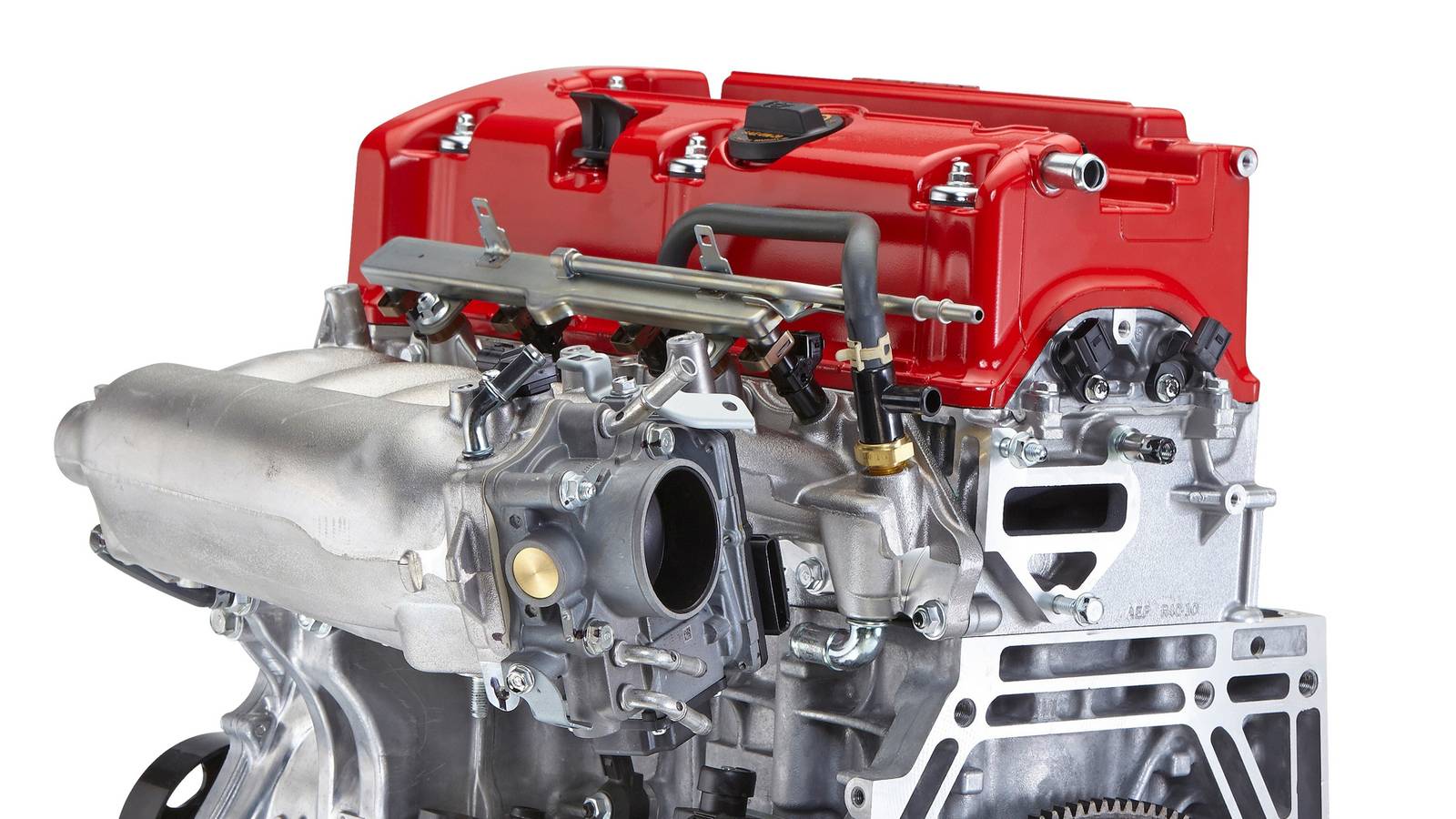
When it comes to engine talk, people rarely get excited about an inline-four (unless it’s powering a motorcycle). They are hugely overlooked because, in the car world, we associate more with being better — more cylinders, more horsepower, more noise.
But given that they’re compact, lightweight, and cost-effective, four cylinders along a crankshaft is a very common engine configuration with no exclusivity factor. This makes a lot of them easy to forget, even if some of them were incredible pieces of engineering in their own right, capable of enduring hundreds of thousands of miles. Whether they were taken for granted, not deemed exciting, or were simply forgotten over the course of time, these are five inline-four engines that will outlast any owner, and then keep going.
Toyota 22R-E

Toyota is famous for making some of the most dependable cars in the world, and they’ve created numerous engines that simply refuse to die. One textbook example is their 2.4-liter 22R-E, which was produced from 1981 to 1995. It saw barely any change in that time, and powered models such as the 4Runner, Hilux, and the Toyota Pickup (yes, it’s named the “Pickup”). Producing 105 horsepower and 136 pound-feet of torque, it had a rev limit of 5,700 RPM, which seems… limiting, but it massively reduced stress on the engine, which prolonged its lifespan.

This engine was also a simple piece of engineering, and that’s how it could last so long. It used a basic single-cam design, minimal electronics, and low compression, so it could handle poor fuel quality and neglect. Vehicles with this engine would frequently last 300,000+ miles with little more than routine maintenance, giving it the reputation of being the ultimate dependable workhorse.
Honda K24

The Honda K24 engine is worshiped in the automotive world, and for good reason, because this humble four-cylinder ticks every single box. It’s ridiculously reliable, endlessly tunable, and flexible enough to power everything from family crossovers to track-focused Civics. The K24 was made to be an upgrade to the K20 and produce more torque, something that Honda engines had always struggled with. It was made with a longer 99mm stroke and a taller deck height, which gave it that mid-range grunt that was missing.

This combination of low-range torque, high RPM, efficiency, and durability gave us an iconic engine that spanned 23 years. Its versatility and volume are why it is in so many cars, from the Honda CR-V to the Acura TLX, and why it is so popular in the aftermarket scene. The most powerful factory configuration of the K24, found in the TLX, produces 206 horsepower and 182 pound-feet of torque, but above the performance, longevity, and versatility is how reliable this engine is; it will routinely power vehicles for hundreds of thousands of miles, even with the bare minimum level of maintenance.

10 Forgotten V8 Engines That Deserve a Second Look
These may not be the first V-8 engines that come to mind, but they all deserve more love.
Toyota 2AZ-FE

Toyota introduced the 2AZ-FE engine in 2000 as a modernized replacement for the 2.2-liter 5S-FE, which had been around since 1980. People overlook this engine because it’s not exciting, but it’s absolutely everywhere. Several million units were produced over a span of 12 years with minimal modifications, and the Toyota models that it powered include the Camry, RAV4, the Scion tC, and the Highlander (four-cylinder).

The size was incredibly compact, at only 626mm long, 608mm wide, and 681mm tall, which is why it was so versatile. It was also very light, weighing just 242 pounds (dry); this was partly thanks to its dimensions, but also because Toyota used aluminum cylinder blocks and sleeves. It’s no secret, however, that the engine is known to have had oil consumption issues, burning it excessively. This was down to the design of the piston rings, and it set a bad reputation. But with proper routine maintenance, this engine delivers serious longevity.
General Motors’ Iron Duke

Can you think of another engine that could ever power a Chevy, a sporty Pontiac Fiero, and a mail truck? The Iron Duke is a legend. Developed by General Motors’ Pontiac division, this unbreakable inline-four was released in 1977 and remained in production until 1993. GM wanted to simplify its range and also make a smaller, more efficient engine in an era defined by large and thirsty V8s. It was an engine for the masses, powering a huge range of cars, trucks, and vans made by Pontiac, Chevrolet, Buick, Jeep, Isuzu, and many more. Deriving its name from its cast-iron block, it surprisingly wasn’t too heavy, weighing around 375 pounds. It was also ridiculously simple, which is the crucial aspect that enabled it to run forever.

Examples of its simplicity are that it had only one intake, one exhaust, and just two valves per cylinder. This was possible due to having a single in-block camshaft and pushrods, which would transfer the movement from the cam lobes up to the rocker arms, which operate the valves. Its horsepower ranged from a mere 85 to 110, depending on the year, but the unique design gave it the low-end torque that was perfect for everyday driving. It’s known that there were sometimes issues with overheating and oil leaks, but for the most part, the simple design, iron construction, and low output combined to make it run endlessly. After 16 years of dependability and building its legacy, the Iron Duke had to make way for more modern designs, such as the 2.2-liter pushrod-four, which would power a wide range of GM cars and trucks.

10 American Vehicles Known For Their Bulletproof Engines
These 10 American Vehicles are known for their bulletproof powertrains.
Volvo “Redblock” B230F

When you think of indestructible cars, you instantly think of a Volvo. They’re widely known as bricks, not just for their shape, but because they are incredibly tough — and the 2.3-liter B230F is widely regarded as the most durable engine that Volvo has ever made. Owners’ forums are filled with stories of this engine comfortably doing over half a million miles. Named after its red-painted engine block, the B230F debuted in the Volvo 700 Series in 1982. The single-overhead-cam inline-four would power millions of rear-wheel-drive Volvos throughout the 1980s and early 1990s, including the 200, 700, and 900 Series models.

The performance specs are modest, but the engine was perfect for the cars that it powered, pulling cleanly from low revs and having the ability to tolerate abuse. It was truly built for durability. Its thick cast-iron block and thick internals, combined with the low power output, meant that the engine was rarely stressed and could sustain prolonged highway use and harsh weather conditions. Volvo have their reputation thanks to engines like this, proving that simple, easily serviceable mechanics that rarely have to work hard can last an eternity.
Sources: OEMs, CarEdge