
2025 is shaping up to be a lousy year for car sales in the U.S., and they’re currently predicted to fall by eight percent, according to data from Cox Automotive. Yes, you can blame tariffs for sure. But an iffy economy and higher interest rates on car loans definitely make it tough to buy a car right now. The average price of a new car is now above $50,000, and the average interest rate on a new car is about seven percent—though that very much depends on your credit score.
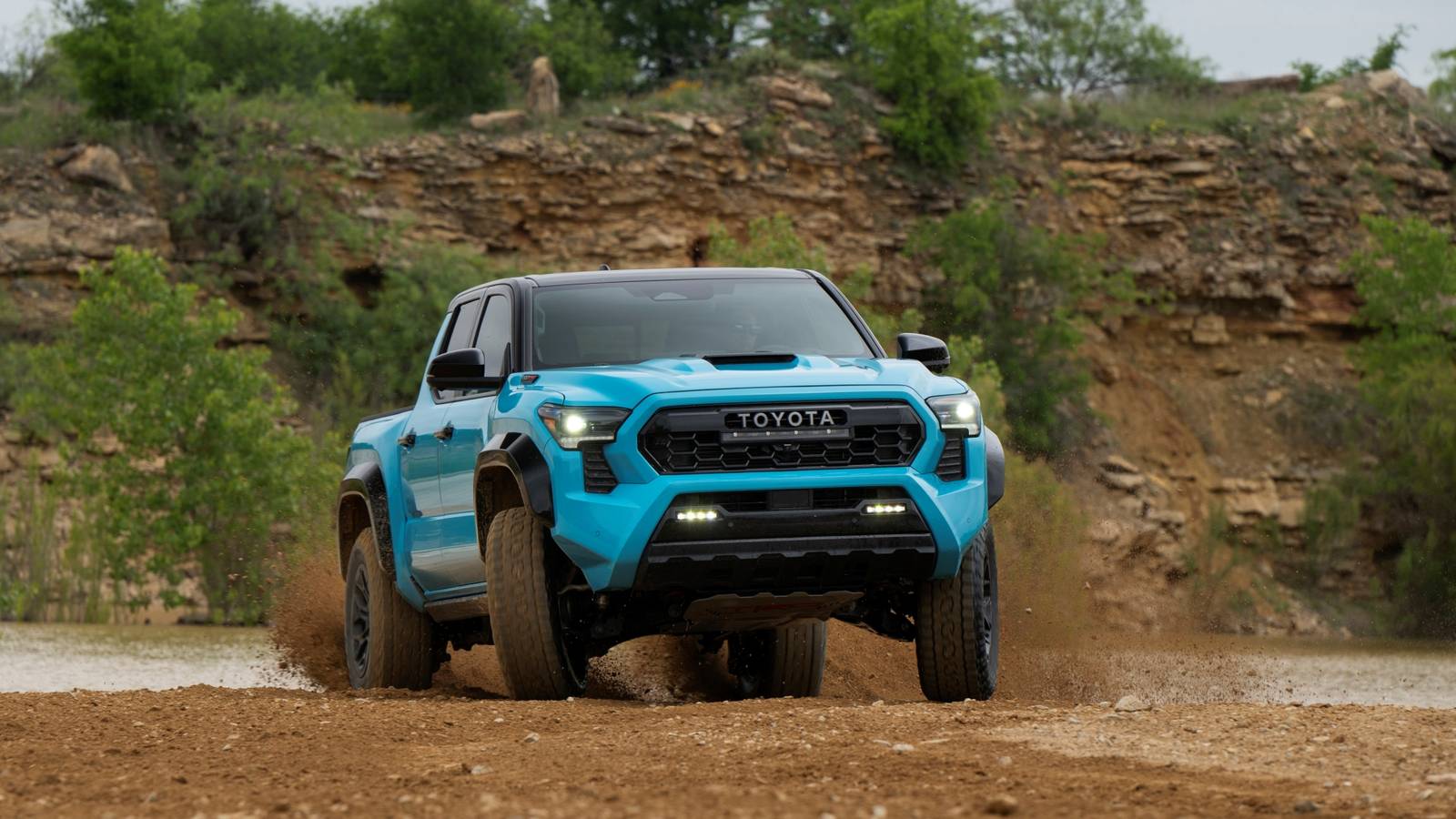
But if you’re Toyota, you have two massive winners on the market right now. The Tacoma completely owns the mid-sized truck market, and the Grand Highlander is crushing the crossover realm. Why are these two Toyotas doing so well? And what about that mystery third Toyota? Also, we have a few words to spill on why these segments are also (relative to the rest of the market’s chill), going to stay pretty steamy.


8/10
- Model
-
Tacoma TRD Pro
- Engine
-
2.4-Liter Turbocharged Inline-Four (hybrid)
- Transmission
-
8-Speed Automatic
- Horsepower
-
326 HP

Why The Toyota Tacoma Still Dominates The Midsize Truck Market After Two Decades
The Toyota Tacoma’s blend of durability, reliability, and off-road prowess keeps it a top choice in the midsize truck market after 20 years.
The Tacoma Owns The Midsize Truck Slot

First, you have to understand just how much the Tacoma is crushing it this year. It’s not just that, on a percentage level, the Tacoma has risen vs. 2024 sales. That percentage, by the way, is massive—nearly 50 percent improvement. But the bigger deal here is that Toyota sold nearly a quarter million Tacomas through November, vs. 170,000 in 2024. The very next closest mid-sized truck (with incomplete data from GM) is the Chevy Colorado. That truck’s 77,390 sales (through October) represent a decent uptick of 10 percent vs. 2024. Still, Ford’s Ranger has shot up by 52.5 percent on the year. It still trails the Colorado at 62,864, but Ford has to be pretty pumped about that major volume bump. Then again, even combined, the Colorado and Ranger don’t remotely approach Tacoma sales.
Nothing Is Remotely As Strong As The Tacoma

Toyota owns this segment. Even when you include the strong-selling Maverick, which really fits in what the industry calls “compact” not mid-size truck, four out of every 10 mid-sizers sold is a Tacoma. Which is just kind of absurd. That said, the picture is a little more nuanced than that.
Two Tacomas Outshine The Rest

I asked Toyota straight up, which Tacomas sell the best. I wanted to know for a few reasons. First, we already know that despite offering a great hybrid for the Tacoma, the i-FORCE MAX, its reception has been just ok. Probably because to get into it, you have to drop nearly $50,000. Meanwhile, two-thirds of all Tacoma sales are split between the TRD Sport and TRD Off-Road (starting at roughly $40,000-$43,000, depending on spec). That’s just the affordable way to get a Tacoma that has some extras but won’t lead to a painful monthly car payment. Toyota says that overwhelmingly, these two grades are ordered in 4WD with a five-foot bed and in the five-seat, double-cab setup.
Small And Midsize Truck Growth
Toyota has one advantage that rivals can’t boast about: It never abandoned the segment. In one sense, it’s remarkable that Ford, which really led with the Ranger up into the early 2000s, didn’t refresh that truck when they fell behind the Tacoma, and then walked away from the segment altogether in 2011. They’re recovering sales on the Ranger at long last, and landed on a brilliant product in the Maverick, one of our Buzz Award winners this year. But only if you combine sales of both the Maverick and the Ranger do you get near-ish the volume of what Toyota has in the Tacoma.
Smaller Trucks May Widen The Segment

Eying that Maverick, you can understand why Toyota may want to expand its market with a true compact truck of its own. Though, to be honest, Toyota has been whispering about that idea since at least 2023. This is also why whatever Ford brings in a compact EV pickup may further widen the truck category, too, which would probably be good news for startup Slate Auto, too.

Consumer Preferences Toward Pickups Radically Changing And Here’s Proof
We love a pickup truck here in the U.S.A., but our preferences to what kind of truck we buy has changed, here is what you need to know about the shift
Why The Grand Highlander Is Crushing Highlander Sales

This is really another story of a segment that’s doing well in a meh year. Three-row SUVs that start for under $50,000 are having a gangbuster year. And the Grand Highlander is Exhibit A in that segment. Grand Highlander sales essentially doubled from this time last year, and while every vehicle in the segment isn’t winning, the Grand Highlander’s recipe of adding a bit more third-row legroom is proving to be a pretty plug-and-play formula. That’s how the Chevy Traverse has boomed in sales by nearly 50 percent as well.
The Category Is Growing—Literally

The 2026 Kia Telluride isn’t out yet, but the Hyundai Palisade, which shares the same platform, is following Toyota’s playbook in growing longer, to add more cargo room behind the third row and more legroom in that third row. That new Telluride will do the same. And if you look at a vehicle with a relatively off year, the Honda Pilot had sales fall by about 11 percent—and it has the tightest third-row legroom among all these players. Relatively speaking, the Pilot is still pretty dominant in this segment. What’s not? The standard Highlander has a really tight third row and paltry cargo room behind that row. Its sales plummeted by about 40 percent.
Size Matters

Also, guess what? A Highlander and Grand Highlander are priced almost at parity across the grade, with some Grand Highlanders actually selling for less than the Highlander in 2026. It’s not very surprising that lots of customers are buying in bulk, and the standard Highlander is suffering as a result.
The Minivan Isn’t Dead!

If there’s one category that’s been unloved but is on the rebound, it’s minivans—which are rebounding pretty robustly in 2025. Toyota’s Sienna sales have increased by a pretty shocking 30 percent this year. But maybe don’t be shocked. If people look at size and see value for the money, the eight-passenger Sienna hybrid costs $40,000 and gets a combined 36 miles per gallon. There’s not much else around that’s as thrifty on gas and as capacious. Kia Carnival sales have also boomed, up about 40 percent, and their hybrid is almost as fuel-efficient.
TopSpeed’s Take

You want to know the real secret Toyota’s unlocked? Trust. The carmaker staked its name on reliability and the Tacoma has had one of the highest resale values on the market. Strong residual values make some car models perennial bestsellers. No, cars aren’t investments. They’re terrible investments, because they cost money to keep operating and maintaining. However, a car that depreciates slowly feels less painful to pay for each month than one that you fear will be worth nothing by the time you get out from under the five-year loan—or one that stretches to six, or even seven years. So Toyota’s secret isn’t really one at all. It’s simple economics and reflects a risk-averse public that’s wary of high prices wherever they turn. So people are turning to safer bets, and Toyota—and a few other carmakers—are reaping the rewards.
Sources: Bankrate; Cox Automotive