
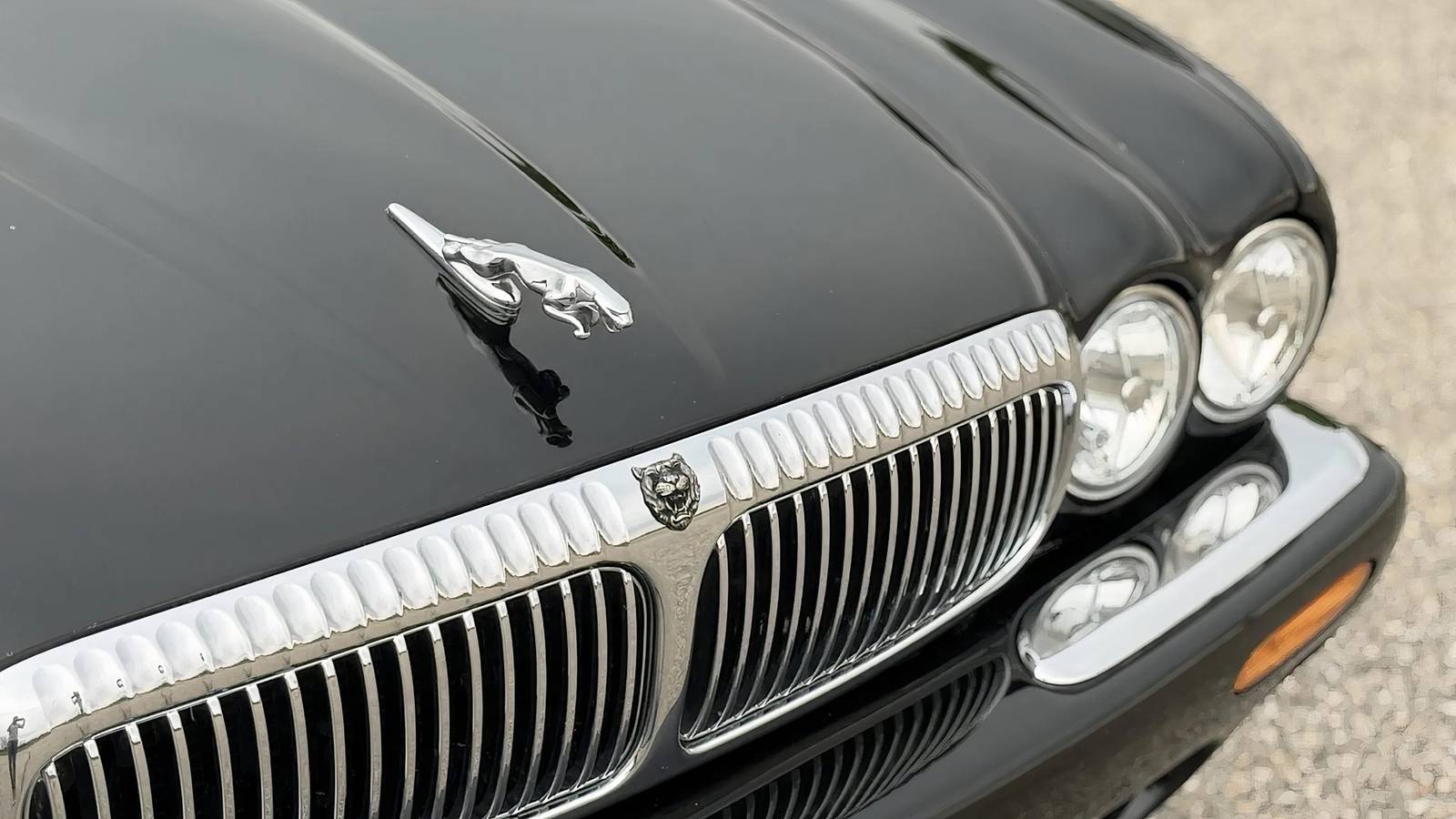
As a very young boy, I saw a bronze-brown Jaguar XJ6 with a white roof parked under a tree in the soft light of the desert dusk. It must have been the first generation XJ, and it was the most beautiful car ever, until I saw a red convertible E-Type in the same place a few months later. Decades later, I had the opportunity to drive such an XJ6, and the expectations of my dreams were realized.
The recent disastrous Jaguar relaunch was simply the final full stop in the sad tale of a great brand dying through neglect, cost-cutting, and forgetting who it was. Throughout the 20th century, Jaguar has made some of the most iconic luxury cars in the world. They did not compete with Mercedes-Benz in mechanical excellence, because when you have style, who needs engineering? Turns out, engineering is important, and Jaguar has managed to drag its reputation through the mud before slowly bringing the brand back. But the damage was done, and the brand is probably dead. There were five main generations of the XJ model, with a handful of sub-generations/Series, but the original 1968 one is now too old and too much of a collector’s piece, so we ranked the other four broad generations in order of reliability as seen today.
Generations are listed in descending order based on overall reliability, from the most to the least reliable.
Jaguar XJ (X351, 2010-2019)
Best Overall Reliability

The X351 was the last of the big cats, and the XJ was discontinued in 2019. Launched as the 2010 model year, it replaced the traditional upright silhouette with a sleek fastback profile. This Jag came with a bonded and riveted aluminum monocoque. This generation also saw an aggressive push for greater reliability, and this is reflected in long-term ownership data. Powertrains ranged from naturally aspirated and supercharged V6s to a supercharged 5.0-liter V8. Later models were fitted with the excellent ZF eight-speed automatic transmission. Jaguar also got rid of the troublesome legacy electrics, which cut the number of random faults that plagued earlier models.
Post-Facelift (2012 – 2019) Reliability

The X351 is subdivided into the pre- and post-facelift versions, but the changes were more profound than cosmetic alterations. The post-facelift was done in 2012 and carried this Jag until its demise seven years later. According to J.D. Power Vehicle Dependability Studies, late production X351 cars score near or above the luxury brand average, a new high for Jaguar after years of lows. The ZF 8HP transmission used in this version is seen as one of the most reliable transmissions in the segment, often passing 150,000 miles with only fluid service. Edmunds’ long-term owner reviews show improved infotainment stability, fewer warning light issues, and improved engine durability. Once the timing chain issues were resolved, the 5.0-liter V8 proved to be robust as long as it was serviced on schedule. The air suspension remained an issue, but its performance is similar to the Merc S-Class of the same era.



Pre-Facelift (2010 – 2011) Reliability

Early X351 models had the same strong points as the later ones, but did suffer from electronics issues. J.D. Power scores these years lower than the post-facelift ones, mainly because of infotainment issues and sensor faults, rather than mechanical failures. The engines and six-speed ZF automatic transmission are solid, but data show a high frequency of dealer visits for software updates and electric niggles. While these seldom caused a breakdown, they did affect the perception of reliability.
Jaguar XJ (X350, 2003-2009)
Structurally Strong, Electronically Fragile

The X350 was a quiet revolution. Under the traditional styling sat an aluminum monocoque that reduced weight by hundreds of pounds. The reception was very positive for ride quality, fuel economy, and mechanical stress. In both chassis and engines, the X350 proved to be fundamentally sound. Buyers in the US could choose from the AJ-V8 engine family, which, by then, had sorted out earlier flaws. When maintained, the engines often exceed 200,000 miles. The bugbear that haunted the X350 was its electrical complexity.
Mechanical Reliability Metrics

The X350 is near the industry average for luxury sedans of the time, according to J.D. Power. Edmunds‘ ownership data shows good engine and transmission longevity, with failures normally the result of irregular maintenance rather than design flaws. The ZF six-speed automatic is mostly reliable, and the timing chain tensioners, now made of metal, are no longer the problem area of before. Cooling system components, including thermostats and water pumps, require proactive replacement, but these are predictable and not unplanned failures.
Electrical And Suspension Issues

Electrical reliability is where the X350 loses ground. Frequent infotainment malfunctions, errors on the instrument cluster, and module communication faults are rife. Air suspension compressors and height sensors also fail, particularly after 100,000 miles. None of these issues is unique to Jaguar, but repair costs are higher because of parts pricing and diagnostic complexity. This pulled down long-term reliability scores despite the strong mechanical fundamentals.

The Jaguar Type 00 Looks Just As Bizarre In Real Life
Jaguar brought the Type 00 into the wild, and it looks like someone photoshopped it into reality.
Jaguar XJ (X308, 1997-2002)
Good Engines, Notorious Early Issues

The X308 brought in Jaguar’s first modern V8 foray, replacing the venerable inline-six. It should have worked, but early execution damaged its reliability reputation in the US. This generation was considered mechanically sound but historically risky, especially in the beginning. Styling was still classic, the ride was comfortable but sporty, but ownership data shows a spike in serious mechanical problems compared to later models.
Engine And Drivetrain Reliability

Pre-2000 models had issues with the Nikasil cylinder liner that degraded, especially in the high-sulphur environment common in the US at the time. These issues were fixed under warranty, and the cars that still run are all updated, but the buyer must carry out due diligence to determine whether this has been done. Early cars used plastic timing chain tensioners, which could fail catastrophically.
Ownership And Reliability Scores

J.D. Power scores the X308 below average for its class. This reflects both historical engine issues and the aging electronics. Edmunds‘ reviews often mention expensive preventative maintenance as required rather than optional. While a properly sorted X308 can be reliable now, that generation ranks lower because of the severity of known failures, rather than only their frequency.

Want A Reliable Jaguar? These 10 Models Have Proven Themselves
Jaguars don’t have the best reputation for being reliable, but these 10 models buck the trend and have proven themselves as dependable companions.
Jaguar XJ (1975-1996, XJ-S/XJ40/X300)
Classic Character, Lowest Reliability

It started earlier, but the period 1975–1984 was when Jaguar, as part of the failing British Leyland, lost its way. This era is broad and somewhat fractured, with several evolutions of the original XJ taking place. These iterations were charming cars that needed a lot of attention. It defined Jaguar’s image in the US, but also created the reliability stigma. Later X300 models were much improved, but the generation as a whole remains the least reliable XJs, including the early 1968 XJ6.
Mechanical Durability

The engines, especially the later AJ6 inline-six in the X300, were quite robust. But oil leaks, cooling system failures, and inconsistent build quality were problems. Automatic transmissions could be great or terrible, depending on the year and the supplier. J.D. Power data from that era has Jaguar near the bottom of the dependability ratings, showing both mechanical and electrical issues.
Electrical And Maintenance Burden

Unreliable electrics are the defining weakness of this generation. Wiring insulation degraded, there were grounding issues, and fragile control modules made long-term ownership a burden. Edmunds and data from enthusiasts show maintenance cost much higher than the norm, even when these cars were not driven that often. This generation had a solid fan base, but the cars needed lots of work and were patently unreliable.
Sources: Jaguar, J.D. Power, Edmunds