
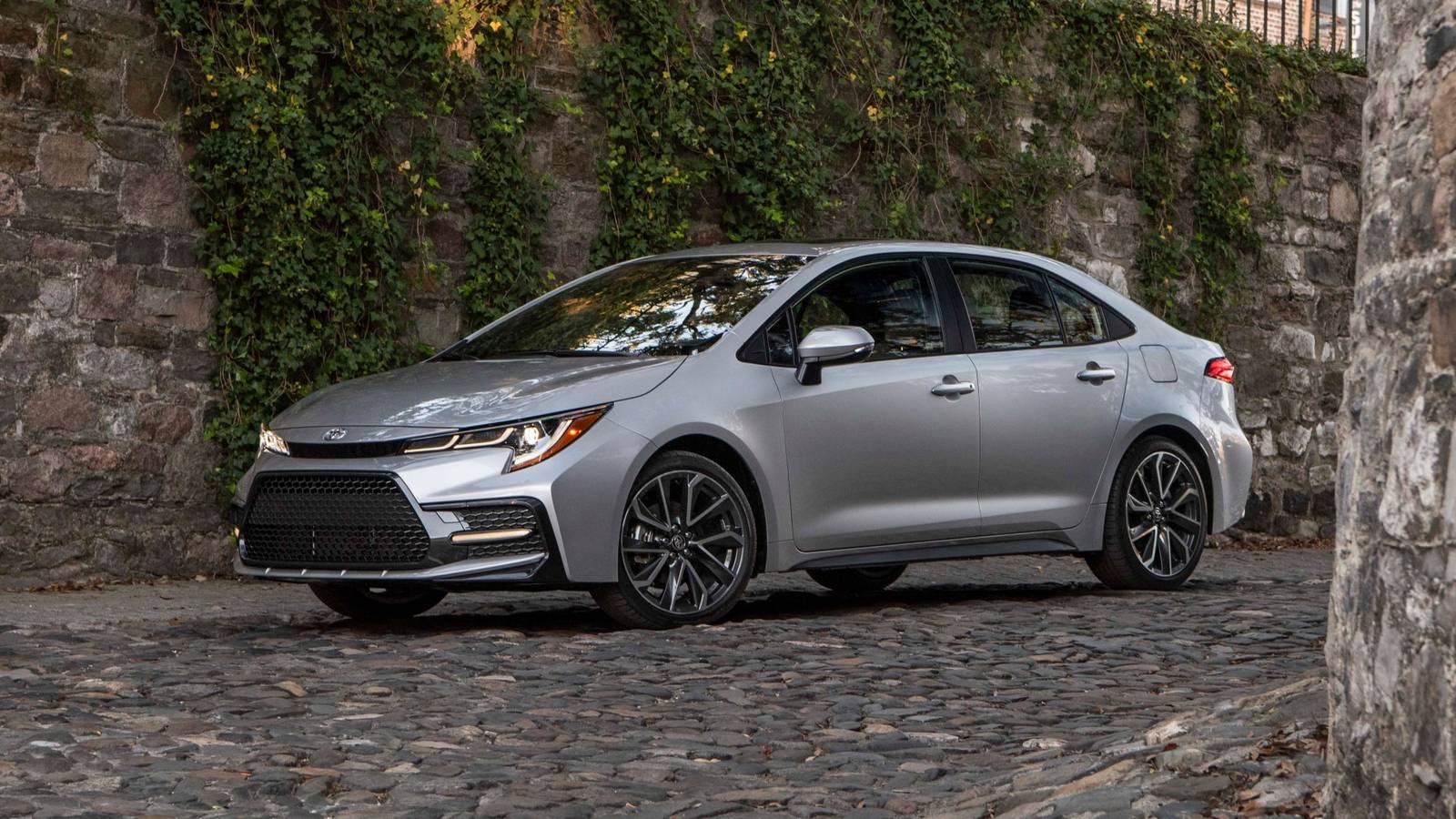
For more than five decades, the Toyota Corolla has been the world’s best-selling nameplate, quietly evolving to meet the needs of each new generation of drivers. While reliability and affordability have always defined the Corolla’s reputation, its physical growth over time is an equally compelling part of the story. Each generation has responded to market pressures such as stricter safety regulations, increased demand for interior space, and the gradual blurring of lines between compact and midsize sedans. Ranking every Corolla generation by size offers a clear snapshot of how the car has matured from a truly tiny economy vehicle into a spacious, family-friendly daily driver.
Early Corollas were designed for narrow roads, urban efficiency, and low running costs, particularly in Japan and other densely populated markets. As global demand expanded, especially in North America, the Corolla grew longer, wider, and more refined to compete with larger rivals. Today’s Corolla is almost unrecognizable in footprint compared to its ancestors, yet it still carries the same core mission. This ranking highlights not performance or technology, but how size alone reflects the Corolla’s journey through automotive history.
Toyota Corolla (E210, 2020–Present)
182.5 inches

The E210 Corolla is the largest version ever sold, stretching to 182.5 inches in length and firmly occupying the upper end of the compact sedan class. Built on Toyota’s TNGA platform, its longer wheelbase and wider track translate directly into improved cabin space and a more planted road presence. Compared to early Corollas, the E210 feels closer to older midsize sedans in overall footprint.

This growth benefits rear-seat legroom, trunk capacity, and crash structure, all key considerations for modern buyers. Despite its size, Toyota carefully balanced proportions to avoid visual bulk, using sharp creases and a low roofline. The E210 proves that the Corolla has grown up without abandoning its efficient, approachable character.
Toyota Corolla (E170/E180, 2014–2019)
182.3 inches

Just 0.2 inches shorter than the E210, the E170/E180 generation marked a major leap in size over its predecessors. Toyota stretched the body to appeal more directly to American buyers who wanted compact efficiency without sacrificing interior comfort. This generation set the template for the Corolla’s modern, larger-than-expected footprint.

Inside, the added length translated into noticeably better rear-seat space and a more usable trunk. The E170/E180 also began to visually distance the Corolla from subcompact territory, adopting proportions that looked more mature and upscale. It was clear by this point that the Corolla had permanently outgrown its small-car roots.
Toyota Corolla (E140/E150, 2009–2013)
178.7 inches

At 178.7 inches long, the E140/E150 generation represented a transitional phase in the Corolla’s growth. It was significantly larger than early-2000s models but still clearly compact by modern standards. This generation balanced global efficiency goals with increasing safety and comfort requirements.

The added length improved stability and ride quality, especially at highway speeds. While interior space was adequate rather than generous, it marked the moment when the Corolla began feeling like a primary family car rather than a basic commuter. Size-wise, it laid the groundwork for the much larger Corollas that followed.

Every Toyota 4Runner Generation And How It’s Changed
The Toyota 4Runner has been smashing through our trails and deserts for 41 years – here is what you need to know about all the 4Runner generations.
Toyota Corolla (E120/E130, 2003–2008)
178.3 inches

The E120/E130 Corolla measured 178.3 inches, only slightly shorter than the generation that replaced it. This era focused on refinement rather than dramatic dimensional growth, maintaining compact proportions while improving build quality. Compared to 1990s Corollas, it already felt noticeably larger and more substantial.

Its size made it easier to package modern safety features like side airbags without compromising cabin space. The E120/E130 also benefited from a wider stance, improving both interior shoulder room and handling confidence. It represents a key midpoint between classic small Corollas and today’s larger designs.
Toyota Corolla (E110, 1998–2002)
174.4 inches

At 174.4 inches long, the E110 Corolla marked a modest increase over the generation before it. Toyota focused on improving crash safety and ride comfort, which naturally led to incremental growth. This generation still felt compact in tight urban environments but offered better everyday usability.

The E110’s size reflected late-1990s priorities, where efficiency was balanced with increasing regulatory demands. Rear-seat space improved slightly, though it remained best suited for short trips. In hindsight, the E110 sits right at the crossroads between an old-school compact and a modern small sedan.
Toyota Corolla (E100, 1993–1997)
174.0 inches

Just 0.4 inches shorter than the E110, the E100 Corolla was considered roomy by early-1990s standards. It featured smoother styling and a more aerodynamic profile, which made the car feel larger than its dimensions suggested. For many markets, this generation helped redefine the Corolla as a comfortable daily driver.

Interior space was competitive for the era, with improved legroom and a more substantial dashboard layout. Despite its growth, it remained easy to maneuver and park, a key Corolla strength. The E100 represents a balanced point where size and simplicity coexist perfectly.

10 Ways The 2025 Toyota Corolla Keeps Getting Better
There’s a reason Toyota has sold more than 50 million of them.
Toyota Corolla (E90, 1988–1992)
172.8 inches

Measuring 172.8 inches, the E90 Corolla was still firmly in compact territory. This generation embraced a boxier shape that maximized interior space within a relatively small footprint. Compared to earlier models, it felt more solid and better suited to longer drives.

The E90’s size made it ideal for global markets, offering efficiency without feeling cramped. While rear-seat space was limited by modern standards, it was competitive at the time. This generation reflects Toyota’s growing understanding of how to extract space without excessive length.
Toyota Corolla (E80, 1984–1987)
169.3 inches

At 169.3 inches long, the E80 Corolla was noticeably smaller than later generations but represented a step up from earlier designs. Toyota focused on improving passenger comfort while maintaining compact exterior dimensions. This generation still prioritized simplicity and low ownership costs.

Its relatively short length made it ideal for city driving and narrow roads. Interior space was modest, but efficient packaging made the most of what was available. The E80 shows how the Corolla once thrived as a truly small, practical car.
Toyota Corolla (E70, 1980–1983)
165.4 inches

The E70 Corolla measured just 165.4 inches, reflecting the compact car philosophy of the early 1980s. Straight lines and upright glass helped create usable interior space despite the short body. This generation was significantly smaller than modern Corollas, both in length and overall presence.

It excelled in maneuverability and fuel efficiency, two priorities of the era. Rear-seat comfort was basic, and trunk space was limited compared to later models. Still, the E70 captured the essence of the Corolla as a no-nonsense economy car.

Every Toyota Hatchback: From Corolla To GR Yaris
Toyota has done a lot for the auto world, and none more so than with their illustrious line of hatchbacks – here is every Toyota hatchback model ever.
Toyota Corolla (E30/E40/E50, 1975–1979)
161.4 inches

At 161.4 inches long, this generation of Corolla was genuinely tiny by today’s standards. Designed during a time of fuel crises and rising efficiency concerns, its compact size was a major selling point. It fit easily into urban environments and tight parking spaces.

Interior space was minimal, but acceptable for the expectations of the late 1970s. The short length contributed to light weight and excellent fuel economy. This era highlights how dramatically consumer expectations have shifted over time.