
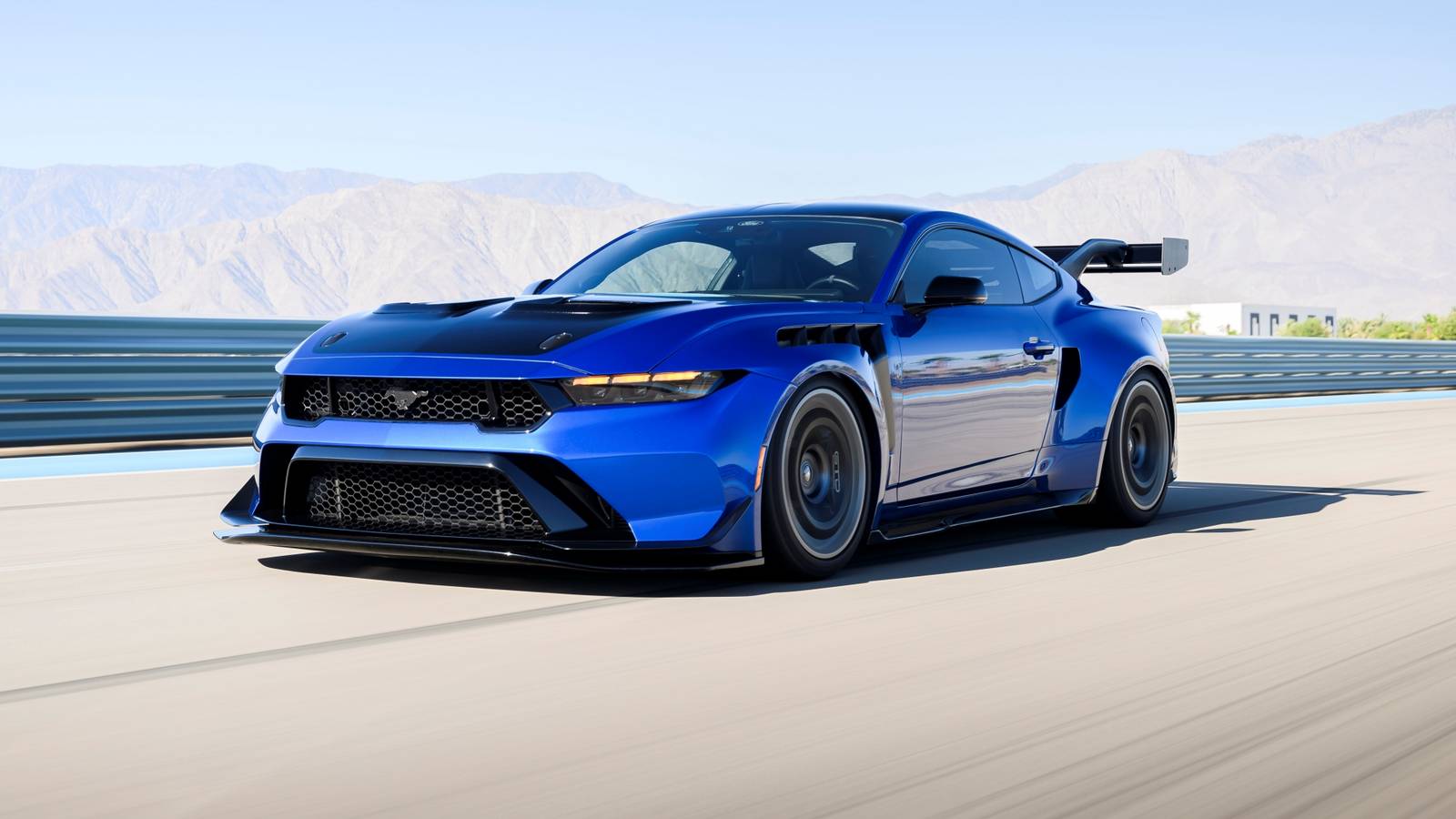
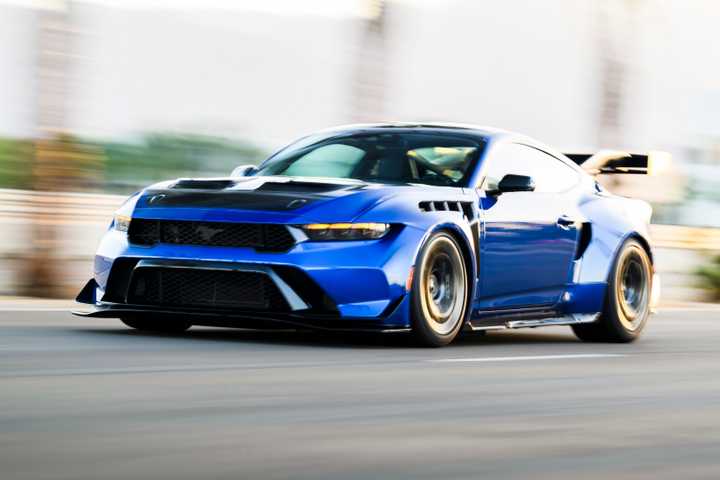
The 2026 Ford Mustang GTD is one of the most extreme models that the brand has ever produced in its over 100-year history. The specialized, track-focused two-door coupe takes the brand’s mass-market pony car and transforms it into a dominating piece of machinery that rivals the likes of the Ford GT.

- Base Trim Engine
-
5.2L Supercharged V8 Gas
- Base Trim Transmission
-
8-speed Dual-clutch transaxle Auto
- Base Trim Drivetrain
-
Rear-Wheel Drive
- Base Trim Horsepower
-
815 hp
- Base Trim Torque
-
664 lb-ft
- Make
-
Ford
- Model
-
Mustang GTD
- Segment
-
Sports Car
The GTD is an exclusive and limited model from the Blue Oval, available to only a select few. If you are a part of this exclusive demographic, there is a lot of information you’ll need before creating your perfect specification. GTD models are likely to become one of the brand’s most collectible icons, so creating the perfect specification is of the utmost importance.
Why The Mustang GTD Is Such An Icon

The 2026 Ford Mustang GTD is a limited-production, street-legal track toy that represents the most extreme performance heights in the Blue Oval nameplate’s extensive motorsport history. This bespoke driving enthusiast model evolves the Mustang from its pony car roots into direct competition with European elites like Porsche and Ferrari.
Ford developed the GTD in collaboration with Multimatic, with a $325,000 base MSRP for those who are allowed access to purchase one. The American brand targets this model at a highly exclusive audience of wealthy collectors, track enthusiasts, and conquest buyers.
The GTD is its current-generation halo product that fills the gap left by the mid-engined GT, serving as a more intense but slightly practical flagship. Since its introduction, the GTD has been a massive commercial success for the brand’s image. Ford confirms that it has received more than 7,500 applications for the initial production run in North America alone, despite its exorbitant price. The GTD has been a commercial success, with strong demand forcing the brand to ramp up production.
Ford’s Next-Level V-8 Creation

Under the hood of the 2026 Ford Mustang GTD sits the brand’s specifically tuned version of the 5.2-liter Predator V-8. This unit features an upgraded dry-sump oiling system that ensures consistent lubrication during high-G cornering. Thanks to the addition of a supercharger, the engine generates 815 horsepower and 664 pound-feet of torque. Ford also adds a revised intake, a smaller supercharger pulley, and an active titanium Akrapovič exhaust system, allowing the engine to reach a 7,650 RPM redline.
With all of that power and rear-wheel drive, you might expect the GTD to be a handful at track speeds, but the reality is a high level of user-friendliness from the very start. – Seyth Miersma, TopSpeed Contributor
Unlike the standard Mustang’s front-mounted gearbox, the GTD adopts a rear-mounted eight-speed dual-clutch transaxle connected by a lightweight carbon-fiber driveshaft, a layout that helps achieve a near-perfect 50/50 weight distribution. This mechanical synergy translates to elite performance figures, including a 0 to 60 MPH sprint in under 3.5 seconds and a quarter-mile time estimated in the sub-10.5-second range. On the top end, the GTD is capable of reaching a track-tested top speed of 202 MPH, making it the most powerful and fastest production Mustang ever to leave the factory.

The Buzz Awards: Ford Mustang GTD Named Best Performance Vehicle For 2026
The Ford Mustang GTD rewrites the book of modern muscle in its own image.
Track-Focused Interior For The Street

The 2026 Ford Mustang GTD transforms the cabin of a traditional pony car into a focused, two-seat cockpit that prioritizes its identity as a street-legal race car by stripping away nearly all vestiges of daily utility. The most immediate indication of this shift is the total removal of the rear seating area, which is replaced by a clear polycarbonate window that allows occupants to view the rear-mounted pushrod suspension and its adaptive spool valve dampers in action.

This mechanical centerpiece, combined with a lack of trunk space due to the rear-mounted transaxle and cooling systems, reinforces the GTD’s purpose-built nature. The driver and passenger are held in place by aggressive Recaro bucket seats, specifically bolstered to handle the lateral forces generated by the car’s aerodynamics, while the interior surfaces are dominated by a blend of Miko suede, premium leather, and extensive carbon fiber trim.

In terms of standard and optional equipment, the GTD retains the 12.4-inch digital gauge cluster and 13.2-inch central touchscreen from the standard Mustang. This interface is optimized for track duty with specialized performance pages and telemetry data. Standard features include a 12-speaker Bang and Olufsen sound system and wireless connectivity for Apple CarPlay and Android Auto. The interior also features dual-zone automatic climate control and customizable ambient lighting.
Standard on the GTD are 3D-printed titanium paddle shifters, a rotary gear selector, and a serialized dash plaque, all of which are crafted from retired Lockheed Martin F-22 Raptor titanium components. These elements provide a tactile, high-strength connection to the vehicle’s mechanical systems that is not found in any other Mustang variant.

Mustang GTD Specs: A Street-Legal Monster With Supercar Power
Built to challenge Porsche, Aston Martin, and Mercedes-Benz, the Mustang GTD is undoubtedly one of Ford’s most impressive ponies.
A Bespoke Suspension Keeps Things Tight

The suspension of the 2026 Ford Mustang GTD represents a radical departure from any previous iteration of the pony car, replacing the standard MacPherson strut front and integral-link rear setup with a race-derived, semi-active system. At the front, the GTD utilizes a short-long arm configuration that provides enhanced lateral stiffness and improved camber control during high-G cornering.
The rear features an inboard, pushrod-actuated multilink suspension mounted to a motorsport-style tubular subframe. This setup moves the dampers and springs horizontally and low between the rear wheels, which not only lowers the center of gravity but also allows for a 1:1 motion ratio.

The core of this system is the Multimatic Adaptive Spool Valve damping technology, which can adjust from its softest to firmest setting in just 15 milliseconds. A dual-spring arrangement at each corner allows the car to operate with a compliant spring rate on the street, but when Track Mode is engaged, one spring is hydraulically compressed to nearly double the total spring rate and lower the ride height by 1.57 inches.
The GTD is equipped with a braking and tire package that mirrors the specifications of the dedicated GT3 race car. Stopping power is provided by a massive Brembo carbon-ceramic system, featuring 17-inch rotors with six-piston calipers at the front and 15-inch rotors with four-piston calipers at the rear. These brakes are designed for extreme thermal management, resisting fade during prolonged track sessions.
Ford includes a set of specifically developed Michelin Pilot Sport Cup 2 R tires mounted on 20-inch forged aluminum wheels as standard. You can upgrade to ultra-lightweight forged magnesium wheels at a cost that Ford has not published.
Massive Aero Plants The GTD To The Tarmac

The 2026 Ford Mustang GTD benefits from a comprehensive aerodynamic package, including a Drag Reduction System that employs active components illegal in many professional racing series. The centerpiece of this system is a hydraulically controlled swan-neck rear wing mounted directly to the C-pillars rather than the trunk lid.
This mounting choice allows the wing to handle high downforce loads more effectively while housing the hydraulic lines internally. In high-downforce mode, the wing’s main element and flap close to create a singular airfoil that pins the rear of the car to the surface during high-speed cornering. To maintain a perfect aerodynamic balance, this rear adjustment works in tandem with active front flaps hidden beneath the car’s keel-shaped underbody. These flaps open and close to manage the center of air pressure, ensuring that the front end remains as stable as the rear regardless of the vehicle’s speed or cornering angle.

Beyond the active systems, the GTD’s bodywork utilizes carbon fiber for almost every major panel to integrate functional vents and ducts. Large fender louvers are standard, designed to exhaust high-pressure air from the wheel arches to reduce lift and drag at the front axle. The front splitter is significantly more aggressive than that of a standard Mustang, working with a comprehensive underbody tray to smooth airflow and create a suction effect.
An optional Aero Package adds carbon fiber dive planes to the front fascia and includes a completely flat underbody. Improving the cooling are specialized air intakes replacing the traditional trunk area to feed the rear-mounted transaxle and heat exchangers, while the vented hood extracts massive amounts of heat from the engine bay.

10 Reasons Why The Mustang GTD Has Gearheads Rethinking Everything
Ford’s decision to build a street-legal, track-focused monster has gearheads and supercar fans alike rethinking both what a Mustang is.
The GTD’s Highly Exclusive Editions

The 2025 Mustang GTD was offered in several highly exclusive limited editions that push its MSRP well beyond the base Mustang GTD price of $325,000, each defined by unique aesthetic and weight-saving treatments. The Carbon Series starts at approximately $428,000 and features an unpainted carbon fiber hood, roof, and rear decklid, paired with Magnetite-finished wheels and contrasting painted stripes. For collectors seeking the most patriotic representation of the brand, the Spirit of America edition is priced at $429,000 and includes the $103,000 Performance Package as standard, finished in a signature Performance White with distinct red and blue accents.

The most extreme variant is the Liquid Carbon edition, which is estimated to reach nearly $450,000. This model completely ditches exterior paint in favor of a clear-coated, fully exposed carbon fiber body. To achieve a 13-pound weight reduction over the Carbon Series, the Liquid Carbon replaces standard door sheet metal with bonded carbon fiber and features a meticulously hand-aligned carbon weave that meets perfectly at the vehicle’s centerline. These editions also include bespoke interior touches, such as the Hyper Lime contrast stitching and reflective seat gradients found in the Liquid Carbon.
Sources: Edmunds, Ford Authority, and Motor Reviewer