
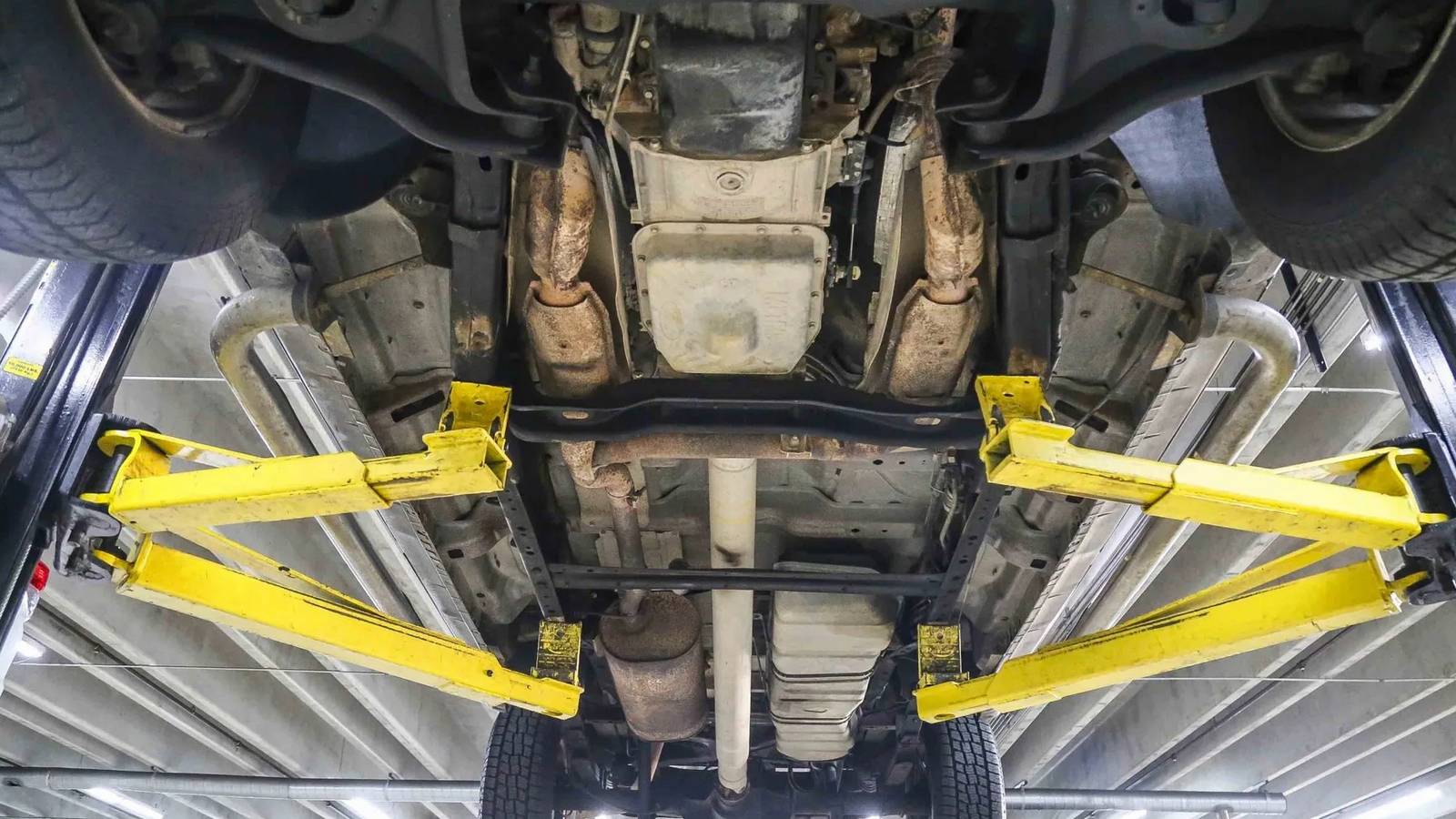
One of the absolute worst epidemics occurring in the U.S. is catalytic converter theft. In recent years, this illegal practice has exploded in popularity as one of the go-to methods of property theft. Yet, why? Catalytic converters are emission control devices that contain several precious metals with significant value and are relatively easy to steal with little automotive expertise. Catalytic converter thefts can be accomplished in less than two minutes, and the required tools can be readily obtained at any home supply store.
The impact on the affected victims can be immense, as the replacement costs of having your catalytic converter stolen are only one part of the issue. While having your car parked in a private garage overnight is the best deterrent, no vehicle is truly safe from this crime. Let’s break down why thieves want catalytic converters, how to best protect your vehicle from theft, and what insurance coverages can help you minimize losses and avoid becoming a helpless victim.
Why Catalytic Converters Get Stolen

Criminality is on the rise in the U.S., and our uncertain financial landscape is one of the largest factors. They say desperate times call for desperate measures. Few property crimes are more appealing for making a “quick buck” than catalytic converter theft. Nowadays, this practice is an all-out crisis in metropolitan areas with seemingly no real solution in sight. With financial losses ranging from $1,000 to $3,000 or more, these thefts are devastating regular people daily. Let’s discuss what drives this criminal activity and which vehicles are the primary targets of these thefts.
Why Do People Steal Catalytic Converters?

Catalytic converter theft is driven by the value of the precious metals that are integrated into this emissions control device. Catalytic converters commonly contain platinum, palladium, and rhodium — all metals that are more valuable than gold by weight. The larger the vehicle, the larger the catalytic converter. Depending on the specific make and model, a single catalytic converter can contain three to seven grams of these rare metals, which have a value of $50 to $500 when sold to scrap metal dealers.
Note that these values are not exact and may vary significantly depending on the model of the catalytic converter and its location. Rarely are stolen catalytic converters actually sold as is, as they are easily identifiable before they are broken down into raw materials. Considering that a new catalytic converter may cost thousands of dollars, the return on investment for these devices as scrap metal is not very lucrative. Does this stop criminals from attempting these thefts as a result? Not at all.

The fact is that catalytic converter theft is alluring to criminals because it’s easy. No automotive expertise is required to successfully steal a catalytic converter. For less than $200 at your local home supply store, you can obtain the necessary tools to steal a catalytic converter. A successful theft can be accomplished in less than a minute. Unlike stealing a car, which is significantly more involved, catalytic converter theft often leaves little evidence.
Once your catalytic converter is cut and removed, black market scrapyards that buy these stolen goods don’t ask questions and always pay in cold, hard cash. The longer you have to hold onto the stolen property, the more likely you are to get caught. The quick turnaround and simplicity of catalytic converter theft has made it one of the fastest-growing property crimes nationwide.
Do All Cars Have Catalytic Converters?

If your car has a gasoline engine and is a 1975 model year or newer, it has a catalytic converter. Federal emissions regulations advanced significantly in the 1970s, and the standards have continued to increase. There are approximately 300 million registered vehicles in the United States, meaning there is effectively an endless supply of potential victims of catalytic converter theft. However, not all catalytic converters have the same value in the eyes of thieves, and certain models are targeted more frequently than others.

As we mentioned, the larger the vehicle, the larger the catalytic converter, and, as a result, the more precious metals ripe for the taking. Trucks and SUVs like the Ford F-Series and Toyota Tacoma are by far the most susceptible vehicles to catalytic converter theft. The high ground clearance of these vehicles makes catalytic converter theft a cakewalk, as it is not required to jack the vehicle up to reach the valuable components. All you have to do is slide underneath the vehicle, locate the catalytic converter, and start cutting. Hybrid vehicles like the Toyota Prius are also one of the primary victims of catalytic converter theft.
Although more time-consuming and difficult than truck-based theft, hybrid vehicles often require more specialized catalytic converters that have a higher rare metal density than standard gasoline-powered vehicles. Another fact is that there are millions of Toyota Prii, making this humble hybrid an easy target for thieves. The catalytic converters found in pre-2000s vehicles also often contain more platinum than newer models and are easier to access than those in more modern vehicles. The only way to be fully immune to this particular theft is by owning an electric vehicle, as battery-powered cars don’t produce tailpipe emissions like gasoline-powered cars.

How Toyota’s 745-mile Solid-State Battery Got A Massive Boost From Idemitsu
You might think that petroleum companies would have no place in EVs, but Toyota can’t make its solid-state battery without partnering with one.
What To Do For Catalytic Converter Theft Prevention

As we mentioned, unless you have an electric vehicle, there is no 100 percent foolproof method of preventing catalytic converter theft. However, there are several security measures owners can take to deter thieves and reduce the risk of potential theft. A few proactive steps can be the difference between becoming a helpless victim and saving thousands of dollars worth of time and hassle.
Catalytic Converter Shield And Physical Deterrents

A modern solution to catalytic converter theft is a catalytic converter shield (also called an anti-theft device). This physical deterrent is essentially an extra coat of armor for your catalytic converter, making it nearly impenetrable to the battery-powered saws commonly used in these thefts. While this armor can still be removed, this will require significantly more time, and each passing second increases the chance of getting caught.
What you want is for thieves to deem that the time and effort required is not worth it and to instead find an easier and more susceptible victim. Most of the time, this works because, as we mentioned, there is essentially an endless supply of potential victims. Depending on the brand and model, a catalytic converter shield may cost anywhere from $150 to $400 or more with installation. Universal-style shields are more affordable, while vehicle-specific designs seamlessly integrate into your vehicle’s exhaust setup at a higher cost.

Other security alternatives exist and can be used in combination with catalytic converter shields. VIN etching, or inscribing your vehicle’s VIN directly onto the catalytic converter, has some benefits. Motion-sensor alarms or dashcams with parking modes can scare off thieves before they even attempt the theft. Proprietary devices like a CatClamp or CatStrap can also serve as low-cost alternatives. All of these measures require some form of investment, but if successful, will be well worth their value by successfully deterring an attempted catalytic converter theft.
Parking And Security Best Practices

Where and how your vehicle is parked plays a huge role in its attractiveness to potential thieves. The only real way to prevent catalytic converter theft entirely is by parking in a private, locked garage. However, many trucks and SUVs can’t fit inside standard home garages because of their height, making them ideal targets for catalytic converter theft. The darker and the more private the area, the more alluring an attempted catalytic converter theft may be. In the end, limiting complete access to the underside of your vehicle is the only foolproof method of preventing this theft.
This is a strong argument for the security advantages of low-clearance vehicles. Even better, with aftermarket air suspension, you can make the car sit on the ground and effectively make the underside of the car inaccessible. Even jacking up the car will be essentially impossible in this situation. While it may sound extreme, we guarantee almost nobody has ever attempted a catalytic converter theft on a slammed Toyota Prius, despite it being one of the most common targets of this theft.

How The Toyota Prius Changed The Way America Drives
The Toyota Prius is an electrified vehicle you barely have to think about, and that’s exactly the point of this extremely efficient vehicle.
Catalytic Converter Theft Insurance Coverage

Let’s say the worst has happened. You go to turn on your car one day, and you realize your catalytic converter has been stolen. This can turn an average day into a stressful and costly experience. While stress alone may take a toll, proper preparation for this situation can go a long way. Understanding how your insurance coverage may or may not apply in this case will help you navigate the most effective and pain-free method of getting your car repaired and back on the road.
Does Insurance Cover Catalytic Converter Theft?

Just because you have insurance doesn’t explicitly mean that catalytic converter theft is covered by your policy. This type of theft is usually only covered by comprehensive coverage, which is an optional premium. Comprehensive coverage is for non-collision claims, such as theft, vandalism, and weather damage. If you have comprehensive coverage, your insurance company will cover the cost of replacing your stolen catalytic converter minus your deductible. However, depending on what your deductible may be, with common deductible values being between $250 and $1,000, there are several factors to consider.
Anytime you file a claim of any kind, there is the possibility that the claim may increase your future premiums. Comprehensive claims usually have significantly less impact, but still have an effect. Certain insurance companies are well aware of the current state of catalytic converter theft and now offer a specific coverage that only applies to this kind of theft. If you own a known target for catalytic converter theft, like American trucks or a Toyota Prius, it is in your best interest to add comprehensive coverage to protect you in these kinds of situations.
Filing A Claim And What To Expect

If your catalytic converter is stolen, you will immediately notice when you go to start up your vehicle. First, the vehicle on start-up will be obnoxiously loud, run very rough, and will immediately throw a check engine light. If you notice these symptoms, don’t panic, and certainly, don’t drive off as if nothing happened. Turn off your vehicle as quickly as possible.
Driving a car without a catalytic converter can cause permanent damage to your vehicle, even if it’s just for a short trip. If it has a higher ride height or easier access, visually check the underside of the vehicle to confirm that your catalytic converter has not been stolen. If it has, immediately file a police report, then contact your insurance company and file a claim.

Take photographic evidence of the crime if possible. A word of advice: the police are unlikely to do anything, even if you have video evidence of the crime being committed, as they have limited resources and focus on these types of crimes. Your insurance company will assign an adjuster who will personally come out and inspect the damage and provide a repair estimate. Once you pay your deductible, the insurer will approve repairs and either pay a shop you select or their preferred repairer.
Depending on parts availability, the process may take a few days to several weeks. If you have rental car coverage as part of your insurance policy, now is the time to use it. Inquire with your insurance provider about anti-theft devices that may deter future thefts or lower your premiums. It is good to stay in the known because certain high-risk vehicles now require proof of an anti-theft device before insurance companies will provide comprehensive coverage.

Honda’s Latest Patent Will Make Car Thieves’ Lives Harder
Honda’s New Patent Could Revolutionize Car Theft Prevention
Sources: Consumer Reports, Congressional Research Service, NHTSA