
For the most part, motorcycle manufacturers tend to fall into two broad camps, each with its own defining traits. Japanese machines – from brands like Honda, Yamaha, and Kawasaki – are revered for their near-bulletproof reliability. They’ve built a reputation for running tens of thousands of miles with little more than routine oil changes and basic maintenance.
European motorcycles, on the other hand, from manufacturers such as Ducati, Aprilia, and KTM, often carry a stronger sense of road presence and a more premium positioning. A Honda Africa Twin, for instance, is engineered to last forever, but it doesn’t quite command the same visual drama as a Ducati Multistrada, even if the latter occasionally raises questions about long-term reliability. But there are certainly motorcycles where those worlds overlap.
Why Reliable Big ADVs Are Harder To Find Than You’d Think

Premium adventure bikes cost serious money, often upwards of $20,000. At such price points, buyers expect bulletproof operation. European manufacturers prioritize performance, features, and premium positioning. Reliability is important, but complex electronics, sophisticated suspension, and cutting-edge tech create more potential failure points.

Japanese manufacturers take the opposite approach, building around proven conservative engineering. The Africa Twin uses a parallel-twin that has been refined for years. Parts are widely available, and maintenance is straightforward. The trade-off is positioning, as Japanese adventure bikes feel more utilitarian compared to European counterparts.

10 Hondas Known For Legendary Reliability
All these bikes have played their part in establishing Honda as a world leader in the motorcycle industry
The R 1300 GS Remains The Adventure Bike Benchmark

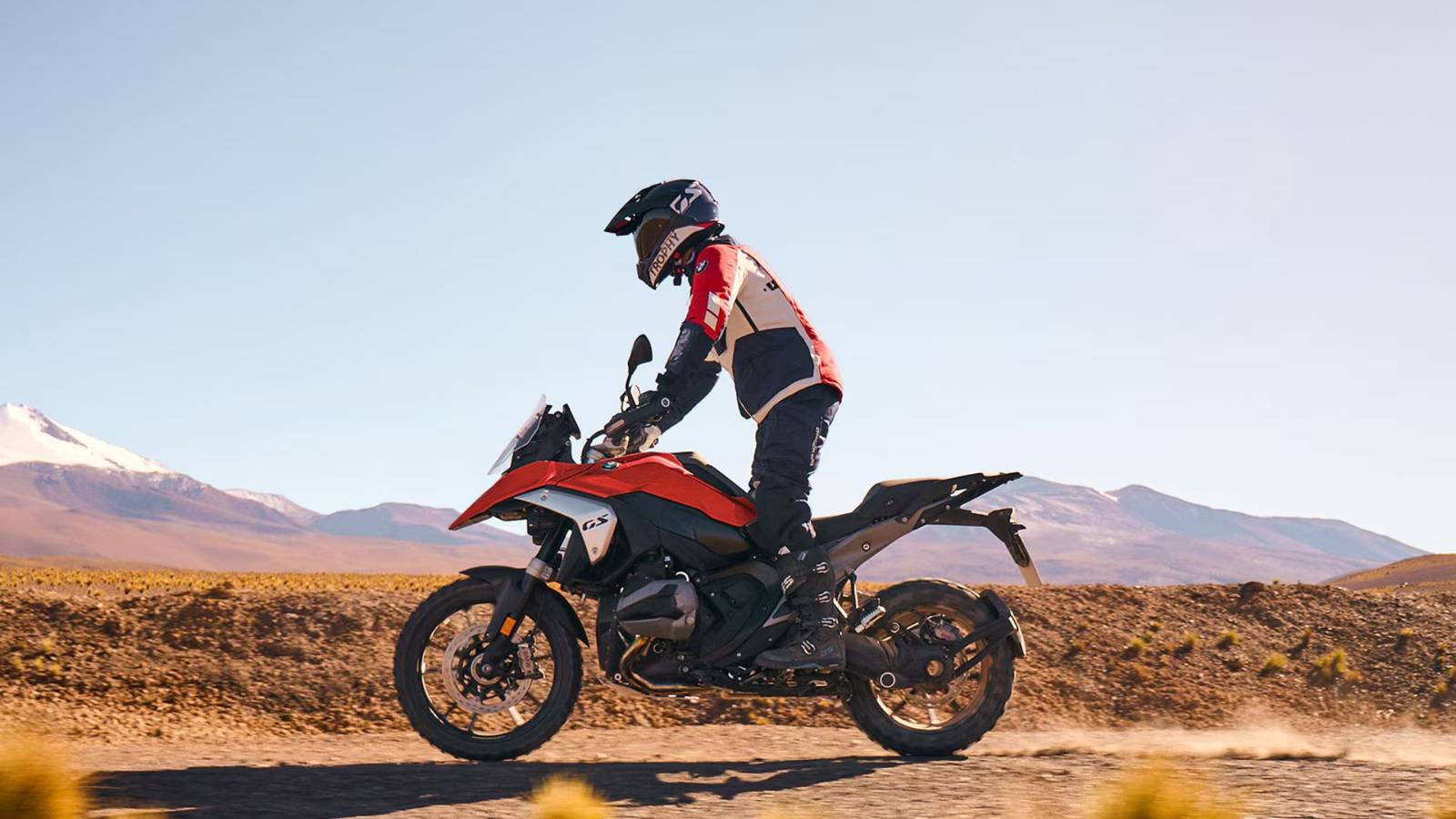
The BMW R 1300 GS dominates adventure bike sales globally for reasons beyond marketing hype. It’s the bike riders choose for round-the-world trips, the machine that racks up hundreds of thousands of miles without hiccups, and the platform that balances modern technology with proven mechanical simplicity. The new generation represents a complete redesign while maintaining the reliability reputation that made the GS the default choice in this segment.
Best-Selling Adventure Bike For Good Reason

The BMW R 1300 GS dominates global adventure bike sales. In 2025, the R 1300 GS Adventure topped the charts with 33,570 units, followed by the standard R 1300 GS with 32,555 units. Combined, that’s roughly one-third of BMW Motorrad’s 202,563 total motorcycle sales. For context, Ducati’s entire 2025 sales across all models totaled 50,895 units. The GS family alone outsells most manufacturers’ complete lineups. In the UK, the R 1300 GS topped sales charts immediately after launch, becoming the best-selling powered two-wheeler of any capacity in the country.
Early Reliability Hiccups Have Been Addressed

That said, the R 1300 GS launch wasn’t flawless. BMW issued a recall in July 2024 affecting approximately 25,000 units worldwide. The problem involved a faulty semiconductor starter relay with insufficient injection molding. Moisture could enter, causing no-start conditions, overheating, and fire risk.

The final solution replaced the semiconductor relay with an electromagnetic relay plus a software update. The boxer engine itself was never implicated. Some adaptive height control issues have been reported on bikes with that optional system, addressed through warranty repairs. No injuries or deaths were reported owing to these issues, and bikes built after the fix have proven reliable.

The ADV Built For Riders Who Want Reliability Without Sacrificing Luxury
The Ducati Multistrada V4 S is a new kind of Ducati: it is exotic, luxurious, AND reliable all at the same time.
The Iconic Boxer Twin Engine

The horizontally opposed boxer twin defines the GS character. BMW has built boxer engines for motorcycles since the 1920s, refining the design across generations. The layout offers inherent advantages, and the new 1,300cc version maintains these benefits while adding more modern technology that improves efficiency without compromising the durability that made this engine legendary.
ShiftCam Technology And Proven Engineering

The 1,300cc boxer twin displaces its cylinders horizontally, lowering the center of gravity. Bore is 106.5mm, stroke is 73mm, compression ratio is 13.3:1. Power peaks at 145 horsepower at 7,750 rpm and torque at 110 pound-feet at 6,500 rpm, with substantial output available much lower.

ShiftCam is BMW’s terminology for variable valve timing and lift by switching between two cam profiles – a sliding camshaft that shifts laterally. At partial throttle, the milder profile reduces lift and staggers intake valve opening. Open the throttle, and ShiftCam engages the full-load profile for maximum airflow. The result is usable torque from 3,000 RPM with refinement at highway speeds. The gearbox uses a wet slipper clutch as standard, and the optional Automated Shift Assistant system eliminates the clutch lever, offering fully automatic or manual shifting without clutch operation.
Shaft Drive Means Low Maintenance

The R 1300 GS uses a shaft drive rather than a sprocket and chain, significantly reducing maintenance. A shaft drive is more expensive and slightly heavier, but essentially maintenance-free in the conventional sense of the term. The only service is changing the drive shaft oil periodically. This matters especially when you’re riding through remote areas. A shaft drive handles adverse conditions like mud, water, or slush, without requiring immediate attention.

BMW Boxer: The Legacy Of The Flat-Twin Engine
A deep dive into the history of the motorcycle powertrain that refused to be “boxed-in”
Presence That Turns Heads

Road presence boils down to a distinctive design that’s immediately recognizable. The R 1300 GS achieves this through elements that not many other manufacturers can replicate. From the distinctive new headlight design to the exposed boxer cylinders, the GS looks like nothing else on the road. This visual identity has been refined over decades, creating a bike that commands attention.
Iconic Design That’s Immediately Recognizable

The R 1300 GS is instantly identifiable. While previous GS generations featured an asymmetric headlight, the new R 1300 GS adopts a symmetrical design with Matrix LED technology as standard. The accessory Headlight Pro adds adaptive functionality that turns the beam into corners, and the beak-style front fender references dual-sport heritage. The exposed boxer cylinders jutting from each side are unmistakable, and no other adventure bike positions its engine this way.
Size And Stance

The R 1300 GS measures 87.1 inches long with a 59.8-inch wheelbase. Standard seat height is 33.4 inches, though several factory options allow riders to tailor the height. Still, the bike sits tall and upright with commanding visibility. Despite being a heavy motorcycle at 523 pounds wet, the R 1300 GS manages its mass well. The boxer layout keeps weight low and centered, and the fuel tank sits under the seat, again contributing to the lower center of gravity.

BMW’s EVO Telelever front suspension and EVO Paralever rear system help maintain stability. The Telelever separates steering forces from suspension movement, largely eliminating fork dive under braking. While the more off-road-focused Adventure model uses spoked wheels, the standard GS rides on cast aluminum wheels with a 19-inch front and 17-inch rear setup.

10 Used Neo-Retro Adventure Bike Alternatives To The BMW R 12 G/S
The new BMW R 12 G/S is a fantastic homage to the original adventure bike, but it’s not the only off-road capable retro ADV out there.
Electronics And Features That Justify The Price

With a base price of $20,395, the R 1300 GS isn’t cheap. But that price reflects comprehensive standard equipment.
Ride Modes And Tech

The R 1300 GS comes with four ride modes – Rain, Road, Eco, and Enduro. Each adjusts throttle response, traction control, and ABS behavior. The electronics suite includes cornering ABS, dynamic traction control, engine brake control, and hill start assist using a six-axis IMU to monitor lean angle continuously. The 6.5-inch TFT display is clear in sunlight with Bluetooth connectivity for navigation and calls. Standard features include keyless ignition, heated grips, USB charging, and tire pressure monitoring. Cruise control with brake function is standard, and it maintains set speed while allowing brake modulation without disengaging.
Optional Radar And Adaptive Features

Buyers also have the option to kit their GS with an Adaptive Cruise Control system that uses forward-facing radar to maintain following distance, adjusting speed automatically. The system also adds Front Collision Warning alerts if closing speed becomes dangerous, while the optional Adaptive Vehicle Height Control automatically lowers the bike by 1.2 inches when stopping, then raises it when moving, making the bike more accessible for shorter riders. Another noteworthy add-on is the Dynamic Suspension Adjustment system that electronically controls damping and spring preload continuously based on riding conditions, load, and ride mode. Plus, manual adjustment is still possible through the TFT display.
Sources: BMW Motorrad