
When you find a car you love, you just want it to keep running forever. Take Irv Gordon and his multi-million-mile Volvo P1800S; that was a real labor of love. While some cars are more set up to last the miles, not all, even with the best intentions, can. We have seen plenty of coupes, sports cars, sedans, trucks, and SUVs hit the big numbers on the odometer.
However, among the luxury German brands that have reportedly hit the ludicrous numbers on the odometer, BMW is not generally one of them. We have seen Mercedes and Porsche models manage the million-mile mark, but it is very rare to see a BMW manage it. There is a lab-rat BMW E30 that racked up a million miles on a treadmill, but how far can BMW models go with real road use? How long can a BMW keep going? We think that, with the proper care, certain models can keep going for hundreds of thousands of miles.
The models in this list have been extensively researched to ensure the most accurate information possible as of the time of publishing. Models are listed in ascending order from the oldest to the newest.
1982–1994 BMW 3 Series (E30)
Engine Type: M20 Inline-Six

Boasting an average auction price of $33,545, the 1982–1994 BMW 3 Series (E30) is not only a legend in our books, but also has the capability to serve you well for many, many miles. Inside is as, dare we say, gaudy-but-good as you’d expect from a 3 Series of its age. You get leather upholstery, a driver-centric cockpit with a dashboard angled toward you in the driver’s seat, and a plethora of buttons and knobs on the center of the dash. The exterior is part-aggressive-part-luxury, and with the small split grille at the front, anyone in the know will know you are driving an E30.
Several engines are available for the E30 3 Series here in the U.S., but the most common are a 1.8-liter M10B18 inline-four, good for 107 horsepower and 105 pound-feet of torque, and from 1985 onward, a 2.5-liter M20B inline-six, which can kick out up to 168 horsepower and 164 pound-feet of torque. The latter is the engine we think, with proper maintenance, will see you good over the 200,000-mile mark.
1982–1994 BMW 3 Series (E30) Reliability

The 1988 BMW 325i (E30) was the model used for the Mobil million-mile test that led to the aforementioned million-mile BMW, so we know it is possible for it to run up the huge numbers in a controlled environment. Specifically, the engine under the hood of the 1988 325i is a naturally aspirated, fuel-injected M20B027 inline-six, but for it to see the big numbers, a fair amount of maintenance will have to be carried out.
Obviously, regular oil changes are needed; replace the air filters periodically, and maybe most importantly, to keep an M20 inline-six going: keeping up with timing belt changes. A snapped M20 timing belt only means disaster for the engine; it is notorious for totaling the internals of the engine, so ignoring the five-year/50,000-mile life of the timing belt is only going to result in the engine being knackered. It is recommended that if you buy an E30 3 Series, you swap the timing belt and water pump as soon as you buy one, especially if there is no record of it being done.
- Average Yearly Maintenance Cost: N/A (RepairPal)
- Est. Maintenance Cost During The First 10 Years: N/A (CarEdge)
- Total Recalls: N/A
- Worst Years To Buy Used: 1982–1986 due to rust.
2000–2003 BMW 5 Series (E39)
Engine Type: M54 Inline-Six

Blending an old-school driving feel with just enough modern comfort to make it an everyday driver, the 2000–2003 BMW 5 Series is equal parts fun behind the wheel and equal parts impressively lavish sedan. Inside, the E39 was originally available with leather trim, real wood on the doors and dash, and once again in typical BMW tradition, a driver-centric cockpit.
You can pick up an E39 5 Series at auction for between $466 (though this example was a lemon) and a whopping $143,000 for a nearly mint condition, highly original example. Alongside the timeless look, subtle kidney grilles, and all-around sleeper sedan stance, it is the M54 inline-six options under the hood that will make you want one. E39 5 Series models are available with three M54 engine options: a 2.5-liter M54B22 inline-six that shifts out 168 horsepower in the 520i, a naturally aspirated 2.5-liter M54B25 inline-six, good for 189 horsepower in the 525i models, and a naturally aspirated 3.0-liter M54B30 inline-six good for 228 horsepower in the 530i models.
2000–2003 BMW 5 Series (E39) Reliability

The highest mileage BMW 5 Series ever reported is a 1998 E39 5 Series, which has reportedly racked up over 584,000 miles. This model is a 523i, so it gets an M52B25 inline-six, not an M54, and is somewhat of a rarity in the high-mileage club, but overall architecture of the E39 5 Series plays a part in longevity (again with proper maintenance). Rust is always the downfall for old E39 models, but unless a model you are looking at is totally plastered in it, and points around the engine bay are rotted through, a lot of small welding fixes can keep them going.
In terms of the M54 inline-six, we love them because of their unique tone and smooth, torquey linear power, but we also love them because a lot of owners and mechanics have seen very high mileage from them, with some owners claiming that if they keep their coolant system well maintained and on top of all the other maintenance, they will see you good far past 200,000 miles.
- Average Yearly Maintenance Cost: $825 (RepairPal)
- Est. Maintenance Cost During The First 10 Years: N/A (CarEdge)
- Total Recalls: 1 for Takata Airbag Inflator recall (SRN: 19V-015)
- Worst Year To Buy Used: Pre-2000, because of rust.
2000–2006 BMW 3 Series (E46)
Engine Type: M54 Inline-Six

Also boasting an M54 inline-six in certain models, the 2000–2006 BMW 3 Series is often described as the ‘perfect-sized’ BMW, and it is hard to argue with that. It is available as a coupe, convertible, sedan, or sports wagon; it rides on a 107-inch wheelbase, and its maximum length is 176.8 inches (convertible and coupe), while the maximum width only measures in at 70.9 inches (convertible and coupe). So, it is compact enough to easily blast around in, and if you go for something like the wagon, you also get a proper sleeper wagon feel.
You get a near 50:50 weight distribution, a choice between a short-throw five-speed manual transmission or five-speed auto box; a MacPherson front strut sits up front, a multi-link Z-axle independent suspension is at the back, four-wheel disc brakes take care of stopping power, and originally, common upgrades like stiffer springs and thick anti-roll bars were added. All in all, you get a compact BMW that can really perform.
2000–2006 BMW 3 Series (E46) Reliability

The 2000–2006 3 Series comes equipped with four different M54 engine options: a 168-horsepower M54B22 under the hood of the 320i, a 2.5-liter M54B25 good for 184 horsepower under the hood of the 325i, and a 3.0-liter M54B30 that kicks out 225 horsepower under the hood of the 330i and a slightly more powerful version (235 horsepower) of the same M54 under the hood of 330i ZHP.
Plenty of owners have claimed that the M54B30 engines can ‘routinely’ hit the 300,000-mile mark, and one owner has claimed to put over 550,000 miles on their M54B30-equipped E46 3 Series. The key to their strength is their smooth running and the fact that they are driven by a chain, not a belt. However, like all long-living vehicles, maintenance is key, and the M54 needs to be cared for, with key maintenance tasks including either replacing or rebuilding the VANOS system if it keeps falling into limp mode, or you get rough idling, and keeping on top of oil changes.
- Average Yearly Maintenance Cost: $773 (RepairPal)
- Est. Maintenance Cost During The First 10 Years: N/A (CarEdge)
- Total Recalls: 4 separate recalls for Takata Airbag Inflator recall (SRN: 19V-015).
- Worst Year To Buy Used: 2000–2001 because of VANOS seal degradation and cooling system failures.

8 High-Mileage Heroes That Run Strong Past 300,000 Miles
They share common traits—straightforward engineering, abundant parts availability, and loyal owner communities.
2001–2006 BMW M3 (E46)
Engine Type: S54 Inline-Six

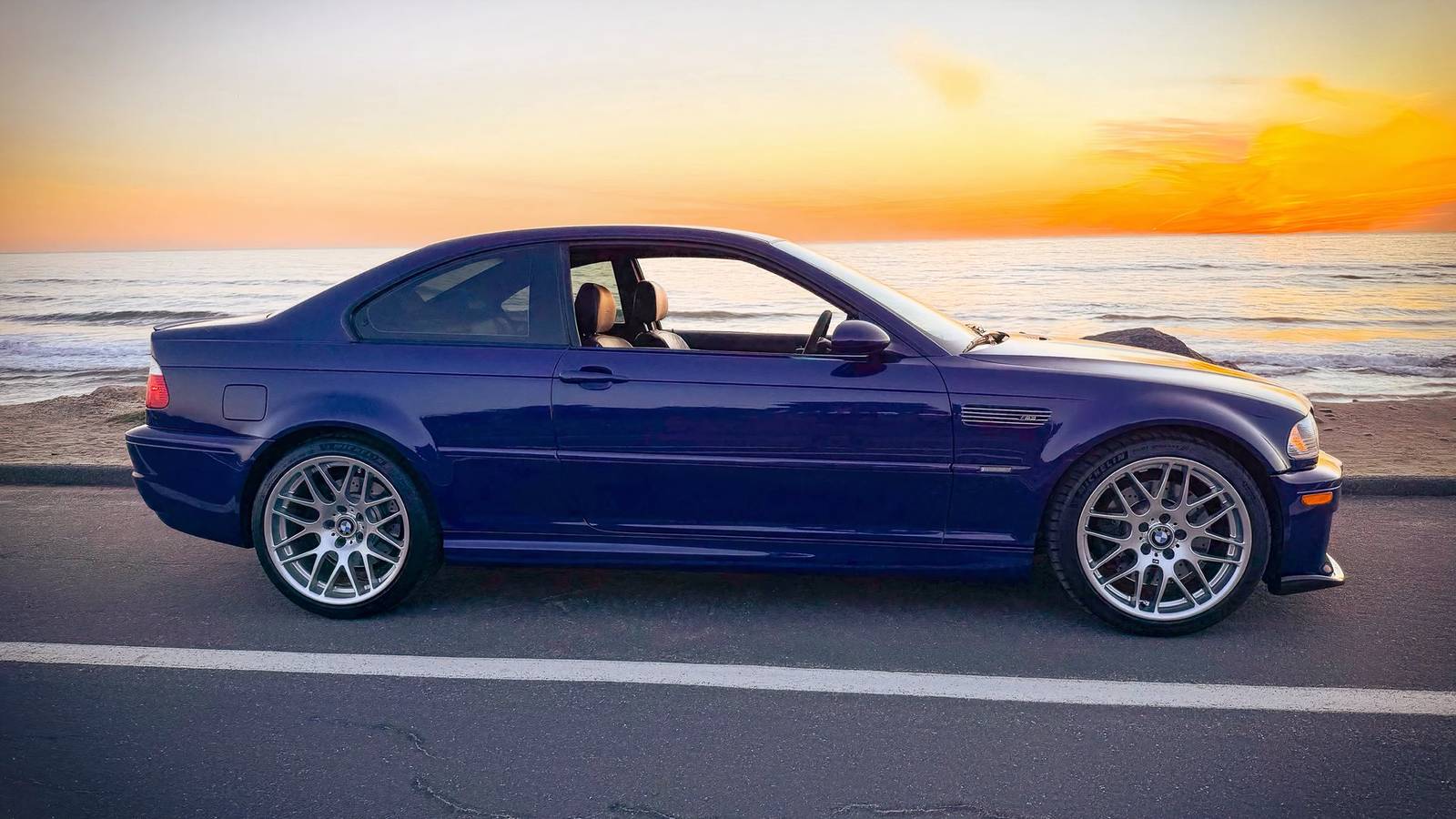
Boasting an average auction price of $31,504 and a top-selling price just north of $207,000, the 2001–2006 BMW M3 (E46) represents a high point for the German marque. This was the era when BMW prioritized engineering over convenience, and it is one of the rawest M models from the early 2000s.
It is equipped with either a six-speed Getrag manual box or an SMG II single-clutch automated manual; a MacPherson strut with high-performance dampers sits up front; multi-link independent rear suspension is tuned for the M3; hydraulic steering gives you direct feedback on the road, and four large vented discs handle stopping power. Then you have the S54 inline-six under the hood: a naturally aspirated beast.
2001–2006 BMW M3 Reliability

The 3.2-liter S54B32 inline-six featured in the 2001–2006 BMW M3 can redline at around 8,000 rpm and kicks out 333 horsepower and 269 pound-feet of torque. This translates to a very perky feel underfoot and 0–60 mph times of 5.3 seconds. It boasts individual throttle bodies, forged internals, and an 11.5:1 compression ratio.
The S54 inline-six is a legend in its own right for how it feels to blast, but what makes it even better is that some owners have claimed to put over 200,000 miles on theirs and even 300,000 miles with proper maintenance. It is recommended that, because the M3 is made to be ragged about, you check the rod bearings (which are prone to go at around 80,000 miles), check the VANOS code for models that have known problems and see to them before taking it to a track, change the water pump at around 60,000 miles, and ensure that the upper exhaust side’s timing chain guide, which is prone to wear, is still in one piece.
- Average Yearly Maintenance Cost: $1,161 (RepairPal)
- Est. Maintenance Cost During The First 10 Years: N/A (CarEdge)
- Total Recalls: 3 separate recalls for Takata Airbag Inflator recall (SRN: 19V-015)
- Worst Year To Buy Used: 2001–2002, because of teething problems with the SMG transmission, crank hub failures, and cooling system weakness.
2005–2007 BMW 530i
Engine Type: N52 Inline-Six

Getting slightly more modern, the 2005–2007 BMW 530i is a transitional model for BMW; they started moving into the modern era in terms of engineering and cabin equipment. Year-on-year, the E60-gen got more in the way of modern for the time equipment like shift-by-wire transmissions, and beefier turbocharged engines, but where this era of 5 Series stands out, aside from some unkind words from BMW fans at the time about its design, is the N52 inline-six used to power the 530i models.
There is just one N52 option for the E60 530i, a naturally aspirated N52B30 inline-six that shifts out 255 horsepower and 221 pound-feet of torque. This engine option was only available for the 2005–2007 530i MY range, and alongside the not-terribly-weighty (for a mid-size sedan) 3,803-pound curb weight, it does a grand job of offering on-road engagement and a fun, smooth, and relatively high-revving nature (6,500 rpm).
2005–2007 BMW 530i Reliability

By many a BMW fan, the N52 has been described as one of BMW’s most dependable engines, and we have seen plenty hit over 200,000 miles. So from the off, you are heading in the right direction for a long life. However, some big tasks need to be carried out or monitored to ensure that the N52 inline-six can see hundreds of thousands of miles.
Routine oil changes should go without saying for all engines, but in the N52’s case, you should pay particular attention to the oil filter housing gasket and the ‘Mickey Mouse flange’. This is a cooling flange that is known for leaking after years of abuse. If you let it continue to leak oil and coolant, it can damage the serpentine belt and cause all manner of problems afterward. The N52 is also equipped with Double VANOS and electronic throttle control, so both of these also need to be monitored for any signs of failure to ensure a smooth ride.
- Average Yearly Maintenance Cost: $630 (RepairPal)
- Est. Maintenance Cost During The First 10 Years: N/A (CarEdge)
- Total Recalls: 3; two for the Takata airbag inflator and one for the PCV valve heater, posing a risk of shorting and causing a fire.
- Worst Year To Buy Used: 2006 because of electrical issues with the Micro Power Module (MPM)
2006–2012 BMW 3 Series (E90/E92)
Engine Type: N52 Inline-Six

Also powered by the N52 engine, the 2006–2012 BMW 3 Series is a good contender to see high miles. The application of the N52 across this generation of 3 Series is slightly more sporadic, but if you can find a used example that boasts one, you have yourself a very reliable, fun, and compact sports sedan that still feels modern today. Model years 2006–2007 of the 323i, 25i, and 330i all come equipped with either an N52B25 or N52B30 inline-six. However, it is the 2007–2011 328i models that saw the most frequent use of it.
The 328i boasts a 3.0-liter NA N52B30 that cranks out 230 horsepower and 203 pound-feet of torque. It boasts Double VANOS, Valvetronic variable valve lift, a DOHC setup, a lightweight aluminum block, and can redline up to 6,500 rpm. The 328i is still a popular choice now because it is naturally aspirated, unlike the 335i and the 330i models that come equipped with a turbo-six; it still acts as a purist’s go-to.
2006–2012 BMW 3 Series (E90/E92) Reliability

As maybe one of the most coveted BMW engines, the N52 does offer a lot of silky smooth, revvy fun, so even if you have to carry out some of the tasks we have mentioned above for the N52, you are in line for a good time. When it comes to specific reliability concerns about the E90/E92 3 Series, though, there are a few things you should take note of.
According to owners, the automatic transmission that you get mated to some N52 engines can develop problems at high miles; the interior and trim can be worn out, with window regulators prone to failing, and control arm bushings and ball joints are prone to wear and failing over time. If you find a used 3 Series, alongside everything you should check for when buying a used car, it is well worth having a proper look under the wheel arches, and around the engine for signs of rust as well.
- Average Yearly Maintenance Cost: $773 (RepairPal)
- Est. Maintenance Cost During The First 10 Years: N/A (CarEdge)
- Total Recalls: 4; one for the Takata airbag inflator, one because the blower motor wiring can corrode and cause a fire, one for the PCV valve heater that can short and cause a fire, and one for the M models’ steering wheel airbag inflators.
- Worst Year To Buy Used: 2006 because of early teething problems.

What To Expect When Buying A High-Mileage Luxury SUV
Shopping for a high-mileage luxury SUV? Check out these essential tips first.
2009–2011 BMW X5
Engine Type: M57 Diesel Inline-Six

While luxury SUVs don’t always have the greatest reputation for longevity, diesel-powered SUVs at least do have a slightly better relationship with it. The 2009–2011 BMW X5 is one of those diesel-powered luxury SUVs that should see high miles. Boasting an aggressive and beefy exterior and an athletic yet luxurious interior with dual-zone climate control and a roomy cabin, the X5 not only looks good, but can still perform as any good SUV should.
The 2009–2011 BMW X5 (E70) is available with xDrive AWD, active steering, adaptive shocks, and one heck of a diesel engine: the M57 inline-six. xDrive30d and xDrive35d models between 2009 and 2010 are equipped with an M57TU2D30 unit that can shift out between 232 and 282 horsepower, depending on the year, while the 2009–2011 xDrive34d is also available with an M57Y Twin Turbo unit that is good for 265 horsepower and 425 pound-feet of torque.
2009–2011 BMW X5 Reliability

Owners of M57-powered models have claimed to put over 300,000 miles on them. It is built with a robust set of internals and block; it is smooth-running, so things aren’t shaken to pieces too often, and according to owners, when looked after, it is relatively trouble-free. This is especially the case compared to the newer N57 mill. However, some sticking points do need to be monitored to make it last the miles; these include timely replacement of wear parts like the injectors and the turbo, and the obvious oil and fluid changes needed for any engine.
Some of the most common failures associated with the M57 diesel engine are carbon build-up at the EGR valve, high-mileage injectors failing, oil leaks from aging seals, and turbo failures (which you should be able to feel from a lack of boost or see when it starts to smoke). One owner of a 2010 X5 35d claimed on Bimmerpost in 2019 to have reached over 240,000 miles in it, after buying it with 203,000 miles on the clock, with simple maintenance and keeping on top of the checklist.
- Average Yearly Maintenance Cost: $1,161 (RepairPal)
- Est. Maintenance Cost During The First 10 Years: N/A (CarEdge)
- Total Recalls: 4; one for the diesel fuel heater, which can experience electrical overload, one for an issue with the fuel pump contacts being incorrectly crimped, one for the Takata inflator recall, and one for the front-side marker lamps being non-compliant.
- Worst Year To Buy Used: 2011 because of fuel system problems and engine overheating issues.
2016–2019 BMW 3 Series
Engine Type: B58 Inline-Six

Available from $9,100 for the lowest trim of the 2016 MY to $29,000 for the highest trim of the 2019 BMW 3 Series, this range of 3 Series blends everything you could want from a mid-sized sports sedan. You get an interior that isn’t too far out of date with a good balance between comfortable and athletic; you get a sport-tuned suspension, optional variable sport steering, ventilated disc brakes as standard, and standard-fit 18-inch alloys wrapped in performance tires. You also benefit from a very potent, reliable, and fun-to-pin inline-six under the hood.
Between 2016 and 2019, it was the 340i and 340i xDrive models that were fitted with a B58 engine to mark the start of the F30 generation. Specifically, these models are equipped with a 3.0-liter turbocharged B58B30M inline-six that can kick out between 320 and 335 horsepower and 330 pound-feet of torque.
2016–2019 BMW 3 Series Reliability

The B58 inline-six is considered one of the most reliable modern BMW engines, with owners reporting having driven it for between 150,000 and 200,000 miles with proper maintenance. However, there is no reason why it shouldn’t last longer with some dedication. The key to the B58’s reliability is the forged crankshaft and connecting rods, closed-deck block, and decent cooling systems. It lets out a very smooth delivery, and it has already garnered a reputation for dependability, so there isn’t much more to ask from a performance engine.
Some of the most common problems associated with the turbocharged B58 inline-six include carbon buildup on the intake valves and minor coolant leaks. However, you should also look out for HPFP wear, turbocharger wastegate rattle, and valve cover leaks; if you keep on top of these things, it should see you good for a long time.
- Average Yearly Maintenance Cost: $968 (RepairPal)
- Est. Maintenance Cost During The First 10 Years: $14,345 (CarEdge)
- Total Recalls: 22
- Worst Year To Buy Used: 2019 because of the most recalls (9)
2019–2026 BMW Z4
Engine Type: B58 Inline-Six

The 2026 BMW Z4 is the last of these legendary roadsters we are going to be able to buy, so the fact that it is powered by a reliable turbocharged B58 inline-six as well is just a bonus. Now is the time to get one. It is the coveted Z4 M40i that boasts a 3.0-liter turbocharged B58B30 inline-six. It pumps out 382 horsepower at 6,500 rpm and 369 pound-feet of torque at between 1,600 and 4,500 rpm, getting you to 60 mph in around 4.4 seconds.
The Z4 M40i also comes equipped with a manual transmission, which we know is very rare on the market today, so the clock is certainly ticking if you want to get your hands on a reliable, fun, potent, and last-of-an-era roadster that still has a stick shift. The Z4 left a huge mark on the roadster market over the years, and with the 2026 model acting as a curtain call, we do hope to see these still being enjoyed on the road in 200,000+ miles.
2019–2026 BMW Z4 Reliability

As we have already talked about the reliability and things to watch out for on a B58 engine, here we will talk about the Z4’s reliability instead. According to RepairPal, the BMW Z4 is relatively reliable, with a rating of 3 out of 5, while the latest iteration has been given very favorable feedback on KBB and J.D. Power, with reliability ratings of 4.8 out of 5 and 85 out of 100, respectively.
However, common complaints about the latest and last generation of the BMW Z4 include the fact that they run at very high temperatures, which in turn can melt the plastic parts in the engine bay and degrade the seals quickly. Owners have also complained that suspension and braking can already have taken a pounding from previous owners, so it is worth taking a proper look and test drive of one before parting with any cash.
- Average Yearly Maintenance Cost: $895 (RepairPal)
- Est. Maintenance Cost During The First 10 Years: $14,915 (CarEdge)
- Total Recalls: 6
-
Worst Year To Buy Used: 2019, because of teething problems for the first MY of the new G29 generation

10 Most Reliable Cars Ever Made
If you’re looking for reliable and dependable cars that can last you a lifetime, you simply can’t go wrong with the models on this list.
2021–Present BMW 4 Series
Engine Type: B48 Inline-Four
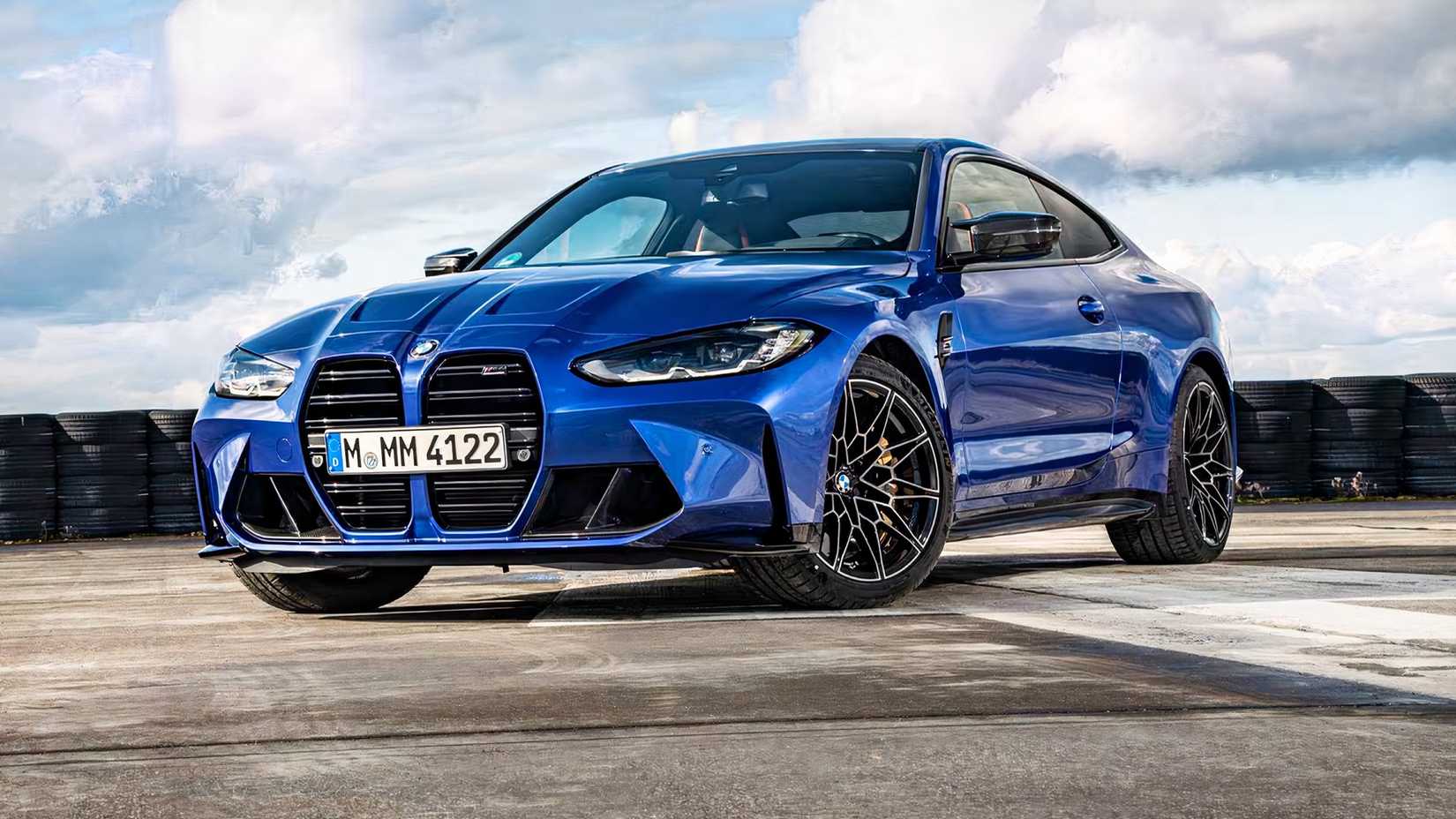
Front 3/4 shot of 2024 BMW M4 Competition in blue parked BMWThe current generation of the BMW 4 Series is all sorts of fun to drive and aggressive-looking, and a lot of that is down to the B48 engine under the hood. This turbocharged inline-four engine is not only relatively powerful for its size (maximum displacement in a 4 Series is 2.0 liters) but is also very rugged. Every model of the current G22, G23, and G26 generation Series 4 is equipped with it, and we can see why. The 420i and 420i xDrive models are equipped with a 184-horsepower unit that balances performance and efficiency; the 430i and 430i xDrive models from before 2024 get a 258-horsepower variant, and the current 430i and 430i xDrive models get a 245-horsepower unit that again balances impressive performance and relatively good fuel returns. Owners on KBB have rated the 2025 BMW 4 Series 5 out of 5 overall, 5 out of 5 for reliability, and 5 out of 5 for performance.
2021–Present BMW 4 Series Reliability

2020 BMW M4 Convertible engine BMWThe B48 is a relatively new engine, so there isn’t a massive chance of it seeing many hundreds of thousands of miles yet (unless there are some very dedicated drivers out there), but it is still being well-received in terms of lack of problems. It is rigid, rugged, and boasts low-friction cylinder liners, so it should run smoothly for some time. There have been some reported problems, though, and if you are planning on running a B48 for over 200,000 miles, you should pay attention to oil leaks from the oil filter housing, coolant leaks from the water pump, carbon buildup on the intake valves (thanks to direct injection), and turbo failure because of excessive heat or oil contamination.
- Average Yearly Maintenance Cost: $968 (RepairPal)
- Est. Maintenance Cost During The First 10 Years: $15,009 (CarEdge)
- Total Recalls: 10
- Worst Year To Buy Used: 2021, because of teething problems for the G22 generation
Sources: JD Power, CarEdge, Bimmerpost, and RepairPal


