
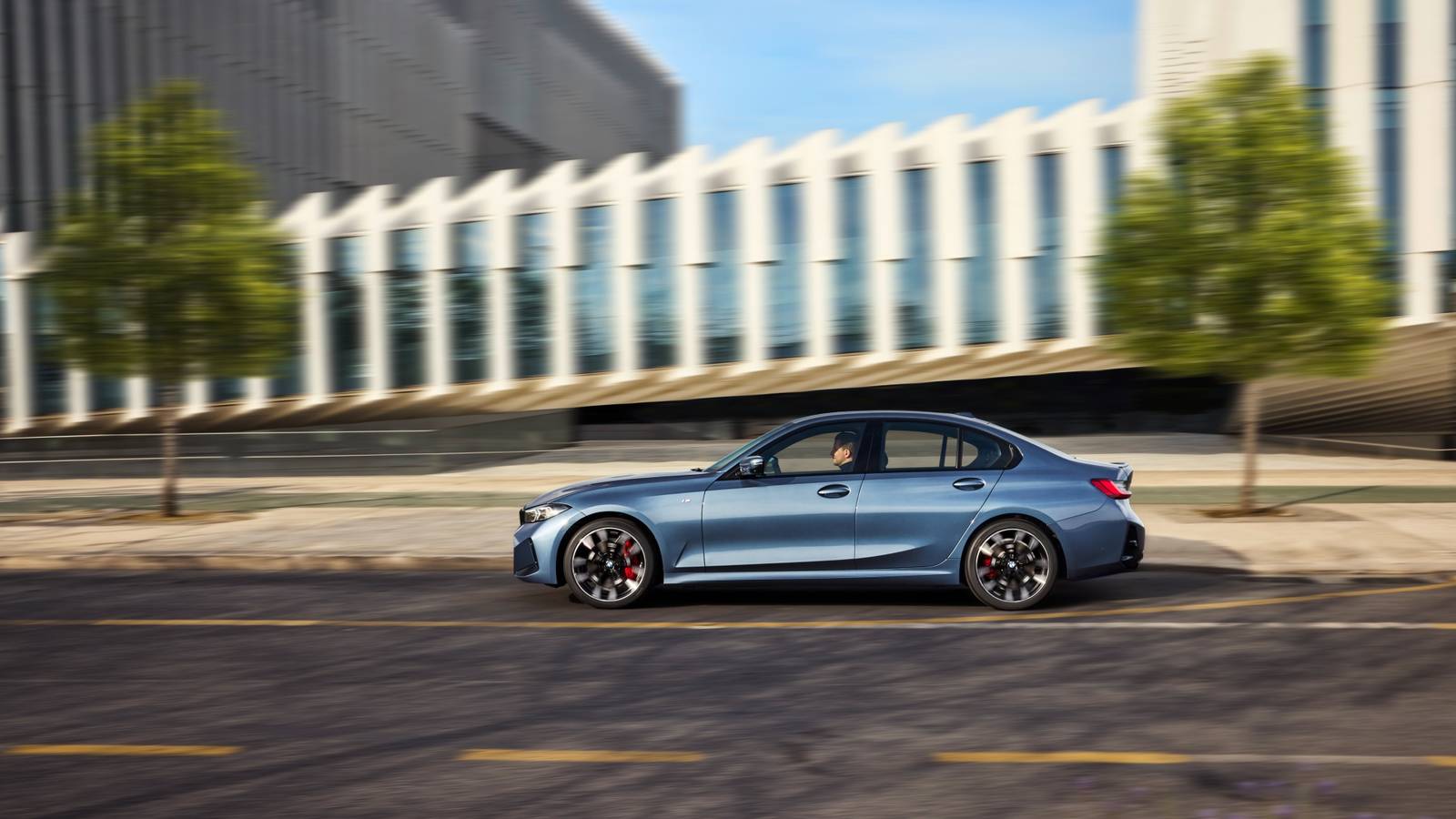
The auto landscape here in the U.S. would look different without the BMW 3 Series. Since 1975 worldwide, and since 1977 here in the U.S., BMW has been turning out the 3 Series as a coupe, a sedan, a wagon, and a convertible – car-wise, there isn’t much the 3 Series hasn’t been. Like all good model lines that last, the BMW 3 Series has seen many faces and engines over its seven generations of existence.
While each 3 Series generation offers something different and exciting, not all are created equal in terms of dependability. So, we are taking a look at how each BMW 3 Series generation ranks for reliability, and have brought you information about which generations are the most and least reliable to buy today.
The models in this list have been extensively researched to ensure the most accurate information possible as of the time of publishing. Models are listed in ascending order from least to most reliable.
Fifth-Generation BMW 3 Series (2006–2011)

The fifth-generation lineup includes model years from 2006 to 2011, and while there are some exceptionally reliable models (mainly due to the engines they boast under the hood), some model years of the 2006 to 2011 BMW 3 Series should be avoided. Today, the fifth-generation BMW 3 Series is a bargain sports car, with average used prices ranging from $3,150 to $12,000. Available body options are varied, and you can get a sedan, a coupe, a wagon, and a convertible; in other words, a huge amount of choice and a lot of bang for your buck.
|
Spec |
Fifth-Generation 325i |
Fifth-Generation 328i |
Fifth-Generation 330i |
Fifth-Generation 335i |
Fifth-Generation 335i |
Fifth-Generation 335d |
Fifth-Generation M3 |
|---|---|---|---|---|---|---|---|
|
Engine |
3.0-Liter N52 Inline-Six |
3.0-Liter N52 Inline-Six |
3.0-Liter N52 Inline-Six |
3.0-Liter Twin-Turbocharged N54 Inline-Six |
3.0-Liter Twin-Turbocharged N55 Inline-Six |
3.0-Liter Turbo-Diesel M57 Inline-Six |
4.0-Liter S65 V8 |
|
Horsepower |
215 Horsepower |
230 Horsepower |
255 Horsepower |
300 Horsepower |
300 Horsepower |
265 Horsepower |
414 Horsepower |
Out of all the engine options available, the naturally aspirated N52 inline-six and the M57 turbo-diesel are the two with the most owners reporting high mileage with just simple maintenance. Both are renowned for being BMW engines that can see over 200,000 miles, with the NA N52 boasting only moderate horsepower and no turbo, which means less stress, and the M57 boasting a beefy set of internals, and again, only moderate horsepower.
Fifth-Generation BMW 3 Series Reliability

According to owner reviews on KBB, reliability ratings for the fifth-generation 3 Series are not terrible. Across all model years, the 2006–2011 BMW 3 Series receives a 4.5 out of 5 for reliability. However, there have been 100+ complaints on the NHTSA’s website about some engines found under the hood of fifth-gen 3 Series models, so tread cautiously when looking to buy one. Lots of owners would advise avoiding them completely.
Out of all the models, the lowest-horsepower N52-equipped models are the most likely to see high mileage. The N52 inline-six was utilized extensively throughout the fifth generation (and carried over to the sixth), and under the hoods of the 325i, 328i, and 330i, it has carried some happy owners a long way with simple maintenance. So the fifth-gen can be reliable, but it is very MY-dependent. It is smooth-running, sturdy, lightweight, and very useful to tune. It is worth noting, though, that outside of engine problems, the most common problems faced by owners include rear subframe issues (mostly for the M3), rough shifting for high-mileage ZF six-speed auto-equipped models, and alternator issues that can lead to battery drain.
- Average Yearly Maintenance Cost: $1,517 (RepairPal)
- Est. Maintenance Cost During The First 10 Years: $14,345 (CarEdge)
- Total Recalls: 4; two for the Takata Airbag inflator recall, and two for blower motor wiring issues.
- Worst Year To Buy Used: 2006–2008; specifically the 335i models because of the use of the twin-turbo N54.
Third-Generation BMW 3 Series (1992–1999)

The third-generation 3 Series models offer a lot of engaging driving feel, a modern coupe-like design with distinctive twin headlights and a small kidney grille, and a very good choice of engines to complement the hands-on experience. The sleeker and more aggressive look was a very deliberate departure from the second-generation 3 Series.
Available as a four-door sedan, a coupe, a convertible, and a compact (with three doors and a hatchback), the third-generation BMW 3 Series blends an old-school rear-wheel drive layout, rack-and-pinion steering, hydraulic steering in the earlier MYs and optional variable sport steering in the latter ones, and a whole score of naturally aspirated inline-sixes (plus two inline-fours) that offer a visceral feel underfoot. It is an old-school BMW that is still usable today.
|
Spec |
Third-Generation 318i/318is |
Third-Generation 318i/318is |
Third-Generation 323i/323is |
Third-Generation 323i/323is |
Third-Generation 328i/328is |
Third-Generation M3 |
Third-Generation 318iS/318ti |
|---|---|---|---|---|---|---|---|
|
Engine |
1.8-Liter M42 Inline-Four |
1.9-Liter M42/M44 Inline-Four |
2.5-Liter M50 Inline-Six |
2.5-Liter M52 Inline-Six |
2.8-Liter M52 Inline-Six |
2.8-Liter M52 Inline-Six |
1.9-Liter M44 Inline-Four |
|
Horsepower |
138 Horsepower |
140 Horsepower |
168 Horsepower |
170 Horsepower |
190 Horsepower |
286 Horsepower |
138 Horsepower |
Third-Generation BMW 3 Series Reliability

The whole E36-gen 3 Series was plagued by cost-cutting, so it is wise to be cautious when looking at one. The 1996–1999 models are considered the most dependable, thanks to the M52 inline-six and beefier cooling system compared to the earlier model years, which had a plethora of problems with weak suspension components, electrical gremlins, and troublesome cooling systems.
It is the latter updated models of the third generation (1996 onward) that are the safest bet. Thanks to the aforementioned inline-six and general lack of electronic components compared to modern BMW 3 Series models, which makes them good for high mileage. Of course, though, there are still some things you should keep an eye out for when you are looking at buying one, namely, underbody rust, knackered suspension, signs of leaks around the engine covers, and whether all the electronics in the cabin work as they should.
- Average Yearly Maintenance Cost: N/A (RepairPal)
- Est. Maintenance Cost During The First 10 Years: N/A (CarEdge)
- Total Recalls: 1, for the Takata Airbag inflator recall.
- Worst Year To Buy Used: 1992–1994, because of electrical faults, cooling system weaknesses, and the use of M42 and M44 engines that are typically prone to more problems than the M52.
Fourth-Generation BMW 3 Series (1999–2005)

The 1999–2005 BMW 3 Series is all sorts of analog goodness, and owners’ love for them doesn’t stop at the more connected feel you get on the road from a relative lack of nannies. The fourth-gen boasts hydraulic steering, physical buttons in the cabin, and a now-traditional instrument cluster free of digital distractions. Once again, this generation of 3 Series comes equipped with a plethora of engine choices, and all of them are naturally aspirated (except for some later MYs of the 330d).
The lowest-output engine can be found under the hood of the early models of the 323i and 323Ci, which is a 2.5-liter M52 inline-six good for up to 184 horsepower. The M54 inline-six replaced the M52, and was originally available as a 2.5-liter and 3.0-liter unit, with horsepower ranging from 184 to 225. The E46 M3 models come equipped with a 333-horsepower S54 DOHC inline-six, and the 330d (in its very limited numbers here in the U.S.A.) comes equipped with a 3.0-liter M57 turbo-diesel good for 184 horsepower.
Fourth-Generation BMW 3 Series Reliability

Generally speaking, the fourth-generation BMW 3 Series is a solid car. Among the model years, the 2001 330i stands out particularly for longevity, thanks to improvements in the cooling system and better electronics compared to the MY before it. With proper maintenance and paying special attention to corrosion hotspots (rear subframe), owners often report putting over 200,000 miles on the M54-equipped models, especially lower-horsepower examples like the 325xi and 330i.
Despite being a reliable BMW, fourth-gen owners have reported a few problem areas that need to be monitored to ensure you can see the high miles in one. Common fourth-gen 3 Series problems include cooling system leaks, rear subframe corrosion (especially examples that see action in wetter parts of the country), and suspension wear. This is especially apparent in ball joints and control arm bushings. Along with everything you should check when buying a used car, it is important to look up underneath the wheel arches and along the underbody for rust.
- Average Yearly Maintenance Cost: N/A (RepairPal)
- Est. Maintenance Cost During The First 10 Years: N/A (CarEdge)
- Total Recalls: 2; both for the Takata Airbag inflator recall.
- Worst Year To Buy Used: 2000; lots of owners have complained about suspension problems and cooling system leaks.

The Most Reliable BMWs Of The 1990s That Still Run Strong
If you want the best the era had to offer, it was likely one of these picks.
Sixth-Generation BMW 3 Series (2012–2018)

Available as the 2012 to 2018 BMW 3 Series, some of the sixth-generation lineup are very reliable. The sixth-generation 3 Series is available with a huge variety of engine choices, and while some of them are up there with some of the most reliable BMW engines created, the same can’t be said for all of them. Sixth-gen BMW 3 Series engines include:
- 1.5-Liter Turbocharged B38 Inline-Three. 134 Horsepower (2015–2018).
- 2.0-Liter Turbocharged B48 Inline-Four. 184 Horsepower (2012–2018)
- 2.0-Liter Turbocharged N20 Inline-Four. 241 Horsepower (2012–2015).
- 2.0-Liter Turbocharged B48 Inline-Four. 255 Horsepower (2015–2018).
- 3.0-Liter N52 Inline-Six. 215 Horsepower – 255 Horsepower (2012–2015).
- 3.0-Liter Turbocharged N55 Inline-Six. 302 Horsepower (2012–2015).
- 3.0-Liter Turbocharged B58 Inline-Six. 322 Horsepower (2015–2018).
The sixth-gen 3 Series was originally available as a four-door sedan, as the F30, a wagon, as the F31, and as a GT model, as the F34. Today, according to data on Kelley Blue Book, average used prices range from $7,300 for the oldest 328i sedan to $23,200 for the 2018 330i with all-wheel drive.
Sixth-Generation BMW 3 Series Reliability

While the average used prices don’t seem horrendous, there were teething problems with the early N20 inline-fours between 2012 and 2014. Owners have reported that common issues with these engines include timing chain failure due to a weak plastic chain guide, oil leaks, HPFP and injector failures, and coolant system problems.
Later model years of the F30 (2015–2018) buck the trend and make up for the early teething problems. They are significantly more reliable than the first MYs of the sixth-gen 3 Series, and among the most reliable BMW models ever made. So, we’d suggest going for a later MY for a better chance of seeing high miles.
Other problems known to cause sixth-gen 3 Series owners bother include A/C failures, suspension rattles, coolant temperature sensor failures, and general degradation of the interior trim. It is also worth noting that the 2012–2018 BMW 3 Series has been subject to several NHTSA recalls for issues ranging from airbag failures to EGR cooler failures, so it is important that if the low prices are enticing, you have all the issues listed on the NHTSA’s website inspected and addressed.
- Average Yearly Maintenance Cost: $1,517 (RepairPal)
- Est. Maintenance Cost During The First 10 Years: $14,345 (CarEdge)
- Total Recalls: 5; one for coolant pump issue; two for EGR cooler recall; one for HPFP failure, and one for head airbag issues.
- Worst Year To Buy Used: 2012, because of the use of early N20 inline-four.
First-Generation BMW 3 Series (1977–1983)

As the generation that kicked off the 3 Series back in 1977, you may be surprised to hear that, according to Classic.com, the average auction price of a first-generation E21 BMW 3 Series is a lowly $15,450. The most expensive example sold went under the hammer for just shy of $60,000 (which was a mint condition and original model), and the cheapest sold for just under $2,000. For not a huge amount of money, you can get your hands on proper BMW heritage.
Both inline-four and inline-six engine options were originally available for the first model years of the 3 Series in Europe, but here in the U.S., we only got the 1.8-liter M10 inline-four. Horsepower may only hit a maximum of 101 horsepower under the hood of the 1980–1983 3 Series, courtesy of the fuel-injected M10B18, but its durability is legendary. We think that the first-gen models are a very good crack at a two-door compact executive sedan, and to us, it is an icon for kick-starting some of the best BMW models ever created.
First-Generation BMW 3 Series Reliability

Because of the age of the first-generation BMW 3 Series, the main thing you should look out for is rust and corrosion in the wheel wells, around the engine bay, on the suspension components, and in the trunk. Also, because this was the first generation of a new model for BMW back in the mid-70s, we’d suggest carefully looking at the fuse box for worn wires.
Despite the problems that the first-gen 3 Series is likely to have picked up over the years, the M10 inline-four under the hood is rock-solid. There is a lack of electrical assistance for most things; it is low-powered, so it isn’t under a huge amount of strain all the time, and it boasts a simple, rugged design with a forged crankshaft and a timing chain. Also, because of the oversized casting tolerance added, it can be bored out to give it some extra juice. It is a very versatile little engine.
- Average Yearly Maintenance Cost: N/A (RepairPal)
- Est. Maintenance Cost During The First 10 Years: N/A (CarEdge)
- Total Recalls: N/A
- Worst Year To Buy Used: 1977–1979 because of rust issues and electrical reliability.
Second-Generation BMW 3 Series (1984–1991)

Following hot on the heels of the first-gen 3 Series is the 1984–1991 BMW 3 Series (E30). With it, it brought the same hands-on feel that purists still love today, an analog feel behind the wheel, the iconic classic BMW look from every angle, more options, and a whole new toolkit of engines. Today, the average auction price of an E30 3 Series is $32,646, while the E30 M3 models command a much higher average auction price of $85,309.
Engine options for the second-generation 3 Series are far more varied than those of the first generation. It was originally available with an M10 inline-four, a 1.8-liter M42 inline-four good for 134 horsepower, a 2.5-liter M20 inline-six that kicks out 168 horsepower, a 2.7-liter M20 inline-six good for 121 horsepower, and a 2.3-liter S14 inline-four good for 192 horsepower under the hood of the first M3 model years (1988–1991). They are all naturally aspirated and were introduced as a defining step up for the 3 Series.
Second-Generation BMW 3 Series Reliability

The E30 BMW M3 is one of the most coveted M models ever created, and it is ideal for purists who want a hands-on, turbo-free experience. The steering is kept in check by a RWD layout, a lightweight, stiffened chassis, and near-50:50 weight distribution; it only comes equipped with a manual transmission, and the S14 under the hood is rev-happy (redline at 7,000 rpm) and responsive.
What makes the M3’s S14 even better is that it is reasonably reliable if looked after, even for something with a racing pedigree. While it is more involved than looking after the M20 inline-sixes used for the 88–91 325i models, it is built for high strain, it has a simple design, and it boasts a timing chain instead of a belt (so no annoying changes).
Other second-gen 3 Series models to look out for are the M20-equipped 325i models. Owners have routinely put 200,000+ miles on these classic BMWs by keeping up with proper maintenance. If we could kindly steer you away from some models of the second-gen, unless properly looked after, it would be the 1984–1986 325e models. They are low-powered (121 horsepower), but because of that, examples today have often been neglected over the years. Unless you want a potentially very hands-on project, we’d suggest the M3 or the 325i models.
- Average Yearly Maintenance Cost: N/A (RepairPal)
- Est. Maintenance Cost During The First 10 Years: N/A (CarEdge)
- Total Recalls: 3
- Worst Year To Buy Used: 1984–1986, because of early electrical teething problems.

Affordable BMW Models You Should Buy Used
These are all the five-year-old BMWs that have hit the sweet spot of depreciation.
Seventh-Generation BMW 3 Series (2019–Present)

As the current generation of the BMW 3 Series, seventh-generation models are still commanding relatively high prices, ranging from $18,850 for the 2019 3 Series to $88,660 for the 2026 BMW M3 Competition. However, alongside very good rates of reliability, you also get the most modern and intuitive build.
When the seventh generation was released, BMW released it with an overhaul. The BMW Evo platform was swapped for the lighter and more rigid BMW CLAR platform; the iDrive infotainment screen got larger (maximum 10.25 inches); a fully digital 12.3-inch instrument cluster became available; the maximum cargo capacity grew from 27 cubic feet in the sixth-gen wagon to 32 cubic feet in the seventh-gen 3 Series Touring, and standard adaptive suspension became more widely used across the grades.
Seventh-Generation BMW 3 Series Reliability

According to owner reviews on KBB, the 2019–2025 BMW 3 Series receives an average reliability score of 4.2 out of 5. This may be fractionally lower than other generations of the 3 Series, but the seventh-gen 3 Series boasts several reliable engines that help to maintain very decent dependability levels in comparison. There are no naturally aspirated engines left for the 3 Series lineup, but thanks to the evolution of turbo tech and hybrid tech, the B48 inline-fours, B58 inline-sixes, and the S58 inline-sixes utilized are both powerful and trustworthy.
The two models (the M340i and M340i xDrive) that boast the B58 inline-six, renowned for being one of the most reliable modern BMW engines, benefit from up to 382 horsepower and relatively stress-free driving. There are some issues you should take note of, though, as owners have reported oil leaks from the valve cover, carbon buildup due to it boasting direct injection, and timing chain tensioner wear.
- Average Yearly Maintenance Cost: $1,517 (RepairPal)
- Est. Maintenance Cost During The First 10 Years: $14,345 (CarEdge)
- Total Recalls: 3; one for engine starter fire risk, one for counterbalance shaft issue, and one for rear seatbelt defect.
- Worst Year To Buy Used: 2019, because of early teething issues and electrical glitches.
Sources: JD Power, CarEdge, NHTSA, Kelley Blue Book, Classic.com, and RepairPal.