
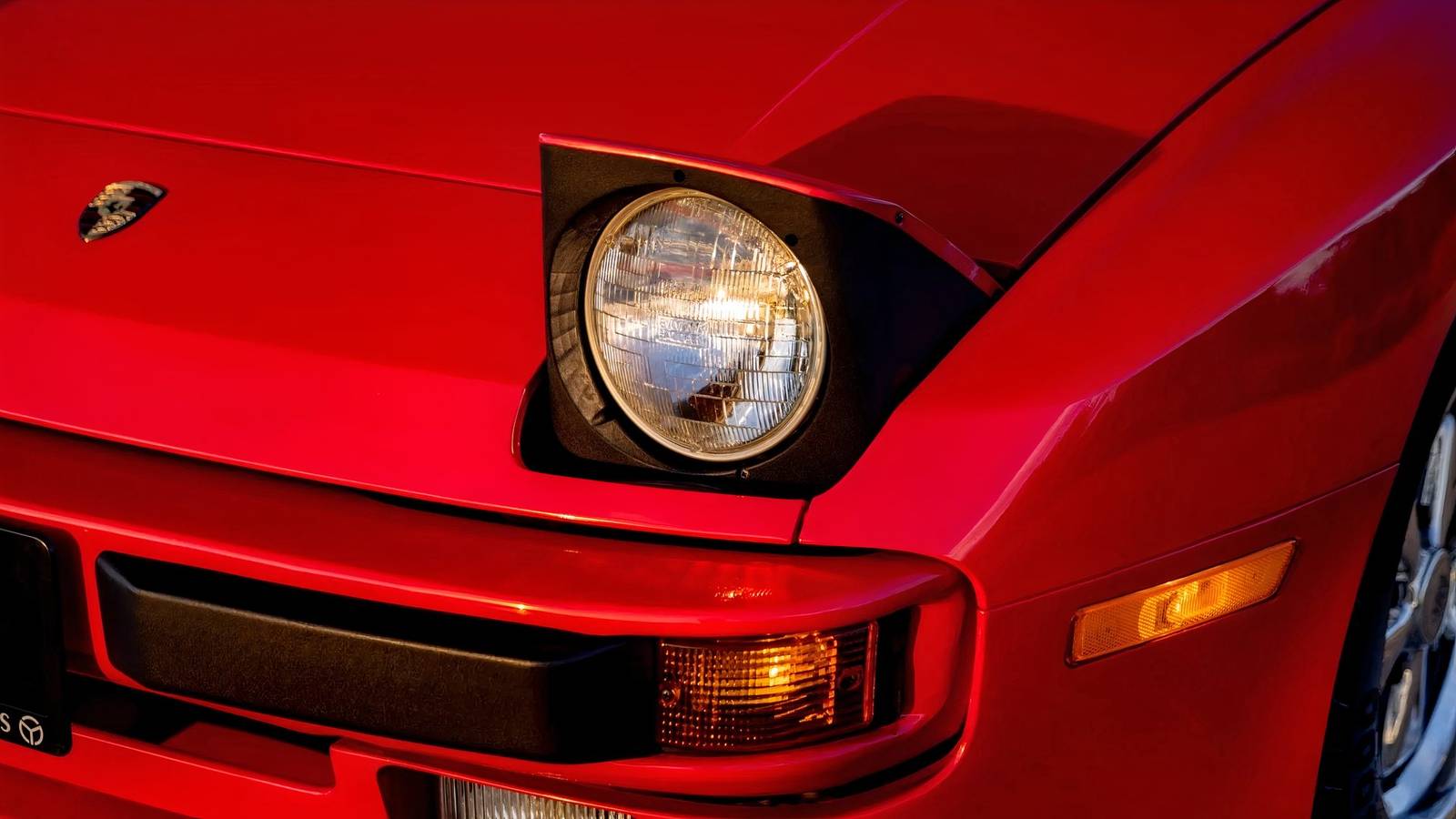
The Porsche 944 has spent much of its life living in the long shadow of the 911. For years, it was framed as the “other” Porsche — the one with the engine in the wrong place and the wrong number of cylinders. And yet, decades on, the 944 is enjoying a quiet but undeniable reassessment.
When one of motoring’s true legends — a former presenter of Top Gear who later went on to create The Grand Tour — speaks so highly of a sports car, it carries real weight. In Jeremy Clarkson’s own words, the Porsche 944 was among the best cars he had ever driven — praise that says more than any spec sheet ever could. Look past the badge hierarchy and the nostalgia bias, and the 944 begins to reveal itself not as a compromise, but as one of the most strategically important and intelligently engineered cars Porsche has ever built.
Why Porsche Built The 944
Bringing Performance To A Wider Audience

By the late 1970s, Porsche found itself at a crossroads. The 911 was iconic, but it was also expensive to build, increasingly complex, and vulnerable to tightening emissions regulations and shifting global markets. Porsche needed a way to expand without diluting its brand — no small task for a company whose identity was already tightly defined.

The solution wasn’t to make the 911 cheaper. It was to build a different kind of Porsche. One that would ruffle a few feathers, so to speak. The 944 emerged as part of Porsche’s front-engined, water-cooled strategy, building on lessons learned from the earlier 924. But where the 924 was sometimes criticized for its Volkswagen and Audi roots, the 944 was unmistakably Porsche in both intent and execution. Wider bodywork, flared arches inspired by the 924 Carrera GT, and a more muscular stance immediately gave it presence. Arguably, it was not always the best-looking Porsche; it was ugly-looking to say the least.
A More Approachable Porsche

Porsche positioned the 944 as a true sports car — not an entry-level concession, but a performance-focused machine that could attract buyers who wanted Porsche engineering without the intimidation, cost, or idiosyncrasies of a rear-engined 911. I’d actually think of it as a budget-friendly Porsche. If I were of age, living at that time, and did not have 911 money, I think 944 would have been my go-to choice. And I also think it wasn’t about cheapening the brand. It was about broadening it.

Best Bang For Your Buck Modern Porsche 911 That Money Can Buy
If you are in the market for a bargain supercar killer, it’s hard to do better than the 996 generation 911 Turbo
The Engine That Changed Perceptions
Four-Cylinder Power Done The Porsche Way

At the heart of the 944 was the feature that sparked the most debate: a four-cylinder engine. In an era when Porsche’s reputation was built mainly on flat-six engines, and in today’s times, they still stick with potent flat-sixes, the idea of a four-cylinder Porsche back at the time felt like heresy to purists. But Porsche approached the problem in a typical contrarian fashion — by engineering the engine to be exceptional rather than apologetic.
Building On Established Engineering Excellence

The 944’s inline-four was essentially half of the 928’s V8, sharing design philosophy and internal architecture. Early naturally aspirated versions produced around 150 horsepower, while later iterations — including the 944 S, S2, and Turbo — increased output significantly. The Turbo models, in particular, proved that forced induction could turn the 944 into a genuinely fast car by the standards of its time, impressive if you ask me. What mattered most wasn’t the cylinder count, but how the engine performed and delivered power without strain.

It was described as smooth, eager to rev, mechanically robust, and well-matched to the car’s chassis. Power delivery was linear and predictable, making the 944 approachable without feeling dull. In hindsight, the engine did more than power the car — it changed perceptions. It proved that Porsche’s engineering excellence wasn’t confined to a single layout or formula. One would think Porsche was rewriting the narrative, but that was far from the case. In the 944 performance, in Porsche’s eyes, was a result of balance and execution, not tradition alone.

The Sports Car With Toyota Reliability And Ferrari-Level Speed
Discover the engineering marvel that delivers Ferrari-like performance without the fuss of a supercar.
Balance Was The Real Secret Weapon
Why The 944 Felt So Right On The Road

If the engine challenged expectations, the chassis shattered them. The 944 used a transaxle layout, with the engine mounted up front and the gearbox positioned at the rear. This configuration delivered near-perfect 50:50 weight distribution — something few sports cars of the era could claim. And this is where I feel Porsche had the upper hand: they were highly strategic, and that showed through in the 944.

On the road, the result was widely regarded as transformative. Contemporary road tests noted that the 944 didn’t demand the constant vigilance often associated with rear-engined sports cars at the limit, nor did it suffer from the nose-heavy feel common to many front-engined rivals of the era. Steering was consistently described as communicative, turn-in as precise, and the chassis as composed even when driven hard. That balance became one of the 944’s defining traits.
Driving Attributes Enthusiasts Didn’t Know They Were Missing Out On

Journalists praised its predictability and neutrality, while owners found it a sports car they could enjoy quickly and confidently, without feeling as if they were fighting physics. In many ways, the 944 came to represent a purer definition of performance than raw numbers alone could convey. It wasn’t the fastest Porsche of its time, but it earned a reputation as one of the most satisfying to drive — a distinction that has only grown with hindsight.

One Of The Last Fast Cars That Still Feels Analog
A rare breed of performance car that demands your full attention and rewards skill, not just speed.
A Reputation For Reliability
The Sports Car You Could Actually Live With

While the 911 built its legend on character and motorsport pedigree, the 944 quietly earned respect through something far less glamorous: reliability. The water-cooled four-cylinder engine was durable when properly maintained; the cooling system was more forgiving than earlier air-cooled setups, and the car’s overall mechanical layout made it easier to live with day-to-day. It started reliably, handled traffic without drama, and could rack up miles without constant mechanical anxiety. Talking space and practicality added to the allure of owning a 944. As a hatchback, it offered decent cargo space, a comfortable, ergonomic cabin, and excellent visibility.




This was a sports car that didn’t punish you for choosing to drive it often. It served as a versatile vehicle: a sports car for the weekend and a comfortable cruiser for the week. That usability helped cement the 944’s reputation as a Porsche you could actually own, not just admire. For many buyers, it became their first Porsche — and for some, the one they kept the longest. That alone speaks volumes about the car’s lasting appeal.

The Most Over-Engineered V10 Ever Put In A Production Car
Few engines in history have been constructed with this level of development.
The 944’s Place In Porsche History
How It Became The People’s Porsche

With hindsight, the importance of 944 becomes impossible to ignore. It was a commercial success, helping stabilize Porsche’s finances during a challenging period. It introduced a new generation of drivers to the brand. And it proved that Porsche could innovate without abandoning its core values. Today, the 944 is widely recognized as a pivotal chapter in Porsche’s history rather than a mere footnote. Enthusiasts have grown to appreciate its design, its performance, and the simplicity with which it delivers driving pleasure. It may be cut from a different cloth, but it remains unmistakably Porsche.

Calling it the “People’s Porsche” isn’t an insult — it’s a compliment. The 944 made Porsche attainable for a broader audience, welcoming everyday enthusiasts into the brand. It belonged to a time when cars were more straightforward and honest—free of hybrid systems or electrification, focused purely on the connection between driver and machine.
Genuine Personality And Driving Manners

Some soul and character — how a car makes you feel — is what truly matters, and the 944 reflects that. Sadly, in the modern world, everything is driven by spec sheets, status, and how many cylinders a car has. The 944 is a testament to what really matters: connection, character, and honest motoring. And by that measure, the Porsche 944 remains one of the most quietly successful cars Porsche has ever built.
Sources: Porsche USA, Bring a Trailer