
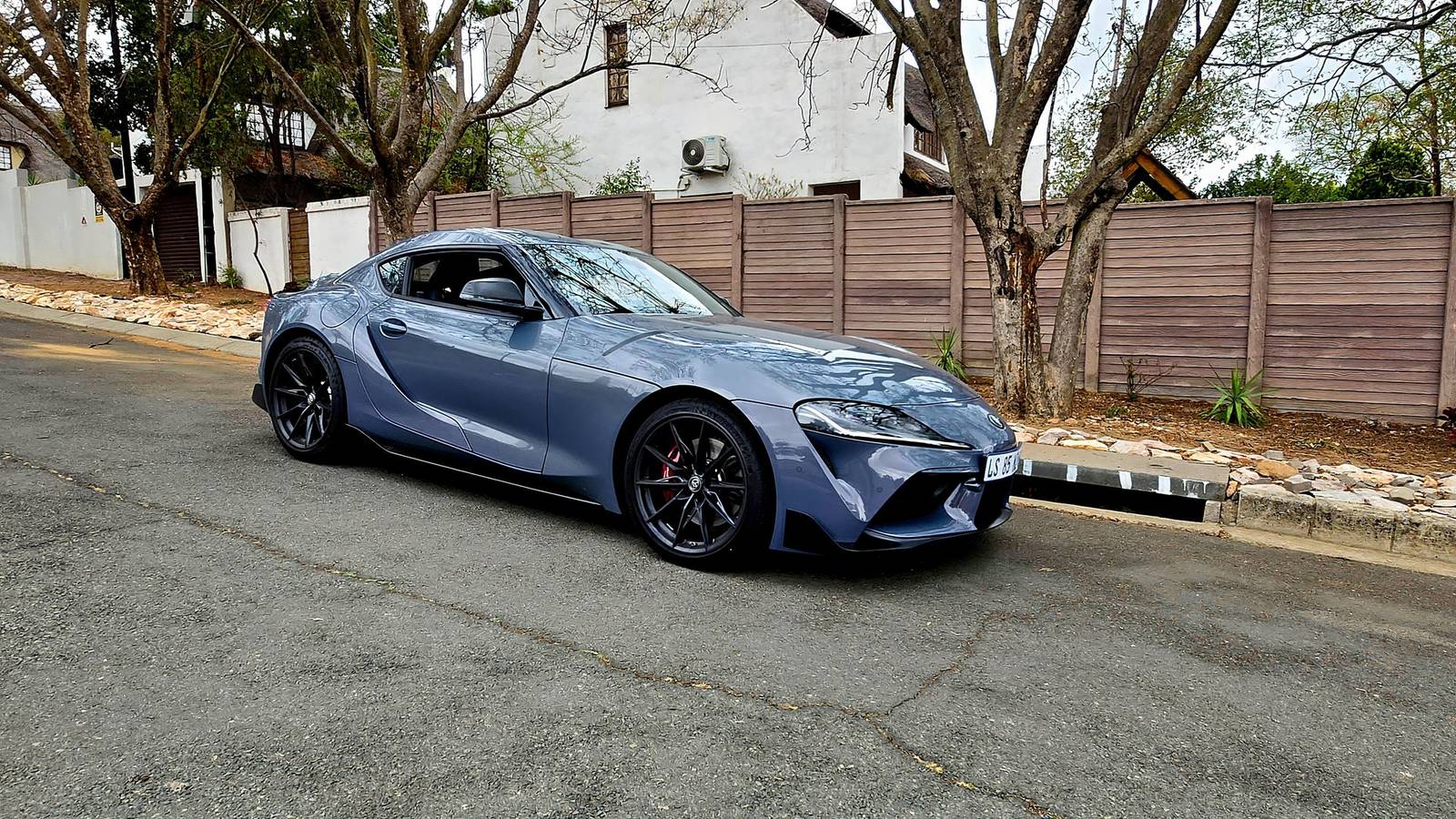
It’s getting harder to find cars that genuinely want you involved. Performance numbers are easy now. Almost everything is quick. But as prices rise and technology piles on, many modern sports cars feel more like impressive machines than something you actually connect with. They isolate. They assist. They smooth over mistakes before you even realize you’ve made them. That’s why the Toyota GR Supra still stands out. I’ve driven a lot of cars over the past four years — well over 200 — and very few have stayed with me long after the keys were handed back. The Supra did. Not because it tried to impress, but because it connected in a way that felt increasingly rare.
It isn’t cheap in the way sports cars once were, but it’s affordable relative to what it delivers — and more importantly, it behaves like a car designed around the driver rather than the algorithm. It’s focused, mechanically honest, and confident in a way many modern performance cars aren’t. My interest in this story comes from more than a spec sheet or a spirited weekend drive. It came from a moment where the Supra stopped being a fun car and became something else entirely.
During a frightening encounter on a quiet stretch of road late at night in 2024, I needed the car to respond instantly. No hesitation. No confusion. Just clean acceleration, stability, and control. The Supra did exactly that. It didn’t feel dramatic or nervous — it felt composed. And that composure helped me get away safely from people who intended to hijack me. That experience changed how I think about drivers’ cars. Engagement isn’t just about enjoyment. It’s about trust.
When Performance Became A Matter Of Survival
The Night The Toyota GR Supra Proved Its Worth Beyond Numbers And Specs

The moment that truly defined the Toyota GR Supra for me didn’t happen on a mountain pass or during a spirited weekend drive. It happened late one night, on an otherwise calm journey home. I was driving with my partner after leaving a friend’s birthday celebration near the legendary Kyalami Grand Prix circuit in South Africa. The roads were quiet, almost empty, and the mood inside the car was relaxed. Music filled the cabin — a mix of George Michael, Bruno Mars, and the Commodores — the kind of playlist that signals the end of a good night. Nothing felt rushed. Nothing felt threatening. Then everything changed.

Ahead of us, a white Haval Jolion appeared in the oncoming lane, moving erratically. It swerved across the road, then suddenly stopped. I slowed and kept a cautious distance, unsure of what I was looking at. Before I could process it, a man jumped out of the passenger side and rushed toward our car. My partner screamed, “Hijack!” Instinct took over. I didn’t hesitate. I accelerated hard and got us out of there. Until that moment, hijackings had always been something I’d heard about or seen online — distant and abstract. Experiencing it firsthand triggered a very different kind of fear.

It was sharp, immediate, and strangely focused. A fight-or-flight response masked by forced calm. My only thought was to protect the person next to me and get us away. The Haval didn’t back off. The driver chased us aggressively, attempting to force us off the road, closing the gap, trying to cut in front, and bumper-bashing us. The situation escalated quickly. There was no room for hesitation and no margin for error. The Supra surged forward without drama. Acceleration was immediate, the car stayed planted, and the chassis felt composed even as speed built rapidly. I had no choice but to commit and escape. At that moment, it was impossible not to think about how differently this could have ended in a less capable vehicle.

Eventually, the Haval abandoned the chase and turned its attention toward another motorist. Shaken but unharmed, we headed straight to the nearest police station. What followed was frustrating. After some resistance and pleading, officers finally agreed to respond. We formed part of a convoy that intercepted the same vehicle further down the road. The driver had again targeted another car. Police confronted him with weapons drawn. He was visibly angry, shouting insults, while his passenger remained silent. Officers told me the driver had consumed alcohol. Despite everything, he was inexplicably allowed to leave — igniting yet another chase.

Not long after, the situation reached its inevitable conclusion. The Haval crashed into a brick security guardhouse outside a residential apartment scheme. The unrestrained driver was ejected through the windshield and landed in nearby bushes. His passenger, who had been wearing a seatbelt, crawled out in shock. We stood there stunned. That driver could just as easily have crashed into us or anyone else.

Watching the aftermath was unsettling. At that point, I chose to leave. I gave my details and took my partner home. We were physically unharmed, and for that I was grateful — grateful not just for luck, but for the car that had responded exactly as needed when everything went wrong. While the experience left a lasting mark, it also reshaped how I view the GR Supra. That night, it stopped being just a sports car. It became a trusted ally — one that delivered confidence, control, and composure when it mattered most. It secured its place not just in my memory, but in my dream garage.

This is the Supra that should’ve came blasting out of the gate back in 2019, manual transmission and all.
Why Affordable Driver’s Cars Are Disappearing
Bigger, Heavier, And Smarter — But Less Involving

The phrase “affordable sports car” doesn’t mean what it used to. Cars have grown larger, heavier, and more complex. Safety regulations, emissions targets, and customer expectations have pushed manufacturers toward vehicles that try to do everything reasonably well instead of a few things exceptionally well. Steering feel is filtered through comfort-focused electrical systems.

Engines are powerful and efficient, but often short on character. Gearboxes are incredibly fast, yet remove decision-making from the driver. Even chassis tuning is frequently designed to intervene before drivers feel the consequences of their inputs. None of this is inherently bad. But taken together, it has created a generation of cars that are quick without being engaging. The GR Supra exists almost in defiance of that trend.


Find 2026 Toyota GR Supra and more cars for sale on our Marketplace
Old-School Fundamentals That Still Matter

There’s nothing revolutionary about the Supra’s layout — and that’s exactly the point. Rear-wheel drive, a compact footprint, a low center of gravity, and near-perfect weight distribution are old-school fundamentals, but they remain the foundation of any great driver’s car. On the road, the Supra feels planted without feeling heavy. It changes direction eagerly but never abruptly. You don’t need weeks to understand it. Within a few miles, you know where the grip is, how the rear end behaves, and how much trust you can place in it. That clarity builds confidence quickly — and confidence is the cornerstone of genuine driver engagement.

The Best New AWD Sports Cars In 2026
AWD isn’t just a feature anymore — it’s how modern performance cars unlock their full potential.
The BMW-Sourced B58 Is A Feature, Not A Flaw
Why The Engine Controversy Misses The Point

Much has been made of the Supra’s BMW DNA, particularly its 3.0-liter turbocharged B58 inline-six. For some, the partnership remains a sticking point. From behind the wheel, it’s difficult to see why. In U.S.-spec form, the B58 produces 382 horsepower and 368 pound-feet of torque, delivered smoothly and predictably. Power builds cleanly across the rev range, throttle response is immediate without being twitchy, and the engine never feels strained. Just as important, the B58 has earned a reputation for durability, having been refined across multiple BMW platforms. Toyota’s Gazoo Racing division further recalibrated the drivetrain and chassis, resulting in a car that feels cohesive rather than compromised.
Performance That Works In The Real World

On paper, the GR Supra is quick enough to embarrass far more expensive machinery. A sub-four-second 0–60 mph time makes that clear. What matters more is how usable that performance is. In everyday driving, the Supra is composed and surprisingly easygoing. The eight-speed automatic works quietly in the background, the ride is firm but livable, and visibility is better than the exterior proportions suggest.

Switch to Sport mode, and the car sharpens noticeably. Steering gains weight, throttle response tightens, and the exhaust becomes more vocal — yet it never feels like it’s daring you to overstep. That balance became especially clear during my real-world incident. The Supra remained composed under pressure and responded exactly as asked. Not every performance car can say the same.
How The Supra Stacks Up Against Its Rivals

The GR Supra doesn’t exist in isolation. The Nissan Z offers strong straight-line performance and nostalgic appeal, but it carries more weight, which results in it feeling less precise. The Mustang EcoBoost provides accessible rear-wheel-drive performance at a lower entry price, but its size and softer setup dilute engagement.

The used market presents tempting alternatives, but often with higher ownership risk and fewer modern safety systems. The Supra occupies a rare middle ground: modern enough to be dependable, focused enough to satisfy enthusiasts, and distinctive enough to still feel special.

Is Toyota Secretly The Most Fun Car Brand?
A day at the track with a trio of Toyota’s GR products has us bullish on the brand’s enthusiast future.
Why The Supra Still Feels Like A Driver’s Car
Engagement Without Gimmicks

That confidence extends to the Supra’s design and interior. Externally, the long hood, wide rear arches, and low stance communicate intent rather than decoration. It looks planted even at rest, shaped by performance rather than softened for mass appeal. Inside, the cabin is driver-focused and purposeful. The seating position is low and locked-in, controls fall naturally into hand, and visibility feels intentional rather than compromised.

You sit in the car, not on top of it — and that matters. There’s no reliance on gimmicks or artificial theatrics. Steering offers genuine feedback, the chassis works as a unified whole, and the rear-wheel-drive balance remains playful but predictable. Everything feels deliberate. That cohesion is what separates drivers’ cars from merely fast ones.
Value Measured In Trust And Connection

The GR Supra isn’t inexpensive, but value goes beyond the purchase price. Running costs are reasonable for a performance coupe, reliability is well documented, and Toyota’s dealer network adds reassurance that many rivals can’t match. Strong resale values reflect sustained demand. More than that, the Supra delivers an emotional return that’s becoming increasingly rare.

It makes ordinary drives feel purposeful and builds trust behind the wheel. In a market full of cars trying to do everything, the Toyota GR Supra succeeds by remembering what matters. Driver’s cars aren’t dead — they’re just harder to find. And when you find one, you know it immediately.
Sources: Toyota USA