
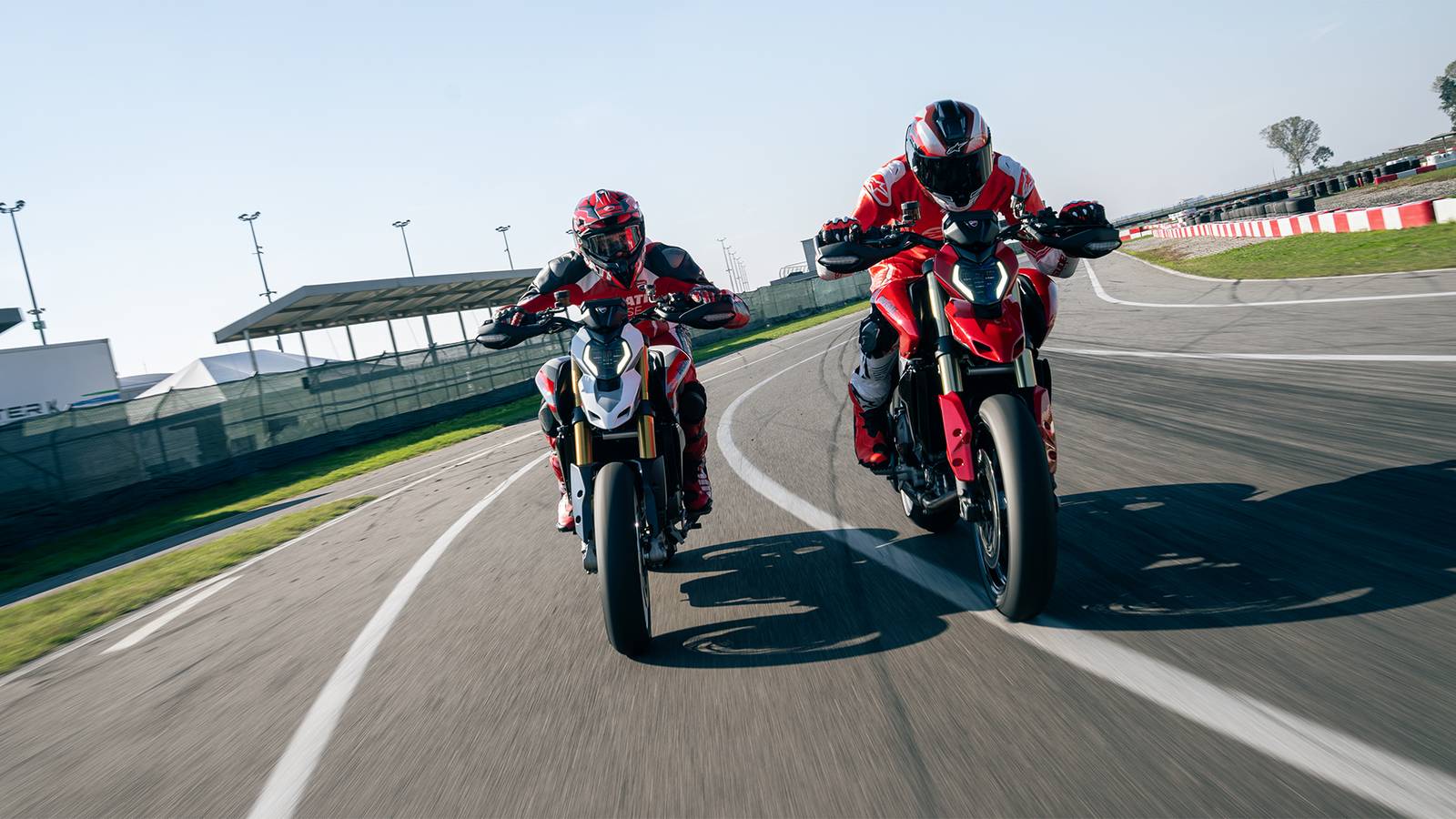
Supermoto racing can trace its roots all the way back to the late 70s. Back then, it was nothing more than a TV show gimmick, but it served to capture the imagination of riders all over the world, inspiring some innovative motorcycle conversions. By the early 00s, manufacturers finally joined the party.
For racing purposes, open-class dirt bikes have always been the platform of choice, but the popularity of the sport gave rise to another larger displacement class of supermotos. Altogether, more practical bikes which offered enthusiasts the opportunity to own a supermoto – or motard, if you will – that was actually street legal. These bikes were always designed simply to be fun to ride, and never served any practical purpose. As a result, only a couple of these weekend weapons are still on sale today.
The Last Bastions Of A Niche Market

This was never a particularly busy part of the market, and as consumers shift to more practical motorcycles it is only shrinking. In terms of manufacturers, it is pretty much a two-horse race, with KTM – as well as its two less orange siblings – and Ducati offering genuine supermoto options. The KTM 690 SMC R and Ducati Hypermotard 698 are both fantastic, dynamic options that weigh next to nothing, and will handle the weekday commute when called upon. Anything more than that will be a chore. KTM also briefly experimented with the concept of a new 890 SMT, but that has since gone off sale without any word of a replacement. This has more to do with KTM’s breakup with CFMoto than anything else, and may well soon return as a 990. That leaves only one twin still standing, the recently updated Ducati Hypermotard V2.

2024 KTM 890 SMT Offers Supermoto Excitement And Adventure Bike Versatility
KTM’s barmy SMT is back and ready for just about anything.
The Ducati Hypermotard V2 SP Is A Weekend Weapon That Still Makes Sense Monday Morning
MSRP: $20,995

Make no mistake, the Hypermotard V2 SP is an expensive friend, but if you are in the market for a fun bike without any restrictions, this should be on your radar. A move to the latest, more practical V2 engine serves to underscore Ducati’s commitment to this model line. A model line that can trace its roots back to 2005, when the Hypermotard 1100 won “Best in Show” at EICMA. The latest design pays homage to that bike, and is, in a word, stunning.

This New Ducati Adventure Bike Can Beat KTM And BMW At Their Own Game
The DesertX V2 is better than ever, and it costs $2,000 less than before
The Hypermotard V2 SP Has Ducati’s Lightest Twin-Cylinder Engine
Power: 120 Horsepower

Ducati chose to stick with the V-twin configuration for this new middleweight lump, but that is the only area where tradition won. Other than that, this is an entirely new engine, which is emissions-compliant and significantly lighter than the old 937 engines. Like most modern middleweight offerings, it sacrifices some top-end performance in the name of more mid-range grunt, with 70 percent of its torque available from 3,000 RPM. It still makes 120 horsepower, which is more than enough power for a bike this light.
No More Desmo

For the first time in decades, we have a Ducati V-twin with no desmodromic valves. Some Ducatisti will feel that this is sacrilege, but there are still desmo-equipped options, and if anything, this will make the bike more practical. Modern valve springs can handle just about any load, and the desmodromic valvetrain has no tangible performance benefit; it just makes bikes more expensive to run. With modern variable valve timing, the performance is more linear, and you get long service intervals of 9,000 miles. The 28,000-mile valve clearance check won’t involve as much cringing as a desmo service would, either.

The History And Mystery Of Ducati’s Desmodromic Valves
Twice the rocker arms, twice the appeal, and no valve float
The Hypermotard V2 SP Puts Fun First

The reason why we love supermotos so much is that they all share one common motif, and that is the fact that they are all fun motorcycles to ride. You don’t need to spend all day on the back wheel to enjoy these bikes; they are equally good at canyon roads. The Hypermotard turns all this fun up a notch thanks to its ridiculous power-to-weight ratio. With the SP model, you get a few lightweight options thrown in, and that keeps the weight below 400 pounds (without fuel, that is), which is pretty impressive, but not as impressive as its suspension.

Here’s Why Supermotos Are So Much Fun
Who knew combining a dual sport with a sport bike could lead to the ultimate riding experience
All That And More, For A Price
The main reason you would be willing to shell out an extra $4k for the SP model is for the forged wheels and uprated suspension. While the stock suspension on the base model is adjustable and will be more than good enough for blasting down a canyon road, the SP model gets fully adjustable Öhlins suspension both at the front and rear. It is what elevates this bike from “fun” to “track weapon.” Along with the fancy suspension, you also get the usual list of modern amenities, including ride modes, cornering ABS, lean-sensitive traction control, a quickshifter, and a TFT dash. What you do not get is cruise control, because touring isn’t exactly on its agenda.
These days, everyone seems to want a bike that can “do it all.” The Hypermotard simply can’t “do it all.” It is an absolute weapon on a canyon road or a tighter track, and can certainly handle a commute thanks to how light and nimble it is. But you are up in the wind, and if you try to use it for touring, it simply won’t be all that comfortable. If you want a fun commuter, both the base model and the Hypermotard 698 will actually be more than up to the task. The only reason you would get the SP model is if you want the ultimate supermoto experience.
Chassis, Suspension, And Weight Specifications
|
Chassis |
Aluminum monocoque |
|
Front Suspension |
48 mm Öhlins NIX3, fully adjustable (6.7-in travel) |
|
Rear Suspension |
Öhlins STX 46, fully adjustable (6.3-in travel) |
|
Weight |
390 lbs (without fuel) |
Source: Ducati