
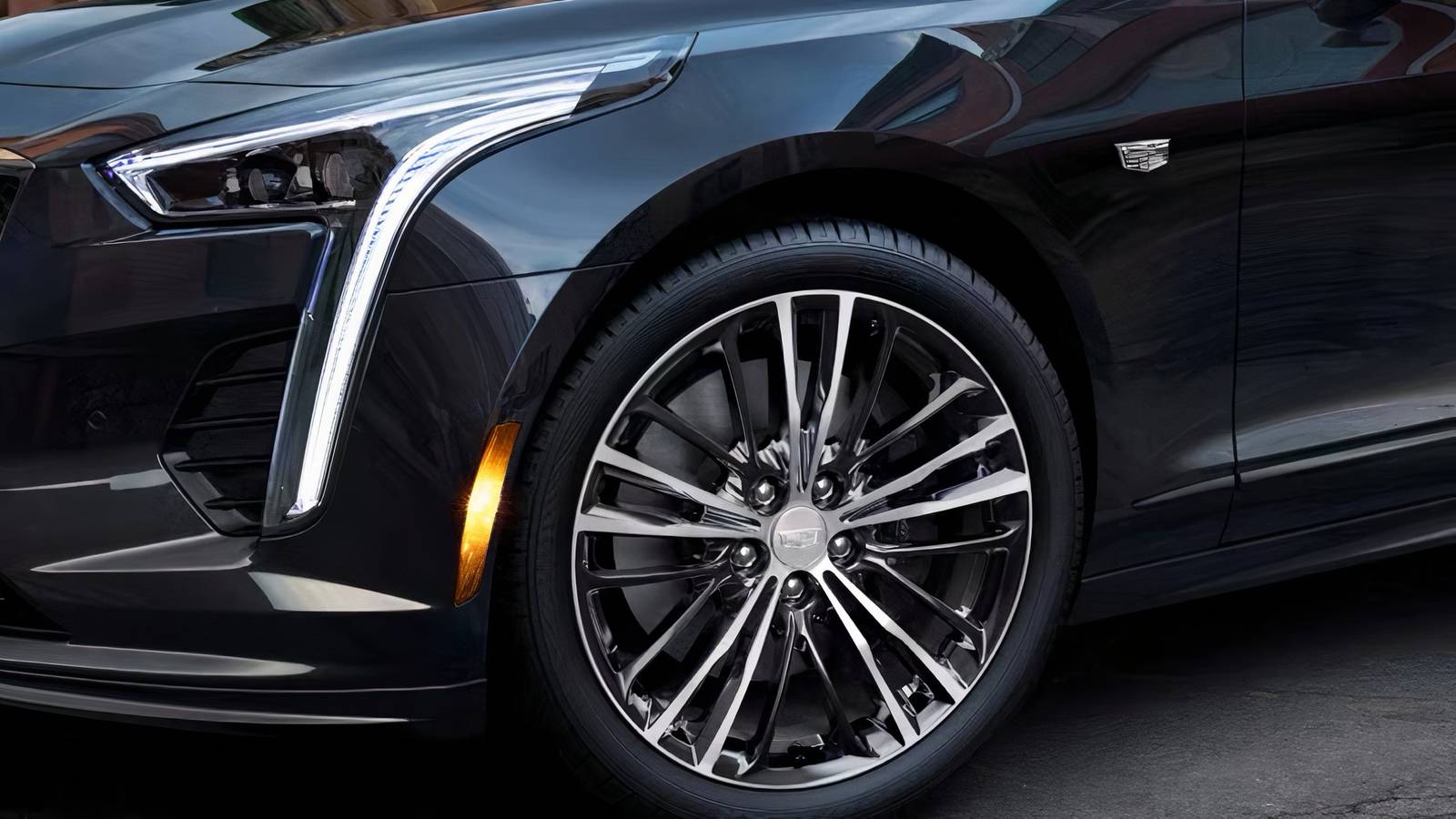
In the late 2010s, as the automotive industry shifted its focus toward electrification and SUVs, Cadillac did something few expected—and even fewer noticed at the time. Cadillac came in hot with its class-leading, twin-turbocharged V-8, and it came roaring for its flagship luxury sedan, designed to take on Europe on its terms.
Introduced for the 2019 model year, the Blackwing V-8 was stout, refined, potent, and a tech marvel, but sadly, almost as quietly as it arrived, it vanished. The Blackwing V-8 remains one of the most fascinating “what if” stories in modern American automotive history — a technical triumph undone by timing, strategy, and a rapidly changing market.
Why Cadillac Built The Blackwing V-8
A Statement Engine For A Statement Sedan

By the mid-2010s, Cadillac was in the middle of a quiet but profound identity shift. The brand wasn’t chasing nostalgia or retro muscle. Instead, it was trying to establish itself as a legitimate global luxury and performance player — one capable of standing alongside heavyweights like BMW, Mercedes-Benz, and Audi without apology. And they strapped up their boots, put on the gloves, and came in with a heavy punch in the form of the CT-6-V. A full-sized luxury sedan designed to showcase Cadillac’s best thinking in design, technology, and ride sophistication.

But Cadillac wanted more than just a luxury flagship. It wanted a halo. Enter the CT6-V with V8 soul. Rather than borrowing an existing engine or leaning on brute force alone, Cadillac commissioned an all-new powerplant — a bespoke V-8 explicitly designed for this car. The result was the Blackwing, an engine meant to signal that Cadillac could build something as advanced and refined as anything coming out of Germany. This wasn’t about sales volume. It was about credibility.

The Most Underrated Sports Sedan Currently On Sale
In 2025, the mere existence of V-8 sports sedans should be celebrated, and perhaps more so if it’s something as brilliant as the CT5-V Blackwing.
What Made The Blackwing So Special
Twin-Turbo Technology Done The American Way

At a glance, the Blackwing V-8 didn’t fit the traditional American performance stereotype — and that was entirely the point. They went against the grain. Displacing 4.2 liters and featuring a sweet hot-vee twin-turbo layout, the Blackwing was compact, efficient, and engineered for responsiveness rather than excess. Sometimes simplicity is always best, really. Output sat around 550 horsepower, delivered with a broad, smooth torque curve that emphasized effortless speed over dramatic theatrics. The figures were staggering at the time. Unlike many high-performance engines of the era, the Blackwing wasn’t shared across multiple models. It was hand-assembled, low-volume, and purpose-built.


Find 2020 Cadillac CT6-V and more cars for sale on our Marketplace
Bespoke For The Purpose Of Passion

And the process of creation alone sets itself apart from the competitive environment, where platform and engine sharing has become the norm. They crafted it to be unique, and that’s where I’d give credit where it’s due. The Blackwing was often described as prioritizing refinement and delivering clean, linear performance, with progressive acceleration and minimal turbo lag. This simply wasn’t a V-8 that was designed to shout; it was engineered to glide, surge, and dominate quietly. Viewed through a broader lens, the Blackwing represented a philosophical shift — American performance interpreted through precision rather than bravado.

The Underrated American Sports Sedan That Embarrassed European Rivals
This severely underrated American sports sedan was actually a better car than the Germans–even if sales didn’t reflect that.
Handling That Matched The Germans
How The CT6-V Took On Europe’s Best

Installed in the Cadillac CT6-V, the Blackwing V-8 transformed the car’s identity. This was never meant to be a stripped-out sports sedan chasing lap times or be the next speed demon. Cadillac kept the CT6-V’s size, comfort, and long-distance composure intact, then layered serious performance on top; think of it like the cherry on top or the icing on the cake. When the road opened up, the speed arrived easily — without drama, without strain, and without the sense that the car was working too hard to impress. Early reviews picked up on that immediately. The CT6-V didn’t rely on stiff suspension or loud theatrics to make its point.

It stayed settled at speed and felt calm doing it, which was arguably more impressive than outright acceleration. The confidence came from balance and control, not aggression — a very un-American approach by traditional standards. For the first time in years, Cadillac had built a sedan that didn’t feel like a value alternative to Europe’s best. It felt legitimate. The Blackwing engine played a significant role in that shift, even if the moment didn’t last long. Just as the car began to earn widespread respect, the market moved on. Visually, the CT6-V followed the same philosophy.
Confidence That Echoed Throughout The Entire Vehicle

The design was clean and restrained, with a long wheelbase and subtle performance cues — quad exhaust tips, wider arches, discreet badging — rather than oversized vents or exaggerated bodywork. Inside, Cadillac leaned into space and comfort. The curved OLED display, high-quality leather, and airy cabin gave it a distinct character compared with rivals such as the BMW M760Li, Mercedes-AMG S63, and Porsche Panamera Turbo. It was quieter, more relaxed, and less overtly sporty — by design. Pricing reflected that ambition, placing the CT6-V among Europe’s flagship sedans while offering a distinctly American interpretation of luxury and performance.

The Most Powerful Naturally Aspirated V8 Sedan Ever Made
The most powerful sedan with a naturally aspirated V-8 didn’t live that long, but when it existed, it was one heck of a luxury sports sedan.
Why It Didn’t Survive
Timing, Strategy, And A Changing Market

The Blackwing V-8 didn’t fail because it wasn’t good enough. It failed because it arrived at the wrong moment. And that in itself is a tragedy because there was a lot of potential. By the time the CT6-V reached the market, demand for large luxury sedans was already in decline. Buyers were shifting decisively toward SUVs and crossovers, segments that were booming at the time, while emissions regulations continued to tighten. At the exact moment, electrification was no longer a distant plan but an immediate reality, reshaping priorities across the industry. For Cadillac, the strategic calculus shifted remarkably quickly.
The Paradigm Shift That Killed The Blackwing V-8

The brand committed to an all-electric future, the soul of the beast was lost, repositioning itself as a technology-forward luxury marque and moving away from the traditional performance playbook that had briefly produced the Blackwing V-8. In that environment, a low-volume, hand-built twin-turbo V-8 — no matter how brilliant — became impossible to justify. Production ended quietly. The engine disappeared. And the Blackwing name was repurposed, later reborn as a badge for Cadillac’s high-performance sedans rather than the engine that inspired it. From a business standpoint, the decision made sense. From an enthusiast’s perspective, it felt like a premature goodbye, almost like the death of a loved one. It was a bittersweet farewell.

The Practical Four-Door That Doubles As A Weekend Track Star
By weekday, it’s a capable family sedan. By weekend, it’s an apex-clipping athlete.
The Blackwing Legacy
A Brilliant Engine Cut Too Soon

Today, the Blackwing V-8 occupies a strange but essential place in American performance history. It stands as evidence that American manufacturers can produce engines with the same level of sophistication, restraint, and technical ambition as their European rivals — when the intent is there. At the same time, it’s a reminder that engineering excellence alone is rarely enough in an industry shaped by timing, regulation, and shifting consumer priorities. Ironically, the Blackwing’s reputation has only grown since its demise.

Enthusiasts now speak of it with reverence, recognizing it as one of the most advanced engines Cadillac ever produced — and one of the most underappreciated. It wasn’t loud about its brilliance. It didn’t exist long enough to build mythology. But for a brief moment, it showed what American luxury performance could be when ambition met execution. And that’s why the Blackwing V-8 deserves to be remembered — not as a failure, but as a tech marvel that arrived just a little too early for its own good.
Sources: Edmunds, Cadillac