
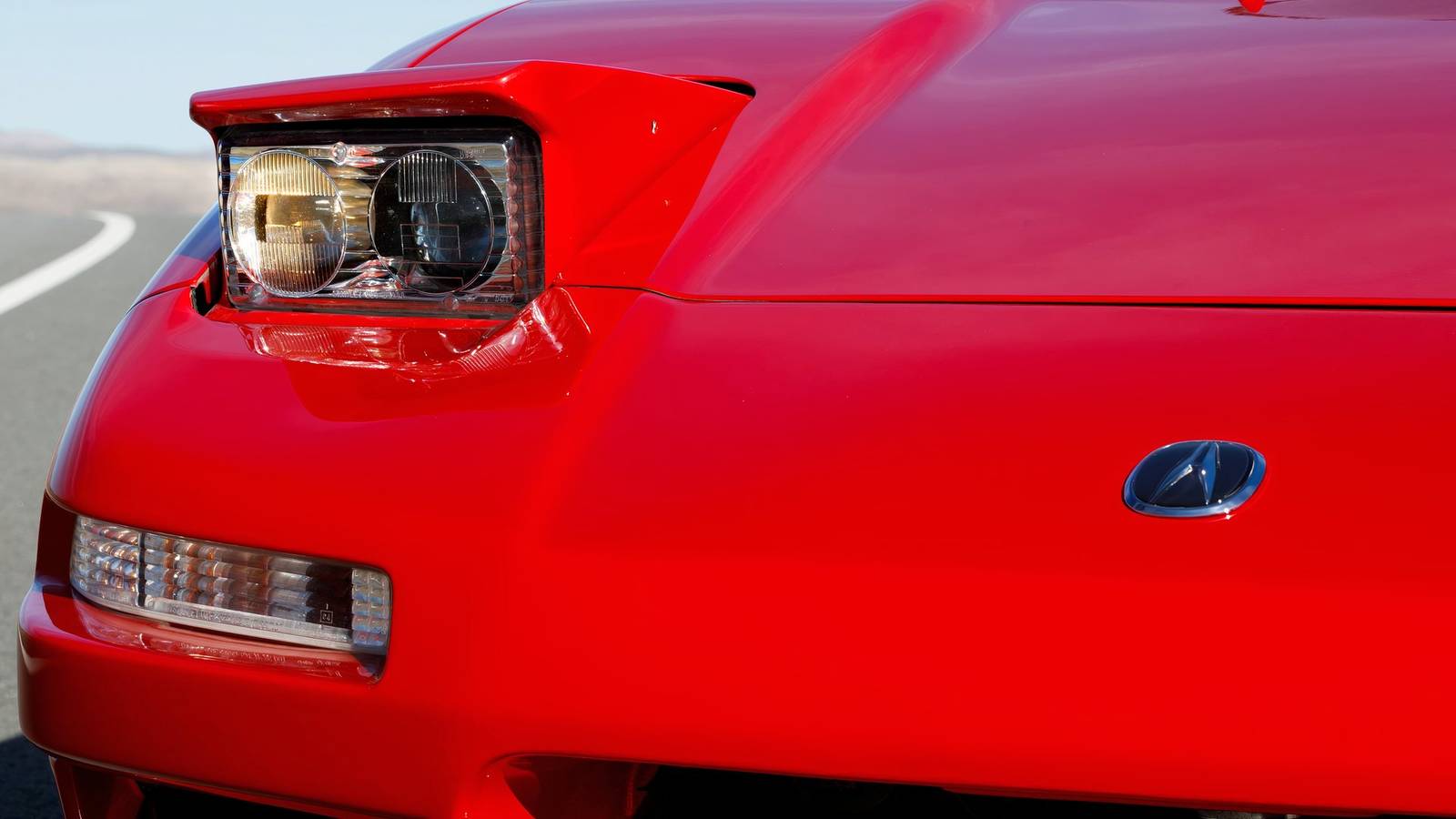
What does it take to make something truly timeless? Usually, you have to create something simple and approachable that also carries several layers of depth. This sounds easy in theory, but in practice, it’s a different story. Many automakers have done their best to build engaging sports cars over the decades, but even today, vehicles from the 1990s still leave a long-term impression on us as drivers. Some of the greatest sports cars ever built are from the 1990s, and one of the most prominent examples is the first-generation Acura NSX (NA1). Yet, why was this 1990s legend so special and so ahead of its time? Follow along as we break down the key details that made the Acura NSX a timeless icon that will never lose its luster.

- Founded
-
March 27, 1986
- Founder
-
Soichiro Honda
- Headquarters
-
Torrance, California
- Current CEO
-
John Ikeda (VP and Brand Officer)
- Status
-
Active
The NA1 Acura NSX Was Built By Drivers, For Drivers

In the late 1980s, Honda had the intention and desire to build a flagship sports car to represent its brand. Its goal was to create something adventurous and experimental, a design and approach never previously attempted by the Japanese company. With the help of Pininfarina, often cited as the most important automotive design firm ever, Honda made this dream into a reality as the first concept car of what would be the first-ever NSX came into existence. Shigeru Uehara, one of the most important engineers in Honda’s history, became the spearhead of the NSX project.
Strength In Simplicity

Uehara and Honda’s goal with the NA1 Acura NSX was simple: build something both as fast and dynamic as a mid-engine V-8-powered Ferrari, but at a fraction of the price. Sounds straightforward, but making that idea into a reality is nothing short of an engineering miracle. One of the key innovations in the Acura NSX was its bespoke all-aluminum chassis, the first of its kind. This lightweight frame saved 441 pounds when compared to steel and paired with the NSX’s aluminum suspension components, which saved an additional 44 pounds.
This responsive and rigid frame served as the foundation for the evocative driving character for which the NSX would become known. Simply put, less weight equals more fun. The heavier something is, the less responsive it will be. The weight savings and rigidity produced by this simple yet advanced frame provide an undeniable feel and engagement. Weighing in at only 3,010 pounds, the first production NSX model is almost skeletal compared to modern sports cars.



Modern Cars Are Too Complicated

Despite every cutting-edge technology available to enable various weight-saving methods, modern supercars still manage to be more bloated and, as a result, more numb than their predecessors. While modern safety standards play a significant role in this increase, this is far from the only factor at play. Everything from hybrid powertrains and AWD systems to active aerodynamics carries a weight penalty that even the most advanced carbon-fiber monocoque cannot overcome.
Honda itself could not escape this very pitfall with the significant weight increase of the 3,878-pound second-generation Acura NSX, which traded away driving engagement for performance. This brings us to our modern realization that if Honda could lose its touch in this regard, anybody could. Most modern automotive brands have discarded the idea of building pure and lightweight platforms, and this dilemma remains a fundamental issue afflicting modern sports cars to this day.

Used High-Value Sports Cars You Can Buy For The Average Price Of A New Luxury Vehicle
For $75,000 or less, these are the few high-value sports cars you can find.
Nothing Beats The Feeling Of The NA1 Acura NSX

Honda knew when it was building the NA1 Acura NSX that this car was designed as a technological showcase of what the brand was capable of. Yet, Honda’s goal with the NA1 Acura NSX wasn’t to produce the fastest car in the world, but rather, one that captured the brand’s spirit. To achieve that, countless hours were dedicated to the balance and feeling of the NA1 Acura NSX in order to fine-tune it into the most responsive and enjoyable car possible.
The NA1 Acura NSX Has An Unreal Motorsport Pedigree

In the late 1980s and early 1990s, Honda was a key participant in Formula 1, supplying engines that powered dominant cars to consecutive Formula 1 titles. Honda utilized their motorsport resources in the design and development of the NA1 Acura NSX, including direct consultation and testing support provided by Formula 1 drivers Satoru Nakajima in the early phases and Ayrton Senna toward the end of development. Even Indy 500 winner Bobby Rahal played a part in development.

Yet, it was development driver Motoharu Kurosawa, a Japanese racing legend, who suggested chassis and suspension tuning for the NA1 Acura NSX at the Nürburgring Nordschleife. Through countless laps and a process of trial and error, Kurosawa and the testing team achieved a 50-percent increase in chassis stiffness with minimal weight gain, which was integrated into the production chassis. Honda then further tested the NA1 Acura NSX across the world, including at racetracks in Japan, Germany, and California. The result of this monumental developmental effort was nothing short of one of the best driving cars ever produced, regardless of era.
Modern Supercars Are Built For Coddling

Compared with the raw experience of driving the NA1 Acura NSX at speed, modern supercars often remove driver control and enable computers to help you go as fast as possible. Modern supercars are less about feeling and skill, but more about quick and hard-hitting results. Modern supercars achieve these results with heavy AWD systems, configurable traction control, and adaptive suspension setups that allow you to be near-asleep at the wheel and still go fast. This, in a nutshell, represents the entire issue with modern enthusiast platforms that are riddled with driver aids and safety features that sacrifice the beauty of engaging driving for a sense of security. Yet, that is what happens when disconnected corporate suits are the ones calling the shots as opposed to on-the-ground designers and engineers.

10 Old Sports Cars That Still Slap Harder Than Most New Ones
Newer cars may be faster, but these are just way more fun (and cheaper).
The NA1 Acura NSX Has An Unbeatable Design

If you take any unsuspecting member of the public and show them the NA1 Acura NSX without any badges, most people will think it’s a Ferrari of some kind. If you told them it’s a Honda, many of them wouldn’t believe you. This is what is known as the Pininfarina effect. In order to have this effect, the car must be designed by, you guessed it, Pininfarina. Although the NA Acura NSX is Japanese to its core, it does have an Italian-designed exterior.
The NA1 Acura NSX Is Built For Understated Elegance

From any angle, the NA1 Acura NSX exudes raw beauty. Uehara, the team leader of the NSX project, had been inspired by the design of fighter jets, something you can see clearly in the clean, sculpted silhouette of the NA1 Acura NSX. Perhaps the most critical and alluring design feature of the NA1 Acura NSX is its relatively small overall size and 46-inch roof height. Compared to other modern sports cars, the NA1 Acura NSX is very small, even though it is wide and low like more modern counterparts.
Even stock, the front bumper scrapes easily unless approached at the correct angle. Yet, inside the cabin, the NA1 Acura NSX feels surprisingly ergonomic for how small it looks on the outside. The seating position is perfect, with great visibility as a result of its “fighter jet canopy” design that is optimized for an ultra-wide viewing angle. Even while comfortably seated in the NA1 Acura NSX, it’s so low that, with the door open, you can easily put your hand flat on the ground. The NA1 Acura NSX is the definition of clean body lines, purposeful design, and a timeless icon of the 1990s that will never lose its appeal.
Modern Supercars Chase Accolades, Not Experiences

Despite modern supercars having access to manufacturing and design standards that would have been a fantasy in the 1990s, we still think the cars from the 1990s look better in many ways. Modern design seems to value extremes rather than simplicity. Yet, when everyone is trying to be extreme, then it’s not extreme anymore. In the end, unique driver-centered experiences create memorable icons, not just chasing whatever is the current trend. The same applies to technology implementation, and that’s why the second-generation Acura NSX had such a poor reception.

It was fast and good-looking, but it was doing the same thing everybody else was doing just to achieve results. In the process, this killed the driving experience that its predecessor had so carefully crafted. Also, its value proposition went completely out the window with a $157,000 starting price that often rose into the $200,000 range as a result of a combination of options and dealer markups. Beautiful things often lose their souls when pencil-pushers and executives call the shots instead of the drivers and engineers. That is why the NA1 Acura NSX is even more desirable now than when it was new; it is unfettered by the desensitized nature of modern sports cars and excels instead at providing a pure experience behind the wheel that most modern cars simply lack.

10 Legendary Japanese Cars That Cemented Their Legacy Thanks To The U.S. Market
These iconic Japanese models still retain a massive influence stateside.
Sources: Honda, Acura, Ferrari