
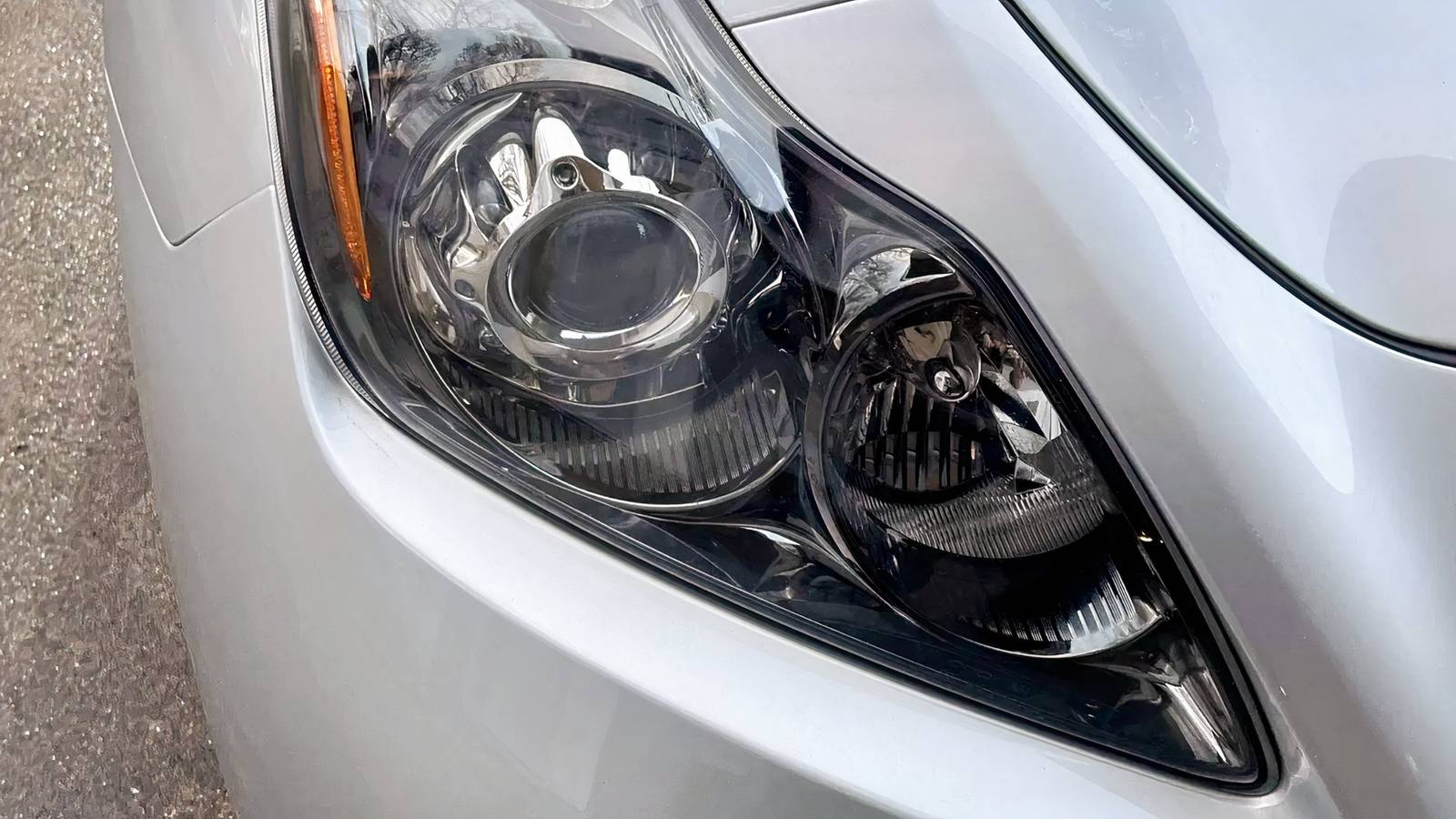
At around $15,000 in today’s used-car market, the 2013 Infiniti G37 Coupe doesn’t immediately excite. At that price point, most shoppers expect a compromise—either on age, mileage, outdated tech, or an engine that prioritizes efficiency over engagement. That notion is precisely why the G37 Coupe continues to fly under the radar. Visually, it presents itself as a calm, well-proportioned luxury coupe. There are no over-the-top styling cues. Infiniti’s approach was restrained, emphasizing balance and elegance over theatrics. As a result, the G37 doesn’t look like a car hiding serious performance credentials—especially not at this price.
When new, that subtlety worked against it. Parked alongside more overtly sporty German rivals, the Infiniti lacked visual drama. Today, however, depreciation has completely flipped the script. What was once an expensive luxury coupe has quietly dropped into attainable territory, leaving behind a car that offers far more than its asking price suggests. Only after you move past the price tag does the G37’s real appeal begin to surface.
The Engine That Makes It A Sleeper
Naturally Aspirated V6 Power

Under the hood sits the reason the G37 Coupe still matters: Infiniti’s 3.7-liter VQ37VHR naturally aspirated V6. In a world now dominated by turbocharged four-cylinder and downsized powerplants, this engine is old-school—and that’s precisely its appeal. The V6 produces an impressive 330 horsepower and 270 pound-feet of torque without relying on forced induction. With no turbochargers involved, power delivery is widely praised for its linearity, avoiding the lag or artificial torque spikes common in turbocharged rivals.

The 3.7-liter engine is known for its willingness to rev, delivering strong performance across the range while saving its most engaging character for higher engine speeds. Reviews consistently highlight a smooth, mechanical sound that builds with revs—assertive without being intrusive—reinforcing its reputation as a performance engine designed to be worked rather than masked by electronics. Equally important is reliability.
Solid Engineering In Motion

The VQ engine family has earned a reputation for durability across decades of use in both Infiniti and Nissan performance models. Regular maintenance is straightforward, and long-term ownership tends to be far less stressful than many similarly powerful turbocharged alternatives from the same era. For a coupe sitting at $15,000, finding this level of naturally aspirated performance is increasingly rare.

10 Shockingly Cheap Performance Cars From the 2000s
The used-car market is full of hidden performance car gems from the 2000s that deliver excitement without breaking the bank.
Performance Without The Drama
Straightforward Speed And Balance

Based on road tests and period reviews, the G37 Coupe delivers its performance in a measured, composed manner rather than with overt aggression. Most examples use a rear-wheel-drive layout, with power routed through either a six-speed manual or a seven-speed automatic transmission. Acceleration figures remain competitive even today, with 0–60 mph times consistently reported in the low five-second range. More notably, performance is described as linear and predictable, with speed building progressively rather than arriving in abrupt surges—a characteristic tied to its naturally aspirated powertrain.

Chassis tuning favors balance over outright sharpness. Contemporary evaluations highlight composed body control, responsive steering, and suspension calibration that prioritize stability and comfort while maintaining engagement. The result is a coupe that performs confidently across a range of driving conditions without requiring constant driver input. Crucially, the G37 achieves this without leaning on performance gimmicks. There are no artificial exhaust enhancements, exaggerated drive modes, or intrusive electronic theatrics. Instead, its appeal lies in understated, accessible performance—one of the reasons it continues to earn sleeper status years after its debut.

10 Affordable Sedans That Hit 60 MPH In Under Six Seconds
These sedans are available on the used market at reasonable prices, allowing buyers to experience strong acceleration without breaking the bank.
Design That Aged Quite Well
Understated, Not Outdated

The G37 Coupe’s design philosophy was never about chasing trends. Its long hood, short rear deck, and muscular rear haunches give it classic coupe proportions that still look relevant years later. Up front, the styling is clean and cohesive rather than aggressive. The profile is smooth and well-balanced, and the rear avoids exaggerated design elements that date many competitors from the same era.

Even today, it looks like a premium car rather than an obviously old one. That restraint has worked in its favor over time. While some rivals now look overly busy or clearly tied to a specific design era, the G37 Coupe has aged with dignity. It doesn’t shout for attention—but it doesn’t feel forgotten either.
Luxury That Still Feels Solid

Period reviews and long-term owner feedback consistently highlight the G37 Coupe’s interior build quality as one of its strengths. Materials are described as solid and well assembled, with soft-touch surfaces used in key areas and switchgear known for its durability over time. The cabin layout reflects a grand-touring focus rather than a hard-edged sports orientation. Seating is positioned for comfort over long distances, while still offering enough support to suit the car’s performance credentials. Visibility is typical for a coupe, and the overall layout prioritizes clarity and ease of use, with controls arranged logically around the driver.
Technology Is Notably Straightforward By Modern Standards

Physical buttons dominate the center stack, and the infotainment system—though dated compared to newer interfaces—has been widely regarded as intuitive and distraction-free. Basic functions remain easily accessible without relying on deep menu structures. This simplicity has played a key role in how well the interior has aged. In contrast to many newer cabins that lean heavily on screens and layered software, the G37’s interior continues to be viewed as functional, robust, and purpose-driven—qualities that suit both daily use and longer-distance driving.

The Most Affordable V6 Sedan You Can Buy In 2025
V6 sedans are in decline thanks to the proliferation of smaller turbocharged engines – this is the cheapest way to get a six-cylinder sedan today.
Pricing And Ownership Reality
Where The Value Really Shows

According to Kelley Blue Book valuation data and long-term market analysis from J.D. Power, used Infiniti G37 Coupe pricing has settled into a beautiful range. Earlier model years from 2008 to 2010 typically trade between $11,000 and $14,000, depending on mileage and condition, while later examples from 2011 to 2013—which benefit from incremental refinements—generally fall in the $14,000 to $17,000 bracket. Manual transmission cars and well-maintained sport trims often sit at the higher end of those ranges.


Find 2013 Infiniti G37 Coupe and more cars for sale on our Marketplace
At these prices, the value proposition becomes difficult to ignore. Buyers are getting a genuine luxury coupe with 330 horsepower and a rear-wheel-drive layout for the cost of a modern used compact—an increasingly rare equation in today’s market. Ownership costs further strengthen the case. Compared to similarly priced European coupes, the G37 benefits from strong parts availability and a simpler mechanical design. Its naturally aspirated V6 avoids many of the long-term reliability concerns associated with early turbocharged powertrains, helping keep servicing and maintenance more predictable over time.

Insurance and fuel costs remain reasonable for the segment, and with depreciation essentially flattened, the G37 Coupe has reached a point where values are relatively stable. For buyers planning to hold onto their car rather than flip it, that stability adds another layer to its sleeper appeal.

10 Affordable Used Coupes That Are Surprisingly Fun To Drive
You don’t have to pay a pretty penny to have. These used coupes provide plenty of thrills for not a lot of money.
Rivals And How The G37 Stacks Up
The German Competition

When new, the G37 Coupe competed directly with some of the most respected luxury cars on the market, including the BMW 335i, Audi A5, and Mercedes-Benz C-Class. Each offered strong performance and premium branding, but also carried higher purchase prices and, in many cases, more complex mechanical setups. Turbochargers, advanced electronics, and tightly packaged engine bays often translate into higher long-term ownership costs as these cars age.

By comparison, the G37 Coupe took a more straightforward approach. Its naturally aspirated engine, conventional drivetrain, and straightforward engineering give it a durability advantage that becomes increasingly appealing on the used market. While it may lack the badge prestige of its German rivals, it delivers comparable real-world performance with fewer headaches—and at a noticeably lower entry price.
Why The G37 Coupe Still Makes Sense: A Sleeper Worth Rediscovering

The Infiniti G37 Coupe represents a moment in time when performance, luxury, and simplicity still coexisted without compromise. It doesn’t rely on forced induction, software-driven personalities, or aggressive styling to make its case. Instead, it offers honest power, balanced handling, and genuine comfort—wrapped in a design that has aged quietly but confidently. At $15,000, it’s one of the most compelling sleeper coupes available. For buyers who value driving feel over digital gimmicks and substance overhype, the G37 Coupe remains a wise, underrated choice—and one that’s finally getting the appreciation it always deserved.
Sources: Kelly Blue Book, J.D. Power, CarGurus