
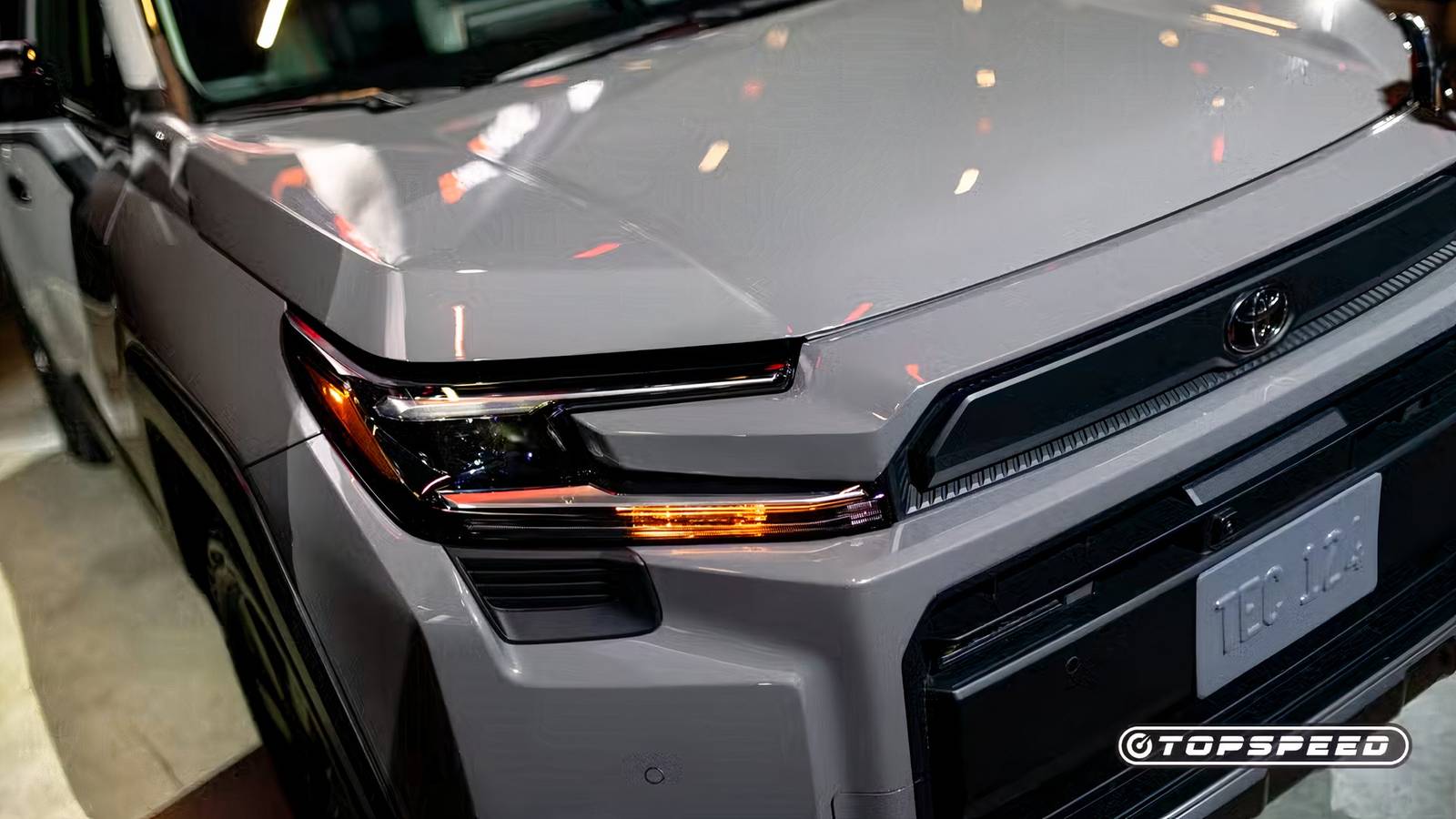
If there is one thing that shouldn’t follow up success, it’s complacency. When you are already an established and dominant force, there is the temptation to float along until the competition inevitably catches up. Toyota, in today’s hybrid-dominated landscape, is in a similar situation. Considering its monumental SUV sales figures for many years now, there is surely the temptation to coast along for a while without further innovation. With the introduction of its uber-popular SUV‘s redesign, however, Toyota isn’t just continuing its surge; it’s further increasing its lead over the competition.
With efficiency, longevity, and a feeling of mechanical reliability at the heart of Toyota’s ethos, they have won over the hearts of consumers with their reputation as the ultimate sensible purchase for someone who requires simple motoring that will get them from A to B without fuss. And whilst this is clearly what speaks to the mass market, there are a few areas that the Toyota philosophy doesn’t prioritize: predominantly, speed, status, and luxury. With several changes made for 2026, Toyota has just evolved the formula to have those bases more prioritized, too. But does this create the ultimate vehicle of its segment?
New Features And Changes To The 2026 RAV4

Marking the start of the sixth generation of the RAV4, Toyota has made serious changes to the lineup, ones that go beyond just a facelift. With the manufacturer’s serious commitment to the hybrid powertrain, the 2026 RAV4 now utilizes electrification in all of its models, marking the official end of gas-only options in the lineup. Now, you only have the option between a hybrid and a plug-in hybrid. This solidifies Toyota’s confidence in its fifth-generation hybrid system, one that outperforms its previous gas-only offerings, making a hybrid powertrain a better choice for most people in 2026.

Bringing its looks more in line with Toyota’s brand vision, the new styling reflects changes made in the recent Camry and Prius models. With slimmer LED headlights and sharper lines covering its traditional boxy stature, the new RAV4 moves away from a more utilitarian look that was more common in older Toyotas, to a more refined and technical look without losing much of the rugged character. Whilst this may not please everyone, it could target consumers in the market for something a little more flashy than the Toyota of yesteryear, perhaps those who usually opt for a German competitor.
A Generous Performance Overhaul

With performance being one of the core fundamentals that has always been lower on Toyota’s list, it might come as a surprise that more emphasis has been put on acceleration than in previous years. Whilst the previous years’ RAV4 was no slouch, the sixth-generation moves from 302 horsepower to a more muscular 324 horsepower in its higher-spec plug-in option, all while improving the EV-only range and introducing 50 kW DC fast charging, which will allow for a charge from 10 percent to 80 percent, taking roughly 30 minutes.
2026 Toyota RAV4 Vs 2026 Honda CR-V In Base Configuration
|
2026 Toyota RAV4 (base) |
2026 Honda CR-V (base) |
|
|
Powertrain |
2.5-liter Hybrid |
2.5-liter gasoline |
|
Transmission |
e-CVT |
CVT |
|
Horsepower |
226 |
190 |
|
Torque |
163 Ib-ft |
179 Ib-ft |
|
0-60 mph |
7.5 seconds |
8.7 seconds |
|
Economy |
44 mpg (combined) |
30 mpg (combined) |
However, it’s the base model that is the game changer. Not so much because of numbers on a spec sheet, but Toyota’s democratization of instantaneous electrified torque, which can be found in the cheapest car in the new RAV4 lineup. With all of its base-spec 2026 rivals having gasoline engines, like the CR-V, the Sportage, and the Mazda CX-5, Toyota now has a huge advantage. With the new hybrid, not only do you get a significant uplift in key features in the base spec compared to the competitors, but you get a vehicle that simply feels far more capable due to the electrified boost.

2026 Toyota RAV4 Hybrid Pricing Announced, With One Thing Missing
Toyota’s best-seller gets a major makeover and a hybrid powertrain. Find out how much it’ll cost you.
2026 RAV4 Pricing And Different Trim Levels

Starting at $31,900, despite all the enhancements to performance, entry-spec sensation, and design, the 2026 Toyota RAV4 is still an excellent value car. Whilst the starting price is a pinch higher than all of its rivals, the Honda CR-V is only around $1,000 cheaper at the base spec. Considering the enormous difference to the economy that the hybrid will make (often 10-20 mpg better) compared to the Honda, you will recoup that initial investment very quickly, and because of that, you get a more futuristic-looking vehicle, one that will cost less on fuel going into the future, and one that feels significantly faster. The cheapest direct rival is the 2026 Kia Sportage, which only clocks in at $28,690.
The Trim-Level Ladder Of The 2026 RAV4
|
LE |
$31,900 |
|
SE |
$34,700 |
|
XLE Premium |
$36,100 |
|
Woodland |
$39,900 |
|
XSE |
$41,300 |
|
Limited |
$43,300 |
The base-spec party piece is, of course, that hybrid system, but it also includes a new 10.5-inch touchscreen and 12-3-inch digital cluster, enabling the base-spec to feel futuristic in its interior approach. The SE model focuses more on a sporting flair, with 18-inch black wheels and blue interior stitching, and even includes sports-tuned suspension. As you climb up the ladder, expect more luxurious features such as heated seats, powered moon roofs, and then, at the top of the tree, AWD, a larger 12.9-inch display, a JBL sound system, and ventilated seats. Whilst these amenities are all welcome, it brings hybridization to the masses, which highlights the base spec as the most special one.
Other Improvements And Rival-Beating Tricks
Whilst Subaru and Honda are wonderfully reliable brands, often ranking high in JD Power and Consumer Reports reliability rankings, Toyota is still the undisputed king on this front. With an extremely mature fifth-generation hybrid system and all the rigorous stress testing for which Toyota is known, you can take a step into the world of electrification and enjoy a car with a reputation for incredible dependability. Not only that, but the RAV4 beats all of its rivals on resale value. After five years and 67,000 miles, the vehicle is only forecast to lose 28 percent of its value, with the CR-V coming in a close second, losing just 29 percent of its value.

Another enormous step-up for the base model RAV4 is its towing capacity, lower down in the range. Whilst the base-spec FWD trim can tow a predictable 1,750 pounds, the SE/XLE AWD variants can tow an incredible 3,500 pounds. Whilst rivals like the Mazda CX-50 and Subaru Forester can reach that 3,500, they require moving further up the trim levels. And as for the CR-V, it maxes out at 1,000 pounds, regardless of the spec.

The Toyota SUV That Sold More Than The 4Runner, Tundra, And Tacoma Combined
This awesome Toyota SUV is the king of the market and has outsold not only its competitors but also its other Toyota counterparts.
How The 2026 Toyota RAV4 Dominates Its Segment

After examining the performance, efficiency, towing capacity, and long-term cost, the RAV4 obliterates much of the competition. While yes, the direct competition base models are up to $3,000 cheaper, there is no hiding the fact that they not only lack the punch of the hybrid RAV4, but actually work out as more expensive long-term due to the huge gulf in efficiency. It means that you could be saving several hundred dollars per year on fuel.

Even when you do come to sell your vehicle, the Toyota RAV4 clocks in with the most impressive resale value of the bunch. If it wasn’t already the segment leader, it certainly is now. Built on the core maturity of Toyota’s renowned, reliable powertrain and opening up that electrified efficiency and punch to everyone means that you have a truly forward-looking approach to an already epic vehicle.