
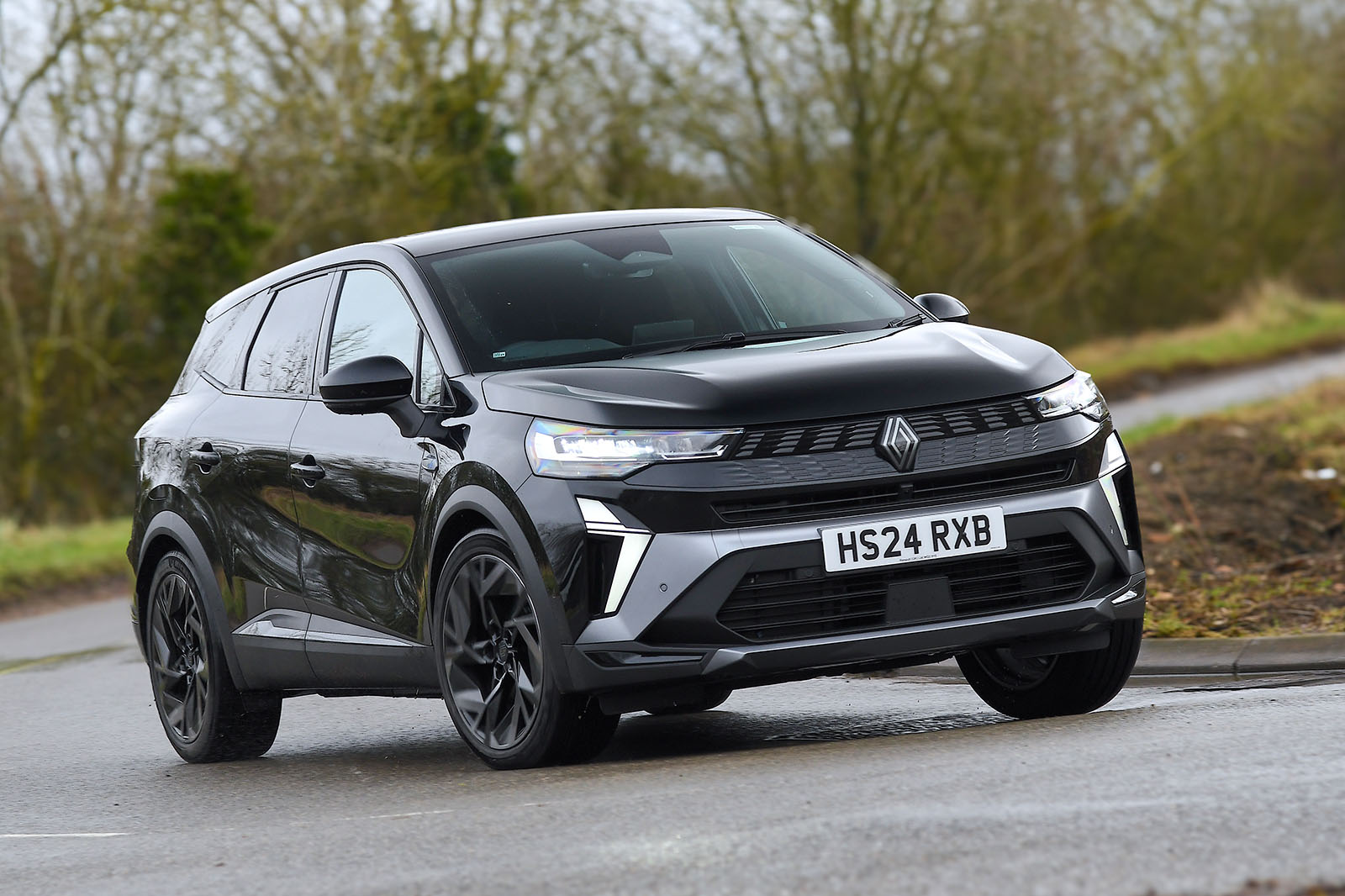
Renault makes much of the Symbioz’s family-friendly interior versatility, and while it is a spacious car, it disappoints in some respects.
Second-row passenger space is just about appropriate for full-size adults but is no great selling point in itself. The Skoda Kamiq offers just as much while the Skoda Karoq, with its optional removable back seats, knocks the Symbioz for six on outright carrying space.
What’s more, if the car is fitted with Renault’s optional Solarbay panoramic roof, which uses electrically charged liquid crystals to block out the sun as and when needed, six-footers will struggle for head room.
Renault does at least include a sliding back seat to boost boot space, but it moves only as one fixed bench, so it’s a bit awkward to heave fore and aft.
With the seats slid all the way back, you create 492 litres of boot space, which is 12 litres less than in the Nissan Qashqai and nearly 100 litres less than in the Kia Sportage. If you slide the bench forwards, however, capacity is increased to a class-leading 624 litres. With the rear bench folded down, space stands at a generous 1582 litres.
The boot itself is usefully large and deep by class standards, with an adjustable-height floor, but it doesn’t possess any notable features aside from this. Items like a 12V socket are absent.
Up front, the driver’s seat is comfortable enough (although it lacks cushion-adjustment options) and the control layout and displays are simple and sensible.
However, because of the thick A-, B- and C-pillars, visibility is poor with regard to blindspots and the small rear window means you have to rely on the low-definition reversing camera when manoeuvring.
It’s easy to find your way round Renault’s Google-based Open R portrait-style infotainment system, with lots of app-based functionality for those with Android-based smartphones. Renault claims the system can download more than 50 apps.
The digital driver’s display, meanwhile, is clear and easy to read and has a decent amount of configurability, but switching between displays prompts a needlessly complex animation that can begin to lag after a while.
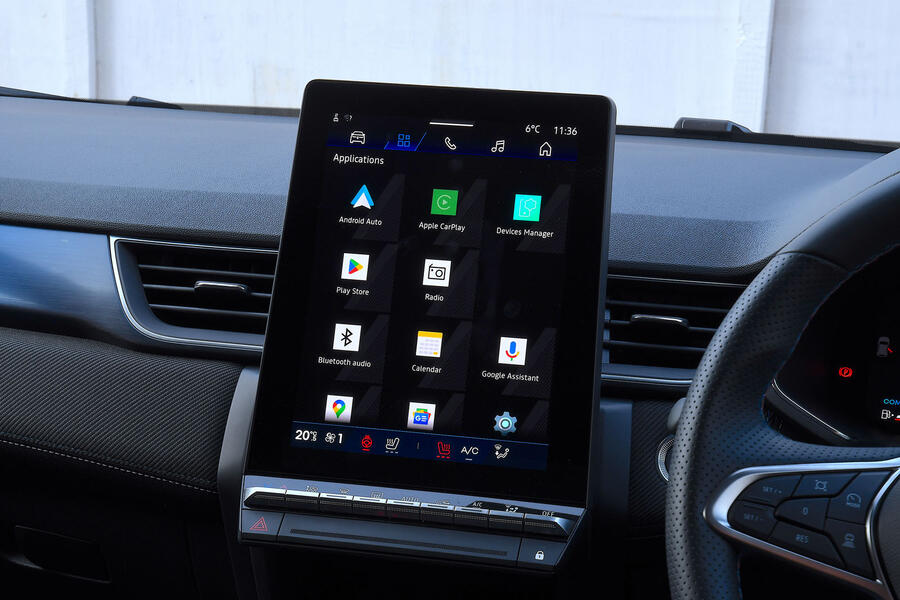
It does at least have a row of physical controls for the HVAC functions, which feel reassuringly sturdy, and the audio volume can be adjusted with a handy steering wheel-mounted stalk.
The car’s ADAS (it offers up to 24 systems, Renault says, between speed limit buzzers, lane keeping assistants, intelligent cruise control etc) are mercifully easy to neuter via a fixed physical shortcut button adjacent to the steering wheel.