
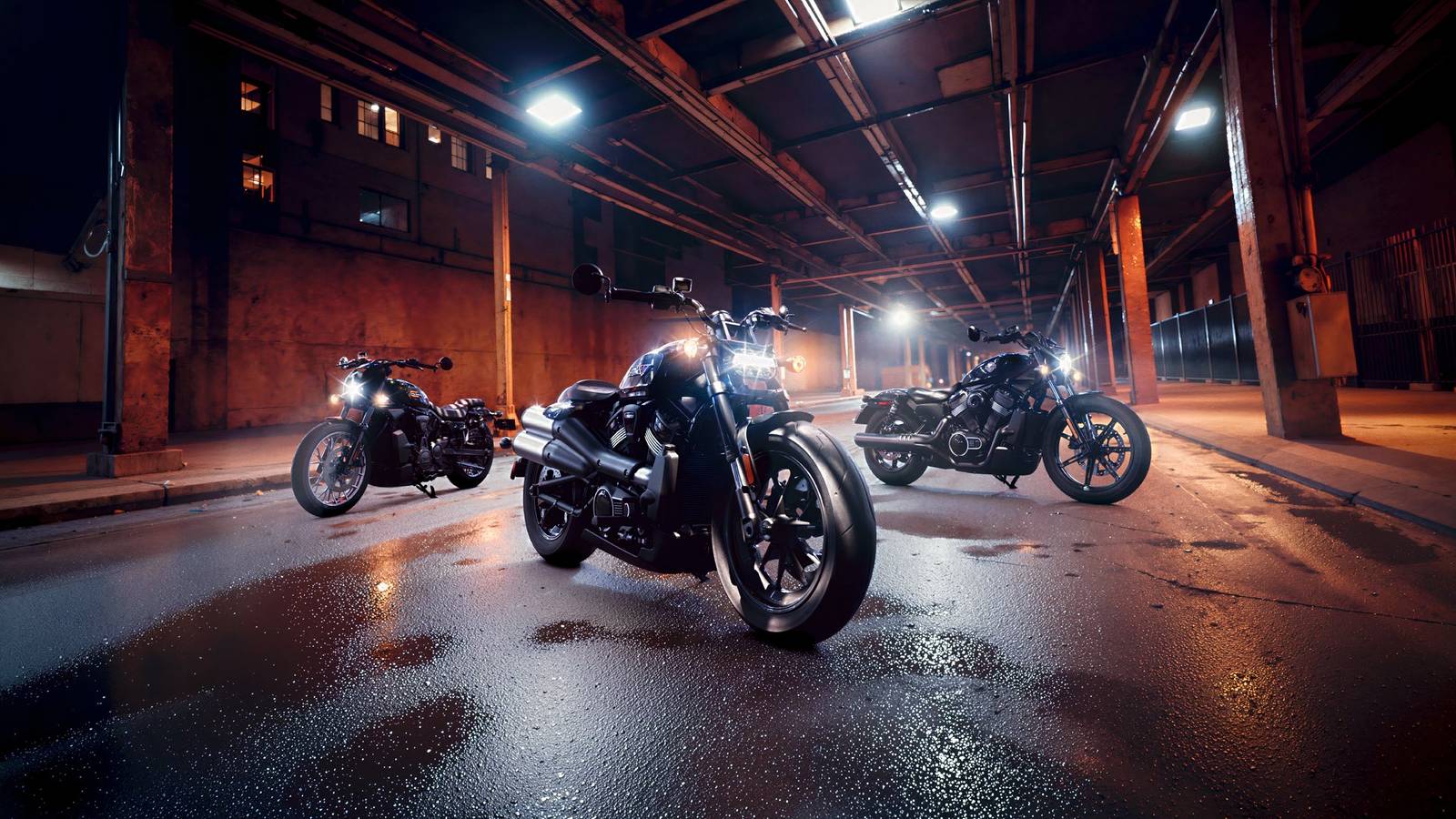
Heritage in motorcycling is a double-edged sword, particularly for a storied American manufacturer like Harley-Davidson. Lean too heavily into nostalgia, and you risk building bikes that look great but frustrate modern riders with outdated performance. Ignore heritage entirely, and you alienate the enthusiasts who made the brand what it is today. For Harley-Davidson, the Sportster nameplate carries serious weight. Introduced in 1957, it’s the longest continuously produced motorcycle in the company’s 122-year history.
The current represents Harley-Davidson’s answer to this challenge. All three of them are based on the new Revolution Max platform that replaced the air-cooled Evolution engine, and now offer the performance and refinement that a modern-day liquid-cooled engine is capable of. All this while, these are wrapped by a design language that pulls directly from 1950s and 1960s Sportster models.

10 Harley-Davidson Bikes From The 90s That Are Worth Buying Today
Often looked at as a decade of stagnation for Harley-Davidson, the 90s still gave us a few noteworthy bikes
Why Balancing Heritage And Innovation Is Difficult

Air-cooled engines were central to what made classic Sportsters so instantly recognizable. The exposed cooling fins, mechanical simplicity, and raw, visceral character all contributed to an experience that felt unmistakably Harley. But air-cooled V-twins have inherent limitations. They run hotter, which restricts compression ratios and power output, and meeting increasingly strict emissions standards while retaining that architecture eventually became unsustainable.
Liquid cooling solves many of those problems, improving efficiency, emissions compliance, and performance. However, it introduces new challenges. Radiators, coolant lines, and more complex engine management systems don’t naturally fit within a minimalist bobber aesthetic. Plus, earlier Sportsters also mounted the engine rigidly as a stressed member, transmitting vibrations directly to the rider – a trait many riders considered part of the bike’s charm. Modern models use rubber isolation for comfort, inevitably softening some of that raw mechanical feel.
The Harley-Davidson Sportster Range Proves Heritage Still Matters
The Nightster: Where The Lineage Begins

Priced at $9,999, the Nightster is Harley’s entry ticket into the lineup. It is powered by the brand’s 975T Revolution Max engine, producing peak output figures of 91 horsepower and 72 pound-feet. Visually, Harley leaned hard into historical references. The tank graphic nods to the XR750 flat-track racer, while the round air cleaner cover, badge, and exposed dual rear shocks are pulled from 1950s and 1960s Sportster DNA.
You can also get the Nightster in a Blood Orange special edition that goes even harder into racing history. The paint scheme references Harley’s factory flat-track bikes, complete with color-matched fenders and chrome exhaust heat shields. Despite its throwback looks, the Nightster includes three ride modes, full LED lighting, ABS, traction control, and drag-torque slip control.
The Nightster Special: Tech Meets Tradition

For an additional $2,500 over the Nightster’s price, you get the Nightster Special at $12,499. Mechanically, it’s the same bike powered by the same 975T engine, and it weighs just a couple of pounds more at 483 pounds curb weight. But visually, it distinguishes itself with a headlight housed inside a mini-fairing, different wheels, and a slightly taller handlebar.
The biggest upgrades, however, are technological. A 4-inch full-color TFT display with Bluetooth connectivity enables turn-by-turn navigation via the Harley app, along with music controls and call notifications. Cruise control and tire-pressure monitoring come standard. Ride modes increase from three to five, including two fully customizable settings that allow independent adjustment of throttle response, traction control, and ABS intervention.
The Sportster S: Most Advanced One Yet

The Sportster S (at $15,999) channels a different piece of Sportster history. This is a blend of the flat-track roots, alongside the beefy look of the Forty-Eight, which ran from 2010 to 2020. The latter’s fat front tire, peanut-tank silhouette, and aggressive forward-leaning stance all echo that model while introducing a more performance-focused identity.
The price jump also buys you the bigger Revolution Max 1250T engine that puts out 121 horsepower and 93 pound-feet. Harley also upgraded the suspension for 2026 with components tuned for both spirited riding and comfort. The TFT display keeps the round shape to maintain that classic aesthetic, but it’s fully digital. Electronics are comprehensive, including cornering ABS and traction control, wheel lift mitigation, and enhanced lift mitigation, all overseen by a six-axis IMU.

10 Harley Motorcycles That Last Practically Forever
From touring models to cruisers, all of these Harley-Davidson bikes are built to last.
Revolution Max: One Family, Two Different Engines

The Revolution Max platform represents Harley’s solution to a problem that had been building for years: how do you move past air-cooled engines without losing the character that defines your bikes? The solution was this new liquid-cooled, 60-degree V-twin architecture featuring variable valve timing, packaged to respect traditional styling cues. Both engines feature forged aluminum pistons, high compression ratios, six-speed transmissions, and belt final drive systems.
But what stands out is how Harley has styled these engines. For 2026, the 975T receives highlighted cooling fins that visually echo older air-cooled motors, even though they are largely cosmetic. Similarly, the round air-cleaner cover on the right side recalls carbureted Sportsters, serving primarily as a stylistic nod rather than a functional necessity.

10 Legendary Harley-Davidson Engines That Refuse To Die
Harley-Davidson has made a few engines that can keep going forever with the right amount of TLC. Here are 10 of them
Classic Styling In The Modern Day

The peanut-shaped airbox cover comes from Sportsters of the 1950s through 1970s, when the fuel tank was actually in that position. Modern packaging puts the tank under the seat for better weight distribution, but the airbox cover maintains the profile. The exposed dual rear shocks are another deliberate choice. Contemporary sport bikes hide suspension under bodywork or use a single monoshock. Cruisers sometimes run hidden shocks for a hardtail look. The Sportsters keep dual shocks visible and outboard because that’s what Sportsters have always had.
The solo seat, chopped rear fender, and side-mounted license plate all come from the bobber culture of the 1950s and 1960s. Bobbers were Sportsters and other bikes stripped down to essentials with cut fenders, removed passenger accommodations, minimal chrome, and blacked-out finishes. The Nightster Special adds back the passenger seat and mini-fairing but keeps the overall stance low and purposeful.


The Motorcycle That Makes Every Other Retro Bike Look Like It’s Trying Too Hard
No other modern motorcycle in the classic segment looks this old school.
Electronic Aids For The First Time On Sportsters

The challenge with adding modern-day, cutting-edge electronics to a Harley-Davidson is that a lot of it can stand out or clash with the old-school design. LED headlights, big screens, or TFT displays can clash with its stripped-down aesthetic if not integrated carefully. The brand’s approach was to hide what could be hidden and shape what couldn’t. The TFT displays on the Nightster Special and Sportster S are round instead of rectangular, maintaining visual continuity with analog gauges. The ABS sensors are integrated into the wheel hubs, where they’re not visible. Accompanying wiring is routed internally wherever possible.

Despite offering modern digital functionality, the Sportster range avoids overwhelming the rider with complexity. The controls are minimal, the interface is clean, the technology is there when you need it and invisible when you don’t. The older Evolution-powered Sportsters were simple because the technology of their era was simple. The new Sportster range is complex underneath but presents a simple interface, perfectly balancing heritage with modern-day engineering.
Sources: Harley-Davidson