
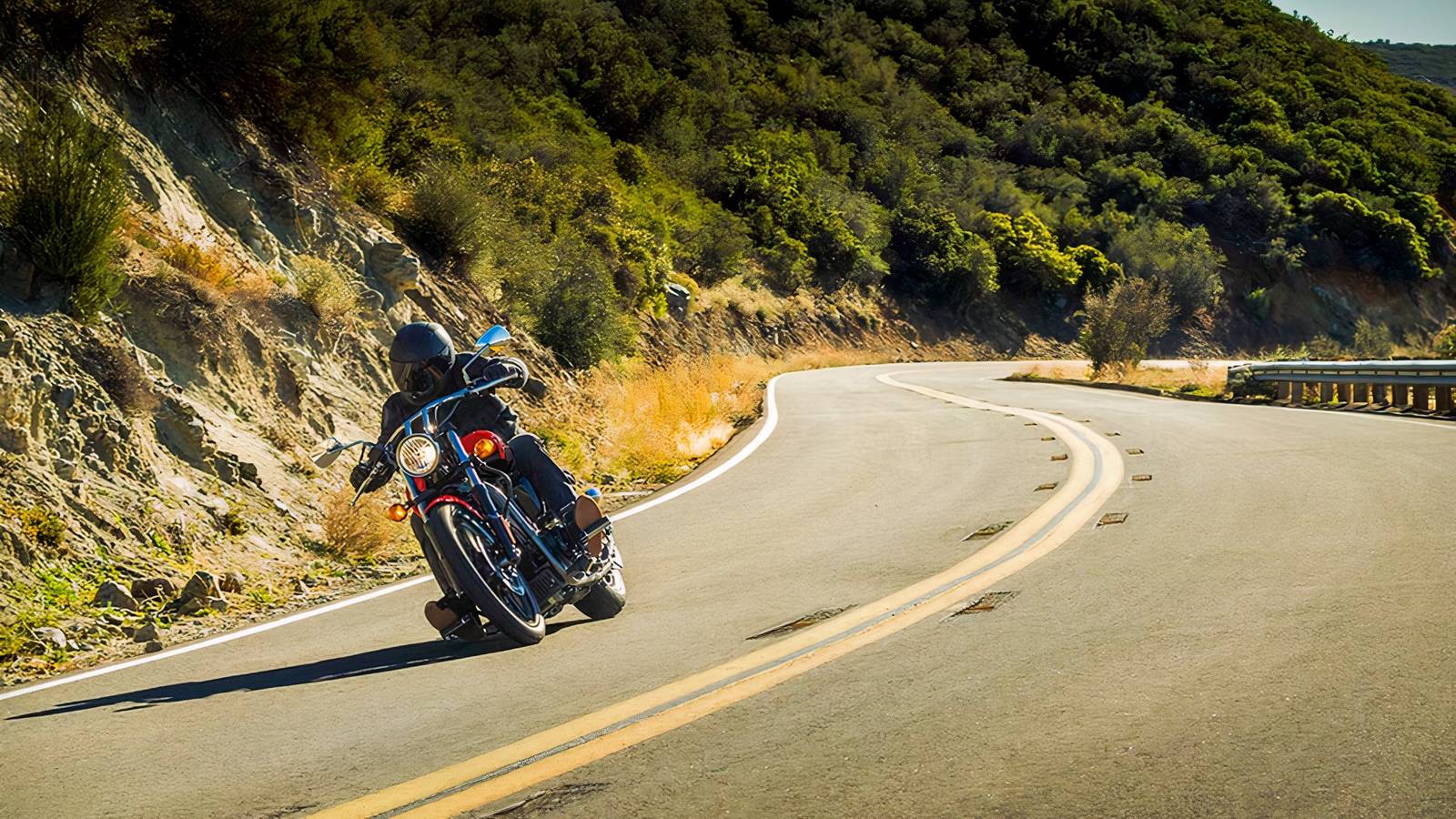
It doesn’t matter if you’re a fan of cruisers or not. Watching someone roll down the highway on a V-twin cruiser automatically wakes the wanderlust in you. Steppenwolf’s “Born to Be Wild” starts playing unbidden in your head, and for the briefest of moments, you want one. If you’re a fan of cruisers, you’re probably the person riding down the highway on one – but ask anyone, and the gold standard (or should that be ‘chrome standard’?) of cruisers has always been Harley-Davidson. It has defined what we seek in a cruiser for many decades now.
The Japanese have realized this too, and have realized that they can’t beat ‘em, so they decided to join ‘em, but while holding their own values dear. That would be reliability and affordability, the things that made them so popular when they first entered the market. They married these traits with the Harley designs that we love so much. But is it possible to find a cruiser with Yamaha reliability and Harley-level presence?
Japanese Cruisers Have A Fascinating History

We’ve said that the Japanese copied H-D, but that is only true for some products. They also made a few of their own originals that nobody has managed to copy effectively. Look at the Gold Wing, for example. It birthed the Valkyrie, which is possibly the most unique cruiser of them all. The biggest displacement cruiser for a while was a Japanese product: the Kawasaki Vulcan VN2000. And the most powerful production cruiser ever remains the second-gen Yamaha V-Max with its 200 horsepower. So no, it wouldn’t be a stretch to say that the Japanese have managed to make a cruiser with Yamaha reliability and Harley-level presence. And here it is.

10 Small Cruiser Bikes To Kickstart Your 2025 Riding Goals
The most powerful beginner-friendly cruiser bike on this list produces over 90 horsepower but is still very approachable.
The Kawasaki Vulcan 900 Custom Has Yamaha Reliability And Harley-Level Presence

Kawasaki has made some truly impressive cruisers over the years, but its range is now limited to two models. One of them is the Vulcan S, which is based on the Ninja 650 sport bike, and the other is the Vulcan 900, which is an old-school V-twin cruiser that hasn’t changed much but still manages to be a good buy even today. One of its calling cards is reliability. After being on sale for two decades, there is no doubt about that.

The Vulcan 900 is available in a few different variants, including an old-school cruiser with whitewall tires and a light tourer with leather saddlebags and a bolt-on windscreen. But neither of those has the visual impact of the Vulcan 900 Custom. This has a blacked-out look and aims to be a drag bike-style cruiser, so it turns heads just like a Harley-Davidson.
It Is Priced Quite Reasonably

The Vulcan 900 Custom is priced at $9,999. That’s $1,000 more than the Yamaha Bolt R-Spec and the exact same price as the base Harley-Davidson Nightster. Given what the Nightster offers, it might seem a little like Kawasaki is asking for a little more than it should. However, the Vulcan is worth it when viewed from the perspective of lower ownership costs and if you value the ability to customize it later. You could also look for older model years and haggle – this product hasn’t changed except cosmetically in a long time, so you won’t be missing much with an older model!

10 Cruisers That Will Run Forever With Basic Care
These bikes will give the Energizer Bunny a run for its money – and all they need is basic preventive maintenance done on time.
Putting The ‘V’ In ‘Vulcan’

The Vulcan 900 is powered by a good old-fashioned 55-degree V-twin. It might have debuted twenty years ago, but it has a lot of modern features like fuel injection, liquid cooling, and overhead camshafts. It even has a short stroke design! Its relatively laid-back compression ratio of 9.5:1 means it isn’t very particular about what fuel it ingests. This 903cc engine puts out 51 horsepower at 5,500 RPM and 58.3 pound-feet at 3,500 RPM. A five-speed wide-ratio gearbox and belt final drive (yes, like a Harley) round out the driveline. This is very low output by today’s standards, where more modern cruisers at the price offer up to 90 horsepower and 72 pound-feet. Still, the torque arrives very early, which makes it great for, well, cruising.
The Traditional Chassis Also Has Some Modern Touches

Kawasaki has given the Vulcan 900 a semi-double cradle frame, which was normal for the class when it launched. Also normal are the Showa forks. However, at the rear, it has a surprisingly modern link-type single shock. This has a preload adjustment with seven steps. The brakes show their age today, with a 300mm disc at the front and a 270mm disc at the rear. They are paired with a two-piston floating caliper at both ends.

While we’re okay with the rear brake setup, the front could really use an upgrade – while the much lighter Vulcan S has an identical setup, the much smaller Eliminator has a larger 310mm disc! Oh, and both those other Kawasaki cruisers offer ABS, which the Vulcan 900 does not, even as an option. The wheels are alloy units, so there are tubeless tires, and there are 21-inch front and 15-inch rear wheels, as befits a drag bike.
Chopper Design Means A Really Long Cruiser

The Vulcan 900 Custom’s dimensions make it sound like a really long motorcycle, and it is mostly down to the kicked-out forks and 21-inch front rim. It is 94.7 inches long and has a 64.8-inch wheelbase. The drag ‘bars contribute to the 35.2-inch width. The combination of long wheelbase and massive front wheel means that this Vulcan is very stable in a straight line, but doesn’t like quick direction changes. The fuel tank holds 5.3 gallons of go juice, and it weighs 611 with a full tank of gas. That is pretty heavy by today’s standards, which is why we think it needs better brakes.

Here Are The Cheapest V-Twin Cruiser Bikes From All Popular Brands
The most affordable V-Twin cruiser in 2025 packs a humble 249cc engine and is priced under $5,000.
Old School Features List Is An Acquired Taste

You will either love or hate the Vulcan 900 Custom’s lack of features. It is very 2000s, with a tank-mounted analog speedo and fuel gauge coupled with an LCD insert for the other information. There are three LEDs at the bottom for neutral, turn signals, and the high beam. As we’ve mentioned before, ABS isn’t even an option despite there being disc brakes at both ends. However, it does have a second set of ECU-controlled throttle valves in line with the first set to smooth out throttle responses.

Other features on the Vulcan 900 Custom include blacked-out elements all over, including the engine and exhausts. The exhausts themselves are slash-cut, and the wheels have pinstriping. Accessories from Kawasaki include a short windshield, extra lights, and a luggage rack.

10 Affordable Cruisers That Refuse To Break Down
These cruisers are unflappable, and you can be sure they’ll get you there AND home!
Modern Competition Vs Old-School Charm

The Kawasaki Vulcan 900 Custom has some real competition in the market. If you prefer to go old school, Yamaha has the Bolt R-Spec. It lacks the liquid cooling of the Vulcan, but it is a dead ringer for the old Harley Sportsters, so it definitely has Harley-level presence. It is priced at $8,999, a whole $1,000 less than the Kawasaki.

If you look at more modern alternatives, there is the cheaper(!) Honda Rebel 1100, at $9,699. While it might not have Harley-level presence, this is a large cruiser, and it has a great feature set that includes ABS and a five-inch TFT display with Bluetooth and navigation as standard.

Or if you want Harley-level presence for under $10,000, why not get a Harley? The base Nightster costs $9,999, has a liquid-cooled V-twin with variable valve timing, a six-speed gearbox, a trellis frame (meaning it is light), and it has traction control, ABS, and an engine back-torque limiter. What’s not to like?
Source: Kawasaki USA