
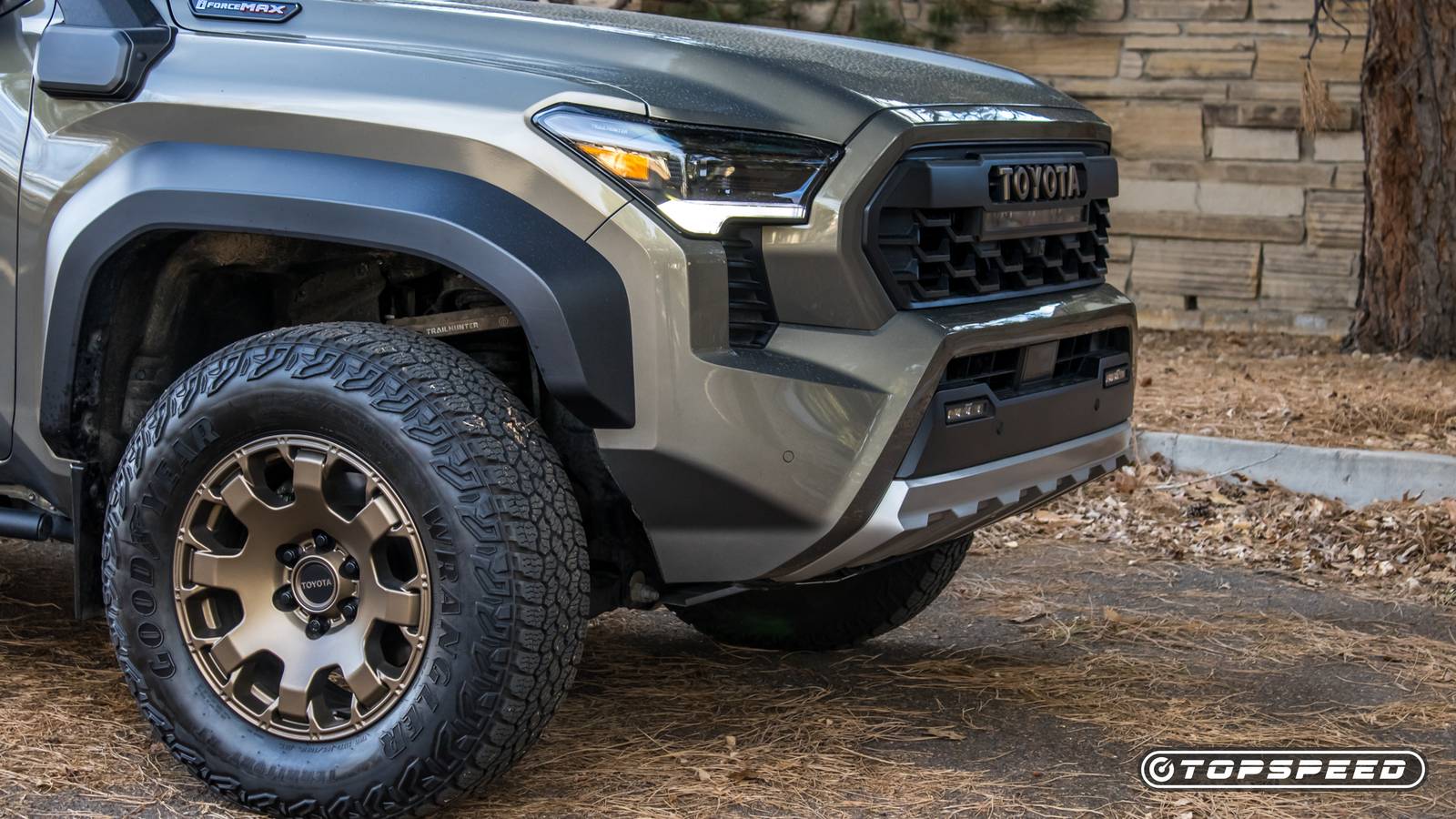
The pickup truck industry remains a monumental part of the American automotive landscape, with more road users considering these versatile vehicle options for personal mobility needs. Trucks will always be the best option for workhorses, but thanks to modern design techniques, they have evolved into much more user-friendly vehicles, while also improving on overall capability and functionality. With this in mind, many consider long-term ownership costs when buying a new truck in modern times.

- Base Trim Engine
-
2.4L I-FORCE I4 ICE
- Base Trim Transmission
-
8-speed automatic
- Base Trim Drivetrain
-
Rear-Wheel Drive
- Base Trim Horsepower
-
228 HP @6000 RPM
- Base Trim Torque
-
243 lb.-ft. @ 1600 RPM
- Base Trim Fuel Economy (city/highway/combined)
-
20/26/23 MPG
- Make
-
Toyota
- Model
-
Tacoma
- Segment
-
Midsize Pickup Truck
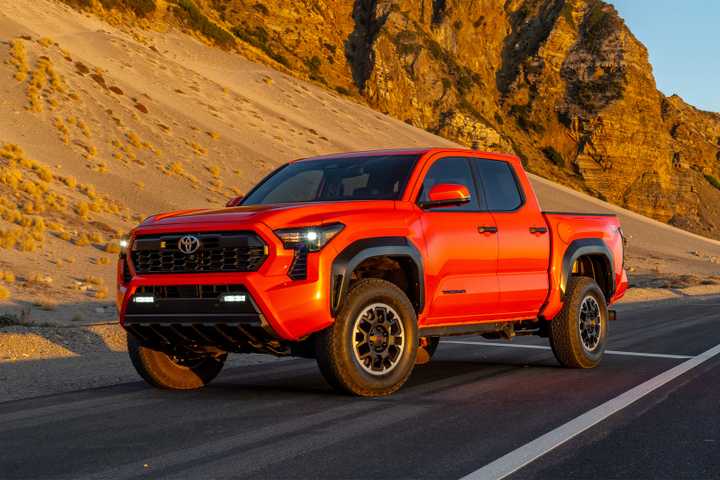
The 2026 Toyota Tacoma is a great example of a truck that has consistently stood the test of time, resulting in many people holding on to their ones for much longer than you’d expect. The current-generation model is no exception to this, as its more modern drivetrain and platform dramatically improve practicality and ease-of-use.
The Toyota Tacoma Seems To Live Forever

The Toyota Tacoma moniker enjoys a longstanding reputation in the U.S. for mechanical longevity, with many older models covering hundreds of thousands of miles with minimal mechanical maintenance. Toyota introduced this model as a locally produced replacement for the Hilux, but with the same principles of prioritizing over-engineered components and a durable body-on-frame construction.
Thanks to this focus, many first- and second-generation models easily surpass 300,000 miles, cementing the truck’s status as a leader in resale value. The third generation model came under fire for poor transmission tuning, but Toyota’s iterative refinements ultimately maintained the brand’s dependable track record.
The 2026 model forms part of the fourth-generation, which Toyota subjected to a dramatic visual and structural redesign. Electronic systems and turbocharged components are more complex, but the Tacoma retains a high-strength steel frame and rigorous testing to ensure it meets the robust standards of its predecessors.
The Tacoma Nails Long-Term Value

The Tacoma’s incredible reputation when it comes to reliability plays a noteworthy factor when it comes to its impressive market success. According to iSeeCars, the ICE model gets an 8.5/10 overall score, including 8.2/10 for reliability, 9.3/10 for retained value, and 8.0/10 for safety. The hybrid scores an 8.1/10 overall grading, consisting of 8.2/10 for reliability and 9.1/10 for retained value.
On the reliability front, iSeeCars also indicates that the model will last 15.7 years or 196,974 miles without experiencing any noteworthy mechanical issues, with a 47.8-percent probability of hitting 200,000 miles. Regarding depreciation, the publication suggests that the ICE model will lose an average of $6,397 or 19.9 percent of its value over five years or 60,000 miles, while the hybrid fares slightly worse, with a $10,870 or a 23.2-percent depreciation rate.
J.D. Power backs this with an 81/100 consumer-verified overall score, including 80/100 for quality and reliability, 73/100 for the driving experience, 96/100 for resale, and 76/100 for the dealership experience.
The 2026 Toyota Tacoma currently has a 4.3/5 star rating on Edmunds‘ consumer review portal, with existing owners highlighting the driving experience, ride quality, and fuel efficiency to be its biggest drawing cards, while some have criticized its lack of interior space and infotainment system usability.

The Pickup Truck That Holds Its Value Longer Than Any SUV
This pickup truck straight-up hoards resale value, and it’s not even one of the big ones
An Interior Built To Work And Last

Interior durability is a fundamental aspect for trucks, especially those subjected to hard labor. The Toyota Tacoma’s interior has undergone a remarkable transformation over the years, evolving from a utilitarian layout into a high-tech command center without compromising its hard-working ethos.
The first-generation models are defined by hard plastics, manual crank windows, and basic cloth benches designed to endure mud and dust and be easy to repair and clean. As the truck transitioned through the second and third generations, Toyota began integrating soft-touch materials and creature comforts like dual-zone climate control and more premium audio systems as a response to the increase in demand for adventure-minded vehicle options.
The 2026 model represents the pinnacle of this evolution, with its optional 14-inch touchscreen and a 12.3-inch digital gauge cluster inspired by premium SUVs. Toyota achieves durability through tactile design, including oversized physical knobs for key functions, which you can use while wearing work gloves. There’s also new IsoDynamic Performance seats with mechanical dampeners that keep your posture stable during high-speed off-roading.
Impressive Powertrain Specifications

The 2026 Toyota Tacoma is only available with the brand’s turbocharged 2.4-liter four-cylinder engine, with power outputs ranging from 228 horsepower to 278 horsepower and 243 to 317 pound-feet of torque. This is available with the brand’s eight-speed automatic or six-speed manual, and rear-wheel drive or four-wheel drivetrains. Toyota doesn’t disclose performance claims, so there’s no official 0 to 60 MPH acceleration figures, but we do know it limits top speed to 113 MPH.
The difference between that base engine and the I-Force Max is downright dramatic. If it’s only about power, then go with the i-Force Max. It’s not available on base trims, however, so you’ll pay a premium for the hybrid power.
– Nicole Wakelin, TopSpeed Journalist
The hybrid i-Force Max integrates an electric motor next to the eight-speed automatic transmission, resulting in a combined 326 horsepower and 465 pound-feet output. This variant is capable of achieving a 7.6-second 0 to 60 MPH acceleration time. Towing capacities range from 3,500 pounds to 6,500 pounds, depending on your desired specification.

The Real Cost Of A Fully-Loaded 2026 Toyota Tacoma
Could you justify spending over $160,000 on a pickup truck? See what happens when you max out the options on a Tacoma.
Robust Drivelines Made To Travel Far

The 2026 Toyota Tacoma’s suspension and driveline also prioritize durability thanks to the TNGA-F high-strength steel chassis. The engine transfers power to the wheels via an eight-speed electronically controlled automatic transmission, featuring a sequential shift mode and uphill and downhill logic. On certain models, you can opt for a conventional six-speed intelligent Manual Transmission with anti-stall and rev-matching.
A two-speed electronic transfer case offers high and low ranges for improved versatility. The i-FORCE MAX hybrid models benefit from a specialized full-time 4WD system with an electronically controlled locking center differential. An electronic locking rear differential is standard on TRD Off-Road and Pro trims. This system physically pins the rear axles together to ensure equal power distribution in low-grip scenarios.
If you are an enthusiast, you can further enhance this setup with optional extras like the Stabilizer Disconnect Mechanism, which increases front-wheel travel by two inches for superior articulation, and heavy-duty underbody skid plates made of stamped aluminum or steel to protect the transmission and transfer case during technical rock crawling.
Don’t Expect To Save Much On Fuel

The EPA covers all the Tacoma’s different configurations for its testing, but we will just focus on the two most popular configurations. The ICE four-wheel-drive automatic returns a 20/23/21 MPG consumption estimate on the city/highway/combined cycle, while covering 382 miles on a single tank of gas from the 18.2-gallon tank.
The agency estimates that you will spend $3,000 more on fuel over five years compared to the average new vehicle. Your annual fuel cost comes in at $2,250, while you can expect to spend $3.71 to drive 25 miles. A full tank of gas will cost you around $57.
The hybrid returns much better savings compared to the ICE model. The EPA estimates that this model will consume 23/24/23 MPG, while covering 419 miles on a single tank. You’ll find yourself spending $2,000 more on fuel over five years, $2,050 on fuel every year, and $3.39 to drive 25 miles.

2025 Toyota Tacoma TRD Pro Driven: Humble No More
It has bounce house seats and a hybrid powertrain. We check out the surprisingly complex 2025 Tacoma TRD Pro.
Broad Specification And Pricing Range

Pricing is a big reason for the Toyota Tacoma’s success in the U.S., which Toyota is able to optimize thanks to its highly versatile and modular TNGA platform, which streamlines the development and production process. The only trims that offer multiple cab and bed configuration options are the SR, SR5, TRD Sport, and TRD Off-Road.
|
Configuration |
Price |
|
|
SR |
XtraCab/Six-Foot Bed |
$32,245 |
|
SR |
Double Cab/Five-Foot Bed |
$33,905 |
|
SR5 |
XtraCab/Six-Foot Bed |
$36,335 |
|
SR5 |
Double Cab/Five/Six-Foot Bed |
$37,405/$37,905 |
|
TRD PreRunner |
XtraCab/Six-Foot Bed |
$38,835 |
|
TRD Sport |
Double Cab/Five-Foot Bed |
$40,115 |
|
TRD Sport |
Double Cab/Six-Foot Bed |
$40,615 |
|
TRD Off-Road |
Double Cab/Five-Foot Bed |
$42,515 |
|
TRD Off-Road |
Double Cab/Six-Foot Bed |
$44,115 |
|
TRD Sport i-Force Max |
Double Cab/Five-Foot Bed |
$47,035 |
|
TRD Off-Road i-Force Max |
Double Cab/Five-Foot Bed |
$47,335 |
|
Limited |
Double Cab/Five-Foot Bed |
$53,270 |
|
Limited i-Force Max |
Double Cab/Five-Foot Bed |
$56,595 |
|
Trailhunter |
Double Cab/Five-Foot Bed |
$63,450 |
|
Trailhunter |
Double Cab/Six-Foot Bed |
$63,950 |
|
TRD Pro |
Double Cab/Five-Foot Bed |
$64,450 |
The TRD PreRunner is only available with the XtraCab and six-foot bed for $38,835. The TRD Sport i-Force Max is the least expensive hybrid variant, starting at $47,035, and is only available with the double cab body and five-foot bed. The Trailhunter and TRD Pro models sit at the very top of the range, with prices reaching $64,450 MSRP.
Sources: Edmunds, CarEdge, iSeeCars, J.D. Power, EPA