
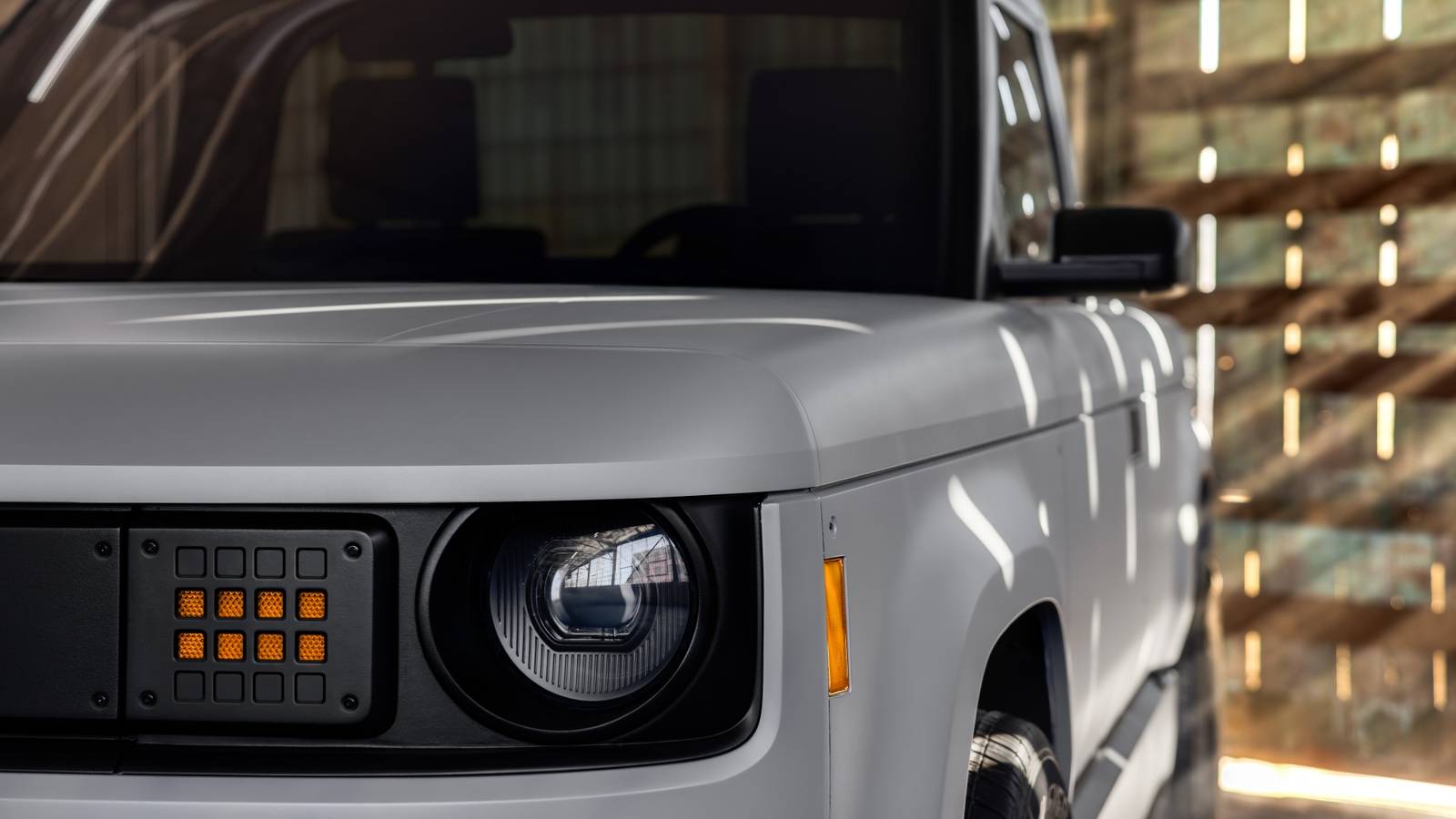
What is the biggest problem with new cars? They are just too expensive. New car prices have steadily increased year after year, from an average below $30,000 in 2010 to our current average in 2026 being about $50,000. There is no reason the “average” new vehicle should cost that much money. However, nowadays, automakers clearly prioritize profit margin over providing actual value to consumers.
Part of the reason that value is no longer a priority for these companies is that Americans aren’t buying more cars; they are buying fewer than ever before. New vehicle sales have shown continued weakness since all-time highs in 2016, and automakers offset lower sales by raising prices. Is there any single company willing to challenge the status quo and bring back affordability while providing the best technology has to offer? Thankfully, yes, and they are called Slate Auto. Let’s break down why this EV start-up has the potential to redefine the current unsustainable affordability standards.
Slate Auto’s Origins, Outlook, And Approach

It seems that every day, a new tech start-up pops up that makes huge promises to disrupt an industry, gets people really excited about it, and then proceeds to fail to live up to expectations. Countless companies litter the “startup graveyard”, but we are praying that Slate Auto isn’t destined to be one of them. Considering that this EV startup is backed by Jeff Bezos and company, one of the richest and most influential individuals in the world, we can assure you that funding will not be its primary issue. Let’s discuss Slate Auto’s plan to revolutionize the industry and determine how it came about and why it matters.
A Real Stealth-To-Splash Startup

Slate Auto was quietly founded in 2022, and since then, it has been building up its foundation to become a promising EV startup. In 2025, the company had its official public unveiling and then, soon after, announced that it had already raised $700 million worth of funding. That is a remarkable start for a company without a single product on the market. Yet, is that enough to truly take on the entire auto industry, let alone have a successful business? Right now, we still don’t know for sure. EV startup rivals like Rivian and Lucid Motors have only survived the storm by shelling out billions with somewhat reckless abandon in hopes of seeing their dreams become a reality. However, Slate Auto is taking a fundamentally different approach to these other EV brands, and that is its x-factor.
Not Just Another Tech-Bro Fantasy

Slate Auto, unlike its California-based rivals Rivian or Lucid Motors, is not here to sell you a premium EV to flex on your neighbors as a status symbol. They aren’t promising 1,000 miles of electric range on a single charge or the most cutting-edge software solutions on the planet. What is Slate Auto’s x-factor then?

Bare-bones simplicity. No nonsense, exotic paint jobs, or lavish accouterments. Everything that isn’t necessary is entirely left out. If you want a new feature down the line, you can always add it later. This simplicity is what will allow the company to offer an American-produced EV at price points previously believed to be unattainable. If Slate Auto achieves this at scale, traditional automakers will likely revise their strategies to remain competitive.

10 Luxury Hybrids That Blend Spaciousness With Efficiency
These 10 luxury hybrid SUVs (and one sedan) balance usable space with long-legged efficiency.
Slate Auto’s Current Game Plan

Now that we have a better idea of where Slate Auto is in the progress of its development, we can map out its current game plan. With its $700 million in funding ready to go, Slate Auto has set out to renovate a large Midwest facility that will be its primary manufacturing base. Its goal is to start production of its first vehicles by late 2026.
Consumer-Backed And Venture-Backed

Through its Series A and Series B funding rounds, Slate Auto has reportedly raised about $700 million with the specific backing of Jeff Bezos and Mark Walter, two of the richest individuals on the planet, along with investment group General Catalyst. Yet, it’s not just the investment firms and big money players that are in support of Slate Auto. When it launched the online reservation system for the Blank Slate electric truck back in April 2025, it managed to draw in 100,000 reservations in only two weeks. Now those reservations are only $50 each and refundable, but the consumers’ interest in what could be the future of electric vehicles is clear.
Midwest Manufacturing And Production Goals
Slate Auto may be less than a year out since it officially emerged from “stealth mode”, but the company has been making major moves since. The EV startup has taken control of a 1.4-million-square-foot facility in Warsaw, Indiana, that will be repurposed as the center of its production efforts. Slate Auto has been keeping the public in tune with its progress with the facility via its social media accounts, and so far, it looks like major developments are occurring daily. This Indiana hub is set to create over 2,000 jobs in the state, and production goals are set to exceed 150,000 vehicles annually once the factory is in full swing.

The American-Made EV That Can Go 200,000 Miles With Minimal Upkeep
This is the best EV option you can consider if you value long-term reliability.
What Slate Auto Needs To Disrupt The EV Market

Slate Auto has a simple goal: produce an affordable, home-grown EV. Yet, considering the state of the current automotive industry, is that just a pipe dream or a goal that is actually achievable? Let’s determine what Slate Auto will actually need to achieve in order to make its idea a reality.
An Optimistic Outlook

Many price points have been presented as the true cost for Slate Auto’s Blank Slate electric truck. Previously, we were hearing the idea of a sub-$20,000 truck. Then they said $25,000. Then they said sub-$30,000. In a best-case scenario, it is most likely that Slate’s EV truck ships in the $25,000 to $30,000 range. The impact of federal tax credits played a huge role in this speculation. Considering the sheer level of ongoing political instability, those credits are unlikely to return.

Simply put, if the Blank Slate costs about $30,000 at launch, it won’t be revolutionary, but it will be a step in the right direction. More affordable cars are good, and a larger inventory of cheaper new vehicles will pressure traditional automakers to revisit their own cost structures. Initial reservations show that the interest is there, but the final market cost and execution of the product will determine its long-term success.
The Devil’s Advocate Perspective

$30,000 is still a lot of money for any new vehicle, let alone a two-door EV truck with limited range and bare-bones features. For the Blank Slate to have the impact that it initially intended, it doesn’t need to just be the cheapest EV on the market, but one of, if not the cheapest, vehicle on the market. The cheapest new vehicle is currently the 2025 Nissan Versa, which has an MSRP of $17,390, but in reality sells for about $22,000. The all-new 2026 Nissan Leaf is currently making waves as the most affordable EV, which is priced at $29,990. The soon-to-be-produced 2027 Chevrolet Bolt looks to one-up the Nissan with its starting price of $28,995.

With a base projected range of 150 miles, the Blank Slate isn’t even competitive with the driving range of these two affordable EVs that both offer nearly twice the range in base configuration. Regardless of what price the Blank Slate ends up being, this alone will not change the fact that our current EV infrastructure is nowhere near where it needs to be for it to be accessible to the average person. Even if EVs were substantially cheaper, most people still have no way of actually charging their electric vehicles in a convenient fashion.

Why Luxury Cars Are Embracing Hybrid Tech Faster Than You Think
Luxury hybrids are the hottest thing on the block right now and for good reason.
Slate Auto’s Wider Market Impact

Slate Auto’s idea with the Blank Slate is truly admirable in theory, but its execution will be the true determining factor of its efficacy. Let’s break down what impact this electric vehicle may have on the wider automotive market and what shifts may or may not occur from its influence.
The Bare-Bones Modular Design

Modular chassis design is by no means a concept that Slate Auto invented. If anything, legacy automakers in recent years have focused on the modular chassis more than ever before. A modular chassis that can be configured into a variety of different vehicles allows for increased manufacturing flexibility and simplifies the production process. Where Slate Auto has taken this a step further is by allowing customers much more freedom of configurability and customization than most traditional automakers or even other EV startups offer.

Add what you want, leave out what you don’t need. If you change your mind later, it can always be swapped in the future. Now that’s cool and forward-thinking. The fact that your two-door truck could be turned into a five-seater SUV at any time after you buy it is an intriguing proposition that may influence other automakers to follow suit with a similar ultra-configurable bare-bones system.
The 2026 EV Market Is Complicated

We know that Slate Auto’s Blank Slate will not be a sub-$20,000 vehicle. However, if it can manage to still be about $25,000 and can move solid volume within the first couple of years, legacy automakers will certainly be put on the backfoot. As we mentioned previously, new car sales have been declining since 2016, and automakers have responded by selling higher-priced, feature-rich vehicles to make up for the lack of volume. If the Blank Slate could sell anywhere near 100,000 units a year, it would be safe to call it a smashing success.

However, the EV market took a downturn in 2025 with the end of the federal tax credit incentive. The disappearance of the tax credit alone is not enough to kill the EV market, but it has slowed progress significantly. Less than six percent of new cars in Q4 of 2025 were electric vehicles. Price, range, and charging infrastructure are still the three make-or-break factors for the proliferation of future EV models. If the Blank Slate can at least keep its $25,000 price point a reality, its impact will be beneficial to consumers by providing strong competition in an increasingly important market space.
Sources: Slate Auto, Cox Automotive