
Motorcycling has always been about chasing the next big leap forward. Every generation brings something new, whether it’s the move from carburetors to fuel injection, or from simple frames to suspension systems that practically think for you. These innovations change the way you ride, the way the bike responds, and the way performance feels when the tires grip the road.
Some breakthroughs stand out so clearly, though, that they set a benchmark no one else can touch. These remain unmatched long after their debut. And in today’s sports bike world, there’s one machine that carries such an innovation, holding its ground while every other manufacturer keeps trying to catch up.
Unique Engineering Marvels That Remain Untouchable

In the constant race to be the fastest or the smoothest, every brand has that one piece of engineering that makes its motorcycles feel different. Take Yamaha, for example. It’s Crossplane Crankshaft design brings MotoGP-inspired irregular firing intervals to the R1, delivering smoother torque and traction. Then you have Ducati with its famous Desmodromic Valve System. It eliminates valve springs, achieving razor-sharp precision at stratospheric revs across its superbike lineup.
Of course, these innovations aren’t just about chasing performance numbers; they change the way you experience the road. BMW’s Telelever Suspension changes the way stability feels by separating braking and suspension forces, and Honda’s Dual Clutch and E-Clutch Transmission offers seamless shifting either automatically or manually. Each of these marvels gives its brand a unique identity. Yet the superbike we are about to discuss has achieved something none of the others have managed.

Here Are The Most Powerful Sports Bikes From All Popular Brands
The sports bike market might be a shadow of its former self, but there are still some incredibly powerful bikes available to us
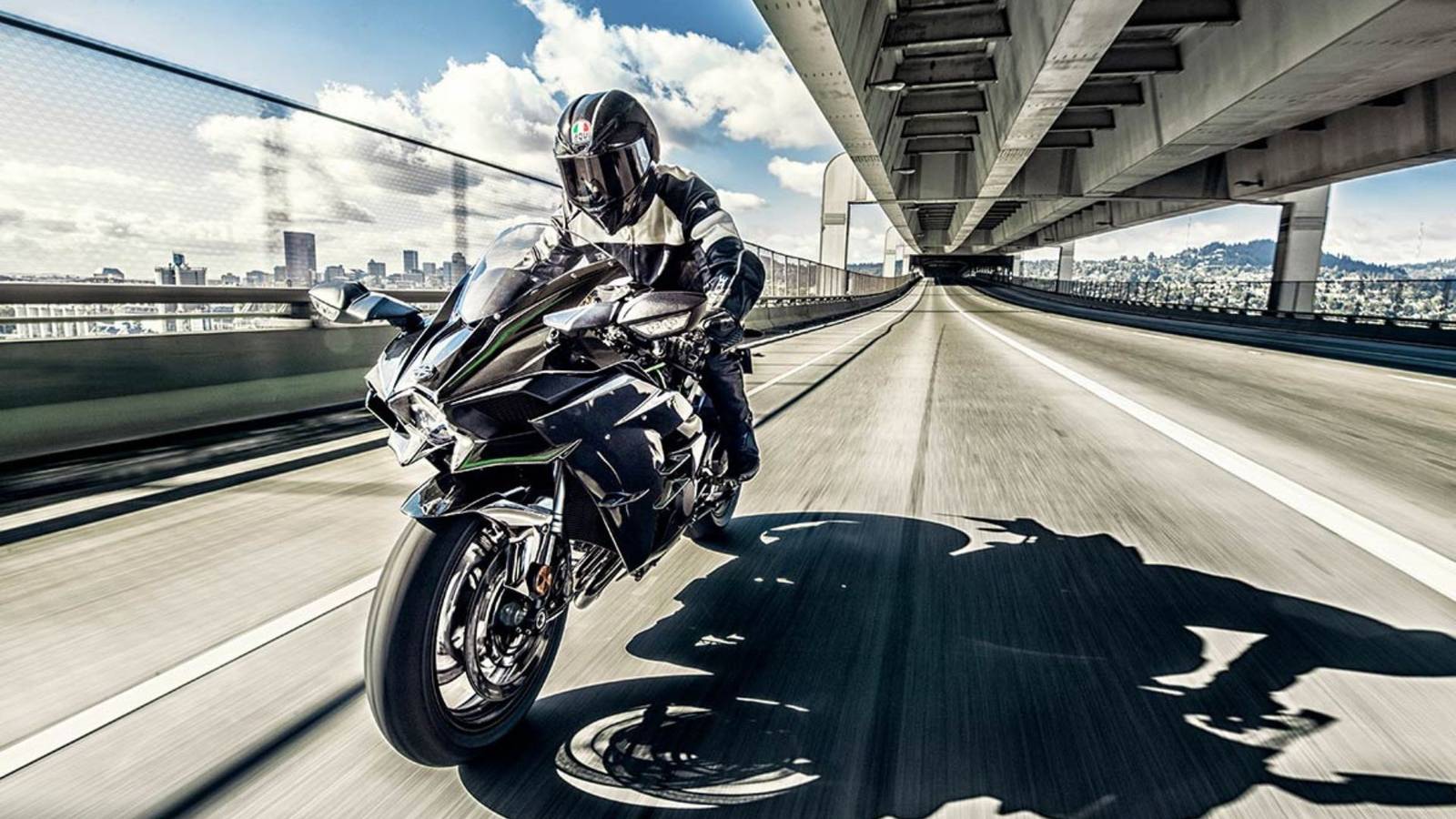
The Kawasaki Ninja H2 Is The Bike That Other Manufacturers Are Still Trying To Catch

In Kawasaki’s history, the iconic Z1 established its performance credentials in the 1970s, while the legendary Ninja ZX-14R later earned its crown as the King of the Quarter Mile. Then, in 2015, Kawasaki launched the first production motorcycle with a supercharged engine. The Ninja H2 wasn’t just fast; it felt like a bike from the future. Then came the outrageous Ninja H2R, a track-only hyperbike that pushed performance into uncharted territory. If you wanted a more versatile package, the Ninja H2 SX SE gave you raw power with touring comfort. The same engine even found its way into the Italian-built Bimota Tesi H2. And while other manufacturers, like Honda, have explored supercharged concepts, Kawasaki remains the only brand to put one on the road.
Supercharged Exclusivity Comes At A Premium Price

The Kawasaki Ninja H2 ABS is priced at $34,400, while the H2 Carbon ABS edition costs $36,200, complete with a carbon-fiber upper cowl and exclusive detailing. With no other supercharged bike to rival it, you’re left comparing it to exotic naturally aspirated competitors like the Ducati Panigale V4 S at $37,695, the BMW M 1000 RR starting at $35,395, and the Aprilia RSV4 Factory at $26,499. These rivals may be lighter and sharper on track, but none can match the straight-line surge of the H2 when the supercharger comes alive.

The Most Expensive New Kawasaki Motorcycle You Can Buy Today
This Ninja is out of reach for most buyers with its over $50,000 MSRP
Supercharged Engine That No One Else Dared To Mass Produce

The supercharged 998cc line-four engine powering the Ninja H2 is designed entirely in-house by Kawasaki Heavy Industries. Built with a 76 mm bore and 55 mm stroke, the engine was engineered from the ground up to withstand the brutal pressures of forced induction. Driving it all is a mechanical centrifugal supercharger connected to a planetary gear train, spun directly off the crankshaft.

That gear system can spin the impeller shaft to nearly 130,000 rpm, forcing close to 200 liters of air per second into the cylinders. The result is a relatively high 8.5:1 compression ratio, yet the setup runs cool enough to avoid the need for an intercooler. A straight-path RAM air intake feeds the supercharger.
Staggering Power Output From Forced Induction
The Ninja H2 isn’t just about clever engineering; it’s about raw numbers that leave jaws on the floor. It produces 228 horsepower at 11,500 rpm and 104.9 pound-feet of torque at 11,000 rpm. Engage the RAM air induction, and that figure jumps to an astonishing 240 horsepower. Step up to the track-only H2R, and you’re looking at a mind-bending 322 horsepower.

Power delivery is through a six-speed dog-ring gearbox with a two-way quickshifter, a MotoGP-inspired design that allows lightning-fast shifts. To keep everything manageable, the fuel system uses dual injectors per cylinder and massive 50 mm throttle bodies to feed the pressurized air. A robust chain final drive and a high-performance hydraulic clutch with assist and slipper functions ensure you stay in control, even during aggressive downshifts.

The Kawasaki Engine So Reliable It’s Still In Production After Decades
The Kawasaki Ninja ZX-6R is a supersport motorcycle with an engine so reliable, it’s been in production for decades.
A Purpose-Built Platform, Armed With Electronics

To harness all that supercharged power, the Ninja H2 is built around a steel trellis frame that blends strength with agility. This results in a curb weight of 524.8 pounds, a wheelbase of 57.3 inches, and a seat height of 32.5 inches. Suspension comes from 43 mm KYB AOS-II front forks and a flagship Öhlins TTX36 rear shock, both fully adjustable so you can fine-tune comfort and control.

Braking performance is equally fierce, with Brembo Stylema calipers gripping dual 330 mm discs up front and a 250 mm disc at the rear. On top of this mechanical foundation, Kawasaki adds a suite of rider aids powered by a six-axis IMU. You get traction control, launch control, cornering ABS, multiple ride modes, and a quickshifter. Advanced systems like blind spot detection, forward collision warning, electronic suspension, and engine braking management give you confidence when pushing the limits.
Nearly Decade-old Exclusivity Still Unmatched

The aesthetics are just as technical. Aerodynamic winglets developed by Kawasaki’s Aerospace division add visual drama while enhancing stability at high speeds. LED lighting sharpens its futuristic presence, while a full-color TFT display with smartphone integration keeps you connected through the Rideology App.

And then there’s the iconic Mirror Coated Spark Black paint. Using a chemical silver-plating process, it creates a liquid-metal look that’s instantly recognizable, and it even features self-healing technology to repair minor scratches. Nearly a decade after its debut, the Ninja H2 remains the only production supercharged motorcycle you can buy straight off the showroom floor. And even now, other manufacturers are still trying to catch up with the challenge Kawasaki set.
Sources: Kawasaki Motorcycles