
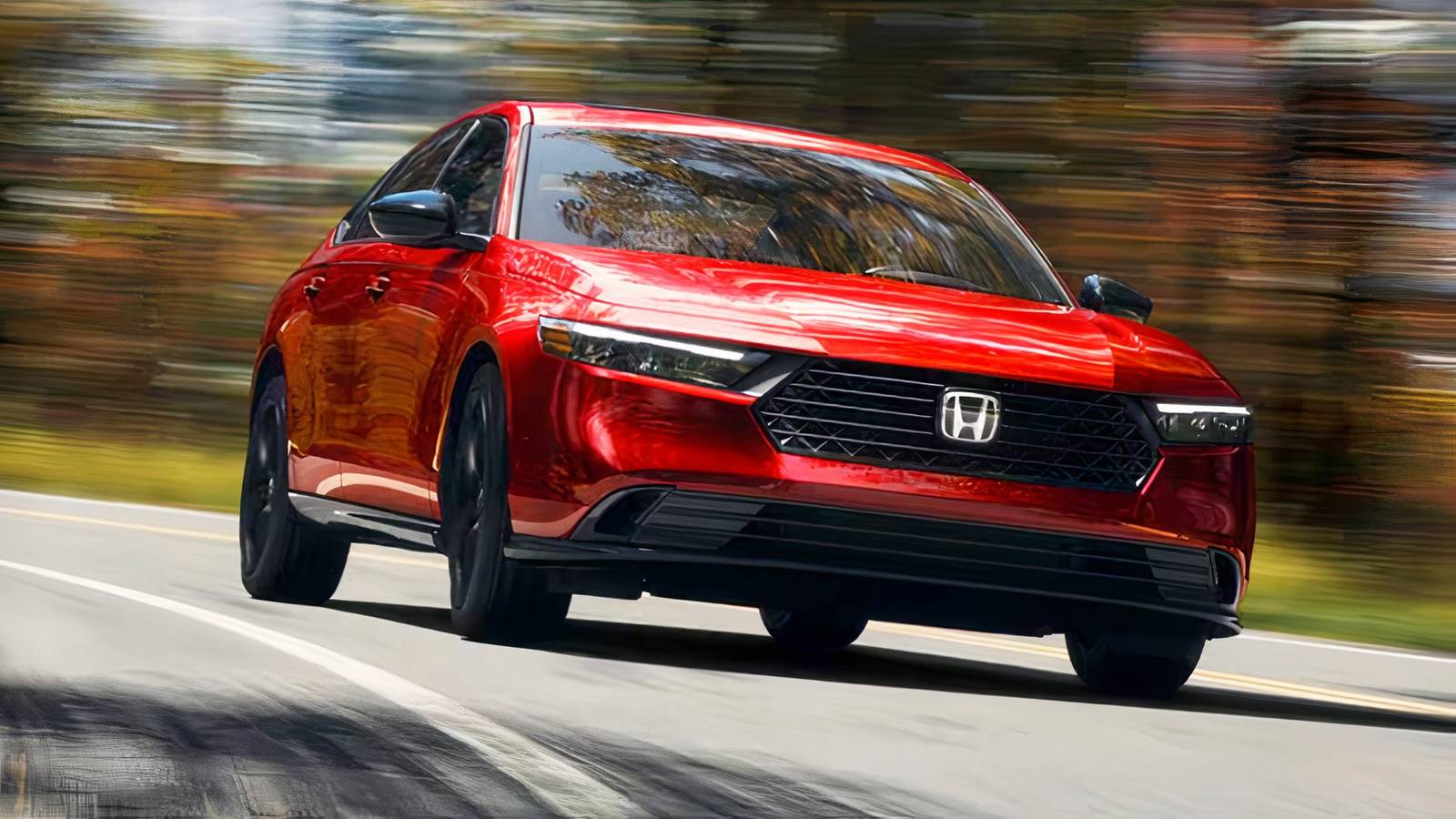
Honda K-engines are in it for the long haul. Sure, they can be tuned to produce incredible power, and you can easily slap a turbo on one, and it will work. But these engines are also renowned for giving the owner hundreds of thousands of miles of reliable service without major failures or expensive repairs. German brands like BMW and Volkswagen produce turbo four-cylinder engines that provide great power and performance, but these do not come close to the K-Series’ durability and legendary high-mileage ownership.

- Divisions
-
Acura, Honda Motorcycles, Honda Racing, HondaJet
- Founded
-
1946
- Founder
-
Soichiro Honda
- Headquarters
-
Minato, Tokyo, Japan
- Current CEO
-
Toshihiro Mibe
- Status
-
Active
Honda is a Japanese multinational corporation founded in 1948 by Soichiro Honda. Originally a motorcycle manufacturer, the company evolved into one of the world’s largest automakers, known for reliable vehicles like the Civic, Accord, and CR-V. Beyond automobiles, Honda produces motorcycles, power equipment, aircraft, and robotics, including the iconic ASIMO humanoid robot. The company’s reputation is built on engineering excellence, fuel efficiency, and innovation. Honda’s corporate philosophy emphasizes environmental responsibility and technological advancement, reflected in their early adoption of hybrid technology and ongoing development of electric vehicles.
A surprisingly high percentage of cars with K-engines go into and beyond the 300,000 miles with nothing more than routine maintenance. Oil, filters, timing components, regular service, and the odd gasket or seal will keep it going, on and on. Many turbo-fours need more frequent servicing, with turbo components wearing out, leading to higher repair costs over time. We’ll look at why the K-Series lasts so long, and what is required to make it reach those really high miles. Although Honda is increasingly replacing K-Series engines with smaller turbos or hybrids, they are still being used in cars like the popular Civic.
Honda K-Series: Engineered For Longevity

The Honda K-Series engines were launched in 2001 to replace the B-series. The K-Series was an instant hit with its blend of efficiency, power, and exceptional durability. These engines would go on to power millions of Hondas and Acuras. These engines are loved not only for their power and tuneability, but also for their ability to rack up major miles without major repairs needed.
Design Philosophy And Durability

The K-Series, most notably the performance-oriented K20 and the torque-rich K24 variants, benefited from Honda’s thorough engineering and conservative approach to structural integrity. The bottom-end architecture is robust, the aluminum blocks have iron sleeves, and the cams are chain-driven. These engines are designed to handle daily driving stress without strain or failure. This is in sharp contrast to many turbo engines that rely on high-stress forced induction and lighter internals in the quest for peak performance and fuel economy.
Enthusiast forums and owner reports regularly cite examples of K-engines going past 300,000 miles with only routine maintenance, or a gasket replacement. This longevity is a theme that runs across the many vehicles that use K-engines, showing how durability is the result of brilliant original design.
Real-World High-Mileage Examples

Longevity surveys and owner reports paint a picture that Honda and Acura models often go past 250–300K miles with minimal internal engine work. The most significant work cited is usually routine timing-chain maintenance and gasket replacements.
Some owners have service histories that show 500,000+ miles with nothing more than regular oil changes and scheduled chain checks, or sometimes replacing an accessory or seal. The narrative shows that K-engines rarely fail if basic maintenance is done.

10 Japanese Cars Known For Their Bulletproof Engines
These are the standouts among some of the most reliable Japanese cars out there.
German Turbo Fours: Performance Versus Longevity

Modern German turbo four-cylinder engines, especially from BMW and VW, push the performance envelope. They get really impressive power per liter of displacement and great torque curves, but these come with a trade-off in stress and complexity of maintenance.
The Turbo Trade-Off

A turbo engine is more complex and operates at greater stress than naturally aspirated engines like the original K-Series. The turbo spins at very high speeds, producing extreme temperatures that demand extra oil and cooling capacity. There are also extra components that can go wrong, including intercoolers, wastegates, and boost control systems. Forums frequently discuss German turbo fours reaching 150,000 miles without major work, but going far beyond that is far less common than with the K-Series.
Modern turbo engines are far more reliable than previous generations, but there are still issues like turbocharger wear, oil contamination from frequent cold starts, and more maintenance on complex timing systems required when mileage gets high.
Comparative Maintenance Costs

CarEdge aggregated data show that Honda vehicles rank among the lowest maintenance costs over ten years, in the same range as Toyota and other Japanese brands. German brands like BMW are typically more expensive to maintain, because of higher labor and parts costs, as well as more frequent repairs needed after longer ownership.
This has implications for buyers who keep their cars longer or buy high-mileage used cars. The long-term cost of ownership for a German turbo-four will be significantly higher than a K-engine Honda, especially when the turbo and emission components get older.

This Honda K24-Swapped 911 Turbo Is A Porsche Purist’s Nightmare
While this may not be your typical Porsche 911 Turbo, the owner chose to ditch the flat-six in favor of the K24 for a few key reasons
Maintenance: Keeping The K-Series Running For Decades

Longevity and high mileage start with meticulous engineering, but reaching and passing 300,000 miles requires regular maintenance and service. Skipping or delaying basic maintenance will have serious consequences over time.
Routine Care Means No Drama

Honda K-engines have straightforward maintenance intervals, making it easier for owners. The chain-driven cams last longer than timing belts. Oil changes at 5,000–7,000-mile intervals help look after internal seals and bearings. The things that can go wrong are well documented and can be planned for. These include high-mileage valve cover gasket leaks and V-TEC solenoids that need replacement.
This contrasts sharply with the greater complexity and cost associated with German turbo engines. Turbocharger or intercooler failures are expensive, and because all engine components work together, failure of these components can affect the rest of the engine as well.
K-Series Myths And Realities

Obviously, things will wear out or cause problems in K-Series engines when the mileage gets really high. Oil leaks on front seals and wear on engine mounts will happen over time, but if addressed in time, they will not lead to an internal engine failure.
But when components do wear out or fail, K-Series parts are widely available and affordable. Because so many cars use these engines, parts inventories are solid, and the aftermarket support is massive.

The K-Series Legacy

Honda K-Series engines are a testament to engineering honesty. They represent a benchmark in naturally-aspirated four-cylinder engineering in an era where many carmakers find it easier to effect efficiency and power by adding complex technology.
The Benefits Of Simplicity

The reason the K-Series lasts so long lies in what it does not have: high-pressure boost, complex turbocharging, and finicky materials requiring very precise thermal management. The K-engines are a study in solid engineering, with balanced rotating assemblies, iron sleeves in a lightweight block, reliable timing components, and maintenance points that are readily accessible.
In the real world, this means drivers will buy a decade-old Honda with 150,000 miles on the clock, and be confident it can reach 300,000 miles with only regular oil changes and coolant top-ups, and planned timing maintenance.
Cultural And Practical Impact

The K-Series is legendary in the wider car community. A K-swap is as popular as an LS engine swap. It is a favorite in the tuning and racing communities, because it is such a solid piece of engineering that it can be pushed far beyond factory spec and still remain reliable. Even modern turbocharged K-engines show the same durability and longevity as the naturally aspirated ones.
The K-series is a tuner’s dream. One case is called the Frankenstein, where a high-torque K24 bottom end is combined with a high-flow K20 cylinder head, which gives low-end grunt and high-rev VTEC performance. These engines can produce 300+ horsepower, making them a favorite for a performance street or track build, including high-end drifting cars. Simplicity allows greater freedom to tune, while also making it possible to drive it over 300,000 miles.
Sources: Honda, BMW, Volkswagen, CarEdge