
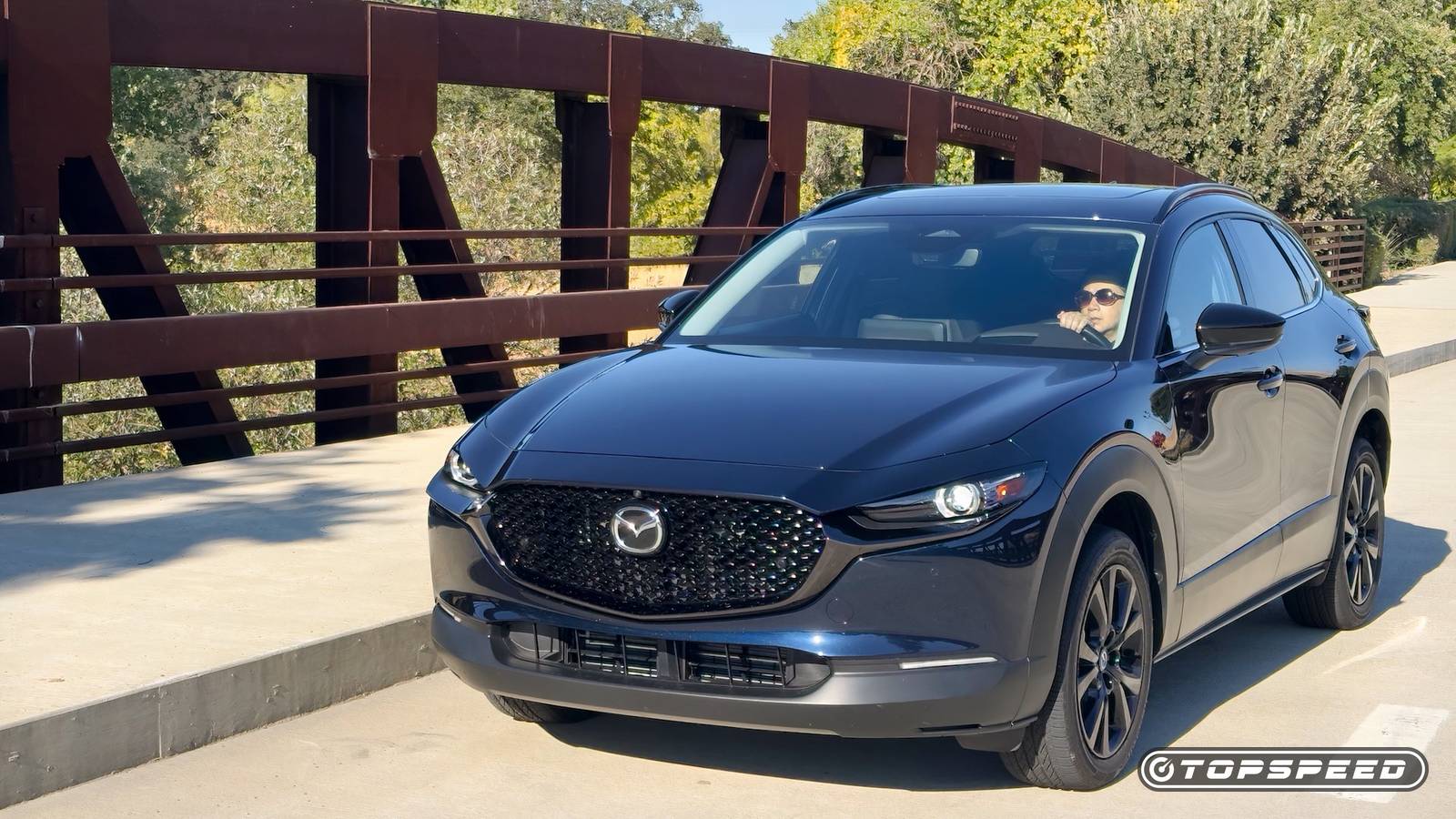
Back in November 2012, then Mazda Motor Corp. CEO Takashi Yamanouchi announced Mazda would reposition itself as an entry-luxury brand. Some 13 years later, the move appears to have been a success. Mazda’s offerings provide significant driving pleasure in pleasantly upscale and relatively affordable packages. A critical examination of the 2025 Mazda CX-30 2.5 Turbo Premium Plus, which has a base price of $36,950, bears this out. The price as tested for the example reviewed here was $38,505.

- Model
-
CX-30 Turbo AWD Premium Plus
- Engine
-
2.5-liter Turbocharged 4-cylinder
- Transmission
-
6-speed Auto
- Torque
-
310 lb-ft
- Driveline
-
All-Wheel Drive
- Range
-
340 miles
In order to provide you with an honest and unbiased review, the vehicle reviewed in this article was driven on a daily basis throughout the course of daily life for a period of one week. For detailed insight into testing procedures and data collection, please review our methodology policy.
2025 Mazda CX-30 2.5 Turbo Premium Plus First Impressions
Mazda’s “Kodo” design language has evolved nicely since its 2010 introduction, which is wholly evident in the marque’s smallest crossover SUV offering. The intent of the Kodo design theme is to create a palpable sense of motion when the vehicle is at rest. To that end, the CX-30’s form is characterized by flowing curvilinear lines, which encourage the eye to trace the contours of the small crossover SUV from front to rear. While I wouldn’t characterize the CX-30 as being pretty, the appearance of the little crossover does evoke an air of dynamic tension.
Exterior Dimensions
|
Length |
173 Inches |
|
Width |
70.7 Inches |
|
Height |
62.2 Inches |
|
Wheelbase |
104.4 Inches |
|
Front Track |
61.5 Inches |
|
Rear Track |
61.5 Inches |
|
Curb Weight |
3,527 Pounds |
Driving Impressions And Performance

Powering my CX-30 2.5 Turbo Premium Plus tester was the turbocharged version of the company’s 2.5-liter four, mated to a six-speed automatic transmission and all-wheel drive. Quoted output is 227 horsepower at 5,000 rpm. The engine is also quoted to make a remarkable 310 lb-ft of torque at 2,000 rpm. Even better — those numbers are what you’ll get when you run Mazda’s SKYACTIV-G 2.5T engine on regular. Feed it a steady diet of premium, and quoted output goes up to 250 horsepower and 320 pound-feet of torque.

Yes, it will cost you a bit more to do so, but it also makes the CX-30 a tad quicker – the choice is up to you. Getting back to that torque figure, though, torque is what gets the party started when you’re pulling away from a standing start. Horsepower serves mainly to keep the festivities going after torque has done the heavy lifting. To that end, running on premium fuel, the CX-30 Turbo consistently ran six-second zero to 60s, according to my trusty Omega Speedmaster.

While that might not sound all that impressive when pretty much every other performance-oriented offering reel off zero to 60 runs in five seconds or less. However, this little Mazda scoots when you punch its throttle. Even better, the CX-30 doesn’t have to surrender a lot of speed when approaching a corner. Accurate steering with good feedback, confident roadholding and resolute braking all harmonize to endow the little crossover with the road manners of a compact sports sedan.
Performance Specifications
|
Engine |
Intercooled Turbocharged Inline 2.5-Liter Four-cylinder |
|
Transmission |
Six-Speed Automatic |
|
Horsepower |
227 HP @ 5,000 RPM |
|
Torque |
310 LB-FT @ 2,000 RPM |
|
Fuel Economy (CMB) |
22 MPG (Observed) |
|
0-60 MPH |
Six Seconds |
|
Top Speed |
126 MPH (Mfr. Est,) |
Summary
- Mazda CX-30 Turbo delivers near-luxury cabin and materials at a more affordable price.
- Thrilling torque and precise handling make it feel like a compact sports sedan.
- Less rear-seat space and shorter warranty than rivals, but stronger value and driving fun.
Mazda CX-30 2.5 Turbo Fuel Economy

EPA estimates for the 2.5-liter turbocharged engine are 22 mpg in the city, 30 on the highway and 25 combined. The Mazda might well have gotten closer to that combined figure, were it not so much fun to drive. (That’s right, it’s the CX-30’s fault – not my decided lack of restraint.) The best I saw was 22 mpg combined.
|
City |
Highway |
Combined |
|
|
EPA Rated Economy |
22 MPG |
30 MPG |
25 MPG |
|
Fuel Economy As Tested |
22 MPG |
Interior Design And Comfort
While the Mazda’s price comes in considerably higher than that of other mainstream subcompact SUVs, the CX-30 2.5 Turbo Premium Plus surpasses them in materials quality, interior design and standard equipment. In fact, the Mazda’s passenger accommodations are closer to those of the considerably more expensive offerings from Acura and Lexus.
The Mazda’s leather upholstery is fitted to a handsomely sculpted interior architecture, with a design that proves true elegance resides within constraint. You won’t find a lot of extraneous buttons, dials and switches, yet everything you need to access quickly can be operated without digging through menus on the infotainment screen.

On the other hand, the CX-30’s racy exterior styling exacts something of a penalty when it comes to interior space. While front-seat occupants will find plenty of legroom, rear-seat occupants will need them to give some of it up. Similarly, while headroom is good up front, it’s a touch compromised for taller rear-seat passengers. Along those same lines, ingress and egress are readily accomplished up front, but getting in and out of the back seat required me to pay attention to avoid bumping my head. The good news is families with young children can enjoy the Mazda without those concerns – as long as the kids are big enough to ride without car seats.

What’s more, the interior design team provided soft touch surfaces everywhere your body is likely to come into contact with the interior. Armrests are nicely padded; the steering wheel is fitted with quality leather, and the sides of the center console have padding where knees might hit. Outward visibility from the driver’s seat is largely unimpeded, and thanks to the adjustable steering column and multi-adjustable driver’s seat, finding a comfortable driving position took me no time at all.
Interior Dimensions
|
Front |
Rear |
|
|
Headroom |
37.8 Inches |
38.3 Inches |
|
Shoulder Room |
55.6 Inches |
53.6 Inches |
|
Hip Room |
54.6 Inches |
53.2 Inches |
|
Legroom |
41.7 Inches |
36.3 Inches |
Technology And Ease Of Use
Topping the dash is a 10.3-inch monitor, which provides the interface for Mazda’s infotainment features. The operating system also supports Mazda Connected Services, the highlights of which include locking, unlocking, remote starting, and monitoring the CX-30 on a supported smartphone.

Wireless CarPlay and Android compatibility are standard, as are Bluetooth, a pair of USB ports up front, wireless phone charging, and Wi-Fi hotspot capability. My Premium Plus test CX-30’s nav application provided real-time traffic notifications and was capable of updating its maps over-the-air. Traffic sign recognition, adaptive cruise control, lane-keeping, lane-departure warning, and automated emergency braking were also numbered among the roster of standard tech features.
Cargo And Storage Space
Here again, deferring to that sleekly styled exterior treatment, cargo capacity doesn’t quite match up to the Mazda’s key competitors. However, this is not to say the CX-30 is less than commodious. You’ll find 20.2 cubic feet of carrying capacity behind the second row. Fold it away, and you’ll gain an additional 25 cubic feet for a total of 45.2.Interior storage is about as generous as is to be expected for a contemporary model of this type. You’ll find storage pockets in the backs of the front seats as well as in all four of the doors. The center console storage bin is suitably deep, and the glove compartment is usefully spacious as well.
|
Minimum Cargo Capacity |
20.2 Cubic Feet |
|
Cargo Capacity Second-Row Folded |
45.2 Cubic Feet |
2025 Mazda CX-30 2.5 Turbo Vs. Its Competitors


Given the Mazda’s upscale interior treatment, standard equipment set, and fun-to-drive quotient, comparing it to mainstream compact crossover SUVs just doesn’t seem fair. A more realistic comparison would be to the entry-level luxury models of Acura and Lexus. These are the Acura ADX A Spec AWD, which starts at $41,950, and the Lexus UX 300h Premium, which starts at $41,115. While both are more costly than the Mazda, they are similar in size. They are also products of what can legitimately be termed legacy luxury brands. Meanwhile, the Mazda is considered a near-luxury offering.
How The Mazda CX-30 Premium Plus Compares To The Acura ADX A Spec

- Base Trim Engine
-
1.5-liter turbocharged 4-cylinder
- Base Trim Transmission
-
CVT
- Base Trim Drivetrain
-
Front-Wheel Drive
- Base Trim Horsepower
-
190 hp
- Base Trim Torque
-
175 lb-ft
- Make
-
Acura
- Model
-
ADX
- Segment
-
Subcompact Luxury SUV
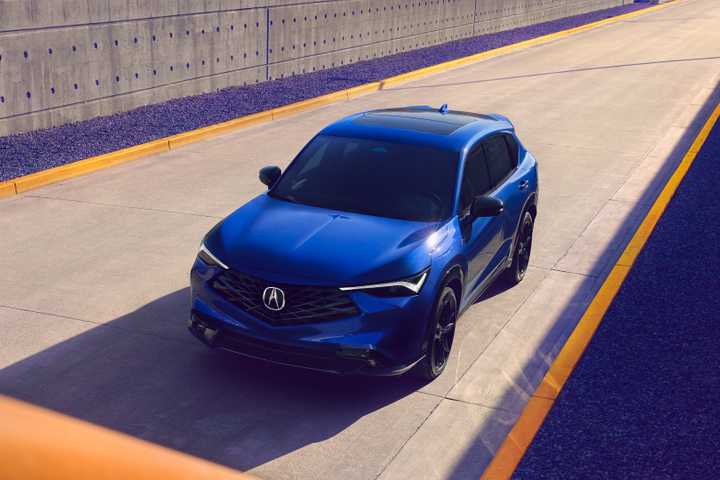
With the Acura ADX A-Spec AWD, you’ll get a quiet interior with a contemporary sense of style. The Acura can also boast competent handling and a pleasant ride quality among its attributes. The version priced closest to the CX-30 Premium Plus, the A-Spec AWD offers a panoramic sunroof, suede-like upholstery accents, ventilation for the front seats, USB-C charging for the rear seats and power adjustments for the front passenger seat.Power is sourced from a 1.5-liter turbocharged four, which is rated at 190 horsepower and 179 pound-feet of torque. A continuously variable transmission serves all four wheels. The ADX AWD has a quoted zero to 60 time of 8.7 seconds. EPA fuel economy estimates are 25 mpg in the city, 30 on the highway, and 27 combined.
How The Mazda CX-30 Premium Plus Compares To The Lexus UX300h Premium

- Base Trim Engine
-
2.0L Inline-4 Hybrid
- Base Trim Transmission
-
Continuously Variable Automatic (CVT)
- Base Trim Drivetrain
-
Front-Wheel Drive
- Base Trim Horsepower
-
196 hp
- Base Trim Torque
-
139 lb-ft @ 4400 rpm
- Fuel Economy
-
44/41 MPG
- Make
-
Lexus
- Model
-
UX
- Segment
-
Subcompact Luxury SUV
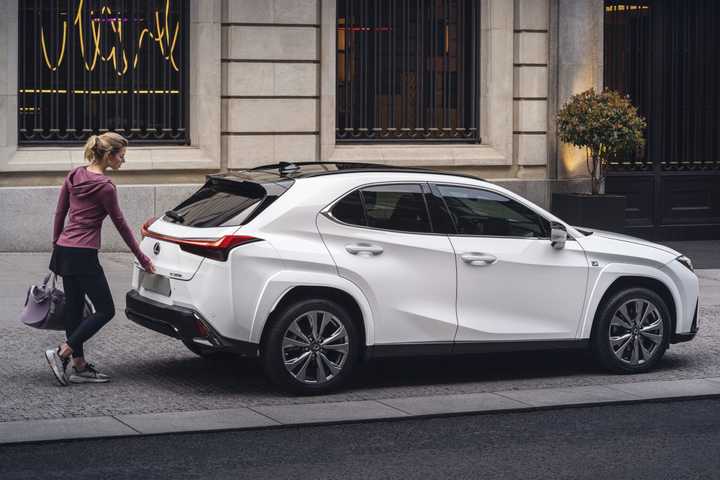
The version of the compact Lexus equipped most closely to the Mazda CX-30 2.5 Turbo Premium Plus is the Lexus UX300h Premium. That package brings a power tailgate, heated and ventilated front seats and a panoramic moonroof. Dual-zone climate control and power-adjustable front seats are listed among its standard features as well. We’re talking about a Lexus here, so fit and finish are first-rate, as are the materials employed in the passenger compartment.A front-wheel drive hybrid-only offering, the UX300h uses a 2.0-liter inline four teamed with a pair of electric motors. The powertrain uses a continuously variable transmission. Total system output is 196 horsepower and 152pound-feetof torque. The quoted zero-to-60 time is 7.7 seconds. EPA estimates are 45mpg in the city, 41 on the highway, and 43 combined.
Our Recommendation For Which Model You Should Buy
Lower price, more fun to drive, and arguably just as nice inside, the 2025 Mazda CX-30 2.5 Turbo Premium Plus absolutely shines in this company. Yes, the Lexus is an absolute champ when it comes to fuel economy, and the Acura handles almost as well as the Mazda. However, the Mazda is faster than both the Acura and the Lexus. On the other hand, they both offer free scheduled maintenance, (one year or 10,000 miles for the Lexus and two years or 24,000 miles for the Acura).

This is a claim the CX-30 can’t make. The Acura and the Lexus also come with four-year/50,000-mile basic warranties, as well as six-year/70,000-mile powertrain warranties. Plus, Lexus covers the UX300h’s hybrid components for eight years or 100,000 miles.Mazda limits buyers to three years/36,000 miles overall and five years/60,000 miles for the powertrain. Of course, given the price differential, you ought to get something extra. This is particularly true since, in my opinion, the Mazda is a more desirable offering – all other things being equal. Again, though, I place a high priority on driving pleasure. Your results may vary.