
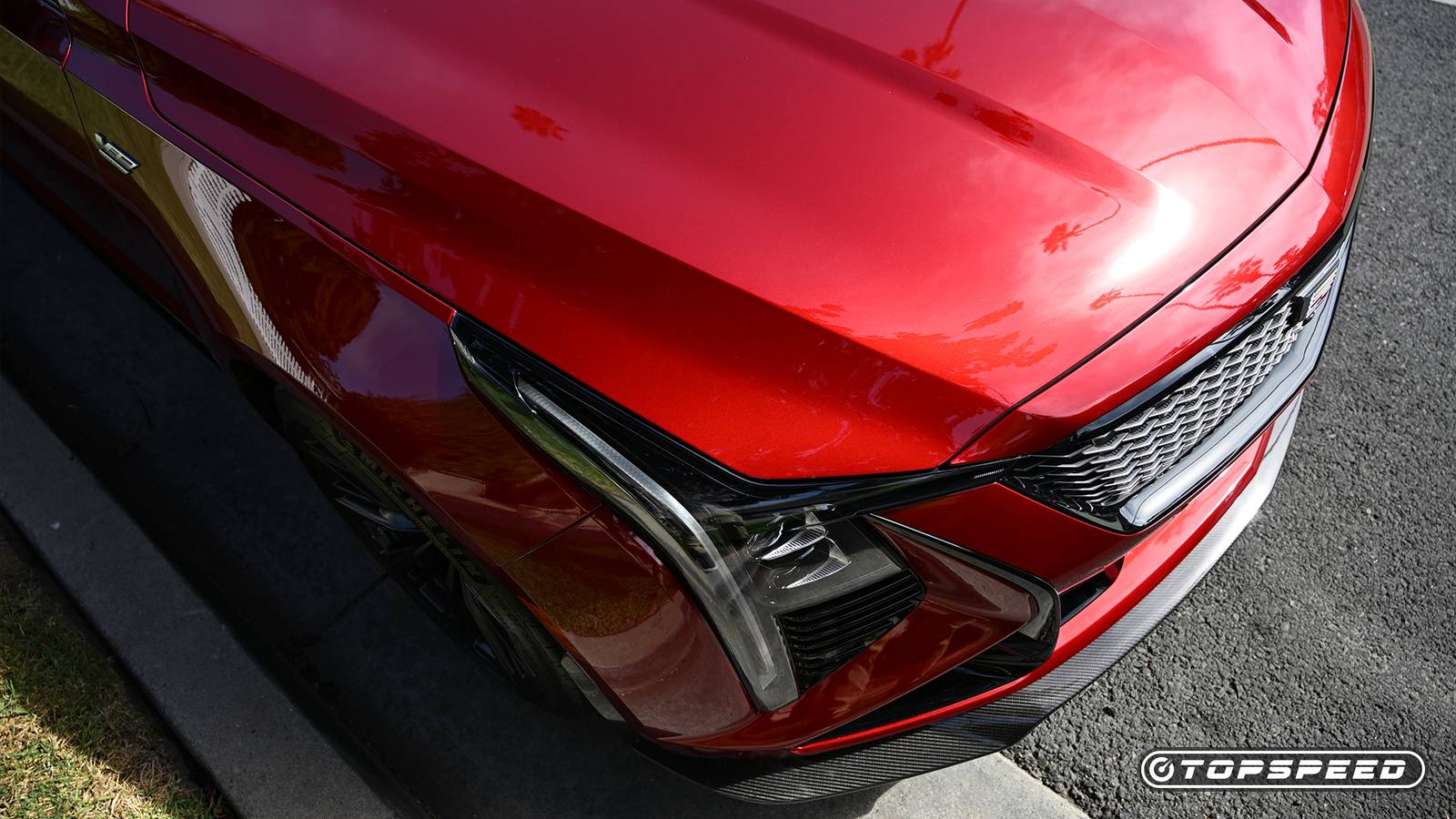
For those who don’t keep an eye on the annual reliability statistics and data on specific cars, actually seeing the results of what are considered the most reliable cars based on real-world tests can be an enormous surprise. There is a surface-level perception that French cars always break, German cars’ precision engineering makes them the most reliable cars, and that American vehicles aren’t dependable because they are poorly built. Whilst it’s possible to find fragments of truth in almost anything, the data shows that these generalizations require a lot more nuance.
Though many people are aware of the tank-like powertrain of a RAM, longevity still doesn’t necessarily come to mind when you consider the breadth of American vehicles on sale. With acclaim for mechanical prowess, German brands like BMW and Mercedes are usually seen as highly well-made luxury cars, and while this is typically true, it doesn’t 100-percent correspond to reliability in the real world. Whilst their powertrains and platforms are usually solid, it is software and computerization that are typically making modern cars suffer, leading to an industry-wide plummet in dependability. This leaves a door open to the more simplistic and therefore reliable American alternatives.
Mercedes’ Concerning Reliability In 2026

The way in which the JD Power dependability is conducted is unique because the problems per 100 vehicles include anything from huge, car-breaking issues (though this is remarkably uncommon in new car tests), to software issues and electrical faults. So whilst Mercedes‘ core engineering is excellent, in a test which penalizes smaller niggles, Mercedes becomes a victim of its own wild tech experimentation.

With a fragmented lineup of full-on EVs and especially plug-in hybrids aplenty, Mercedes is now relying mostly on, by far, the least durable types of powertrains in the industry. In the 2026 study, PHEVs were discovered to be the very least dependable, with a staggeringly poor 281 problems per 100 cars — the company’s favorite form of propulsion.
More Occurring Issues With Modern Mercedes
- MBUX infotainment system lag, random restarts, and freezes
- Unresponsive touch-sensitive pads replacing physical buttons
- Over-the-air updates are removing bugs, but also introducing newer ones
A few of the most serious contributors to the below-par score were the 2026 Mercedes S-Class, Mercedes-Benz GLE, and the Mercedes EQ and EQS. Annoyingly for the consumer, they seem to be the most expensive models that are suffering the most due to the simple fact that there is more advanced technology to go wrong in general.

In the S-Class, owners are reporting issues with the flush door handles getting stuck, requiring a manual override, and one of the 350 sensors hallucinating into thinking there is something wrong. It turns out the future-driven approach that defines them at the moment is seriously compromising a smooth-sailing, problem-free vehicle.
BMW Isn’t Doing Bad For A Luxury-Tech Carmaker

With 198 problems per car reported in 2026 for BMW, they happen to sit pretty much in the middle between Cadillac and Mercedes, and slightly beat out the industry average, too. Whilst they are still caught in a trap with their iDrive 9 system, which removes the bulk of physical controls and introduces the possibility of more glitches being present, they do have an absolutely rock-solid platform to work from, meaning long-term powertrain reliability will likely be excellent.

BMW’s B58 straight-six engine, which you can find in the X5, 3 Series, and 5 Series, is one of the most reliable engines used in 2026. With Toyota’s intervention on quality control and stress testing so it could meet their own standards, the B58 is now a masterclass in longevity, and makes the potential tech-based related issues sting less.

10 Most Reliable Cars Ever Made
If you’re looking for reliable and dependable cars that can last you a lifetime, you simply can’t go wrong with the models on this list.
The Rise Of Cadillac As A Reliability Hero

Cadillac is performing with excellence in the latest JD Power ‘Vehicle Dependability Study’. Coming in fourth place, behind Lexus, Buick, and Mini in that order, the company just misses out on the top three. Although with a score of 175 PP100 (problems per 100 cars), that is nothing to be ashamed of. With the industry average being 204 PP100 in 2026, Cadillac is performing far beyond the typical modern car, and it’s been achieving consistently excellent results each year, with 2024 being an above 190 PP100 anomaly.
2023 To 2026 Cadillac Results On JD Power Dependability Study
- 2023: 173 problems per 100 cars
- 2024: 196 problems per 100 cars
- 2025: 169 problems per 100 cars
- 2026: 175 problems per 100 cars
In a landscape where it seems like 200 and above is standard for most manufacturers, it’s impressive that Cadillac is keeping that number so far below that threshold. But it’s no fluke; there are clear reasons as to why they achieve such dominant results. With the majority of Cadillac’s core models being built on proven GM platforms, most of the issues that might have been present earlier on in their life cycle have been ironed out.

With a reliance on traditional gasoline-only four-cylinders and six-cylinders, the company has managed to avoid some of the teething issues that other manufacturers are currently facing in their switch to plug-in hybrids or full-on electrification. Whilst Cadillac does avoid those problems, they also aren’t reaping the reliability rewards of the phenomenally mature hybrids in 2026.
The Model That Is Propping Up Dependability The Most

The Cadillac XT6 is one of the exemplary models that is doing wonderful favors for the company’s overall reliability results. It was named the number-one most dependable premium mid-to larger-size SUV, beating out German rivals like the X6 and, despite its legendary reliability status, Porsche with its Cayenne.

In an era where luxury vehicles are being bogged down by experimental technology and software problems, the XT6 manages to stay refreshingly clear of that with a tried-and-tested approach to its architecture. Whilst BMW and Mercedes are practically obsessed with enormous screens, Cadillac’s more conservative approach to cutting-edge tech has allowed it to stay hugely consistent and predictable.
2026 Cadillac XT6 Specifications
|
Powertrain |
3.6L V6 (N/A) |
|
Transmission |
9-Speed automatic |
|
Horsepower |
310 |
|
Torque |
271 Ib-ft |
|
0-60 mph |
6.4 – 6.9 seconds |
|
Economy |
21 mpg (combined) |
|
Cargo Space |
43.1 cubic feet |
Though the Cadillac XT6 can be fairly critiqued for “playing it safe” or suffering with dated technology, there are plenty of consumers out there who are happier with ease of use, physical controls, and would much rather have a system they can rely on rather than an IT technician’s computer setup in their cabin. And to some, the dated nature of the powertrain will be one of the reasons for buying this car. It uses a smooth V6 engine, which has been a proven workhorse, and is a pleasant glimpse of tradition in a segment filled with electrified dominance.

Why Some 10-Year-Old Cars Are More Reliable Than Brand-New Models
As vehicle problem rates market-wide go up each year, some older cars on our roads are more reliable than new ones; we are going to find out why.
Cadillac Is On Top Of Its Game

Due to a combination of tried and true platforms, a reserved approach to technology adoption, and a reliance on GM’s proven parts, Cadillac is a brand that, whilst it doesn’t push much-needed boundaries like other companies, is accessible and consumer-friendly. Having consistent issues, even if only minor, in a brand-new vehicle after spending potentially $50,000 or more is disheartening to say the least, and though the Cadillac might not give you the same futuristic wow factor as a plug-in Mercedes-Benz, it’s bound to offer you predictability and a smooth experience for your typical consumer.
Sources: JD Power, Mercedes, Cadillac