
Three-row SUVs have never really been about fuel efficiency. Their purpose for existence is to provide comfortable cabin room for six, seven, or eight people, and a versatile cargo space so that riders don’t have to give up their space, and others can travel comfortably. Low fuel efficiency is the price you’re willing to pay to push a bulkier cabin, needing to be reinforced with a heavier structure to safely transport more occupants, with a more robust powertrain and drivetrain to move the combined weight of metal, glass, and human bodies.
The prime solution was to make cabins smaller, to carve out interior space a fraction of an inch at a time, or to blueprint personal room to “acceptable” legroom and shoulder room tolerances. But then technology stepped in as the game changer, using lighter and smaller engines, using controlled induction and/or adding electrification to make powertrains more efficient, and in some cases, more powerful. The result is that you no longer have to budget between moving bodies and paying fuel bills, as these efficient three-row SUVs prove.
At the top of the efficiency pyramid, dedicated electric powertrains are reshaping three-row SUV expectations. Their ready torque effectively moves a much-bulkier vehicle with unmatched efficiency. With few exceptions, though, their price tags are still prohibitive, so we’re focusing on more affordable ICE-based powertrains. Models are listed in ascending order from least to most efficient.
2026 Chevrolet Tahoe LT
Combined Efficiency: 24 MPG

The 2026 Chevrolet Tahoe is available with multiple powertrain choices, with the most take-up being 6.2-liter and 5.3-liter V-8s, but the efficiency leader in the lineup is the Duramax 3.0-liter turbo diesel inline-six, which gets seven more miles to the gallon over its gasoline counterparts, but also enables 576 miles of driving range (nearly 200 more than the V-8s). Its 305-horsepower output trails the others at the top end, but its 495 pound-feet of torque surpasses both the V-8s, and it delivers it far lower in the rev range, for improved trailering confidence (up to 8,200 pounds).
Starting Price: $67,695

The real-wheel drive 2026 Chevy Tahoe starts at $60,700, but you have to move up to the LT level before you can get the diesel engine. Providing the cost of diesel doesn’t skyrocket, the $7,000 premium will be made up in fuel savings in just over four and half years, according to EPA estimates, and you still get seating for eight (optionally down to seven, though you can get nine in the entry-level LS), and 25.5 cubic feet of cargo space when all three rows of seats are used. Fiddle with the seating arrangement, and you can fit in up to 122.9 cubic feet.


Find 2026 Chevrolet Tahoe and more cars for sale on our Marketplace
2026 Mazda CX-90 PHEV
Combined Efficiency: 26 MPG

The 2026 Mazda CX-90 is uniformly fuel-efficient. There are two choices of engines, with a mild hybrid using a 3.3-liter turbocharged inline-six, and the plug-in hybrid using a SKYACTIV version of Toyota’s 2.5-liter Atkinson cycle normally-aspirated four-cylinder. The PHEV returns an estimated efficiency of 26 mpg running on premium gasoline over 500 miles, while the mild hybrid gets 25 mpg on regular over 462 miles. The CX-90 PHEV does have the added benefit of traveling 27 miles on electricity alone, averaging 56 MPGe.
Starting Price: $50,495

The underrated 2026 Mazda CX-90 PHEV starts at $50,495, which is about $11,700 more than the entry-level CX-90 (though matching up the trim levels—Preferred—makes the difference just $7,500). Seating is configured for seven passengers in a 2-3-2 array, with additional arrays of 2-3-3 or 2-2-3 on higher trim levels. The cargo space can expand from 15.9 cubic feet when all seats are needed, up to 75.2 cubic feet when rear seating isn’t needed.
Find 2026 Mazda CX-90 and more cars for sale on our Marketplace
2026 Volvo XC90 T8
Combined Efficiency: 26 MPG

The most efficient 2026 Volvo XC90 isn’t either of the mild-hybridized versions (one is turbocharged, the other is supercharged and turbocharged) but the Plug-In Hybrid T8 version, which uses the same 2.0-liter turbocharged “four” as the others. According to the EPA, the powerful Volvo XC90 PHEV attains 27 mpg, combined, with a range of 530 miles. Plus, it has the ability to go 33 miles on electric power alone, at an average of 58 MPGe. The end result is estimated savings of about $1,850 per year on energy.
Starting Price: $76,200

The 2026 Volvo XC90 starts at $61,150 and rises to $76,200 for the PHEV (T8). It comes standard with seven seats (which can be reduced to six with middle-row individual chairs) and 23 cubic feet of cargo space behind the third row of seats. Rear seat legroom of 31.9 inches and shoulder room of 46.9 inches make it a tight fit for adults, and all seats can fold forward to expand cargo room to a maximum of 85.7 cubic feet. If the rear seats aren’t needed, cargo volume stands at 34.6 cubic feet.
Find 2026 Volvo XC90 and more cars for sale on our Marketplace
2025 Mitsubishi Outlander
Combined Efficiency: 28 MPG

The 2026 Mitsubishi Outlander gets a new, smaller turbocharged 1.5-liter engine that improves efficiency from the 2.5-liter “four” it replaces (28 mpg combined in FWD, versus the previous engine’s 27). Power is down slightly (174 horsepower vs 181), but torque is up substantially (206 pound-feet, up from 181). The Outlander is also available as a PHEV with a 2.4-liter four-cylinder, which can be considerably more efficient in city driving with 38 miles of electric-only driving, but doesn’t match the new engine on overall combined efficiency.
Starting Price: $29,995

Starting at just under $30,000, the 2026 Mitsubishi Outlander is the lowest-priced three-row SUV on the market, and it’s also the smallest, with the big impact being felt in third-row legroom and cargo capacity. Seating is configured for seven in a 2-3-2 arrangement. Third-row legroom is barely usable at 18.7 inches, and the cargo volume with all seats in use is just 10.9 cubic feet. The rearmost seat has also been changed to a full-width bench, meaning a loss of cargo versatility, with the seatback going down (flatter) in one piece.
Find 2026 Mitsubishi Outlander and more cars for sale on our Marketplace
2025 Lexus TX 550h+
Combined Efficiency: 29 MPG

The 2025 Lexus TX is the upscale version of the Toyota Grand Highlander you’ll read about later, and like its Toyota counterpart, it’s powered by three efficient powertrains. The 550h+ is the PHEV version, and is rated the most efficient, despite using the largest ICE of the group—a 3.3-liter V-6, whereas other TXs use a 2.4-liter turbo “four”—it also gets 76 MPGe, over 33 miles. That means it is expected to save $750 per year more than the hybrid TX 500h—a swing of $3,750 over five years (provided you plug it in during its downtime).
Starting Price: $79,510

Pricing is relatively reasonable, given the 2026 Lexus TX 550h+’s size and status. The TX seats up to seven, but the PHEV only accommodates six, with middle captain’s chairs and a split/folding rear bench. That ensures optimum comfort for rear passengers, with 39.5 inches of legroom in the middle row and 33.5 inches in the adult-usable rear seat. There are 20.2 cubic feet of cargo space behind the rear row, and that can expand up to 97 cubic feet, with the seating versatility to combine cargo and bodies.
2026 Hyundai Palisade Hybrid
Combined Efficiency: 34 MPG

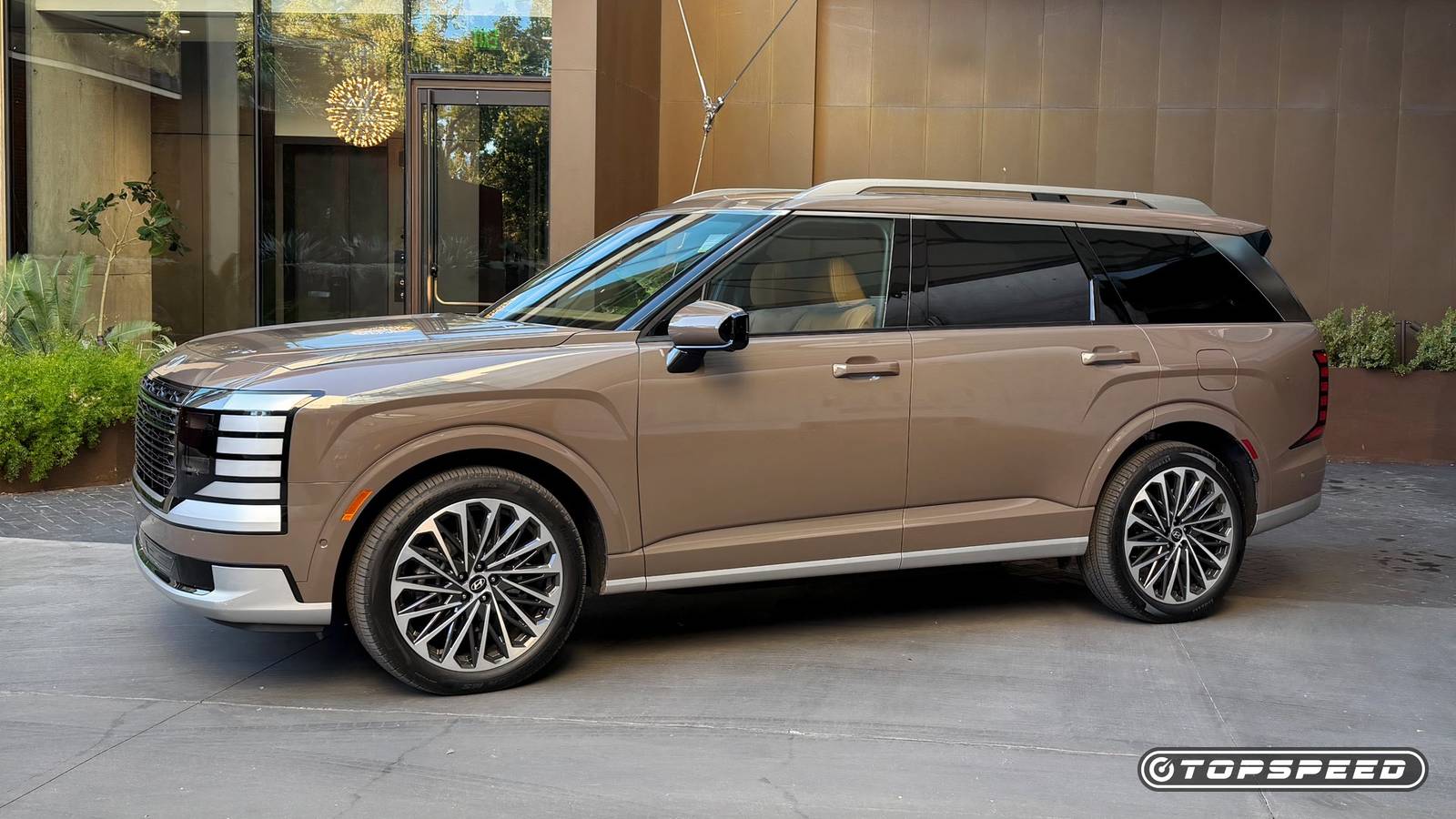
Relatively new to the Hyundai lineup (since 2020, and facelifted in 2023), the Hyundai Palisade slots in above the veteran Santa Fe to better compete against the Toyota Grand Highlander. The all-new 2026 Hyundai Palisade welcomes a hybrid 2.5-liter turbocharged “four” to the lineup, offering a manufacturer-estimated 34 mpg, combined, in FWD mode (the AWD drops slightly to an estimated 29 mpg, which would maintain its place on this list).
Hyundai cannot magically make the Palisade have an additional ten cubic feet of cargo capacity that the Grand Highlander offers, but they are being clever in offering the best of a few worlds—making a tractable, not massive SUV, more flexible for families to use.
– Michael Frank for TopSpeed
Starting Price: $44,160

With an MSRP in the mid-$40,000s, the 2026 Hyundai Palisade Hybrid bests its three-row SUV rivals and holds its own in terms of space and usability. The large SUV seats seven in a 2-2-3 arrangement, with the option of a middle bench to add another seat. Priority is given to middle row occupants, with 41.4 inches of legroom, but they can slide forward to improve on the rear row’s standard 32.1 (itself, not bad). Cargo space behind the rear bench totals 19.1 cubic feet, but can expand to a maximum of 86.7.
2026 Toyota Highlander Hybrid
Combined Efficiency: 35 MPG

A veteran of the Toyota SUV lineup, the Toyota Highlander heads into 2026 with one of the brand’s most efficient vehicles. Powered by the time-proven 2.5-liter four-cylinder system, the AWD hybrid Highlander sits at the lower border of the midsize market, making its lighter weight work toward an estimated fuel-economy rating that rivals FWD versions of larger three-row SUVs. Annual fuel costs are estimated at $1,250, adding up to a swing of $3,000 from the non-hybrid models over five years.
Starting Price: $47,320

As it gears up for a total revamp in 2027, the 2026 Toyota Highlander soldiers on in 2026 with an eight-seat array that can swap out the middle-row bench for captain’s chairs for a seven-seat option. Third row legroom is tight but can be made slightly more comfortable through minor middle-seat fore/aft adjustments. The 16-cubic-foot cargo space behind the third row is not bad for this size of SUV, and can expand in arrangements up to 84.3 cubic feet, which rivals some larger SUVs.
2026 Toyota Grand Highlander Hybrid XLE
Combined Efficiency: 36 MPG

The relatively-new Toyota Grand Highlander was offered as a hybrid from the outset, and the 2026 Toyota Grand Highlander Hybrid is one of the most efficient hybrids in the market, SUV or otherwise. There are a couple of hybrid choices for the Grand Highlander in 2026, with the venerable 2.5-liter four-cylinder option being the most efficient (available in FWD and AWD), compared to the powerful 2.4-liter turbo “four” Hybrid MAX. The FWD Grand Highlander Hybrid is slightly more efficient than the AWD version (36 mpg vs 34, respectively).
Starting Price: $46,180

The Toyota Grand Highlander is relatively new (since 2023), arising from a desire to make a roomier Highlander, and the most efficient 2026 Toyota Grand Highlander Hybrid (FWD) costs less than its Highlander Hybrid (AWD) contemporary. Three rows of seats can accommodate seven or eight, depending on the middle-row individual seats or bench, with its main selling point being an adult-friendly 33.5 inches of rear legroom. A roomy 20.6 cubic feet of cargo space sits behind that, expandable to 97.5 cubic feet with all seats folded.
2026 Hyundai Santa Fe Hybrid
Combined Efficiency: 36 MPG

Hyundai’s mission statement has always been to beat the Japanese in their dominant market segments, and the 2026 Hyundai Santa Fe Hybrid does exactly that against the Toyota Grand Highlander Hybrid. The hybrid Santa Fe uses the Hyundai Group’s 1.6-liter turbo four-cylinder hybrid powertrain (shared with Kia hybrids) to provide ultra-low emissions and top-tier efficiency. The FWD’s 36 mpg combined rating also returns an estimated 637 miles of driving range, and is only slightly better than the AWD model.
Starting Price: $36,400

The 2026 Hyundai Santa Fe Hybrid is one of the better values in today’s SUV market, with the FWD model beating its Toyota rival by $10,000, but returns a slightly smaller cabin (though no less comfortable or versatile). Seating is arranged in a 2-3-2 array, with the option on higher trims to turn the middle bench into individual seats. Rear seat legroom of 30 inches can be slightly expanded by shortening the middle row’s 41.7 inches. Cargo space behind the rear seat is tight at 14.6 cubic feet, and expands to a maximum of 79.6.
2026 Kia Sorento Hybrid
Combined Efficiency: 37 MPG

The 2026 Kia Sorento Hybrid makes the most of its 1.6-liter turbocharged four-cylinder hybrid powertrain to become the most efficient non-EV three-row SUV in the market. The FWD Sorento Hybrid just barely edges out its Santa Fe cousin, while the Kia’s AWD version is equal to the Hyundai’s. Besides a range of 655 miles, the 2026 Kia Sorento Hybrid will sip fuel to a consumption figure of about $1,200 per year, saving up to $2,000 more over five years than the average vehicle in America.
Starting Price: $38,890

The 2026 Kia Sorento Hybrid is a couple of thousand dollars more expensive than its Hyundai Santa Fe counterpart, and its swoopier profile translates into reduced cabin volume for cargo—starting at 12.6 cubic feet behind the rear seats, expandable to 75.5. Seating is arrayed in a 2-3-2 layout, with the option for middle-row captain’s chairs, with rearmost legroom tight at less than 30 inches, and only slightly elongated using the middle’s 40.7-inch availability.