

Toyota has a problem on its hands in Australia, and it’s not one it can solve with a software update.
The surge in thefts affecting popular models has been well documented, and the methods being used – including CAN bus injection and OBD injection – have meant plenty of owners are suddenly thinking about old-school security again. Not alarms. Not trackers. Physical deterrents. The kind of thing you can see from the street.
That’s the context for Toyota’s genuine steering wheel lock, a roughly $200 accessory pitched as a simple way to add a layer of protection to vehicles already on the road. In theory, it’s the sort of product you buy for peace of mind – something that looks substantial, feels solid in the hand, and hopefully forces a thief to move on to an easier target.
So we put that theory to the test with an angle grinder.
CarExpert can save you thousands on a new car. Click here to get a great deal.
The setup was deliberately simple. A steering wheel mounted to a plank, each lock fitted as it would be on a car, and a battery-powered grinder like the kind you could realistically imagine being used in a driveway at 3:00am.
The key question wasn’t whether the locks could be defeated – almost anything can be cut with the right tool – but whether the premium-priced, genuine accessory actually buys meaningful time compared to the cheap stuff.
We lined up a small group of steering wheel locks spanning the price spectrum, including a budget unit around the $30 mark, another slightly more expensive option at $40, a mid-tier ‘yellow’ design for $175 with a bulky plastic outer section, and the genuine Toyota lock at the top of the pile.
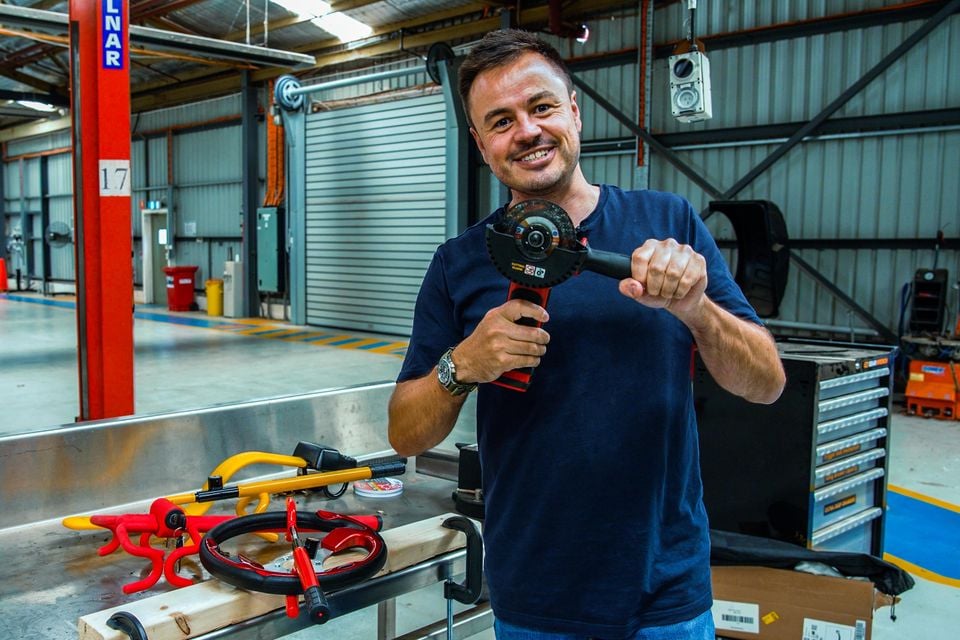

The benchmark was 60 seconds. If a lock could resist a grinder for a minute, it would at least force a thief to create sustained noise, sparks, and attention. If it couldn’t, the deterrent value becomes more about appearances than real resistance.
The first result was the most confronting: the cheapest lock was through in 15 seconds, and it barely looked like the grinder had worked up a sweat. That’s the sort of timeframe where a thief doesn’t need to rush, doesn’t need to panic, and doesn’t need to worry about the tool chewing through discs.
The next lock – only around $10 more – didn’t meaningfully change the outcome. It added roughly 10 seconds, which sounds like something on paper, but in practice it’s still over almost as soon as it starts. We’re talking about a window where most people inside a house would either sleep through it, or assume someone’s cutting pavers or doing early-morning work nearby.

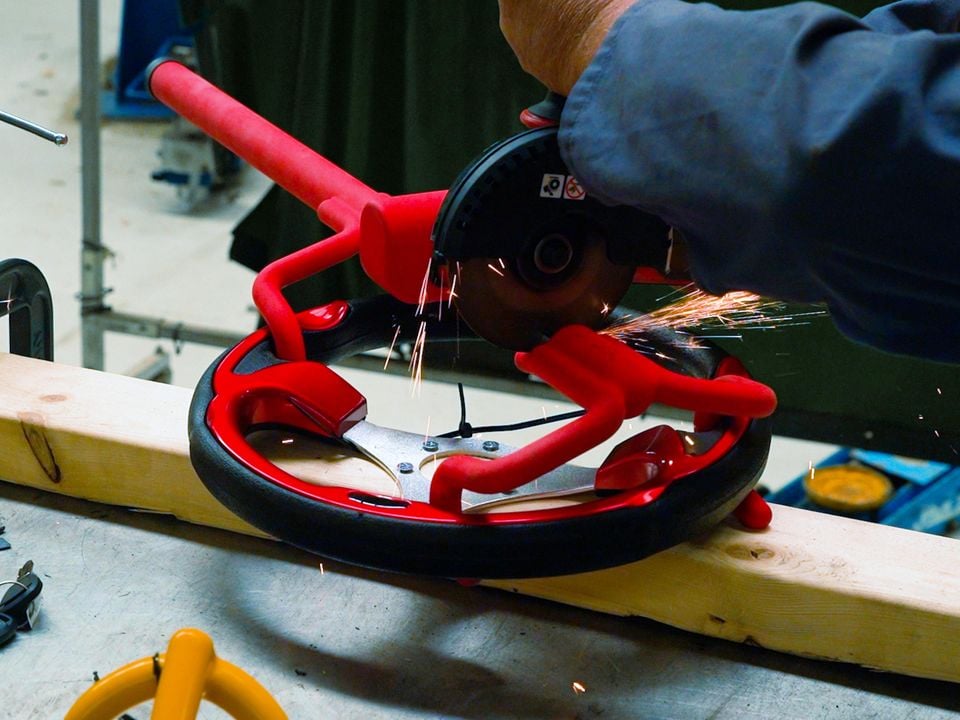
Then we moved to the bigger, more substantial mid-tier lock – the one that looks like it should be a real step up. It wasn’t. It lasted a bit longer, but the takeaway stayed the same: spending more money was only buying small increments of time.
We also took a closer look at the construction, cutting into the bulky section to see what was actually doing the work. Once the plastic outer was breached, the underlying reality was hard to ignore. It’s still steel, still shaped in a way that leaves points of attack, and still vulnerable to a tool that’s designed to chew through metal quickly.
And that’s what made the genuine Toyota lock so important in this test. At $200, it’s not priced like a novelty. It’s priced like an engineered solution – something that should make the cheap locks look like toys.
Instead, it took around 20 seconds.
That’s not a typo. Roughly five seconds more than the bargain-basement option.
Worse, the design itself appeared to give the grinder an easy starting point, and once it had a bite, it was all over. At that point, it’s hard to argue the genuine accessory delivers value in line with its asking price, even if Toyota is effectively subsidising it compared to what it costs in other markets.

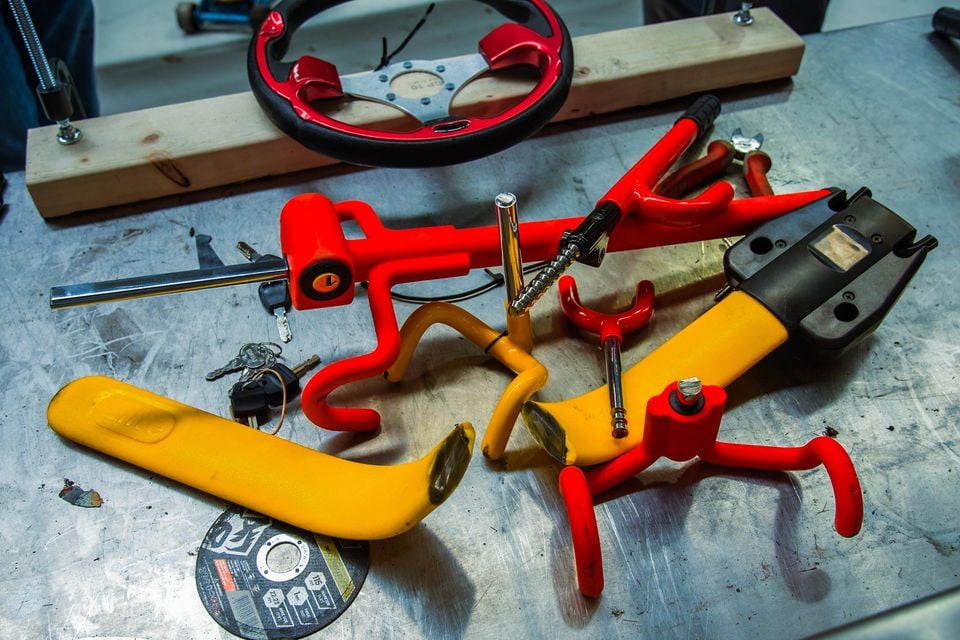
There’s another uncomfortable detail here: the grinder being used wasn’t flawless. It was cutting out intermittently. In other words, these times weren’t the absolute best-case scenario for a thief. With a better tool – or simply one that doesn’t stop and start – the gap between “hard” and “easy” shrinks even further.
We also looked at an even quicker method: instead of cutting the lock, cut the steering wheel itself. The section tested took about six seconds. That’s the sort of workaround that makes any single-point physical security device feel flimsy, because it reminds you thieves don’t have to play by the rules of the product’s design.
So where does that leave Toyota owners?
A steering wheel lock can still have value as a visual deterrent. It tells the opportunistic thief to keep walking. It may push someone towards a softer target. But if you’re buying one expecting it to physically withstand an angle grinder for long enough to matter, this test suggests you need to reset expectations – especially if you’re looking at the genuine accessory thinking it’s in a different league.
If anything, the results make a stronger case for layered security: visible deterrents, immobiliser solutions where possible, and a mindset that assumes a determined thief with the right tools can defeat almost anything given even a short window of time.
And that’s the sting in the tail. The genuine lock isn’t useless – but at $200, it’s hard to justify when it performs only marginally better than something a third of the price.