
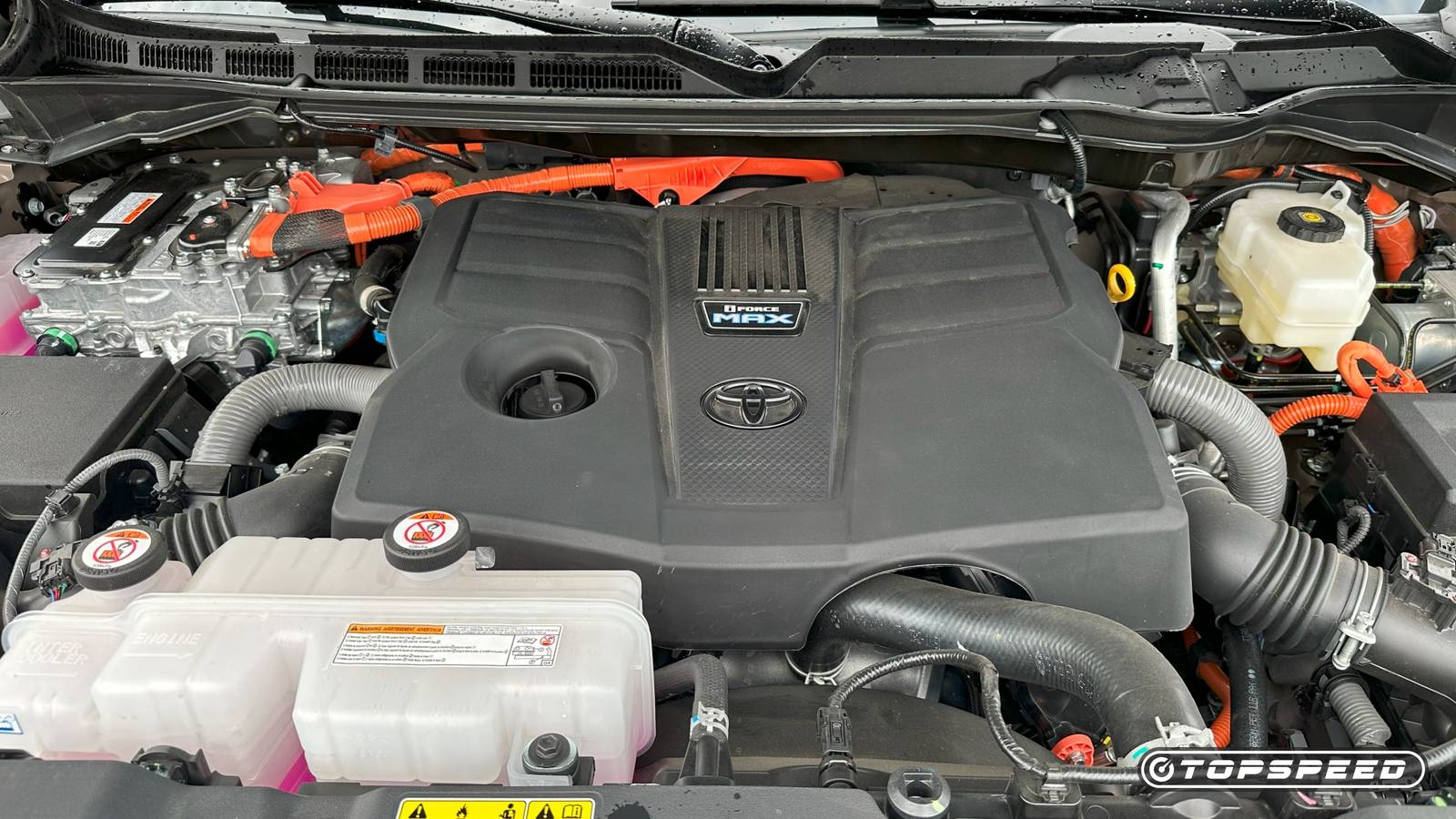
For decades, full-size pickup truck buyers equated reliability with displacement. Big V8s, simple layouts, and proven architecture were seen as the safest bet for anyone planning to tow, haul, or rack up six-figure mileage. Toyota disrupted that assumption when it retired its long-running 5.7-liter V8 and replaced it with a smaller, twin-turbocharged V6 in the Tundra. The move was controversial, especially among buyers who viewed turbocharging as a liability in a work truck.
What followed was an unexpected outcome. Despite early scrutiny and highly publicized recalls, the Toyota Tundra has emerged near the top of recent J.D. Power reliability rankings for full-size trucks, placing Toyota’s 3.4-liter twin-turbo V6, introduced with the debut of the third-generation Tundra in 2022, at the center of the reliability conversation. This article explains how reliability studies reach those conclusions, what makes this engine different, how it performs in the real world, and why it now sits at the heart of the most reliable pickup truck debate.
Why Reliability Studies Are Pointing To One Clear Winner
How Major Reliability Studies Evaluate Truck Engines

Major reliability studies, including those conducted by J.D. Power, evaluate vehicles based on owner-reported problems rather than lab testing or the manufacturer’s promises of durability. The methodology centers on Problems Per 100 Vehicles (PP100), with lower numbers indicating fewer reported issues across powertrain, electronics, interior, and build quality. Engines are not scored in isolation, but powertrain reliability plays a central role in the overall rating.

In the 2025 J.D. Power Vehicle Dependability and Quality studies, the Toyota Tundra earned an overall reliability score in the low-80s out of 100, placing it in the upper tier of the full-size pickup segment. Because nearly all modern Tundras are powered by the 3.4-liter twin-turbo V6, that engine is inseparable from the truck’s reliability outcome. In other words, strong survey results for the Tundra reflect strong early ownership results for its engine.

This matters because J.D. Power surveys capture thousands of real owners reporting actual faults, concerns, warning lights, and failures encountered during daily use. When a truck ranks near the top of its class, it signals that the core mechanical systems, including the engine, are performing with fewer issues than most competitors.
What It Takes To Earn The Title Of Most Reliable Pickup Truck Engine

Being labeled the most reliable pickup truck engine is not about theoretical longevity or isolated anecdotes of high-mileage examples. It is about consistency across a large population of owners during the most failure-prone phase of a vehicle’s life. Early reliability is where design flaws, manufacturing errors, and integration problems tend to surface quickly.

For Toyota’s 3.4-liter twin-turbo V6, this distinction comes from delivering competitive power while maintaining low defect rates across thousands of vehicles. Even with recalls factored into the broader narrative, owner-reported data still place the Tundra among the most reliable trucks currently on sale. That combination of performance and survey-backed reliability is what elevates this engine into ‘best pickup truck engine’ territory.

Every Toyota Tundra Generation And How It’s Changed
Discover how the Toyota Tundra evolved across generations, from rugged beginnings to a tech-savvy powerhouse in the pickup truck market.
Inside Toyota’s 3.4-Liter Twin-Turbo V6
Core Engineering Features That Set Toyota’s Best Truck Engine Apart

Toyota’s 3.4-liter twin-turbo V6, known internally as the V35A-FTS, was designed to replace a naturally aspirated V8 without sacrificing towing capability or drivability. In standard form, the engine produces approximately 389 horsepower and 479 pound-feet of torque, with peak torque arriving low in the rev range thanks to parallel twin turbochargers.

The engine uses a compact turbo layout to minimize lag and maintain consistent boost under load, which is critical for towing and hauling applications. It is paired exclusively with a 10-speed automatic transmission calibrated for smooth shifts and load management. The result is a powertrain that delivers strong low-end torque while operating within tighter emissions and fuel efficiency constraints than its predecessor.

What sets this engine apart is Toyota’s emphasis on thermal management, conservative tuning, and durability margins rather than chasing class-leading output figures. This philosophy aligns with Toyota’s long-standing reputation for reliability, even as the company adopts more complex technology.


Find 2025 Toyota Tundra and more cars for sale on our Marketplace
How This Engine Differs From Previous Tundra Powertrains

For 15 years, Tundras relied on the 5.7-liter naturally aspirated V8, an engine widely respected for its simplicity and longevity. That V8 offered killer power delivery and mechanical straightforwardness, but lagged behind competitors in fuel efficiency and emissions compliance.

The 3.4-liter twin-turbo V6 represents a philosophical shift rather than a direct replacement. Instead of relying on displacement, Toyota uses forced induction and advanced engine management to achieve similar or better performance figures. While this adds complexity, it also allows the engine to operate more efficiently across a wider range of driving conditions. This transition was risky precisely because Toyota’s reputation was built on conservative engineering. That the company was willing to make this shift underscores its confidence in the platform and helps explain why its reliability and performance are closely scrutinized.

These Are The First 10 Production Cars In History With Factory Turbochargers
We may love a good turbo today, but they had to start somewhere – here are the first 10 production cars to boast a turbocharged engine under the hood.
Real-World Performance In The Toyota Tundra
Towing, Daily Driving, And Long-Term Durability Expectations

In real-world use, the 3.4-liter twin-turbo V6 delivers strong towing performance that matches or exceeds the outgoing V8 in most scenarios. The engine’s low-rpm torque makes highway merging, trailer pulling, and uphill acceleration feel composed rather than strained. For daily driving, throttle response is smooth and predictable, avoiding the abruptness sometimes associated with turbocharged engines.
This truck’s powertrain works extremely well, and it’s very smooth….This truck pulls with vigor right off the line, something that makes passing slower traffic or merging onto the highway stress-free affairs.
– Craig Cole for TopSpeed
From a durability standpoint, Toyota engineered the engine to handle sustained load, heat, and stress typical of truck use. That said, long-term durability expectations remain partly unresolved simply because the engine has not yet accumulated decades of service history. Unlike the old V8, this engine is still proving itself beyond the early ownership window. As a result, buyers evaluating long-term reliability must weigh strong early performance against the reality that full 200,000-mile data is still emerging.
Owner Feedback And Early Long-Term Reliability Indicators

Owner feedback paints a pretty picture. Many Tundra owners report smooth operation, strong performance, and minimal issues during the first years of ownership. These reports contribute directly to strong reliability survey outcomes and help explain why the Tundra ranks highly in studies like those by J.D. Power.

At the same time, well-documented recalls related to manufacturing debris in certain early-production engines cannot be ignored. Toyota has addressed these issues through recalls, which limit owner cost exposure but still factor into perceptions of reliability. Notably, these failures are not universal and are concentrated within specific production windows. The key takeaway is that while isolated failures have occurred, broad owner data still supports the conclusion that the engine performs reliably for most users, particularly in later production runs.

Everything You Need To Know About The 2026 Toyota Tundra Refresh
Toyota may refresh its full-size truck soon. And it could bring some changes enthusiasts are craving.
Why This Engine Now Leads The Best Pickup Truck Engine Conversation
How It Stacks Up Against Rival Full-Size Truck Engines

Compared to rival engines from Ford, General Motors, and Ram, Toyota’s twin-turbo V6 holds its own in both output and reliability metrics. Competitors offer a mix of turbocharged V6s, naturally aspirated V8s, and mild-hybrid systems, each with their own trade-offs.

What distinguishes Toyota’s offering is not headline power or towing capacity, but consistency. In owner-reported reliability studies, the Tundra avoids the widespread electronics and powertrain complaints that affect many competitors. That consistency elevates Toyota’s engine when evaluating overall dependability rather than isolated performance benchmarks. In a segment where complexity is increasing across the board, Toyota’s ability to integrate turbocharging without a dramatic reliability penalty stands out.
What This Means For Buyers Looking For The Most Reliable Truck

For buyers prioritizing reliability over anything else, Toyota’s 3.4-liter twin-turbo V6 presents a compelling case. Strong early reliability scores, competitive performance, and Toyota’s track record of addressing issues through recalls and service campaigns reduce ownership risk. This engine may not satisfy purists longing for naturally aspirated V8s, but it reflects the reality of modern truck engineering. As reliability studies continue to favor the Tundra, Toyota’s latest V6 increasingly defines what the most reliable pickup truck looks like in today’s market. The broader implication is clear. Reliability leadership no longer belongs exclusively to old-school designs, and Toyota’s best truck engine proves that careful engineering can make modern complexity work.
Sources: J.D. Power, Toyota, NHTSA