
Honda and Hyundai now sit closer together than ever in the mainstream car market, but they approach design, engineering, and ownership from very different angles. Whether you’re cross-shopping a 2026 Hyundai Elantra vs 2026 Honda Civic, a Hyundai Tucson vs Honda CR-V, or full-size family haulers like the Hyundai Palisade vs Honda Pilot, or whatever, understanding the differences between them can save you money, frustration, and buyer’s remorse. So here are the five most important distinctions every shopper should know before choosing between Honda and Hyundai.

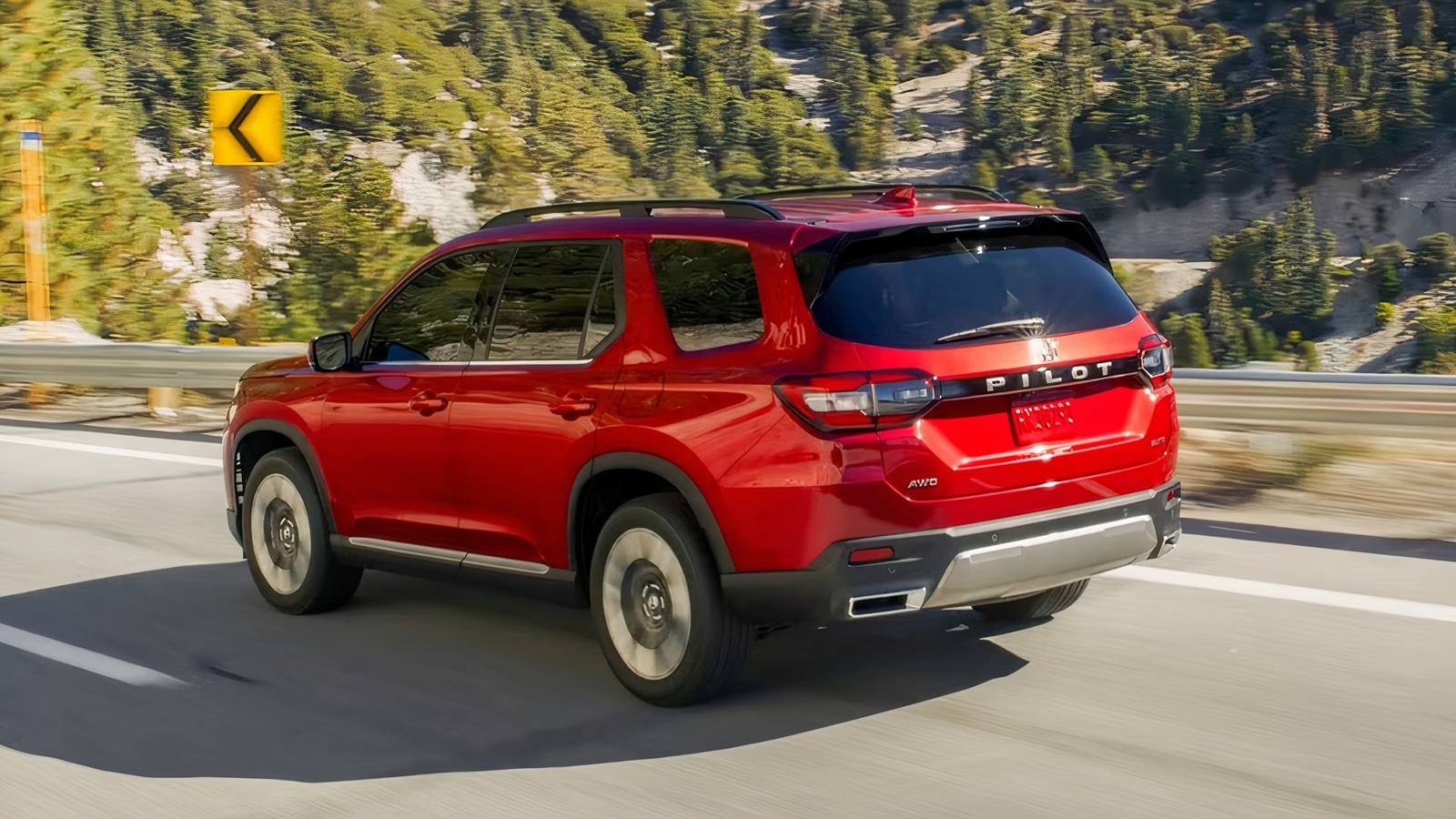
2026 Honda Pilot Interior And Exterior Picture Gallery
The 2026 Honda Pilot arrives with a bolder styling, a more premium cabin, upgraded technology, enhanced capability, and improved driving dynamics.
Powertrain Philosophy: Proven Engineering vs Feature-Forward Tech
Honda vs Hyundai reliability and engineering approach

Honda has long prioritized conservative, long-term engineering over rapid innovation. Its naturally aspirated engines, CVTs, and restrained turbo usage are designed to deliver predictable performance and durability over hundreds of thousands of miles. This philosophy is especially clear in core models like the Honda Civic and Honda CR-V, where incremental improvements are favored over radical changes.

Hyundai, by contrast, embraces a more feature-forward approach. Turbocharged engines, dual-clutch transmissions, and hybridization are used a bit more aggressively across Hyundai’s lineup. Vehicles like the Hyundai Elantra and Hyundai Tucson often offer more power and technology at lower price points, appealing to buyers who want performance and features upfront.
The trade-off is complexity. Hyundai’s newer drivetrains can feel more advanced, but Honda’s powertrains are generally easier to service, age more gracefully, and inspire more confidence among long-term owners. Though recent Consumer Reports data shows Hyundai hybrids like Elantra matching or exceeding in predicted reliability. Buyers prioritizing longevity tend to lean toward Honda, while those seeking modern tech often gravitate toward Hyundai.

Why The 2025 Hyundai Tucson Hybrid Makes For The Perfect Affordable SUV
The 2025 Hyundai Tucson Hybrid got a big update, making it even better than last year’s model, which is near-percent any which way.



Compact Sedans: Hyundai Elantra vs Honda Civic
Hyundai Elantra vs Honda Civic comparison

The Hyundai Elantra vs Honda Civic matchup highlights each brand’s core identity. Both, in their base forms, are fine little economy cars, but both also have hot versions to give fans something to bite into. The Civic emphasizes driving balance, structural rigidity, and interior ergonomics, delivering a refined experience even in base trims. Steering feel, braking consistency, and ride quality remain Civic strengths. The Elantra counters with bold styling, a spacious cabin, and generous standard equipment. Hyundai includes advanced driver-assistance features at lower trims, often undercutting the Civic in price while offering more visible tech.

Where Honda pulls ahead is in cohesion. The Civic feels engineered as a single system, with fewer weak links as mileage climbs. The Elantra offers more immediate value, but long-term owners often report higher resale values and fewer drivetrain complaints with Honda’s compact sedan. In short, the Elantra wins on features and price, while the Civic excels in refinement and long-term ownership confidence.

10 Hybrids With The Lowest Cost Of Ownership Over Five Years
Here are the best hybrid SUVs, sedans, and even minivans with the lowest ownership costs going into 2025.
Compact SUVs: Hyundai Tucson vs Honda CR-V
Hyundai Tucson vs Honda CR-V buying differences

The compact SUV segment is where Honda and Hyundai compete most directly. The Hyundai Tucson stands out with futuristic styling, dual-screen interiors, and an expansive hybrid lineup. It feels modern, spacious, and tech-heavy, especially in higher trims.

The Honda CR-V, meanwhile, prioritizes usability. Its interior layout is intuitive, cargo space is among the best in the class, and the hybrid powertrain is tuned for smoothness rather than novelty. Honda’s hybrid system also benefits from years of refinement across multiple models. Reliability data and resale trends consistently favor the CR-V. While the Tucson often impresses on a test drive, the CR-V’s mechanical simplicity and proven architecture tend to age better, especially for buyers planning to keep their vehicle long-term.

Are Kia And Hyundai The Same Company?
It’s commonly thought that the two brands – marketed as independent of each other – are actually one and the same: here’s what you need to know.
Three-Row SUVs: Hyundai Palisade vs Honda Pilot
Hyundai Palisade vs Honda Pilot family SUV comparison

In the three-row SUV space, Hyundai and Honda take notably different approaches. The Hyundai Palisade leans heavily into luxury, offering upscale materials, quiet cabins, and premium features normally associated with higher-priced brands. It’s designed to impress families upgrading from smaller crossovers.

The Honda Pilot focuses on utility and mechanical robustness. Its V6 engine, practical interior layout, and straightforward infotainment system emphasize durability over flash. While the Pilot may feel less luxurious, it’s often praised for long-term reliability and consistent performance under load. Ownership intent matters here. Families leasing or upgrading frequently may appreciate the Palisade’s comfort and design. Buyers planning to rack up mileage or keep their SUV for a decade often find the Pilot’s simpler mechanical layout more reassuring.

10 Affordable Hybrids That Are Great Investments For The Long Run
These models are sure to deliver years and years of commendable service at an affordable cost-to-own.
Brand Identity, Logos, And Ownership Experience
Specs Are One Thing, Brand Perception Is Another.
Branding tells a story. The Honda logo emphasizes heritage, motorsports credibility, and engineering continuity. Honda buyers often cite trust, familiarity, and resale value as reasons for choosing the brand again.
The Hyundai logo reflects reinvention. It’s the product of years of focus groups and marketing pros’ inputs. Over the past decade, Hyundai has aggressively reshaped its image, offering long warranties, bold designs, and value-driven pricing to attract new buyers.
Hyundai’s warranty coverage remains a major advantage, particularly for risk-averse shoppers. Honda counters with stronger resale values and a more established reputation for long-term durability.
Verdict: Which Brand Is Right For You?

There is no objective winner in the Honda vs Hyundai competition. I’m not even fully comfortable calling it a competition. Hyundai excels at delivering features, design, and value immediately, while Honda focuses on refinement, engineering discipline, and long-term dependability. Honda has so much time in the game that the comparison, while valuable for buyers, leaves a lot on the table in terms of fair competition.
If you plan to lease, upgrade often, or want the most technology for your money, Hyundai may be the smarter choice. Or if you simply like a fancier interior with all the creature comforts, plus some. If you’re buying to keep, value resale, and want a vehicle that feels solid at 150,000 miles, Honda remains difficult to beat. Knowing these five differences allows buyers to choose based on priorities rather than marketing — and that’s where the real value lies.
Sources: Honda, Hyundai, Cars.com