
The front-wheel-drive sports car has always been a tricky segment for manufacturers to navigate because of their inferior means of putting power down to the ground compared to their rear-wheel-drive counterparts. Front-wheel drive configurations possess better packaging and more attractive productive costs and were never really intended for outright performance.
However, this very strength makes them an ideal starting point for making a performance car that is accessible to the people. In recent years, these front-wheel-drive performance models have become substantially more expensive, but thanks to the monumental weight savings, they return some impressive torque-to-weight ratios, making them exemplary enthusiast cars.
Models are listed in ascending order based on torque-to-weight ratio, from the lowest to the highest.
2026 Honda Civic Si
Torque-To-Weight Ratio: 0.066:1

The 2026 Honda Civic Si is a dedicated low-cost enthusiast’s compact sedan, sourcing power from a high-revving turbocharged 1.5-liter four-cylinder engine, complemented by a lightweight construction. This powertrain produces 200 horsepower and 192 pound-feet of torque exclusively to the front wheels via a short-throw six-speed manual transmission.

The 2026 Honda Civic Si weighs in at just 2,906 pounds, resulting in a torque-to-weight ratio of 0.066 pound-feet per pound. It is by no means the most powerful model that we feature on this list, but the point of the Civic Si has always been to translate a featherweight profile to maximize agility and steering response. The Si trim optimizes this with a sport-tuned suspension, larger brakes, and a standard limited-slip differential.
Top 3 Rivals


Find 2026 Honda Civic Si Sedan and more cars for sale on our Marketplace
2026 Mini Cooper S
Torque-To-Weight Ratio: 0.073:1

The F66-generation 2026 Mini Cooper S optimizes the brand’s fun-to-drive philosophy, albeit in a slightly larger package when compared to its original predecessor. Powering this model is BMW’s turbocharged 2.0-liter TwinPower four-cylinder engine, producing 201 horsepower and 221 pound-feet of torque to the front wheels, exclusively via a seven-speed dual-clutch automatic transmission.

In its lightest specification, the Mini Cooper S weighs in at 3,014 pounds, resulting in a torque-to-weight ratio of 0.073 pound-feet per pound. With this, it achieves a zero to 60 MPH acceleration time of 6.3 seconds, making it a suitable entry point to the outright performance-focused JCW flagship. The Cooper S is renowned for offering a good balance of daily comfort and go-kart-like handling thanks to its low center of gravity and a wide track.
Top 3 Rivals
Find 2026 Mini Cooper Hardtop and more cars for sale on our Marketplace
2026 Volkswagen Jetta GLI
Torque-To-Weight Ratio: 0.079:1

The 2026 Volkswagen Jetta GLI continues its legacy as the sedan alternative to the GTI, featuring an identical 2.0-liter four-cylinder turbocharged EA888 engine producing 228 horsepower and 258 pound-feet of torque. You can have this with a six-speed manual transmission, which results in a base curb weight of 3,241 pounds.
Immediately after covering a few miles with the car, I was pleased by how rock-solid this chassis still feels and how engaging the GLI remains, especially when zipping it around an urban environment.
– William Clavey for TopSpeed

Upgrading to the automatic seven-speed DSG version slightly increases this figure to 3,318 pounds. Going for the manual yields a torque-to-weight ratio of 0.079 pound-feet per pound. The Jetta GLI’s torque curve peaks at a highly impressive 1,700 RPM. Combined with standard VAQ limited-slip differential and adaptive dampers, the GLI effectively bridges the gap between a daily commuter and a dedicated sports sedan.
Top 3 Rivals
Find 2026 Volkswagen Jetta GLI and more cars for sale on our Marketplace

The Practical Four-Door That Doubles As A Weekend Track Star
By weekday, it’s a capable family sedan. By weekend, it’s an apex-clipping athlete.
2026 Kia K5 GT
Torque-To-Weight Ratio: 0.086:1

The 2026 Kia K5 GT aims to recreate the muscle car personality but with a significantly downsized approach. Powering this is a turbocharged 2.5-liter four-cylinder engine producing 290 horsepower and 311 pound-feet of torque to the front wheels exclusively via a performance-oriented eight-speed wet dual-clutch transmission. It carries a curb weight of roughly 3,596 pounds, which gives it a torque-to-weight ratio of 0.086 pound-feet per pound.

Kia claims that this drivetrain is enough to get the sedan from zero to 60 MPH in 5.4 seconds. The GT achieves this ratio because of its higher torque figure, but many reviewers have noted it to be a front-heavy sedan that tends to overwhelm the front tires if you try to drive it like a hot hatch.
Top 3 Rivals
Find 2026 Kia K5 and more cars for sale on our Marketplace
2026 Hyundai Sonata N-Line
Torque-To-Weight Ratio: 0.086:1

The 2026 Hyundai Sonata N Line shares the aforementioned Kia’s construction, featuring a turbocharged 2.5-liter Smartstream four-cylinder engine also producing 290 horsepower and 311 pound-feet of torque to the front wheels via an eight-speed N Wet Dual-Clutch Transmission prioritizing fast shifts. This iteration weighs in at a slightly lighter 3,534 pounds, but its ratio remains 0.086 pound-feet per pound.

Hyundai doesn’t fit the Sonata N-Line with a mechanical limited-slip differential, like you would find in its more performance-oriented Elantra N, but it does feature electronic torque vectoring to manage its power. As a result, many credit the Sonata N-Line with being an exceptionally quick and stable cruiser that can surprise many smaller sports cars during mid-range acceleration.
Top 3 Rivals
2026 Volkswagen Golf GTI
Torque-To-Weight Ratio: 0.087:1

The 2026 Volkswagen Golf GTI is the undisputed benchmark for the hot hatch, made possible thanks to its tried-and-tested turbocharged 2.0-liter four-cylinder EA888 engine. For 2026, Volkswagen cranks the power up to 241 horsepower and 273 pound-feet of torque. You can’t get it with the manual transmission anymore, but the seven-speed DSG dual-clutch transmission is a fan favorite configuration for most prospective buyers.

The base trim hot hatch weighs in at 3,183 pounds, resulting in a torque-to-weight ratio of 0.086 pound-feet per pound. This is not an outright track time slasher, but the Golf GTI’s torque arrives early at just 1,750 RPM, providing an immediate shove that makes it feel exceptionally punchy in city traffic and tight corners.
Top 3 Rivals

10 Cheap Performance Hatchbacks That Deliver Sports Car-Level Fun
While sports cars typically command higher prices, several affordable hot hatches provide a thrilling driving experience without breaking the bank.
2026 Mini Cooper JCW
Torque-To-Weight Ratio: 0.087:1

The 2026 Mini John Cooper Works is where we start to get into serious front-wheel drive performance territory. Under the hood, you will also find BMW’s 2.0-liter TwinPower Turbocharged four-cylinder engine that has been significantly reworked for the 2026 model year. It now produces 228 horsepower and 280 pound-feet of torque. Mini opts to discontinue the manual transmission for this model, leaving us with a speed-oriented seven-speed dual-clutch transmission.
The Cooper S 2 Door is no slouch, by the way. We like this car a lot. It’s already quick: It can chase down 60 MPH in a reasonable 6.3 seconds, which bests an Acura Integra A-Spec that costs nearly $3,000 more.
– Michael Frank, TopSpeed Journalist

The JCW only weighs in at 3,047 pounds, resulting in an impressive torque-to-weight ratio of 0.092 pound-feet per pound, despite a lower output. This results in a 5.9-second sprint to 60 MPH from a standing start. The JCW also includes a specialized adaptive suspension, helping it feel even faster in the corners than its numbers suggest on paper.
Top 3 Rivals
2026 Hyundai Elantra N
Torque-To-Weight Ratio: 0.088:1

The 2026 Hyundai Elantra N continues to be a disruptor in the front-wheel drive segment, offering a high-performance experience that punches well above its price bracket. Hyundai fits it with a bespoke turbocharged 2.0-liter four-cylinder engine that produces 276 horsepower and 289 pound-feet of torque. In its lightest configuration with the six-speed manual transmission, the Elantra N carries a curb weight of 3,186 pounds.

This results in a competitive torque-to-weight ratio of roughly 0.091 pound-feet per pound for the manual variant. Upgrading to the eight-speed dual-clutch version gives a temporary power boost with no changes to the torque via the N Grin Shift overboost feature, but it increases the curb weight to 3,296 pounds. To harness this power, Hyundai employs an electronic limited-slip differential and an integrated drive axle inspired by WRC rally cars, reducing weight at the hubs and improving handling precision under heavy torque loads.
Top 3 Rivals
2026 Acura Integra Type S
Torque-To-Weight Ratio: 0.096:1

The 2026 Acura Integra Type S is the Honda division’s more luxurious take on the Civic Type R, resulting in it offering a better and broader daily-driver appeal. Under the hood, you’ll find the brand’s K20C1 2.0-liter turbocharged VTEC four-cylinder engine producing 320 horsepower with an unchanged 310 pound-feet of torque output. The additional refinements mean that this model weighs in at a slightly higher 3,219 pounds on the scales.

This results in the Integra Type S achieving a torque-to-weight ratio of approximately 0.096 pound-feet per pound. Like the Type R, you can only have this with a six-speed manual gearbox with the added benefit of a helical limited-slip differential, ensuring that its torque is efficiently transferred to the surface with minimal drama. You also get the benefit of a sophisticated adaptive damper system, enhancing overall versatility.
Top 3 Rivals

The Luxury Wagon That Proves Practicality Can Be Fun
Move aside luxury SUVs; this 2025 Audi luxury performance wagon proves you can have practicality and performance grit in one package.
2026 Honda Civic Type R
Torque-To-Weight Ratio: 0.097:1

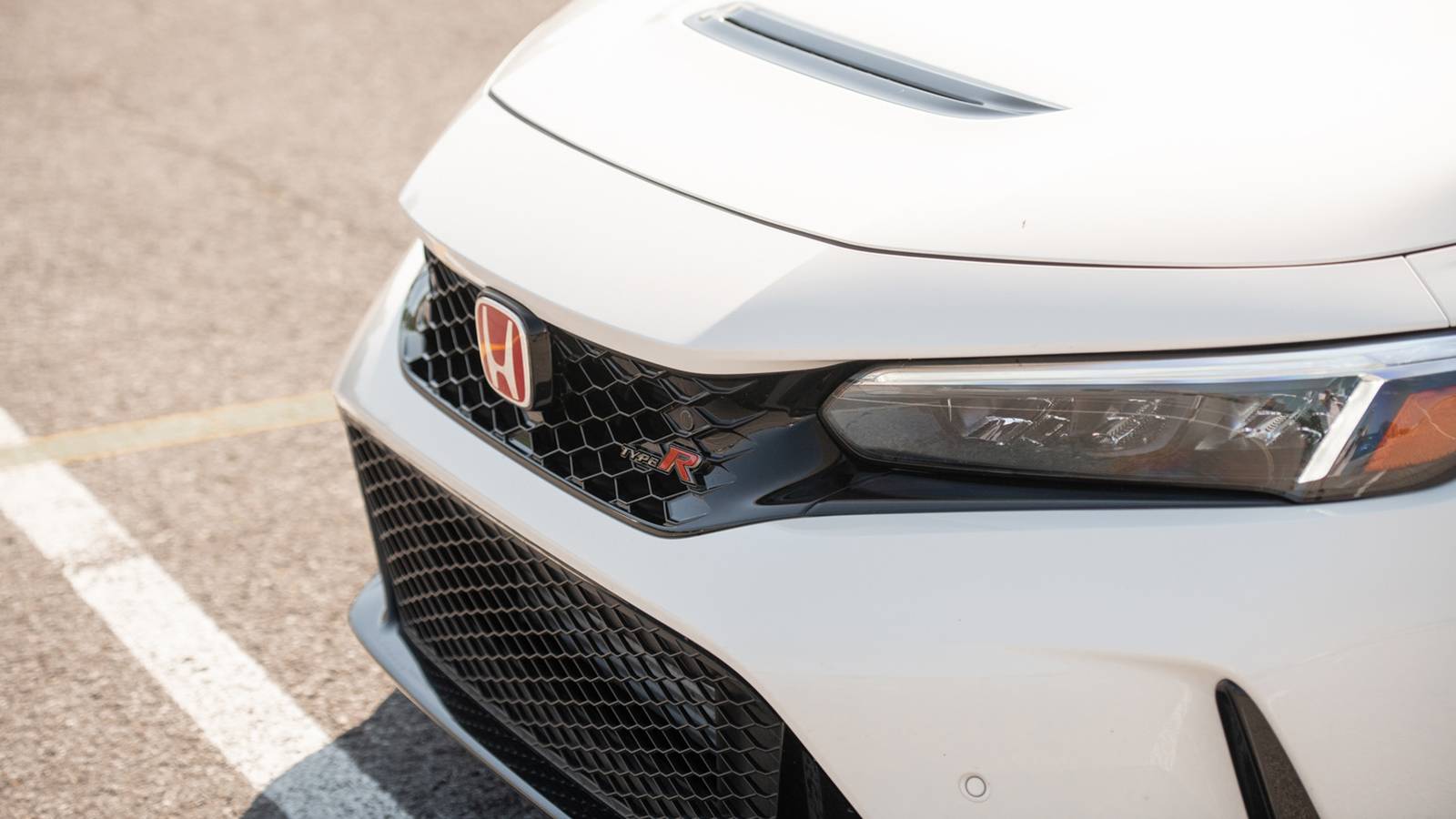
The 2026 Honda Civic Type R remains the quintessential front-wheel-drive performance icon, powered by a 2.0-liter turbocharged VTEC inline-four engine. This high-revving K20C1 engine generates 315 horsepower and 310 pound-feet of torque, delivered exclusively through a six-speed manual transmission with rev-match control to the front wheels. To maintain its track-day dominance, Honda keeps things lean, resulting in a 3,188-pound curb weight.
Setting the front end towards the apex is as simple as coming off the throttle. Reapply the throttle, and the Type R’s downright magic front differential hauls you out of the corner.
– Chase Bierenkoven for TopSpeed

This creates a class-leading torque-to-weight ratio of 0.097 pound-feet per pound, ensuring that the Type R well suits its immediate and aggressive throttle response. Beyond the raw numbers, the Civic Type R utilizes a sophisticated dual-axis MacPherson strut front suspension to manage this torque, almost eliminating the torque steer that typically plagues conventional front-wheel drive platforms. This results in a zero to 60 MPH sprint of 5.3 seconds and a top speed of 170 MPH.
Top 3 Rivals
Sources: Various manufacturers