
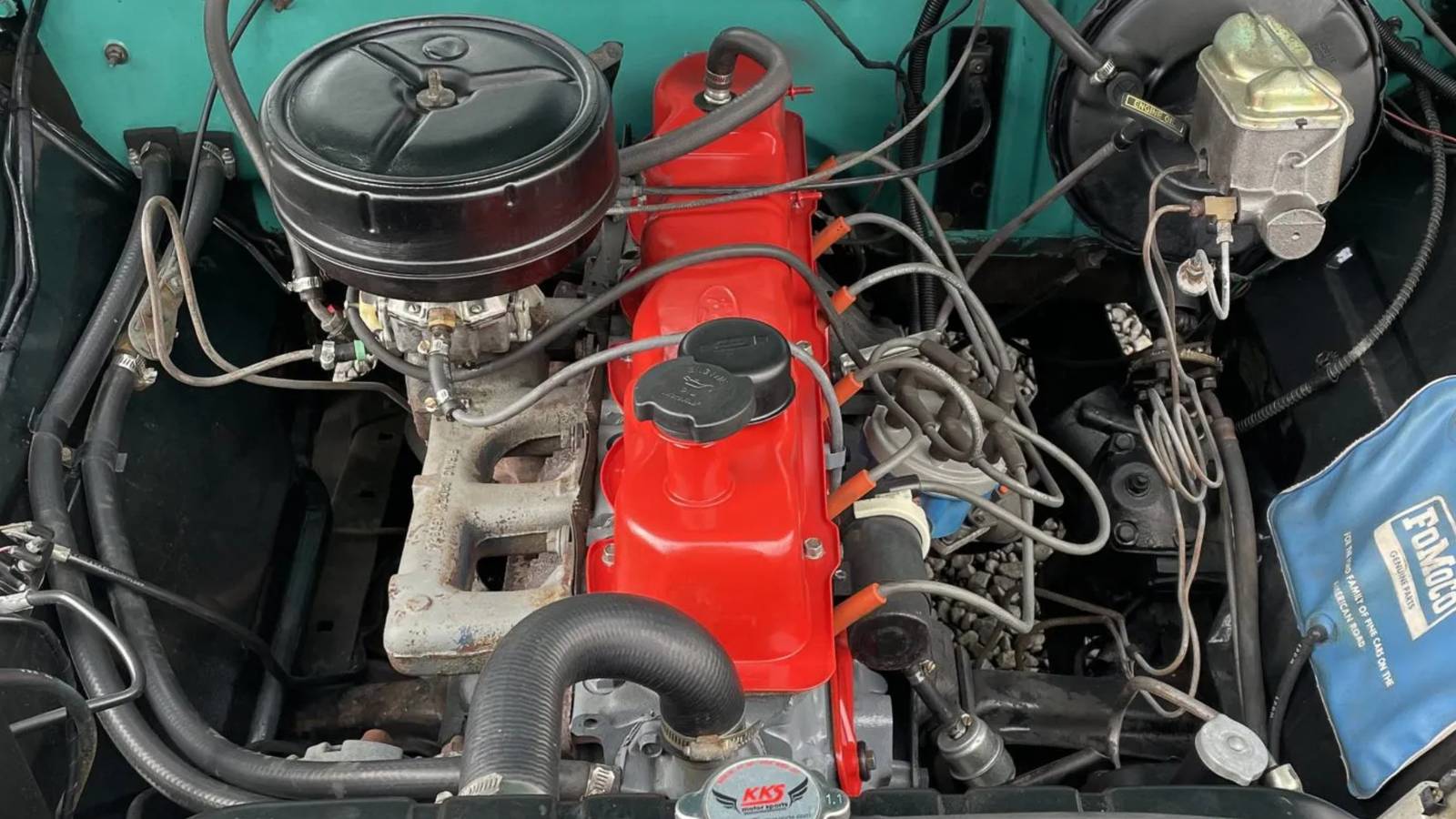
Workhorses have long acted as the foundation of the American automobile industry, with products like the Ford F-150 in work truck spec remaining one of the brand’s most popular options just in terms of raw sales. Fleet vehicles are regularly subject to strenuous work for long periods, which is why reliability is a key factor during the design and production stage. Ford is no stranger to this, as we see with its now-defunct 300 inline-six gasoline engine, which enjoyed a three-decade-long production stint before being replaced by the arguably inferior Essex V-6.
The Ford 300 Six is a much more beloved engine that the Blue Oval was able to keep in production for 30 years before it had to create something that adhered to modern consumption and performance standards. To this day, many trucks and vans fitted with this engine are still hard at work, with some showing well over 400,000 miles on the odometer.
Ford’s Unbeatable 300 Six
Production Years: 1965-1996

In 1965, Ford officially took the covers off its 300 cubic-inch inline-six gasoline engine, designated as the CSG649i in industrial catalogs. It eventually grew to be widely renowned as one of the most durable internal combustion engines ever produced. Its legendary bulletproof status is thanks to the brand’s decision to go for a simplified and overbuilt design featuring a massive cast-iron block and cylinder head, seven main bearings, and timing gears instead of a failure-prone chain or belt.

This was not a high-horsepower performer, but the 300 was able to twist peak torque at as low as 1,600 RPM. Opting for this design meant that it could move heavy loads with a tractor-like persistence that outlasted many of the trucks it powered, even its diesel rivals.
The F-Series’ Iron Heart

The 300 Six’s applications spanned far beyond the average consumer vehicle, primarily thanks to its high reliability standards. Ford made this the backbone of the F-Series pickup line and E-Series vans for over three decades and even extended the engine to be used in the iconic brown UPS delivery trucks, which are subject to constant stop-and-go durability. Ford eventually had to put the design to rest, despite immense success, in 1996 as emissions standards and packaging requirements shifted toward more compact V-6 designs. Despite its untimely demise, the Big Six remains a cult favorite among enthusiasts who value longevity and simplicity over raw speed.

The Ford 300 cubic-inch inline-six first hit the production line in 1965, primarily serving as the heavy-duty centerpiece of the fourth-generation Ford F-Series trucks. The 240 was the entry-level powertrain option, but the more powerful 300 was an immediate success and, as a result, much more popular, because it addressed the specific needs of post-war American workers who required more than just a basic commuter engine. Ford introduced this engine alongside the Twin I-Beam front suspension, marketing a truck that drives like a car but works like a truck. The 300 was the perfect powertrain for this promise, made possible thanks to its massive four-inch bore and nearly four-inch stroke, which provided a level of low-end torque of roughly 260 pound-feet at just 1,600 RPM.

How The Ford Bronco’s Comeback Changed The SUV Landscape In The 2020s
The re-introduction of the legendary Ford Bronco changed the overrun SUV market, here is what its comeback did for the SUV segment during the 2020s.
Beating The V-8s At Their Own Game

The 300’s aforementioned tractor-like behavior is what owners and fans love most about it. As opposed to the higher-revving V-8 rivals of its time, this more compact engine could lug heavy trailers or payloads of hay and gravel without breaking a sweat or stalling. Its internal architecture features seven main bearings and a gear-driven camshaft, which meets industrial-grade motors but is packaged into a consumer pickup that you could purchase at your local dealership. This overbuilt nature gives farmers and tradesmen a sense of security, as the engine proved virtually impossible to overheat or wear out under normal work conditions. To this day, some 300 Six engines are still being put to work all over the U.S.



A Refined Workhorse Of The Old Days

The Ford 300 inline-six underwent a moderate mechanical refinement that transformed it from a simple mid-century workhorse into a modern and enduring legend. Many engines suffered from smog-era performance losses throughout the 1970s, but the 300 remained popular because its low-end torque was naturally suited to the heavy, emissions-choked trucks of the time. The most significant leap occurred in 1987, when Ford replaced the traditional carburetor with electronic fuel injection. This upgrade improved cold-start reliability and drivability without sacrificing the heavy-duty bottom end, further cementing its bulletproof status.
Built To Go The Distance

As V-8 engines became more complex and V-6s became the standard for smaller trucks, the 300’s popularity actually grew among high-mileage users. By the 1990s, it evolved from being a farm engine into the backbone of fleet vehicles like UPS delivery trucks, where it often clocked over 300,000 miles with only basic maintenance.

Its popularity reached a fever pitch in its final production years, ending in 1996, as buyers realized the simplicity and longevity of the Big Six were unmatched by newer, overhead-cam designs. Today, this popularity has transitioned into a cult following, where enthusiasts value the 300 for its honesty, ease of repair, and surprising ability to handle modern turbocharging, representing a testament to an engine that truly became more respected as it aged.

Ford F-150 Lobo: A Factory Street Truck For the U.S.A.
“Street truck” culture isn’t new, but factory versions wax and wane. The F-150 Lobo joins the Maverick Lobo. And maybe a Bronco Lobo’s coming?
Applications Beyond The Automotive World
The Ford 300 inline-six achieved a second life as a premier stationary power plant due to its ability to run at a constant load for thousands of hours. Thanks to its low peak torque, it can perfectly synchronize with the standard 60Hz operational speed required for electrical generators and irrigation pumps. Beyond farming applications, it became the standard engine for airport tugs and baggage loaders, where the need for high-effort, low-speed pulling made a high-horsepower V-8 unnecessary and inefficient.

Its hit status in the industrial sector was cemented by specialized heavy-duty features. Specially engineered industrial versions of this engine feature hardened cast-iron timing gears instead of the fiber gears found in passenger trucks. This ensures the valve timing will never slip or fail during a 24-hour work cycle. This variation also features a larger six-quart oil sump, a stronger water pump shaft, and forged connecting rods to withstand the heat of continuous operation.

The 300 Six thrives when subject to industrial applications because, thanks to its simple and easy-to-maintain design, you can leave it neglected in a remote field or a busy tarmac.
Sources: RepairPal, MotorReviewer, Kelley Blue Book