
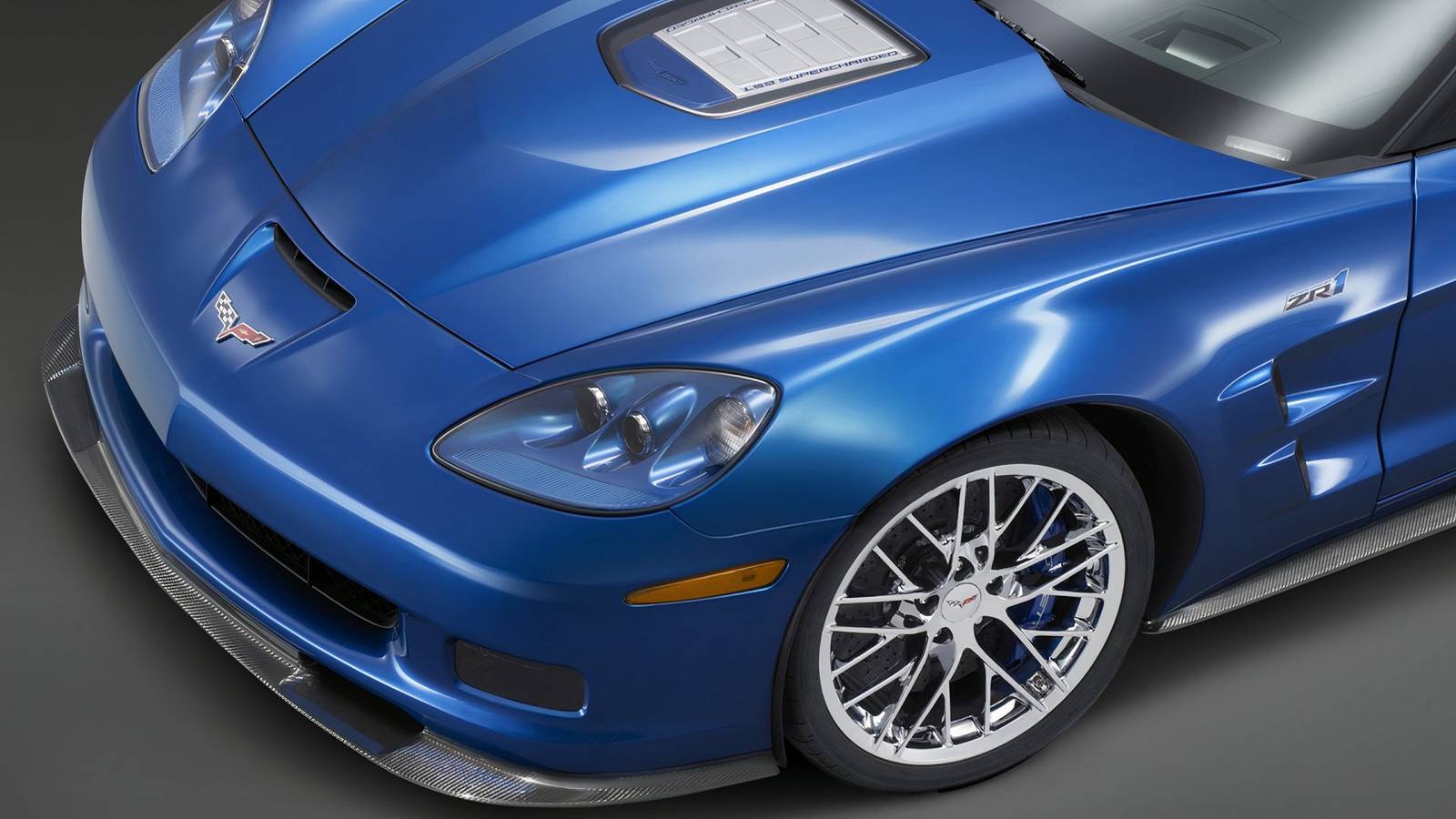
For decades, car enthusiasts have debated which engine truly deserves legendary status. BMW loyalists swear by the inline-six for its refinement and balance, exemplified by models like the E46 330i and E39 530i. JDM fans point to turbocharged icons such as the Mazda RX-7’s 13B rotary and the Toyota Supra’s 2JZ-GTE. But when the conversation shifts from brilliance to longevity — from engineering purity to real-world survival — one engine rises above the rest: Chevrolet’s LS V8, as found in the C5 and C6 Corvette and early C7 models.
The LS isn’t just a great engine. It’s an engine that refuses to die. From daily-driven pickups to 1,000-horsepower drag cars, from track builds to off-road rigs, the LS has endured abuse that would kill most powerplants twice over. It has outlived trends, emissions cycles, and entire generations of competitors. And that’s why, in America at least, the LS V8 has earned the title of the true forever engine.
Why “Forever Engine” Matters
What Longevity, Simplicity, And Scale Really Mean

Calling an engine a “forever engine” isn’t about nostalgia or dyno numbers. It’s about three core principles: longevity, simplicity, and scale. Longevity means an engine doesn’t just last under ideal conditions — it survives neglect, abuse, modification, and time. A forever engine racks up mileage in fleet vehicles, endures countless heat cycles, and keeps running long after others develop fatal weaknesses. Simplicity matters because complexity is the enemy of durability. The more systems an engine relies on to function perfectly, the more potential points of failure it introduces.

Simple engines are easier to maintain, easier to repair, and far more forgiving when things go wrong. Scale is the final, often overlooked factor. An engine produced in massive numbers benefits from constant refinement, unmatched parts availability, and a global knowledge base. When millions of examples exist, weaknesses are exposed early — and fixed. The LS V8 checks all three boxes better than almost any modern performance engine ever built.

The Japanese Six-Cylinder Engine Is So Reliable It’s Still In Production After Almost 25 Years
Toyota’s venerable turbodiesel remains a cornerstone for one of its most iconic vehicles.
The LS V8 Philosophy
Why Chevy Built An Engine That Refuses To Die

When General Motors introduced the LS1 in 1997, it wasn’t trying to create an enthusiast legend. The goal was far more pragmatic: build a compact, lightweight, efficient V8 that could power everything from Corvettes to trucks while meeting tightening emissions regulations. That requirement shaped the LS philosophy. Unlike older big-blocks, the LS used a deep-skirt aluminum block, six-bolt main bearing caps, and a stiff bottom end engineered to handle serious torque.

The pushrod valvetrain — often mocked by rivals — reduced complexity, lowered the engine’s center of gravity, and eliminated the need for long timing chains and multiple camshafts. Chevrolet avoided exotic materials and high-strung engineering. Instead, it prioritized durability: thick cylinder walls, strong crankshafts, conservative valvetrain geometry, and oiling systems designed for sustained load. The result was an engine that didn’t care whether it lived in a sports car, a tow vehicle, or a work truck. It was built to do everything—and survive it all.

10 American Vehicles Known For Their Bulletproof Engines
These 10 American Vehicles are known for their bulletproof powertrains.
Performance Without Fragility
How The LS Makes Power Without Stress

One of the LS V8’s most significant achievements is how effortlessly it makes power without operating on the edge of failure. High-revving engines often rely on tight tolerances, lightweight internals, and aggressive cam profiles to extract performance. That works — until heat, wear, or boost enters the equation. The LS takes the opposite approach. With its large displacement and relatively long stroke, the LS doesn’t need extreme RPM to deliver serious output. Torque arrives early and remains consistent, reducing stress on internal components.



The LS Doesn’t Just Make Power — It Tolerates It

Even in stock form, many LS variants comfortably produce over 400 horsepower while idling smoothly and running on pump fuel. More importantly, the LS responds to modifications without demanding internal upgrades. Mild cam swaps, improved airflow, or forced induction can double output while retaining factory bottom ends. That’s not theoretical — it’s proven daily on drag strips, dynos, and street builds across the country. Power without fragility is what separates significant engines from legendary ones.

The Best Bang For Your Buck V-8 Crate Engine You Can Buy In 2025
Despite the cost, you won’t find an engine with a better price-to-performance ratio.
Used, Boosted, Or Abused
Why The LS Survives Where Others Don’t

Perhaps the strongest argument for the LS as a forever engine is how it performs at the worst point in any engine’s life: secondhand ownership. Most engines deteriorate rapidly once maintenance slips or modifications pile up. The LS, by contrast, thrives in chaos. High-mileage junkyard LS engines are routinely pulled, cleaned, boosted, and pushed well beyond factory limits — often without rebuilding. Stories of 200,000-mile LS motors surviving track abuse or double-digit boost levels are so familiar they’re no longer impressive. They’re expected.
Purpose-Built Power From The Start

This durability comes down to margin. Chevrolet engineered the LS with conservative tolerances, overbuilt rotating assemblies, and cooling systems capable of handling sustained load. The engine doesn’t panic when conditions deteriorate. It’s also remarkably tolerant of poor tuning, imperfect fuel, and mismatched components — all realities of real-world modification. Where more delicate engines crack pistons, spin bearings, or drop valves, the LS often shrugs and keeps running. That resilience is why the LS dominates grassroots motorsports. It isn’t cheap because it’s weak — it’s affordable because it’s everywhere and nearly impossible to kill.

The Untold Story Behind America’s Most Durable Engines
These three legendary engines have defined the greatness of American engineering.
Why It Outlasted The Competition
How The LS Became America’s Most Dependable Performance Engine

The LS didn’t win by being the most advanced engine on paper. It won by being the most adaptable. BMW’s inline-six engines are undeniably brilliant — smooth, responsive, and technically impressive. They rely on complex valvetrain systems, high-pressure fuel injection, and tightly integrated electronics. When maintained perfectly, they’re outstanding. When neglected or modified carelessly, they quickly become expensive liabilities — something seen repeatedly within enthusiast communities, including in South Africa, where modification culture often outpaces long-term mechanical sympathy.

BMW has built inline-six engines that genuinely earned their reputation for durability. The naturally aspirated M54 — and later the N52 — are often cited as high points, capable of serious mileage when properly cared for. They’re smooth, well-balanced, and deliver power in a way that made BMW’s reputation what it is. But that reliability comes with conditions. Miss oil changes, ignore cooling issues, or start modifying without a clear plan, and problems arrive quickly — especially on high-mileage, enthusiast-owned cars. That’s a reality many owners discover the hard way.
The LS Took A Very Different Path

It was designed to be built in huge numbers, worked on easily, and used hard in the real world. As emission rules tightened and other manufacturers leaned into complexity, Chevrolet stuck with the same basic formula and kept improving it. That consistency is what allowed the LS scene to grow the way it did. Parts are everywhere. Knowledge is everywhere. Entire racing categories rely on LS power, not because it’s fashionable, but because it finishes races. Even as GM moved on to newer engine families, the LS stayed relevant — not because it was cutting-edge, but because people trusted it to survive.

10 Cars That Prove Inline-Six Engines Are The Best Design Ever
Smooth and balanced is the name of the game with these legends.
The Forever Engine, Defined
Why Longevity, Not Perfection, Defines A True Forever Engine

A forever engine isn’t proven on a dyno or in a press release. It’s proven by what’s still running years later — in daily drivers, half-finished garage projects, weekend track cars, and even scrapyards where some engines refuse to quit. The LS V8 earned its reputation the unglamorous way. It survived poor maintenance, questionable modifications, and long stretches of hard use.

It ended up everywhere, from Corvettes and police cruisers to drift cars and tow rigs, and it made serious performance accessible without demanding exotic engineering to stay alive. BMW’s inline-six may be a masterpiece of refinement. But when engines are pushed beyond their comfort zones, when ownership passes from meticulous to messy, and when real-world abuse enters the equation, the LS remains. That’s what makes it America’s real forever engine.