
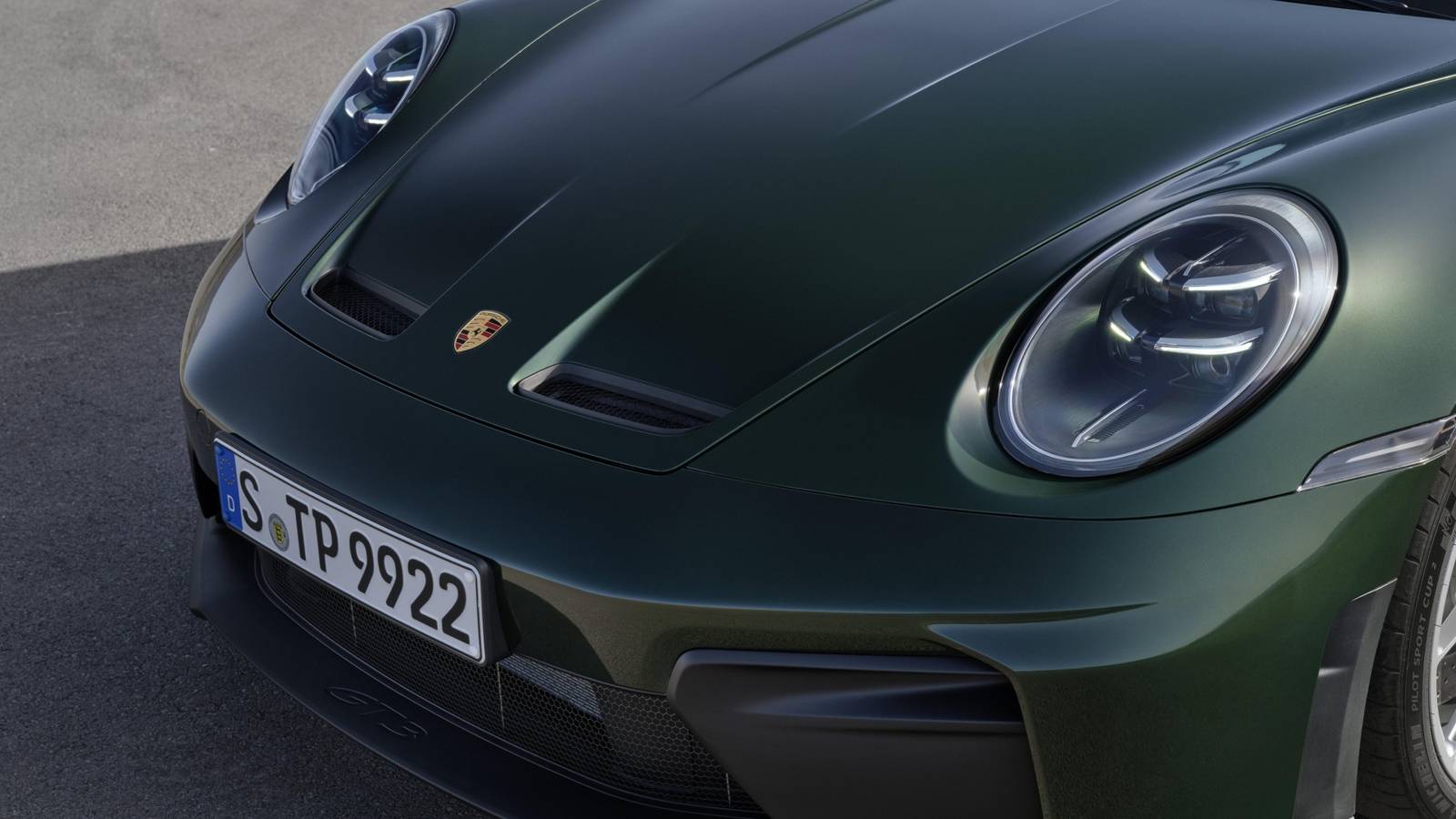

Modern performance cars are faster than they’ve ever been, yet somehow they ask less of the driver than they ever have. Oftentimes, it can feel game-like and lacks soul. Power arrives instantly, traction systems quietly correct mistakes, and steering is filtered until it feels more like a suggestion than a conversation. Speed today is often effortless — impressive, yes, but strangely detached. In that landscape, sports cars that still feel mechanical, demanding, and honest are becoming rare.
That’s precisely why the Porsche 911 GT3 matters. It doesn’t smooth over the experience or insulate you from the work of driving. It asks for attention, timing, and commitment. In return, it delivers something most modern performance cars no longer prioritize: a genuine connection between driver and machine. Not simulated. Not filtered. Real.
Why Analogue Still Matters
What Modern Performance Cars Have Lost

The shift away from analog didn’t happen overnight. It happened gradually, and primarily for good reasons. Emissions regulations, safety requirements, and consumer expectations pushed manufacturers toward turbocharging, electrification, and increasingly sophisticated driver aids. The result is cars that are objectively faster, safer, and easier to live with. But something was lost along the way.

Modern performance cars often manage speed for you. Throttle inputs are softened by torque fill. Steering weight is artificially tuned. Stability systems intervene before the driver even realizes grip is fading. Mistakes are masked, not learned from. The car thinks, and the driver becomes more of an operator than a participant. An analogue car doesn’t work that way. It doesn’t rush to correct you. It responds after you act. It requires the driver to read feedback, manage inputs, and understand consequences. That learning curve — the effort — is precisely what makes the experience rewarding. And it’s why analogue still matters.

The 997.2 Porsche 911 GT3 RS Is Worth Supercar Money
You could buy a supercar or you could invest in the last 911 GT3 RS to be offered with a six-speed manual transmission. What’s your move?
The Porsche That Refused To Go Soft
Why The 911 GT3 Stayed True To The Driver

Porsche could have made the GT3 easier to drive. It had every opportunity to soften the edges, add more assistance, and lean harder into convenience. Instead, it deliberately doubled down on difficulty. At the heart of the GT3 is a naturally aspirated flat-six engine, an increasingly rare choice in a world obsessed with forced induction. There’s no turbo smoothing out throttle response, no artificial torque surge to make the car feel quick at low revs. Power builds as revs climb, and the driver has to work for it. Timing matters—commitment matters.


Find 2026 Porsche 911 GT3 and more cars for sale on our Marketplace
That Philosophy Extends Beyond The Engine
The steering is tuned for feel, not isolation. The chassis is stiff, communicative, and unapologetically focused. Even with modern safety systems present, the GT3 never feels like it’s driving for you. It allows mistakes — and expects you to learn from them. This isn’t stubbornness on Porsche’s part. Its intent. The GT3 exists to preserve a specific kind of driving experience, even as the rest of the industry moves in the opposite direction.

The Most Powerful Naturally Aspirated Flat-Six Ever Put In A Production Car
This venerated manufacturer is known for its high-performance six-cylinder sports cars, and one of them has the most powerful N/A six in the game.
What It Feels Like To Drive
Steering, Sound, And Effort You Can’t Fake

While this piece focuses on the 911 GT3, my brother’s experience comes from the more extreme GT3 RS — a track-focused variant that intensifies the same analog, driver-first philosophy. I haven’t driven the 911 GT3 myself, but my brother, Brenwin Naidu, motoring section editor at Sowetan and Sunday Times Lifestyle, has — and his experience captures exactly why cars like this still matter.

After spending time with a Porsche 911 GT3 RS from the 991.2 generation, he described the drive as something that demanded genuine contemplation rather than casual evaluation. This wasn’t a car you simply step out of and move on from. It lingered. From the moment you settle into the seat — inches from the floor, harnesses visible, roll cage in your peripheral vision — the intent is unmistakable.
Porsche Didn’t Build This Car To Accommodate Convenience; It Built It To Communicate

What stood out most wasn’t the speed on paper, but the sensory overload that came with it. With sound insulation removed, the naturally aspirated 4.0-liter flat-six dominates the cabin. As Brenwin described it, just when you think the engine has given everything at around 6,500 rpm, it somehow finds another breath, screaming all the way to 9,000 rpm with a ferocity that feels mechanical, raw, and alive. It isn’t refined or polite — it’s intoxicating. The steering, he noted, reacts almost faster than thought itself.

Inputs are immediate, the front end responding with a clarity that modern cars often mute. The brakes are firm and progressive, demanding confidence but rewarding commitment. Even the tires — semi-slick Michelin Pilot Sport Cup 2s — are unapologetic, punishing carelessness and insisting on heat, respect, and precision before they offer grip.
The 911 GT3 RS Rewards Skill

Despite the staggering figures — roughly 520 horsepower, around 346 pound-feet of torque, and a 0–60 mph time of about three seconds — Brenwin made it clear that the numbers aren’t the core of the experience. What defines the GT3 RS is something far more challenging to quantify: the physical effort it demands, the unfiltered noise, the vibration through the cabin, and the constant stream of feedback reminding you that this is a car that expects real commitment from its driver.

And that’s precisely why it matters. In an era where performance cars increasingly filter sensation and smooth over mistakes, this Porsche does the opposite. It exposes everything — the speed, the sound, the limits — and leaves the rest up to you.

Best Of The Best: Greatest Porsche 911 Models Of All Time
Within the 911 lineage, certain models stand out as definitive highlights with milestones that pushed the boundaries of design, technology, and speed.
Fast Without Relying On Tech
Why The GT3 Makes Speed Feel Earned

The GT3 is undeniably quick, but it doesn’t deliver speed the way modern performance cars do. There’s no instant shove off the line, no torque spike designed to impress in a straight line. Acceleration builds progressively, and speed comes from sustained commitment rather than instant gratification. This changes the relationship between driver and car. You don’t rely on electronics to manage traction or mask poor inputs. You manage to grip yourself. You balance throttle mid-corner. You decide how much to ask of the chassis, and when.

In a world where many cars use technology to make speed effortless, the GT3 makes it meaningful. It rewards smoothness, patience, and accuracy. It punishes sloppy inputs. And because of that, every fast corner feels earned rather than gifted. That sense of ownership over the experience is what separates the GT3 from most modern performance cars. It doesn’t just go fast — it teaches you how to go fast.

10 Of The Best German Performance Cars That Deserve Your Attention
Germany has long been synonymous with high-performance automotive engineering, and for good reason.
One Of The Last Of Its Kind
Why Are Cars Like This Disappearing Fast?

Cars like the Porsche 911 GT3 aren’t disappearing because manufacturers forgot how to build them. They’re disappearing because the market no longer demands them in large numbers. Convenience, efficiency, and accessibility sell better than effort and involvement. Regulations play a role, but consumer expectations play a bigger one. Most buyers want speed without sacrifice. They want performance without discomfort. They want the car to handle complexity for them. And there’s nothing wrong with that—but it leaves little room for vehicles that prioritize feeling over ease.

The GT3 survives because Porsche believes there’s still value in difficulty. There are still drivers who want to be challenged rather than protected. Who wants to feel a mechanical connection instead of a digital polish? But cars like this are becoming exceptions, not the rule. Which is why the 911 GT3 matters so much. It isn’t just one of the last fast cars that still feels analogue — it’s a reminder of what driving used to demand, and what it can still give back if we let it. In an era where speed is cheap and involvement is rare, the GT3 stands almost alone. Not because it’s the fastest, but because it refuses to make driving easy. And that might be its most important quality of all.
Sources: Porsche USA