
There are brands that make some of the most exciting motorcycles in the world. Then, there are others known for their value products with segment-busting feature sets. Somewhere in the middle is Honda. This is the world’s largest two-wheeler manufacturer. But contrary to its mass-production figures, the company has its toes in every possible two-wheeler category, including the pinnacle of performance.
It is known equally for its small vehicles that can withstand extreme conditions, and at the same time, when it puts its mind to it, it can make performance vehicles worthy of a wallpaper or a world track record. How did Honda get here, you ask? Why is it so respected, and how does it manage to do what it does across segments, markets, and styles? That’s what we’re trying to tell you today.
Honda’s Engineering Roots

Honda’s founder, Soichiro Honda, lived through both World Wars. His first company was Tokei Seiki, and it produced piston rings. But WWII bombs and an earthquake forced him to sell what remained of it after the dust settled and start a new company, Honda Technical Research Institute, in 1937. After the Second Great War, Soichiro recognized there was a need for cheap mobility in Japan, and his solution was to marry bicycles with generator motors.
Thus, the Honda Type A was born in 1946. A single year after going into production, the Type A had a conveyor line. Another year after this, the Honda Motor Co. was founded. The Dream D-type, Honda’s first ground-up product, went on sale in 1949.
Then, in 1960, the Honda R&D Co. Ltd. was established as an organization independent of Honda Motor. It doesn’t limit itself to motorcycles – it is an engineering company, plain and simple. ASIMO, eVTOL aircraft, and autonomous lawnmowers are all results of the engineering from this standalone organization. It also dabbles in automotive solutions from time to time.
The Honda Two-Wheeler Story
Honda’s first two-wheeler was a generator modified to power a bicycle. The first ground-up product was the Dream D-Type, and it was soon followed by Honda’s first four-stroke design, the E-Type. The first Cub followed, the Cub F, which was a motorized bicycle. Finally, the Super Cub in the form that we know and love went on sale in 1958.
This was the most unassuming design, with an underbone chassis, a small two-stroke 50 cc engine, and not much else. What it did, though, was mobilize most of the world over; for nearly seven decades, it has been in continuous production. The Super Cub is what made Honda a force to be reckoned with, even in developed markets where large displacement and horsepower dominated. Honda would go on to carry this lesson for all its other products.

The Honda Motorcycle With The Lowest Maintenance Costs In 2026
Regardless of the brand, a cheaper-to-maintain dual-sport than the XR150L is hard to come by!
Honda Outside Of Two Wheelers
This is an article primarily about two-wheelers, but it is important to understand where Honda comes from in a holistic way when looking at its engineering perspective. For example, Kawasaki would never have managed to engineer the supercharging on the H2 engine if it didn’t have its own aerospace division. Even in motorsport disciplines at the pinnacle of their fields, engineers from the aerospace industries get hired for their expertise. There can be some surprising crossovers – it’s quite possible that your table or ceiling fan blades were designed by an aerodynamicist. With this perspective, Honda’s engineering achievements in other areas become significant.
Honda’s Prominent Automotive Tech

It’s right about time to make a ‘VTEC kicked in yo!’ joke, but truth be told, Honda’s B16A engine that powered the Civic, RSX, and CR-X was Honda’s first engine with the technology. Yet, it was extremely reliable. It wasn’t the first car with variable valve timing, but it certainly was the first to bring it to the masses and prove that it could be reliable and affordable. Today, everyone is running it in their cars, and motorcycles are adopting it as well.
Elsewhere, the NSX was the first production car with an aluminum monocoque and body. Again, more and more cars are moving to the material because it is stronger and lighter than steel, and more resistant to corrosion. Honda was also the first with four-wheel steering (1987 Prelude), hydrogen fuel-cell power (FCX Clarity), sat-nav (1995 Legend), and most people seem to forget that the Insight was launched at the same time as the Prius.
Engineering Excellence In Honda Motorcycles

There have been many Honda motorcycles and scooters that have shown great engineering prowess over the decades. Let us look at a few of them and what made them such great examples of engineering. Of course, this is by no means a complete list, and we’ve had to leave out some stalwarts like the Gold Wing and CBR1100XX Super Blackbird simply because Honda has so many significant models in its history.
Honda Super Cub

We usually measure greatness by the peaks of achievement. The most powerful engine, the highest top speed, and the most advanced features. The Super Cub has none of these. This is the motorcycle equivalent of the tortoise in The Hare And The Tortoise – it doesn’t have speed, but what it has is reliability in spades. It will keep going, no matter what. If there ever is another World War, the only things remaining after will be cockroaches, Hiluxes, and the Super Cub.
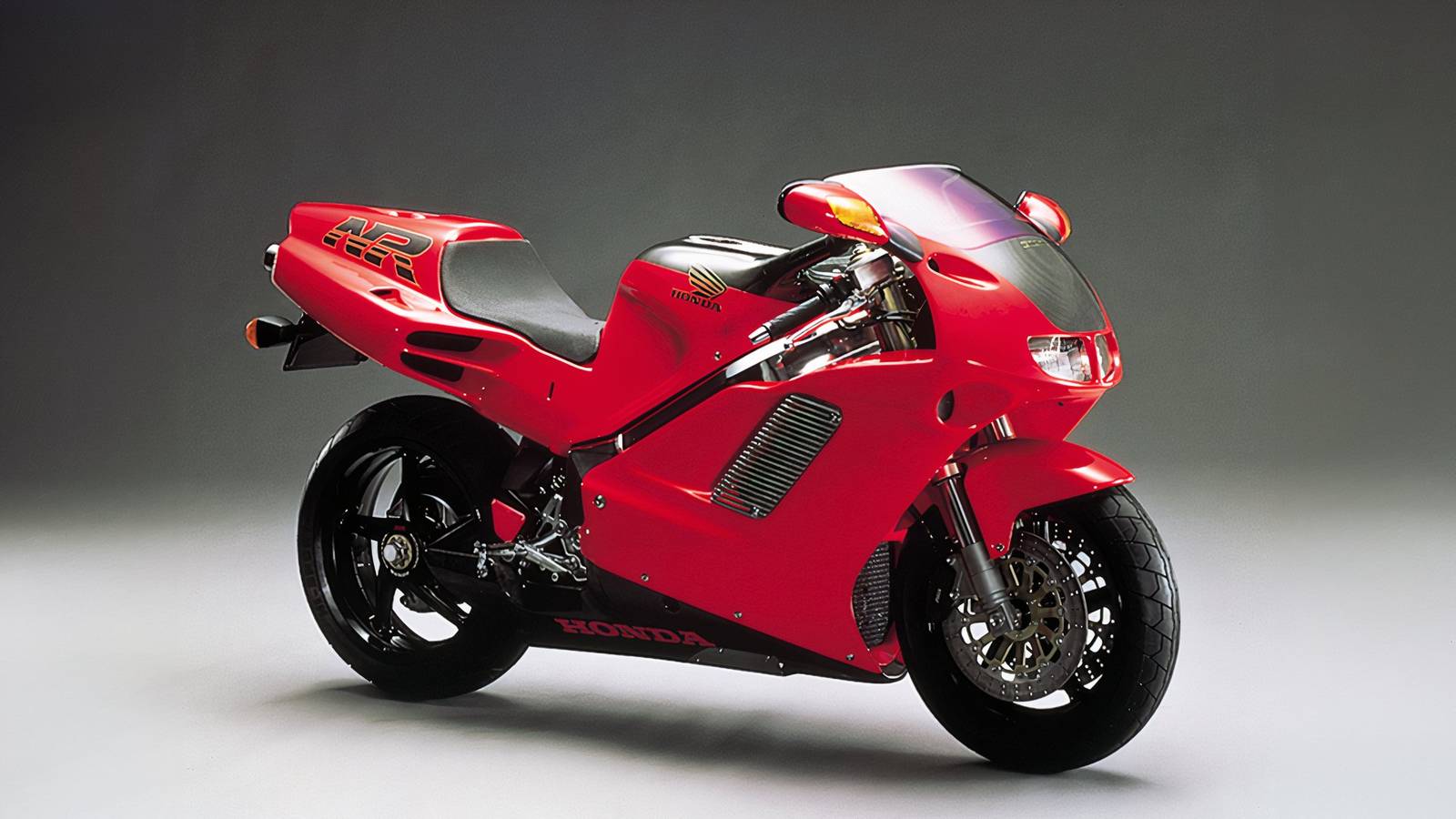
Honda NR750

Honda’s attempt to win at the pinnacle of motorsport coincided with the conviction that four-stroke motorcycles were the way forward. The NR 750’s four-stroke race bike was never successful, but it led to Honda applying for a couple of hundred patents. The design gave the world a number of firsts that we take for granted today, like a digital instrument cluster, twin front brake discs, and carbon fiber bodywork. It also inspired one of the most beautiful motorcycles in history. Oh, and when Honda decided to go back to a two-stroke racing machine after that, it crushed the opposition.
Honda CB750 Four

The inline four motorcycle seems to be dying a slow death, but for the longest time, it was the default choice for a performance motorcycle. It started with this, the CB750 Four. It, like the NR, introduced to the world quite a few firsts. The biggest thing it contributed to the world of motorcycling, though, was the concept of a performance motorcycle that was also reliable. Honda doubled down on the format with the CBX1000 and its inline six-cylinder engine, but the CB750 Four set the standard for all modern performance motorcycles.

10 Most Significant Honda Motorcycles of All Time
Honda has had an impact on motorcycling out of all proportion to its relatively short life
Honda CBR900RR Fireblade

In simple terms, the CBR900RR took the CB750 Four’s lessons and brought them into the 21st century, so to speak. Tadao Baba’s concept, that a sports motorcycle needed to be able to stop and turn just as quickly as it could accelerate, forever changed our perception of what a performance motorcycle should be able to do. This pursuit of lightness, compactness, and handling exists to this day in all racing disciplines. Honda has even managed to give the world the most powerful naturally aspirated inline four-liter bike in the
CBR1000RR-R SP.
Honda CX500 Turbo

Kawasaki might have given the public the first production turbocharged motorcycle, but it was a dealer-level fitment. Honda’s CX500T was available with a turbocharger from the factory itself. And despite it being new tech for the company – this is a recurring theme – it was reliable. We don’t expect anything less from the upcoming V3R 900 E-Compressor, which will be the first Honda motorcycle with forced induction since the CX.
Honda WN7

Honda’s first electric two-wheeler has been a long time coming, and on the surface, there isn’t much that is special about it. It offers performance equivalent to a middleweight sport bike, and it doesn’t have amazing range or anything that seems to make it truly stand out. However, in typical understated Honda fashion, you don’t need a quick charger for the WN7; it will charge to full in a few hours from a regular wall socket. This might seem like a tiny detail, but it gives EVs a whole new dimension of usability.
Sources: Honda PowerSports, Honda R&D, Honda UK