
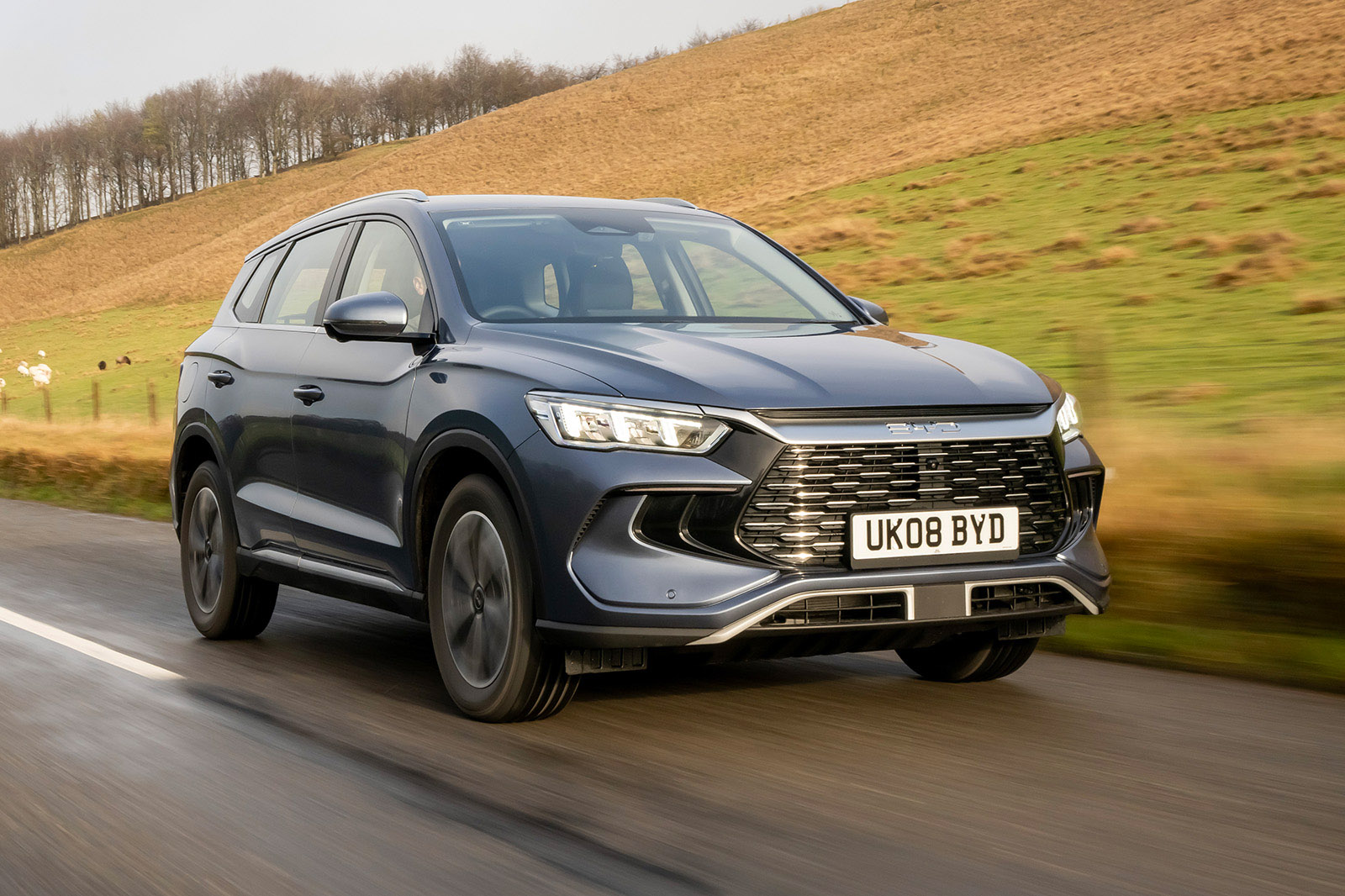
Potent value for money and the lure of low running costs are likely to endear this car to much of its customer base. Practicality should too, at least reasonably well. This is a big car for the C-SUV class, and while it has a complicated hybrid powertrain to carry, it still delivers plenty of second-row passenger space – enough for this 6ft 3in tester to be perfectly comfortable. The boot is a bit smaller than some rivals’ – 463 litres, no matter which trim level and battery pack you go for, whereas some in the class go beyond 600 litres.
BYD’s original Sealion model, the 7, suggested that this could almost be the company’s idea of a pseudo-premium model line. The 5 doesn’t have nearly so many classy materials, or much of a sense of cabin quality about it, sadly. For the money, there’s certainly no reasonable basis to expect that, of course, and the car’s prevailing standards for material quality and solidity pass muster. But there’s just a suggestion of flimsy cheapness about some of the fittings (air vents, column stalks); a lack of adjustability, in some respects, in the front seats; and a faintly plasticky feel to the car’s ‘vegan leather’ upholstery.
BYD does give you a really chunky drive selector rather than one of those fashionable thimble-sized shifter nubbins, though, and there are still plenty of physical buttons to make the driving experience simpler. BYD’s 12.8in touchscreen infotainment screen continues to have a few too many sub-menus for our liking and displays too many icons at a dismayingly small size. However, usability is certainly improving bit by bit with every new model introduction, even if a few digital quirks remain, such as the car’s baffling trip computer.