
The 1980s were an era of automotive daring. Car manufacturers were furiously hunting for something new, something no one had ever seen. And making this time doubly potent was the simultaneous introduction of turbocharged wizardry seeping into everything. Look past the big hair and neon clothing, or don’t, but you’ll find machines that really pushed the culture—vehicles that didn’t just survive the decade, they became icons in ways both shockingly timeless and so, so of their day.
These 10 cars from the 1980s still stir a grin, a double‑take, or passionate and weird conversation at a car meet. They aren’t all rare, and they don’t all make 500 horsepower, but they each carry a distinctive personality—the kind that resonates long after their factories were repurposed as a parking deck. Whether it’s Italian excess, JDM style, or plain knuckle-dragging American beef, this list celebrates the cars that still fire us up after 40 years.
1988 Mitsubishi Starion / Chrysler Conquest TSI
The Starion Was Destined For Greatness But Landed In Obscurity

The Mitsubishi Starion and its U.S.‑market twin, the Chrysler Conquest TSI, sit on this list because they were early adopters of a formula the world would later love: turbocharged power without supercar pricing. In an era before AWD turbos were commonplace, the rear‑drive Starion shoved boost through a 2.6‑liter engine and delivered punchy midrange torque that made highway on‑ramps feel like launchpads. The pop‑up headlights and wedge‑shaped body are pure ’80s performance theater, executed with genuine purpose.

Today, these cars are sleeper royalty. They don’t wear aero kits screaming for attention, but the car fairing does demand a bit of attention, especially once the turbo spools. Enthusiasts respect them for what they were and what they can still do with a bit of love—after all, a Starion that runs smoothly still shocks both vintage‑car fans and the casually curious.
1988 Toyota MR2
Even Toyota Gave The Mid-Engine Thing A Shot In The ’80s

Toyota’s little mid‑engine wonder was proof that fun didn’t have to cost a fortune. The MR2 balanced light weight with nimble handling, and while its 1.6‑liter engine wasn’t a powerhouse by brute force, the way it navigated corners made drivers rethink what “small car fun” could be. It was a rare mid‑ship design in an era when most affordable sports cars played it safe with a front engine and rear‑drive layout.

Today, early MR2s still turn heads because they remain honest drivers’ machines. Seeing one roll up at a show is like seeing a cartoon version of an Italian thoroughbred. People still love these today. Hell, probably more than they did in the ’80s. It’s not uncommon to see these today benefiting from tasteful restorations and careful upkeep from adoring owners. These pint‑sized wedges still have that thing that makes you stop and go, “cool.”
1986 Lamborghini LM002
If Rambo Had V12 Money

If there was a poster child for audacious 1980s automotive foolishness, the Lamborghini LM002 would be it. Imagine a V12‑powered off‑roader that looks like a tank on a gasoline diet. That’s the LM002, born from Lamborghini’s desire to blend supercar power with desert‑surfing capability. Its 5.2‑liter V12 (a de-tuned version of the Countach’s engine) barked like a whopped dog, and the car lumbered with surprising composure across sand dunes and urban landscapes alike.

On the street, it still disrupts everything. Seeing one in the real world demands your attention. Car aficionados erupt with recognition and awe. The LM002 is a rare cultural artifact that refuses to fade—it’s too loud, too strange, and too magnificent to ignore. It’s less a car and more a declaration that the 1980s weren’t afraid to imagine a car that does everything at once.

10 American Cars From The 1990s That Are Modern Classics
Cars are added each year to the list of new classics, look away now if you were born in the ’90s – these 1990s American cars are now modern classics.
1986 Nissan Pulsar NX Sportbak

The Nissan Pulsar NX Sportbak is for those who always wanted to see the math team kids out-cool the football players. It’s quirky. This thing isn’t your normal sports car. It had this insane hatchback design: a removable rear window/roof thing that turned your sports car into a station wagon. There’s simply no denying its energetic style. The NX was a fun little package that stood out. It wasn’t about dominance but about charm and personality.

Modern enthusiasts treasure the NX because it was different on purpose. It didn’t feel like every other car on the road, and it still doesn’t. Parked next to its contemporaries, the Sportbak’s angles and proportions offer a distinct visual break from the vaguely-egg-shaped rabble crowding the roads. For all enemies of monotony, this is your weapon.
1986 AMC Eagle
The AMC Eagle Is The First Crossover

The AMC Eagle might be the ultimate underdog on this list. Long before crossovers became a lifestyle staple, the Eagle combined passenger‑car comfort with full‑time four‑wheel drive. It wasn’t pretty, and early adopters didn’t parade it at car shows in droves, but the Eagle was quietly radical—blurring boundaries between sedan and utility in ways that would become tomorrow’s norms.

Today, Eagles draw head turns because they are so clearly of a different time. What’s funny is it shows that people, even back then, wanted the same things they want today: a car/SUV hybrid that gives us (or at least tries) the best of both worlds. They are reminders that innovation didn’t only come from the big luxury or sports names. The Eagle was useful, unpretentious, and ahead of its time. Seeing one now prompts appreciation for whoever called that shot.
1980 Audi Quattro

If the AMC Eagle represents crossover intuition, the 1980 Audi Quattro represents the competitive revolution. Audi’s pioneering use of permanent all‑wheel drive in a rally‑bred road car changed the performance landscape. The Quattro’s wonderful shape carried turbo power and a drive system that made traction in rain and snow less of a guessing game. It was potent, accomplished, and thrilling in a way that still resonates in today’s performance AWD machines.

In person, the Quattro commands respect—it’s a piece of motorsport history that proved all‑wheel drive wasn’t just practical, but powerful. You don’t even need to know any of that to know it, ya know? Its stance and presence feel purposeful, and it remains a favorite for enthusiasts who value technical advancement as much as classic aesthetics.

10 Classic Cars You Can Find For Less Than $10,000
Classic cars don’t just have to be for the rich; you can get yourself an awesome classic ride for less than $10,000 and join the exclusive club.
1986 Buick Grand National GNX
The Grand National GNX Was The Black Sabbath Of Muscle Cars

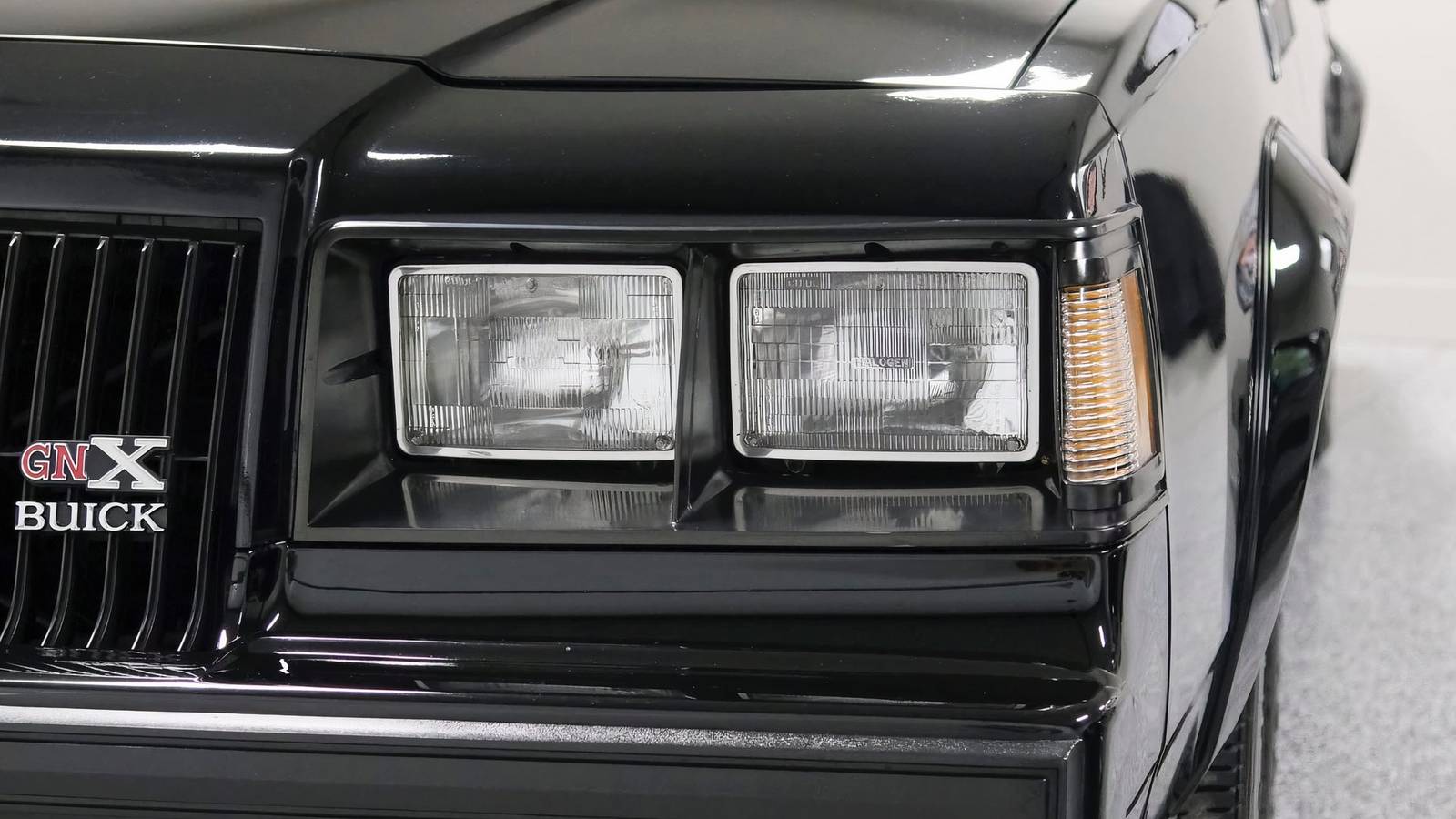
If grit had a nameplate, it might well be the Buick Grand National GNX. Cloaked in bible black with a turbocharged V6 that could embarrass many larger engines of the era, the GNX was the muscle car that everyone underestimated. It didn’t wear chrome or garish stripes. It hid its ferocity behind a bad guy suit.

Today, the GNX is revered. If you see one, it’s best to address it as “sir.” It’s a car that didn’t just outperform expectations in the ’80s; it rewrote what people thought a domestic performance car could be while looking like a buttonman’s poster car. At shows and auctions, it still draws a crowd, who are also all a little afraid of it. Its aura has only grown stronger over the decades of lore it’s enjoyed. A true sleeper icon.
1980 Datsun 280ZX 10th Anniversary Edition
Back When Carmakers Knew What A Proper Paint Job Looked Like

The 280ZX marked a departure for the Nissan Z lineage, blending performance with comfort. The 10th Anniversary Edition took that blend and refined it with commemorative details and a focus on smooth cruising without sacrificing the Z’s sporty roots. It wasn’t the rawest Z car ever made, but it was one of the most balanced, certainly the best painted.

Owners and fans today appreciate this ZX for its elegant simplicity and its status as a bridge between classic sports car purity and more modern driver comforts. Head turns still happen because the 280ZX carries itself with a poised silhouette that hints at its heritage without shouting it. It’s a sophisticated classic that rewards both nostalgic admiration and thoughtful driving.
1981 DMC DeLorean

If there was ever a car that didn’t need justification for why it’s a head-turner, it’s the DMC DeLorean. But writing about his stuff is my job, so… This is perhaps the most culturally iconic car on this list, and maybe ever, thanks in large part to its massive role as the coolest time machine ever depicted. The gull‑winged stainless‑steel coupe is recognized instantly—even by those who don’t know a carburetor from a windshield wiper. It’s a car born from blind ambition, controversy, and a religious dedication to trying to make the coolest-looking car possible. Despite its abject failure as a product, it still looks just as unique today as it was when it first rolled off the line.
But beyond its cinematic legacy, the DeLorean’s design still arrests attention. People pause, point, smile, and reminisce. That’s admiration that any car would envy. Whether cruising at what looks like Mach 1,000,000, no matter the speed it’s actually going, or simply sitting parked, admired from every angle, it’s a machine that doesn’t just turn heads—it makes people happy.

Factory-Turbocharged Muscle Cars You Forgot Existed
A high-performance turbocharged variant is usually a high-profile car, but some seriously killer turbo rides have fallen down the memory hole.
1985 Mercedes‑Benz G‑Class

Finally, the 1980s Mercedes‑Benz G‑Class reminds us that some designs can be so good that they work for decades. Originally conceived as a utilitarian off‑roader for both military and civilian use, the G‑Class’s hard-angled style has hardly changed in four decades. Sure, it has gone from frog to prince over that time, but the basic design language simply didn’t change. In an age of rounded edges and aero curves, the original G‑Class still stands as a bold but simple geometrical statement: “Square. Good.”

Seeing one from the 1980s today is like seeing little Mickey Mantle play T-ball. (Sorry for the rogue baseball player reference; that’s clearly not my wheelhouse.) Its presence is commanding, its lines unapologetically, well, lines, and its reputation for capability is now legendary. It turns heads not just because it’s old, but because of how relevant it still is despite its age.