
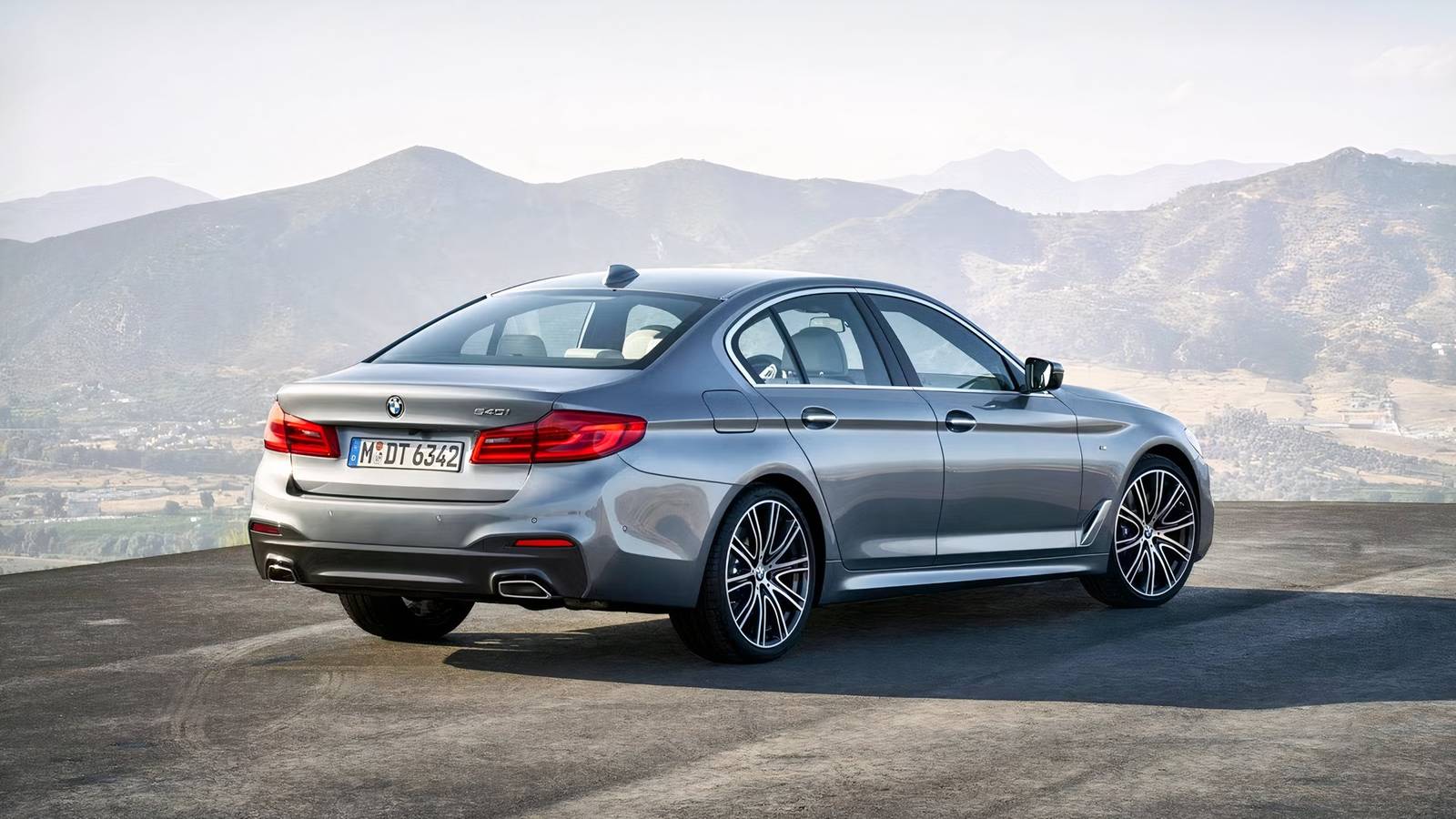
There was a time when the idea of cross-shopping a Toyota Camry and a BMW 5 Series would have sounded absurd. One lived firmly in the sensible, middle-class heart of the market. The other occupied luxury car territory, reserved for company cars, long-distance commuters, and people who cared about more than simply getting from A to B. It was, in many ways, the practical buyer versus the one who enjoys the finer things — and I’ve always leaned toward being the sensible one. That’s what makes this comparison so tempting.
That line, however, is no longer as clear as it used to be. Today, a fully loaded Camry — the kind with leather, big screens, premium audio, and every option ticked — now costs real money. Meanwhile, quietly sitting in the used market is one of BMW’s best all-around luxury sedans: the 540i. In many cases, you can buy one for less than that top-spec Toyota. That’s not just a pricing quirk — it fundamentally changes the conversation.
When Mainstream Pricing Starts To Blur
How A Fully Loaded Camry Starts Stepping Into Luxury Money

The modern Camry is a genuinely impressive car. It’s refined, well-built, and packed with technology. In its higher trims, you get large touchscreens, digital displays, heated and ventilated seats, premium audio, and driver-assist systems that would have felt futuristic a decade ago. But all of that comes at a price. A fully loaded Camry XSE or XLE now pushes into the low-to-mid $40,000 range. Once destination fees and option packages are added, it falls into territory once occupied by entry-level luxury sedans.
Overall, the 2025 Camry is more handsome than ever. This car’s new styling is both sophisticated and subtle, something I greatly appreciate.
– Craig Cole for TopSpeed

And that’s where the comparison starts to get uncomfortable. Because for the same money, you can now buy a 2018–2022 BMW 540i—a midsize luxury sedan that originally cost far more and was built to a completely different standard. When a Camry reaches into the $40,000s, buyers are no longer choosing between “mainstream” and “luxury.” They’re choosing between new and safe versus used and genuinely premium. And that changes everything.

Why This 3-Year-Old Toyota Hybrid Is A Steal Right Now
A 3-year-old Toyota hybrid offers exceptional reliability, top-tier fuel efficiency, and advanced features—all at a surprisingly low price.
The Unexpected Alternative
Why The BMW 540i Suddenly Makes A Lot Of Sense

The BMW 540i is one of those cars that has quietly aged into a bargain. When new, it was positioned as a proper luxury sedan — a step above the 3 Series, with more space, better materials, and a more relaxed, refined character. It wasn’t meant to be flashy. It was meant to be good at everything: long-distance comfort, highway cruising, effortless speed, and premium feel. Under the hood sits BMW’s excellent 3.0-liter turbocharged inline-six. In most versions, it produces just over 330 horsepower and a strong wave of torque that makes the 540i feel quick without ever feeling stressed. It’s smooth, quiet when you want it to be, and muscular when you lean into it.

The key point, though, isn’t how good the 540i is. We all know Bavaria’s finest B58 engine is to be cherished and enjoyed, but the point to stress is how much it costs now. Depreciation has done what it always does to luxury sedans. A car that once sat well above mainstream pricing now lives in the same financial neighborhood as a new, fully loaded Camry. And that flips the value equation on its head.


Find 2018 BMW 5 Series Sedan and more cars for sale on our Marketplace

10 BMW Models You Should Buy Used In 2025
Find out which BMW models from the past decade are the smartest buys for enthusiasts and practical shoppers alike.
What You Actually Get For The Money
Comfort, Materials, And Refinement You Won’t Find In A Camry

This is where the gap between a mainstream sedan and a true luxury car becomes impossible to ignore. Sit inside a BMW 540i, and you immediately feel the difference. The doors close with more weight. The seats are more deeply padded and shaped for long drives. The leather feels thicker. The switches have a more precise, damped action. The cabin insulation is better. The ride quality is more composed at speed.

It’s not about flashy features. It’s about how the car feels to live with. The 540i was designed for people who spend hours behind the wheel — executives, commuters, road-trippers — and it shows. The suspension absorbs rough pavement more gracefully. The steering is calmer on the highway. Wind and road noise are more carefully filtered out.
How BMW And Toyota Luxury Differs

A Camry, even a very good one, is still built to a different brief. It’s designed to be efficient, reliable, and affordable to own at scale. The BMW was designed to feel expensive every day. And when the prices overlap, that difference becomes very hard to ignore.

The Hybrid Car That Feels Like A Lexus Without The Price Tag
Once a luxury-only affair, premium features now grace mainstream cars, and this Japanese hybrid offers upscale options without the price tag.
Ownership Reality In 2026
What Living With A Used 540i Is Really Like

Of course, buying a used luxury car isn’t the same as buying a new Toyota, and that distinction matters. A BMW 540i will cost more to maintain than a Camry — that’s simply part of stepping into the luxury segment. Parts, servicing, and repairs carry a premium, and there’s no pretending otherwise. But the modern BMW inline-six has built a strong reputation for reliability, and many used examples come with full service histories or certified pre-owned coverage that helps reduce the risk.

The bigger factor, though, is depreciation. The first owner of a 540i absorbed the steepest drop in value when the car was new. You don’t have to. You’re stepping in after that hit has already been taken, which is why the numbers now look so compelling. You’re not inheriting someone else’s mistake — you’re buying the same premium experience for a fraction of what it once cost, with most of the luxury still very much intact.

The Highest Mileage Toyota Camry Hybrid In The World
This Toyota Camry Hybrid has been doing taxi duties in Dubai without any major issues.
Why This Trade-Off Is So Tempting
Choosing Real Luxury Over Buying Brand New

This is where the choice becomes philosophical. Do you want the certainty of a brand-new Camry, with its factory warranty, predictable servicing, and reputation for bulletproof reliability? Or do you want the experience of a true luxury sedan — quieter, smoother, and more indulgent — for roughly the same money? Personally, I still lean toward Japanese cars when it comes to long-term ownership. Brands like Toyota engineer their vehicles with durability and low running costs front of mind. They’re built to be driven, neglected a little, and still keep going, which is exactly why so many Camrys rack up huge mileage without drama.

German luxury cars, on the other hand, are engineered with a different priority. BMW builds something like the 540i to feel exceptional every time you drive it — the way the suspension reacts, the way the engine delivers power, the way the cabin insulates you from the outside world. That refinement comes with more complexity, and yes, higher running costs, but it also delivers an experience the Camry simply can’t match. For a growing number of buyers, that trade-off is starting to feel worth making.
The Allure Of True Luxury Is Hard To Ignore

A used BMW 540i offers something the Camry never truly can: the feeling of stepping into a higher class of car. It doesn’t just have more power or nicer materials — it moves with greater assurance, isolates you from the road more effectively, and makes every journey feel a little more considered. When the money lines up the way it does now, that difference becomes impossible to ignore. The Camry remains an excellent car, but the 540i is a genuine luxury sedan — and right now, the market has made that experience far more attainable than it has any right to be. At that point, the real question becomes simple: do you play it safe, or do you take the step up?