
When Ford pulled the covers off the Mustang in 1964, it didn’t just launch a stylish new coupe; it lit a competitive fuse that would burn for the next six decades. Chevrolet’s response, the Camaro, ensured that what began as a clever product idea evolved into one of the most influential rivalries in automotive history. These muscle cars were statements, aimed squarely at a generation hungry for speed, style, and self-expression at an attainable price. The resulting pony car war reshaped Detroit’s priorities and permanently altered how performance was marketed to the masses.
What made the Mustang-versus-Camaro battle so potent was how relentlessly each brand pushed the other forward. Every redesign, engine upgrade, and racing homologation was a calculated move in an ongoing chess match played out on streets, drag strips, and showroom floors. This rivalry fused marketing bravado with mechanical ambition, embedding both nameplates deep into American culture. As Ford and Chevy now face off again in the electric era, it’s worth remembering that today’s EV showdown is merely the latest chapter in a contest that began long before electrons replaced gasoline.
How The 1964 Ford Mustang Invented A Segment Chevrolet Had No Choice But To Chase

The original 1964 Ford Mustang was less a gamble than a perfectly timed strike, blending sporty styling with affordable underpinnings borrowed from the humble Falcon. Ford’s genius lay in creating a car that looked aspirational but remained accessible, allowing young buyers to feel like they were stepping into something exotic without exotic pricing. Within months, demand exploded, and the Mustang instantly defined what a “pony car” was before the term even existed.
Leaving The Competition Scrambling

Chevrolet, meanwhile, found itself flat-footed, with no direct answer to Ford’s runaway success. The Mustang’s long hood, short deck proportions, and endless options list exposed a glaring hole in Chevy’s lineup that could not be ignored. In Detroit, that kind of imbalance was unacceptable, and the Mustang’s sales dominance made it clear that Chevrolet had to respond or risk losing an entire generation of buyers.

The Legacy Of The Camaro: Why Its Demise Matters
The Chevy Camaro is one of the all-time most iconic American cars, and its discontinuation rips a hole in the muscle car time/space continuum.
Chevy’s Camaro Was A Calculated Counterpunch To Ford’s Pony Car

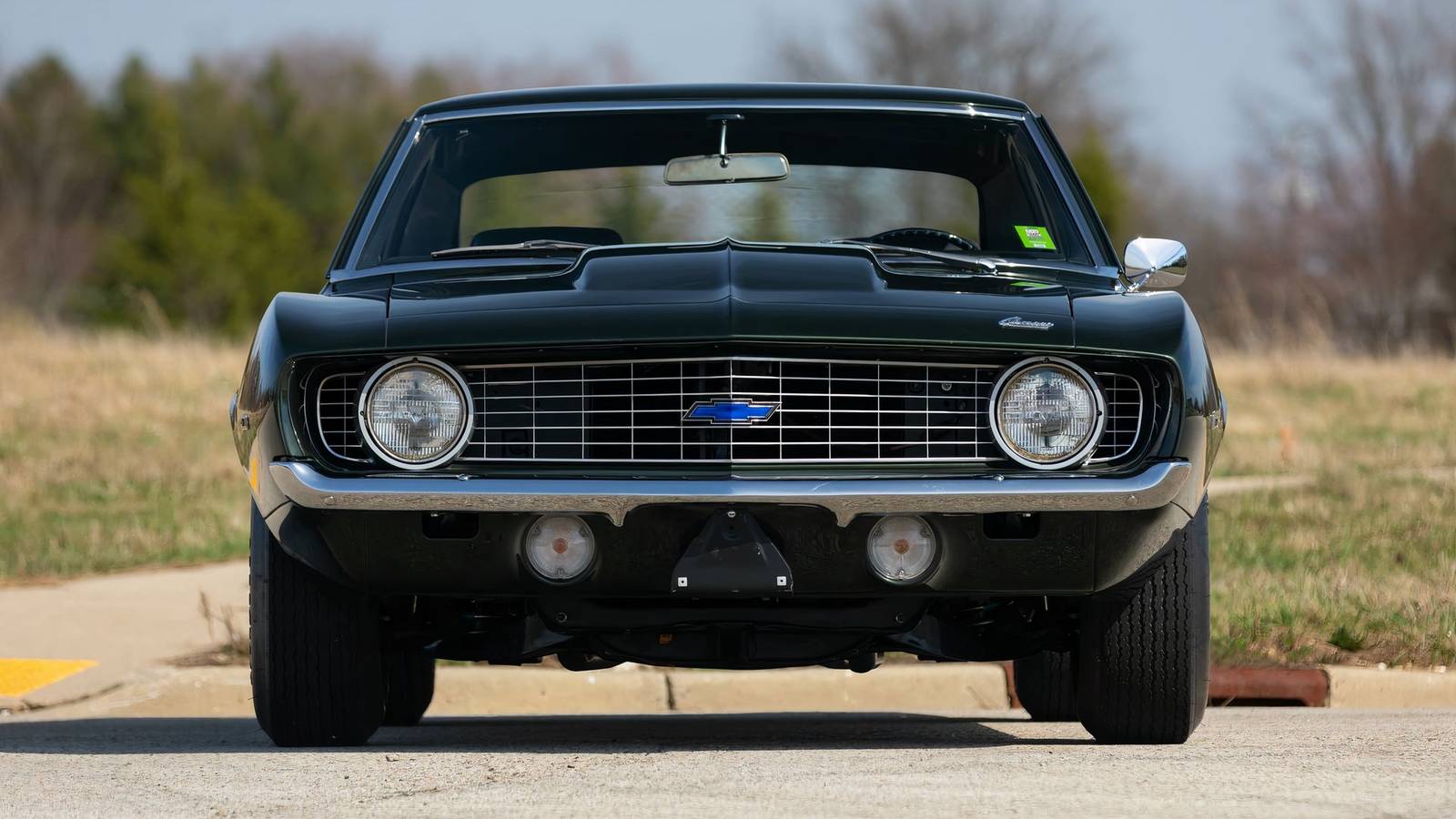
Chevrolet’s response came in 1966 with the Camaro, a car engineered with one clear mission: beat the Mustang at its own game. Built on the all-new F-body platform, the Camaro was positioned as a more serious performance machine, offering a wider range of engines and a slightly more aggressive driving character. Chevy executives were careful to avoid calling it a “Mustang fighter” publicly, but internally, there was no confusion about its purpose.
Chevy Puts Its Cards On The Table

Where the Mustang leaned into broad appeal, the Camaro sharpened its edge, appealing to enthusiasts who wanted more muscle and less flash. High-performance trims like the SS and Z/28 quickly gave the Camaro racing credibility, especially in Trans-Am competition. This strategic counterpunch ensured that the pony car segment would no longer be a one-brand phenomenon, setting the stage for decades of escalation.

Mustang GTD Specs: A Street-Legal Monster With Supercar Power
Built to challenge Porsche, Aston Martin, and Mercedes-Benz, the Mustang GTD is undoubtedly one of Ford’s most impressive ponies.
How Mutual One-Upmanship Forged America’s Most Iconic Twins

Once both cars were established, the rivalry entered a feedback loop of constant improvement and reaction. Each new Mustang revision prompted a Camaro update, and vice versa, creating a cycle of innovation driven as much by competition as by consumer demand. Styling tweaks, suspension upgrades, and ever-more-powerful engines became weapons in a rolling Cold War.
A Rivalry That Bred Increasingly Impressive Products

This one-upmanship didn’t just benefit buyers; it defined the identities of both cars. The Mustang became synonymous with versatility and broad appeal, while the Camaro leaned into a reputation for sharper performance and track focus. Together, they formed a dual narrative that elevated the entire segment, ensuring that neither car could stagnate without conceding ground to the other.
Marketing Wars, Horsepower Races, And Youth Culture Collide In The Pony Car Boom

The Mustang-Camaro battle wasn’t fought solely in showrooms or on racetracks; it played out in advertising, pop culture, and suburban driveways. Ford and Chevrolet aggressively targeted young buyers with imagery of freedom, rebellion, and speed, positioning their pony cars as symbols of independence. Movies, music, and television amplified the message, embedding both cars deeply into American youth culture.

Under the hood, the horsepower wars escalated with almost reckless enthusiasm. Big-block V8s, special editions, and factory-backed racing programs pushed the limits of what these relatively compact cars could handle. This fusion of marketing bravado and mechanical excess created a golden era where performance wasn’t just sold, it was celebrated as a lifestyle.
From Gasoline Grudge Match To Electric Era Rematch

As emissions regulations, fuel crises, and changing tastes reshaped the industry, the pony car rivalry evolved but never disappeared. The Mustang survived continuously, while the Camaro experienced pauses and rebirths, each return framed as a renewed challenge to Ford’s icon. Even when performance shifted toward efficiency and technology, the underlying competitive DNA remained intact.

Today, that same rivalry has entered a new phase with electric powertrains redefining what performance means. Ford’s Mustang Mach-E and Chevrolet’s electric performance ambitions may look radically different from their V8 ancestors, but the motivation is strikingly familiar. Sixty years on, Ford and Chevy are still pushing each other, proving that while the technology changes, the spirit of the pony car war continues.

1992 Chevrolet Camaro: A Look Back At The End Of A Generation
Unleashing power and style, the 1992 Camaro is a true ’90s icon. With bold looks and the legendary Z28 trim, it roars into muscle car history.
The Most Impressive Mustang And Camaro Models

Over the decades, Ford and Chevrolet have each produced halo versions of their pony cars that pushed far beyond the segment’s original affordable mission. On the Mustang side, cars like the 1965 Shelby GT350, the fire-breathing 1969 Boss 429, and the modern supercharged Shelby GT500 turned the Mustang into a legitimate supercar slayer, blending brute force with track credibility. These special editions weren’t just faster Mustangs; they were rolling proof that Ford was willing to stretch the platform to its absolute limits to stay ahead of Chevrolet.

Chevy answered with equally legendary Camaros that became benchmarks in their own right. The original COPO Camaros, built for drag racing, achieved near-mythical status, while the first-generation Z/28 dominated Trans-Am racing and cemented Camaro’s motorsport reputation. In more recent years, models like the Camaro ZL1 and track-focused ZL1 1LE showed that Chevrolet remained committed to building uncompromising performance machines, ensuring the rivalry stayed intense across generations.
Beyond outright power, some of the most impactful Mustang and Camaro models earned their status through cultural influence rather than raw numbers. Fox-body Mustangs of the 1980s became grassroots performance icons thanks to their tunability and accessibility, while fourth-generation Camaros found similar favor among enthusiasts chasing affordable V8 speed. These cars helped keep the rivalry alive during lean years, proving that the Mustang–Camaro battle wasn’t sustained only by rare halo models, but by everyday performance cars that ordinary drivers could turn into legends of their own.
Sources: Ford and Chevrolet U.S.