
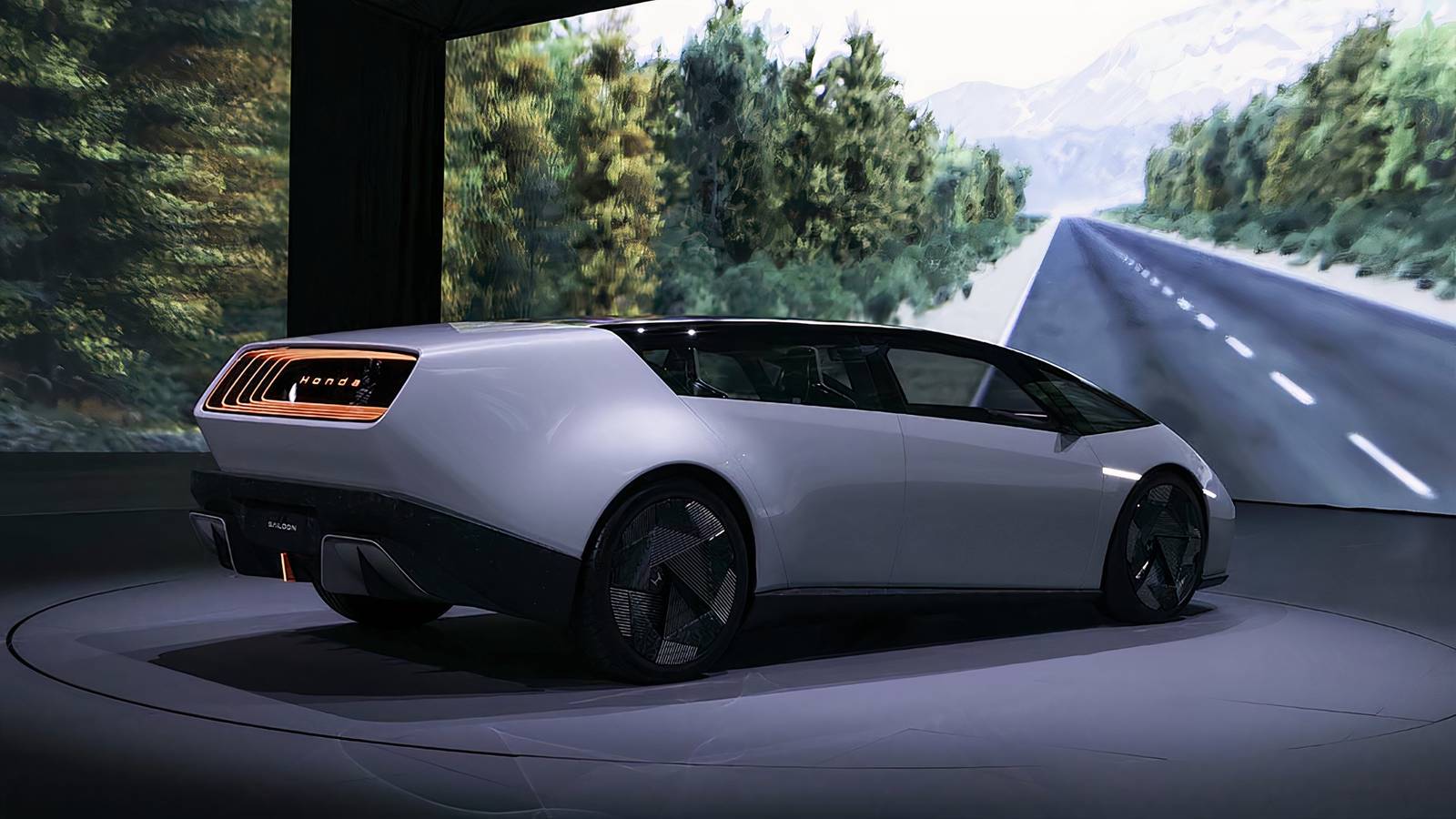
As carbon neutrality becomes an increasingly important priority for automakers, new developments in the EV space are more crucial now than ever before. Honda, a pioneer in efficiency technology, is not looking to be left behind in the EV race. Instead, the Japanese brand has positioned itself as a leader in battery technology with a full-blown commitment to the development of solid-state batteries.
Few emerging technologies are more important in the automotive world right now than solid-state batteries. Honda has already set big plans in motion to be among the first automakers to bring this critical technology to market. In this way, the Japanese brand can keep its products relevant and competitive for the next generation of drivers while also meeting its carbon emission standards.
The Origins Of Honda’s SSB Development

Honda has had a long-standing goal of realizing carbon neutrality across all its products by 2050. The only way that is going to happen is through the rapid development of emerging EV technologies. As the EV market currently stands, widespread adoption has been hampered by limited range, lackluster charging infrastructure, and exorbitant prices. Only one technology has been presented as a catch-all solution to our current situation: solid-state batteries. Honda views SSBs as one of the most important investments for the future prosperity of its brand. Let’s discuss Honda’s approach and why it has decided on a proprietary method.
Honda In-House Strategy

Solid-state batteries aren’t just some new technology for Honda; they represent the very future of the company. The Japanese brand aims to be one of the first globally to bring this product to market and initiate mass production. They are ensuring they can retain tight control over the development process of this core technology by not outsourcing the research or manufacturing of SSBs, but rather, keeping every part of the process in-house. Honda’s strategy for SSBs is a holistic one, where it envisions mass-production methods even from the early stages of development. Everything, from optimal size to materials and production methods, is considered during the development period. The better its mastery of the development process, the better the end product will be. In-house SSBs will be critical for Honda to develop better and more affordable EV products in the near future.
Honda’s Development Timeline

Honda has stated its goal is to introduce SSBs to production models by the second half of the 2020s. It is realistic to expect the implementation of Honda’s SSBs by 2028, which they consider the start of the “mid-term” in their battery development roadmap. By then, the brand also plans to have established full-scale battery data traceability, the application of sustainable materials, and the scaling up of its EV value chain. These developments mean that electric range is set to double in the second half of the 2020s from about 300 miles to 600 miles. Simultaneously, SSBs will allow for a 50 percent reduction in size, a 35 percent reduction in weight, and a 25 percent reduction in cost. If Honda can manage to achieve this potential, it will know it has secured a competitive edge ahead of other automakers in our future EV landscape.

Honda’s Approach And Major Breakthroughs

The term “gamechanger” is often used too loosely in emerging automotive technology, but the advancement of solid-state batteries is a driving force unlike any other in the industry. The simple fact is that this technology will have a massive impact on the efficiency and potential of EVs, and the sooner we get it, the better for everyone.
How Honda Is Defining Themselves

Honda’s primary focus with SSB development is designing the highest quality material for the solid electrolyte, the most important structural component of SSBs. Honda has leveraged a specific single-particle active material with a high cracking resistance and applied it via roll-pressing to increase the density of the solid electrolyte. Simply put, the better the contact material, the better the energy density.

Many of these processes, like roll-pressing, have been adapted from conventional lithium-ion battery manufacturing. However, what normally requires a four-step process for electrolyte filling in lithium-ion batteries can be achieved in a single step with solid-state production. This makes the roll-pressing method even more effective for SSBs as it offers a higher manufacturing productivity that is up to eight times higher than lithium-ion-based practices.
Honda’s Expectations And Validation Process

When Honda talks about SSBs, its expectations for the technology are clear: high energy density, stable chemical reactions, and high ionic conductivity. The higher the energy density, the longer the range, the higher the power output, and the lighter a battery pack can be. With more stable chemical reactions, SSBs can operate at wider and significantly higher temperatures. Increased heat resistance means that expensive and complex liquid cooling systems can be simplified or outright eliminated. The benefits result in longer range, lower cost, better packaging, better performance, and shorter charging time.

While SSBs sound like the perfect solution to all our current EV woes, validating the mass-production viability of this technology is an ongoing process. Honda is tackling the most effective way to streamline the SSB production process in a way that will optimize quality, cost, and stability. As it stands, only one of the ten key production processes is capable of operating at full capacity in a mass-production setting.

This Model Grew Sales By 62% — But Then It Got The Axe
It’s not every day that a major automaker cancels a vehicle program after it grew sales this much in 2025.
Honda’s Current Plan And The Rest Of The Industry

Back in 2024, Honda completed construction of its first SSB production complex in the city of Sakura, located in Tochigi Prefecture, Japan. This construction is funded in part by the approximately $275 million that Honda has invested in SSBs in five years, from 2023 to 2027. This landmark facility is Honda’s primary method of validating the material specification and production processes of SSBs before scaling. This demonstration facility became operational in January 2025 and has already displayed its usefulness in reducing eventual mass production costs.
Honda’s Current SSB Road Map

Honda’s SSB development started in a lab back in 2020, and now, six years later, prototype cells are being produced at the Sakura facility for mass-adoption verification. By the time we see these advanced batteries in a new Honda model, it will likely be 2028. According to Honda, it takes a minimum of two to three years from the planning phase to build a mass production plant of the scale intended. Yet, the 295,000-square-foot Sakura facility is accelerating the process as fast as possible.

It has been built to mimic the exact layout and methodology expected to be used in mass-production facilities. This will allow for minimizing lead times and eliminating unnecessary work processes after exact specifications have been determined. Just like at the Sakura facility, battery cell and module production will be conducted with a three-building design, where Building C1 will handle the positive electrode and insulating layer coating, along with cell assembly. Then, Building C2 will handle the negative electrode formation, while Building C3 is where the final formation and module assembly occur.
Honda’s Relationship With The Rest Of The Industry

Although Honda has chosen to develop their solid-state batteries in-house, this does not mean it does not have strategic partnerships with other brands in the industry. Currently, Honda collaborates with LG for the production of lithium-ion batteries. However, by 2028, Honda looks to take control and vertically integrate its EV value chain as the primary battery supplier for all of its joint venture partners. While Honda’s commitment and investment in SSBs is among the highest of any automaker, it is not alone in the race to achieve the first mass-production SSB-powered vehicles.

Toyota, Honda’s perennial rival, has its timeline for production applications of its own proprietary SSBs set around 2028. Nissan is also in the mix, and they, too, aim to launch an EV by 2028 with SSBs, all developed entirely in-house. With lithium-ion technology, most automakers source battery cells from the same small group of known suppliers, like LG. However, automakers are banking on their own bespoke technologies to be their X factor in the battle of SSBs. If Honda can validate the economics of reliable and cost-effective SSBs before anybody else, they will have a distinct edge over the rest of the competition. SSBs are not the only solution for a carbon-neutral future, but they are among the technologies that may determine the next decade or two of automotive engineering.
Sources: Honda, Toyota, Nissan, LG