
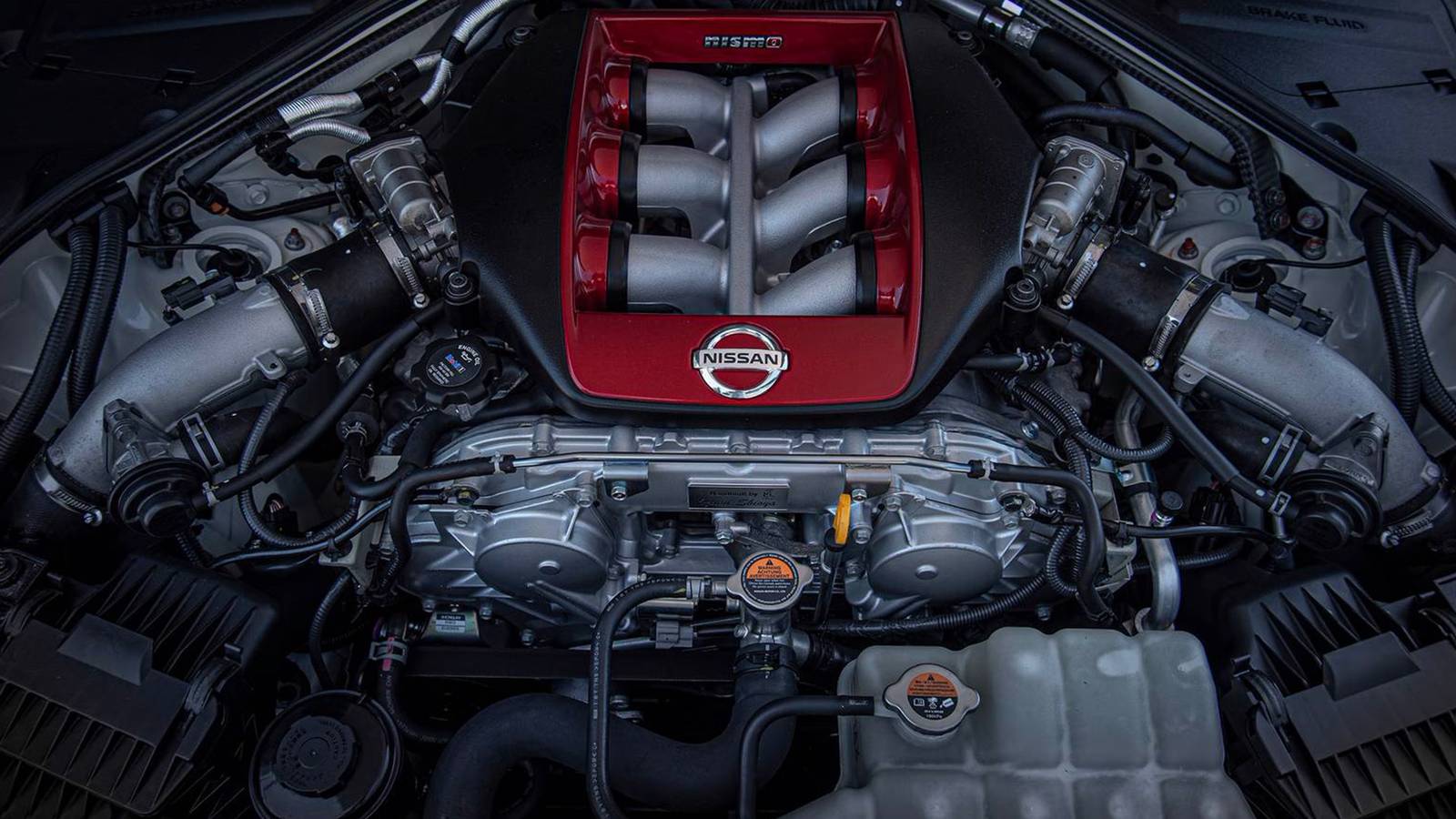
Many of us see the V8 as the best engine configuration ever devised. It has powered muscle cars, sports cars, supercars, SUVs, trucks, and mainstream cars, and to a certain extent, still does today. However, for all the V8’s upsides, it can be a thirsty beast. For those of us who are looking for the smoothness of a ‘V’ but with a typically slightly better fuel return, the V6 has been, for a long time, the answer.
The first V6 engine used in an American production car was back in 1962. Since then, it has been found under the hood of some legendary sports cars and mainstream cars that offer a good blend of sportiness and everyday usability. But the heyday of the V6 in mainstream cars has all but passed. So, we are taking a look at the rise and fall of the V6 engine and why we see so few of them in the mainstream market today.
How The V6 Took Over American Cars

The rise of the V6 in mainstream American cars and trucks didn’t just happen overnight; it was driven by the need for a change as much as it was a performance innovation. Early American models relied on inline-four, straight-six, or V8 engines, but by the early 1960s, Buick debuted the first production V6 engine for the 1962 Buick Special. They fitted a 198-cubic-inch “Fireball” V6 under the hood using a new-for-the-time aluminum 90° design and offered a more compact, smooth-running, and slightly more efficient alternative to the larger ‘V’ engines being used.
Throughout the 1970s and 1980s, the need for a smaller, more efficient engine that could still offer some performance grit was even more apparent due to the 1973 oil crisis, which effectively forced brands to strangle the horsepower from some of our favorite engines of the late 1960s and early 1970s. The need for an engine that still felt perky while still following the stricter emission controls effectively made the V6 a more popular engine than the detuned V8s on offer at the time.
The Engine That Changed Mainstream Driving

The adoption of the V6 engine changed the U.S. auto landscape; it provided a middle ground between the modest performance credentials of four-cylinder engines of the 20th century and the thirsty power of hefty V8s. It also made marques change the way they packed the engines under the hood.
Compared to older inline-sixes, the V6 is generally shorter and easier to fit, which makes it ideal for a more ‘modern’ car layout. This meant that automakers moved toward front-wheel-drive platforms in the late ’70s and early ’80s without sacrificing performance, especially in mainstream sedans. This also gave us more choices within the same model line. 1980s models like the Pontiac Fiero, the Ford Thunderbird, and Chevy Cavalier were originally all available with inline-fours and, more importantly, a V6 for those wanting some extra grunt, smoother highway cruising, and even better towing from their everyday car.
Just as importantly, as fuel injection, balance shafts, and engine mounts improved, V6 engines also became noticeably smoother and quieter than most four-cylinders. So, by the ’90s, stepping into a V6-equipped model meant stepping into a higher trim. Crucially, though, it meant stepping into a model that balances both performance and relative efficiency.

The Fastest Naturally Aspirated V6 Sports Car
This Japanese sports car is the current naturally aspirated V-6-powered sports car you can get, and it is part of an iconic lineup of JDM models.
The V6 Reigns In The 1990s And 2000s

While the 1980s saw a boom in V6 options in the U.S. auto market, it was the 1990s and the 2000s that truly established the V6 as more than the default ‘step-up’ engine. Emissions regulations were still tight; fuel economy standards were becoming more aggressive, but we still wanted models that felt refined without the cost or consumption of a V8. Homegrown manufacturers like General Motors, Ford, and Chrysler were turning out V6s like the GM-tuned port-injected 3.8-liter 3800, the Ford 3.0-liter and 3.8-liter V6s, and Chrysler’s 3.3- and 3.5-liter V6 options.
Meanwhile, V6 engines from the likes of Toyota, Nissan, and Honda were beginning to play a huge role in our market under the hood of some of the best JDM models ever created. Nissan’s VQ Series V6, Toyota’s VZ V6s, and Honda’s C30A and C32B V6 engines became some of the most legendary and reliable engines of the era. The 1990s, especially, made the V6 more than just a middle ground.
Power, Performance, And Everyday Appeal

When it comes to six-cylinder engines that really stood in the mainstream market, a few names from the ’90s and 2000s earned their reputation not just through sheer power, but through smart engineering.
One of the most impressive is GM’s 3.8-liter 3800 Series II V6. This V6 utilizes a 60° block with balance shafts to cut vibrations and a tuned-port injection system that boosts both torque and efficiency without making things too complicated. With up to 205 horsepower and 230 pound-feet of torque at its disposal, the 3800 V6 became an American legend for smooth power delivery and decent fuel economy under the hoods of the Buick LeSabre, Pontiac Bonneville, and Chevy Monte Carlo. EPA estimates give models like the 1996 Buick LeSabre a combined mpg rating of 20 mpg, which isn’t horrendous for something of the era that is also relatively perky.

In the early 2000s, the Nissan VQ35DE V6 became a benchmark for naturally aspirated sixes. Boasting an aluminum block and DOHC with VVT, this V6 can muster up to 300 horsepower and has a broad torque band. This makes it a lively number under the hood of models like the Nissan 350Z, the Nissan Maxima, and the Infiniti G35. Its lightweight design, forged internals, and the use of a timing chain instead of a belt mean that it is smooth, rev-happy, and a reliable engine to run.
Then we have Toyota’s 2GR-FE 3.5-liter V6. This robust mill features DOHC with VVT-i for better breathing across the rev range, and can kick out up to 296 horsepower. It has seen action under the hoods of the Toyota Camry and Toyota Highlander to Lexus models. Thanks to its strong mid-range power and Toyota-grade reliability, it is one of the most coveted mainstream V6 engines to ever be utilized. The 2006–2017 Camry boasts it, the 2006–2008 RAV4 is available with it, the ES 350 models from 2006 to 2018 have one under the hood, and even supercharged variants of it were used by Lotus for the Exige from 2012.
Must-Drive V6 Mainstream Models Of The 1990s & 2000s
Smoothness, reliability, and stauncher performance became a trademark of the V6 engine during the 1990s and 2000s, and the era turned out a fair number of mainstream cars (away from sports cars) that can offer a fun yet slightly undercover driving experience. We think the following V6-equipped models from the 1990s and early 2000s act as fantastic sleeper cars and are well worth taking for a spin.
- 1998–2004 Audi A6. Boasts a 2.8-liter DOHC variable intake V6, good for 193 horsepower. It is smooth and responsive to drive.
- 1992–2001 Toyota Camry. Boasts a 3.0-liter 1MZ-FE V6 that produces up to 200 horsepower, and is also renowned for its durability and silky feel, making it a great commuter model.
- 1992–2005 Buick LeSabre. Boasts the GM 3800 Series II 3.8-liter V6, and is reliable and efficient considering its power output.
- 1997–2005 Volkswagen Passat VR6. Features a narrow-angle VR6 V6 good for up to 200 horsepower. The VR6 V6 is renowned for its smooth and refined feel.
-
1990–1995 Ford Taurus SHO. Boasts a 3.0-liter Yamaha DOHC V6 that can kick out up to 235 horsepower. It is high-revving (7,000 rpm redline), responsive, and sporty for a
mainstream American sleeper sedan
.

10 Used Sedans With V6 Muscle That Won’t Break The Bank
Do V6-powered sedans offer any advantages for you? Drive one of these ten used sedans and enjoy the balance of power and efficiency.
Why The V6 Has Faded Away

By the sounds of things, owning a V6-equipped car or truck sounds like a good thing. However, over the last decade or so, the number of models with a V6 under the hood has dramatically declined in the mainstream market. While we still have full-size pickup trucks, like the Toyota Tundra, which offers six-cylinder options, the more mainstream market has opted to go a different way.
Mostly, we see mainstream cars move away from the V engine and toward potent little turbo-fours and electrically-motivated hybrid mills. Take the much-missed Toyota Camry with a V6, for example. If you are looking for a mainstream sedan or a family car with a V6, they are often marketed as ‘performance sedans’ or performance variants, instead of a standard engine choice.
Turbo Fours And Hybrid Engines

With the evolution of turbo technology and more power being squeezed out of inline-four engines, the need for a V6 in most mainstream vehicles can be seen by many as a bit redundant. Yes, you get smooth power from a V engine, but with models like the 2026 Hyundai Elantra N boasting a 276-horsepower turbo-four, and much further up the scale, the 2025 Mercedes-AMG CLA 45 S Coupe flaunting a 2.0-liter turbo-four good for 416 horsepower, the V6 can be seen as a bit old-hat.
Even less sporty models are now boasting potent little inline-fours, like the 2026 Honda Civic Hybrid, which boasts a 200-horsepower inline-four mated with two electric motors that is plenty powerful enough for everyday driving. Plus, it is far more fuel-efficient than something like the last MY of the V6-equipped Camry. According to Fuel Economy.gov, the 2026 Civic Hybrid can achieve a combined mpg rating of 49 mpg. The admittedly more powerful yet only slightly quicker-to-60 V6 Camry (5.8 seconds vs. 6.2 seconds) can achieve 26 combined mpg. In the mainstream market, it may be little wonder why brands shifted over to four cylinders, turbo or not.
Shifting Buyer Trends And Fuel Rules That Killed The V6

It is not just automakers that helped the V6 fall from mainstream cars, but also us as drivers. With the never-ending quest to find the most fuel-efficient vehicles at the top of the priorities list, the typically more efficient turbo-four and hybrid options were always going to take over. We are not saying that it is a bad thing, but it has no doubt left some V-lovers in the dark.
With the cost pressures of running a vehicle seemingly always rising, the less we can spend on fuel, the better. So, if there is an option between a relatively powerful turbo-four or a hybrid that costs less to fill up compared to a V6 that may have more power but costs a lot more to fill up, we think we know the choice a vast majority of drivers would make. As an example, the 2026 Genesis GV70 is available with either a 300-horsepower turbo-four or a 375-horsepower bi-turbocharged V6, but the annual fuel costs are quite a way apart.
|
Spec |
2026 Genesis GV70 w/ Turbo-Four |
2026 Genesis GV70 w/ V6 |
|---|---|---|
|
City MPG |
22 MPG |
18 MPG |
|
Highway MPG |
28 MPG |
24 MPG |
|
Combined MPG |
24 MPG |
20 MPG |
|
Estimated Annual Fuel Cost |
$2,450 |
$2,900 |
We can also attribute the decline of the V6 in the mainstream market to emission rules and CAFE standards. Stricter federal and state regulations have effectively forced automakers’ hands to reduce fuel consumption and lower CO2 emissions across the board.
While we love a V6 for its smooth and relatively powerful nature, it does tend to use more fuel and produce more CO2 emissions. To hit CAFE targets, brands have increasingly downsized their engines, added turbos, and made the most of hybrid power. Offering a V6 only is often not economically or logistically smart in today’s environment, especially in non-luxury mainstream vehicles.

10 V6 SUVs That Deserve More Recognition
Have you overlooked some of the best V6-powered SUVs? Here are ten that deserve more recognition and respect than they get.
Is The V6 Making A Comeback?

While it is true that we see fewer V6 engines under the hood of mainstream cars compared to what the market used to offer, it is not all bad news for those of us who enjoy them. There seems to be a small resurgence in the use of V6s, especially in more luxury and sporty models. As the turbo-four did to the V6, the V6 looks to be doing the same to the V8, replacing it with its better efficiency. We seem to have come full circle in terms of engine choices.
In 2026, there are lots of used V6 cars that beat turbo-fours, and there are new models of sedans, sports cars, and trucks from the likes of Genesis, Ford, Nissan, Lincoln, and Cadillac that are still honoring some V-engine traditions.
2026 Vehicles Still Boasting V6 Engines

There is still a wide variety available in 2026 with a V6; many of them are the higher trims of certain models, are billed as the more performance-focused option, are performance vehicles, or are luxury vehicles, but nonetheless, they are still there. Below are a few standout V6-equipped vehicles you can still buy in 2026.
|
Spec |
2025 Honda Ridgeline |
2026 Nissan Z |
2026 Ford Explorer ST |
2026 Cadillac CT4-V Blackwing |
2026 Lincoln Navigator |
|---|---|---|---|---|---|
|
Engine |
3.5-Liter V6 |
3.0-Liter Bi-Turbocharged V6 |
3.0-Liter EcoBoost V6 |
3.6-Liter Bi-Turbocharged V6 |
3.5-Liter Bi-Turbocharged V6 |
|
Horsepower |
280 Horsepower |
400 Horsepower |
400 Horsepower |
472 Horsepower |
440 Horsepower |
|
Torque |
262 LB-FT |
350 LB-FT |
415 LB-FT |
445 LB-FT |
510 LB-FT |
|
0–60 MPH |
6 Seconds |
4.9 Seconds |
5.9 Seconds |
4 Seconds |
5.8 Seconds |
|
MSRP |
$42,090 |
$42,970 |
$54,905 |
$65,395 |
$94,590 |
Iconic Cars That Boast A V6
If newer V-power or mainstream cars are not your bag, then there are still some iconic V6-powered vehicles still roaming the auction houses, and make the most of the V6 they boast. A few of the following iconic V6 vehicles are from the heyday of the V6 (the 1990s and 2000s, but not all), and all strike a good balance between smooth power, engaging feel, and relatively easier-to-maintain builds compared to some V8 counterparts.
|
Spec |
1976 Lancia Stratos HF Stradale |
1993–1995 Acura NSX-R |
2004–2007 Noble M400 |
1992–1994 Jaguar XJ220 |
2017–2025 Nissan GT-R (4BA-R35) |
|---|---|---|---|---|---|
|
Engine |
2.4-Liter V6 |
3.2-Liter V6 |
3.0-Liter Bi-Turbocharged V6 |
3.5-Liter Bi-Turbocharged V6 |
3.8-Liter Bi-Turbocharged V6 |
|
Horsepower |
190 Horsepower |
290 Horsepower |
450 Horsepower |
500 Horsepower |
565 Horsepower |
|
Torque |
169 LB-FT |
244 LB-FT |
400 LB-FT |
475 LB-FT |
467 LB-FT |
|
0–60 MPH |
6.8 Seconds |
4.7 Seconds |
3.3 Seconds |
3.6 Seconds |
3.2 Seconds |
|
Top Speed |
144 MPH |
174 MPH |
187 MPH |
217 MPH |
196 MPH |
|
Average Auction Price (Classic.com) |
N/A |
$390,060 |
$57,100 |
$512,518 |
$136,375 |
Sources: J.D. Power, Classic.com, and FuelEconomy.gov.