
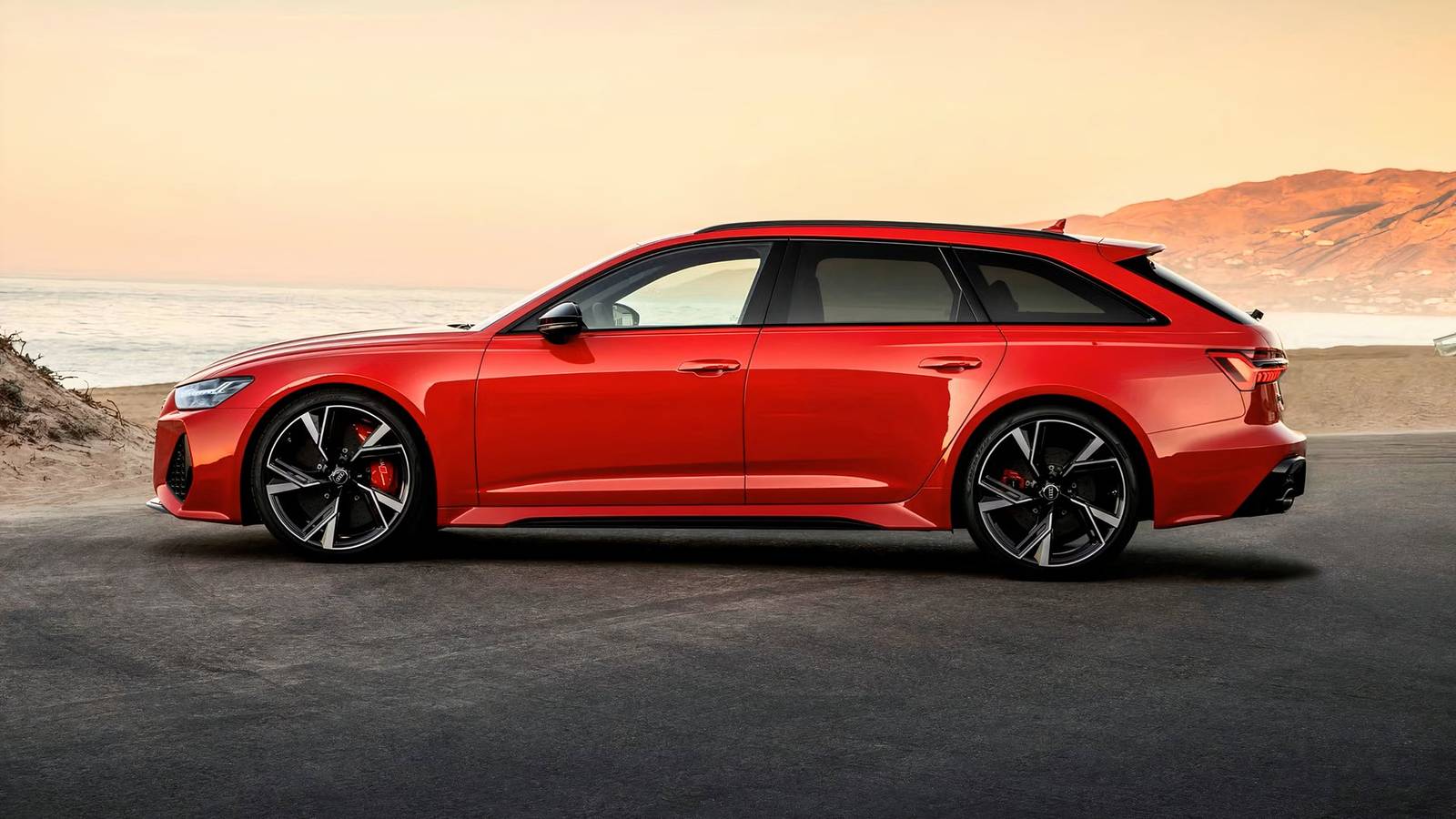
For the better part of two decades, SUVs have been the default choice for families who want one vehicle that does everything. They sit higher, offering a commanding view over surrounding traffic, promise room for people, pets, gear, and whatever else, and offer wide liftgates and rear fold-flat seats to help juggle people and stuff. Plus, all-wheel drive (mostly standard but nonetheless available) conveys the ability to go anywhere and do anything.
They usually aren’t very thrilling, though, but their presence and convenience often bring them to the forefront, and block the view of the few remaining station wagons, many of which are comparably roomy and versatile, often much more efficient due to their reduced bulk, and offer much better driving dynamics just by being closer to the ground. And as is the case with the following SUV alternatives, their performance is improved, and sometimes their efficiency.
2025 Volvo V60 Cross Country
Compared To The 2026 Volvo XC60

The 2025 Volvo V60 Cross Country holds a distinctive place in the market as one of the pioneers of turning station wagons into crossovers, and today it is one of the last wagons with genuine SUV-like capability and comfort, though it still relies more on car-like dynamics than SUV-ruggedness. It’s not one of the shining examples of a sports wagon, powered by a mild-hybrid turbocharged four-cylinder engine that tops out at 247-horsepower, but it’s one of the more efficient sports wagons, returning 26 mpg combined.

From a practical standpoint, the 2026 Volvo V60 CC offers a generous 18.3 cubic feet of cargo room when all the seats are in use, and can expand to 60.5 cubic feet with the rear seats folded forward, though cushion contouring doesn’t render the load floor completely flat. Still, when all the seats are folded flat in this thing, you’re getting just as, and in some cases, more cargo space than in some SUVs, and the lower cabin floor facilitates entry and exit for shorter passengers.
There’s also plenty of headroom due to the car’s wagon shape. As a matter of fact, when you take a moment to compare the numbers, you realize this V60 offers 0.1 inch more rear headroom than the 2025 Acura ADX I drove not long ago.
– William Clavey for TopSpeed
The 2026 Volvo XC60 Is Similar To The 2026 Volvo V60 In Size And Utility

In contrast, the 2026 Volvo XC60 leans heavily on all-around utility without sacrificing the Scandinavian simplicity and refinement Volvo buyers have always expected from their wagons. It shares the base 2.0-liter turbo mild-hybrid engine of the V60, with identical power outputs but loses a smidgen on performance and efficiency, due to its slightly elevated stance. However, the XC60 has the option to move up to a plug-in hybrid system that improves performance, range, and efficiency.

Almost identical in footprint to the V60 Cross Country (it’s shorter, but a tad wider and higher), the refreshed 2026 Volvo XC60 B5 offers marginally higher ride height and more upright seating position, resulting in better outward visibility from all seats. The higher cabin impedes aerodynamic efficiency, but the added vertical volume combines with the upright seating to add about 10 cubic feet in overall passenger volume. Its cargo room is slightly diminished, though, when all seats are in use.


Find 2026 Volvo V60 Cross Country and more cars for sale on our Marketplace
2026 BMW M5 Touring
Compared To The 2026 BMW X5 M Competition

The 2026 BMW M5 Touring is the first M5 wagon sold in America, and gets power from a twin-turbo V-8 with an electric motor fed by a plug-in hybrid system. It delivers a combined 717 horsepower and propels the wagon to 60 mph in about 3.5 seconds, yet returns an estimated 13 mpg combined. That’s incrementally faster than the 617-horsepower 2026 BMW X5 M Competition, which uses a mild hybrid version of the same engine, but it’s not quite as efficient overall as the SUV (despite the M5’s 25 miles of electric-only driving).

The 2026 BMW M5 Touring is perhaps the most famous of today’s performance wagons, related to the 7 Series sedans and the IX electric SUV, as well as the rest of the 5 Series lineup. The high-end wagon made its 5 Series debut in the third generation (E34) in 1992, and continued through 2009 (replaced by the notchback Gran Turismo). 2025 marked the return of the wagon to America and the first high-performance M5 wagon since 2009, which was not sold in the U.S.
The Slightly Bigger 2026 BMW X5 M Competition Can’t Outperform The 2026 BMW M5 Touring

For comparison, the 2026 BMW X5 M Competition is quite the performer itself, and has the added attractiveness of nearly doubling the M5 Touring’s 17.7 cargo space, when all the seats are in use, though the premium is only 14.7 cubic feet when the rear seats are folded. Price-wise, the 2026 BMW M5 Touring starts at $125,300, which is slightly lower than the X5 M Competition’s $131,000 (although you can get the lesser-tuned 523-horsepower X5 M60i for $93,600, and other X5s for as little as $68,300). In choosing the M5 Touring, you’re basically giving up a little bit of space and versatility for outlandish performance.

The BMW X5 M’s overall size gives it a slight edge in cargo volume, seats up or down, and its taller seating grants better sightlines and improves headspace. However, the lower-to-the-road AWD M5 Touring outshines even the track-tuned M5 Competition’s manners, and it has the added attractiveness of performing most of its around-town duties without dipping into the fuel tank.
Find 2026 BMW M5 Touring and more cars for sale on our Marketplace
2026 Mercedes-AMG E 53 Hybrid
Compared To The 2026 Mercedes-AMG GLE 53 4Matic

The 2026 Mercedes-AMG E 53 Hybrid makes a strong case as perhaps the most compelling performance-luxury wagon, with its blend of serious power and everyday usability. Its plug-in hybrid setup couples a turbocharged 3.0-liter inline six-cylinder engine with an electric motor for a combined 577 horsepower (temporarily up to 604 horsepower, with Race Start), enabling a 0–60 mph time of four seconds. Using the mild hybrid 429-horsepower version of the same engine, the 2026 Mercedes-Benz GLE 53 is about a second slower.

Germans are well known for their performance wagons, and the Mercedes-Benz E-Class Wagon is one of the youngest on the market (introduced in 1995), though it could also be considered the senior of the segment, tracing its wagon roots back to the E-Class predecessor that introduced a wagon in 1984. The 2026 Mercedes-AMG E 53 uses an adaptive suspension and AWD to deliver sports sedan road manners and SUV all-surface traction.
The 2026 Mercedes-AMG E 53 Hybrid And GLE 53 Are Roughly The Same Size

Although the two vehicles are different, the 2026 Mercedes-AMG GLE 53 is the same basic size-class as the 2026 Mercedes-AMG E53 Hybrid, and shares the same engine (but without the plug-in hybrid system of the performance wagon). The two are similar in their 33 cubic-foot cargo holds, but the GLE’s interior expands to hold 10 more cubic feet when the rear seats are folded forward (most of that in vertical space, with the SUV standing a foot taller).

Desired for its reliability, the Mercedes-Benz GLE is also shorter overall but rides on a longer wheelbase, with the end result being that it has a slightly smaller turning circle, meaning that it is perhaps more maneuverable for its off-road adventures. They both use AMG Ride Control, but it’s tuned to different usage. The GLE has adaptive damping, but both suspensions are geared to deliver smooth rides under their respective applications—grand touring highway runs for the E 53 Wagon; off-road adventures for the GLE 53.
Find 2026 Mercedes-AMG E53 Wagon and more cars for sale on our Marketplace
2026 Audi RS 6 Avant
Compared To The 2026 Audi Q8

The Audi A6 Avant is as old as its BMW 5 and Mercedes-Benz E-Class rivals, but it set the tone for the future of the German sports wagon back in the early 1990s with its all-wheel drivetrain. The 2026 Audi RS 6 Avant remains a compelling performance wagon, blending supercar-level acceleration with everyday usability. Powered by a 621-horsepower twin-turbo 4.0-liter V-8, it out-rockets the others to 60 mph, breaking the tape in a reported 3.3 seconds, all while packaging four doors and room for five.

Its adaptive suspension and Quattro AWD in the 2026 Audi RS 6 Avant deliver superior handling and a smooth ride during daily around-town use and long-trek highway cruising. Although not recommended with its road-hugging lower body panels, it even adds a modicum of off-road ability. Its price, size, and power are matched by the 2026 Audi RS Q8, with the latter lacking the efficiency of the RS 6 (the only Avant in the current Audi lineup), though neither could be considered a gas-sipper—the RS 6 is rated at 17 mpg, combined; the RS Q8, 16.
The 2026 Audi RS 6 Avant Space Is On Par With The Q8 SUV

By comparison, the 2026 Audi Q8, as a whole, is less cost-prohibitive, starting at $75,600 for its entry level. The 2026 Audi RS Q8 Performance’s $138,300 is more in line with the 2026 Audi RS 6’s $130,700, but neither can match the RS 6’s level of handling and performance, especially the mild hybrid 335-horsepower 3.0-liter turbocharged V-6 model. Because of its stance, the Q8s return a milder driving feel, which may be preferred by families, rather than the aggressive track-tuned suspension setup of the RS 6.
Bomb through corners you’d think you could only survive in a sports car, and the SQs don’t even sweat. I was pretty shocked at how hard I could push, well exceeding any advisable pace, posted or otherwise.
– Michael Frank for TopSpeed

The two vehicles match up almost exactly on interior space and cargo versatility, with the RS 6 countering the usual SUV height benefits by offering more headroom front and rear. The Audi Q8’s superior width grants a couple more inches of shoulder room, and the upright seating of the SUV translates into more comfortable rear legroom. In terms of overall volume, both hover around the 100 cubic foot threshold, with the Q8 slightly outdoing the RS 6 in cargo volume with the seats up or down—33.7–60.7 cubic feet, versus the wagon’s 30–59.3.
Find 2026 Audi RS6 Avant and more cars for sale on our Marketplace
2026 Porsche Taycan GTS Sport Turismo
Compared To The 2026 Porsche Cayenne GTS

If your taste in sports wagons runs more toward sustainable energy, there’s the 2026 Porsche Taycan GTS Sport Turismo, which anchors itself as one of the most engaging and usable high-performance EVs in the U.S. market. Perhaps the best of all worlds, the Taycan Sport Turismo delivers real-world usability, everyday dynamics, unwavering performance, and superb efficiency. It also offers a compelling alternative to Porsche’s signature SUV, the Cayenne, matching up nearly in interior space and blowing it away on performance and efficiency.

Disclaimer: the 2026 Porsche Cayenne also has two electric models, with the lesser level cheaper but not as powerful, and the top-tier overwhelmingly more powerful and slightly more expensive. For this comparison, though, we will go with the slightly less expensive ICE Cayenne GTS, which is roughly the same size as the Taycan wagon. The 690 horsepower and instant torque of the Taycan’s dual electric motor powertrain launch it to 60 mph in 3.1 seconds (with launch control), blowing away the Cayenne GTS’s 4.2 time (with Sport Chrono Package).
The 2026 Porsche Taycan GTS Sport Turismo Is The Most Practical Electric Performance Wagon

The 2026 Porsche Taycan GTS Sport Touring leans into the wagon practicality without abandoning the Porsche dynamism (not that Cayenne does either). Its adaptive chassis and air suspension smooth out mottled pavement and straighten out curvy ribbons of pavement, without forsaking a usable cabin that can hold up to 17.2 cubic feet of cargo (frunk included)—14 behind the rear seats, expanding to 41 when they fold forward. The main drawback is that there is cabin room for only four occupants.

In contrast, the 2026 Porsche Cayenne GTS shifts the wagon/performance balance toward SUV convenience, but doesn’t completely sacrifice Porsche’s dynamic identity. Powered by a robust V-8, its internal-combustion character delivers traditional SUV grunt for towing and the potent Porsche engine note for its soundtrack. In terms of overall size and cargo versatility, the Cayenne GTS has the edge, with 27.3 cubic feet of cargo space behind its three-position rear seat, and expands to 60.3.